
Travel update Ratnapura National Museum: closed for renovation Checked 3 October 2026
The Department of National Museums lists the Ratnapura National Museum as temporarily closed for renovation and has not given a reopening date. Its normal hours are Tuesday to Sunday, 9 am to 4.45 pm, except public holidays. Check the department’s website before you go.
Ratnapura, the “city of gems”, is the capital of Sabaragamuwa Province, on the Kalu Ganga about 101 km south-east of Colombo. It has been the centre of Sri Lanka’s gem trade for centuries, and gem pits dot the hills around it. For travellers it is a regional base, because the Palabaddala path up Sri Pada (Adam’s Peak) starts here and the roads to Sinharaja and Udawalawe pass through.
Is Ratnapura for you?
Go if you are curious about how people mine and trade gems, want to see one of the island’s most important shrines to the god Saman, or are climbing Sri Pada from the Ratnapura side. It also breaks up the long drive from Colombo towards the south and the national parks.
Think twice if you want a pretty town to wander, because Ratnapura is a busy commercial centre and it rains a lot. Its main business is also a trade in which visitors can easily lose money, so go to look and learn, not to buy on impulse.
A town that lives on gems
Gem mining here is an old, mostly small-scale business. The most common method, says the National Gem and Jewellery Authority (NGJA), is a pit with tunnels at the bottom. The NGJA, which is the state regulator, also lists surface digging and river-bed dredging. Gem pits are a common sight in the countryside around the town.
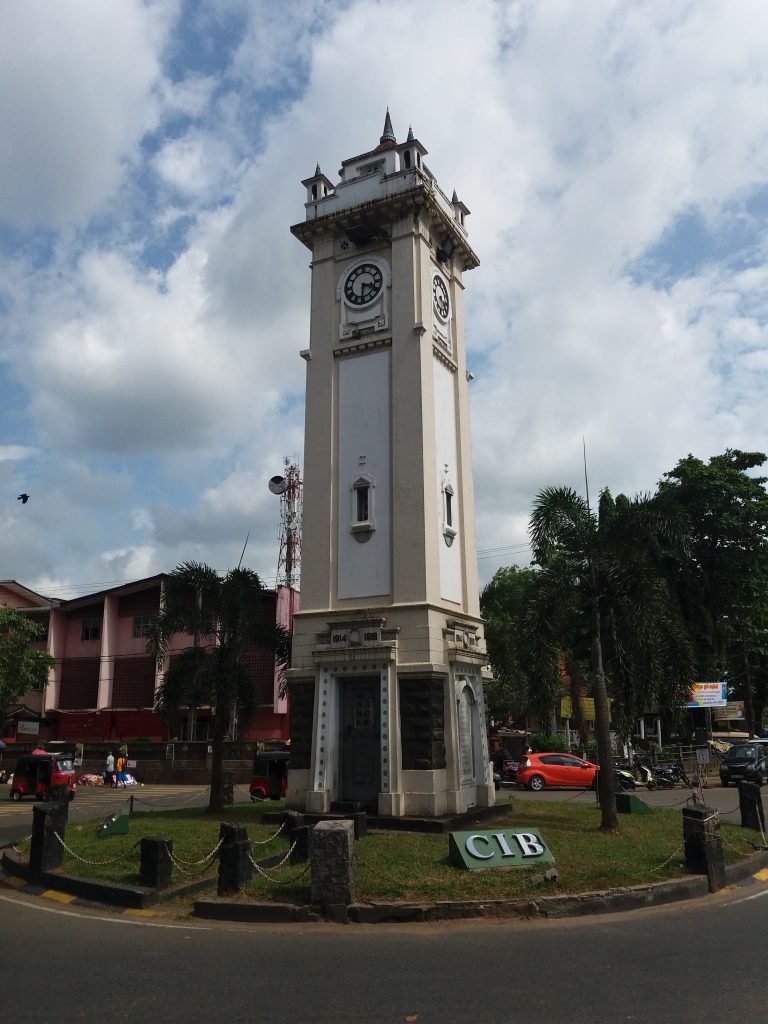
Most mornings, traders gather in the town centre around the clock tower to buy and sell stones. Recent visitors (2025–26) report that the market is busiest early, from about 7 to 10 am. Even if you don’t buy, it is worth seeing as a scene, with dealers examining stones and striking deals on the street. Visitors also report that a mine visit can be impossible after heavy rain, when the pits flood and the ground turns to deep mud. Ask locally before you go, and expect to get dirty.
If you want to buy: take care. The NGJA’s chairman has told AFP that imitation stones and heat-treated stones sold as untreated are the biggest threat to the trade. In the chairman’s view, a certificate from the regulator is the best guarantee against fraud. The NGJA runs a gem testing laboratory in Ratnapura as well as in Colombo and Galle, and you can check whether a certificate is genuine on its certificate verification site. Treat a stone as something you like rather than an investment, because nobody can promise you will sell it for more at home.

Maha Saman Devalaya
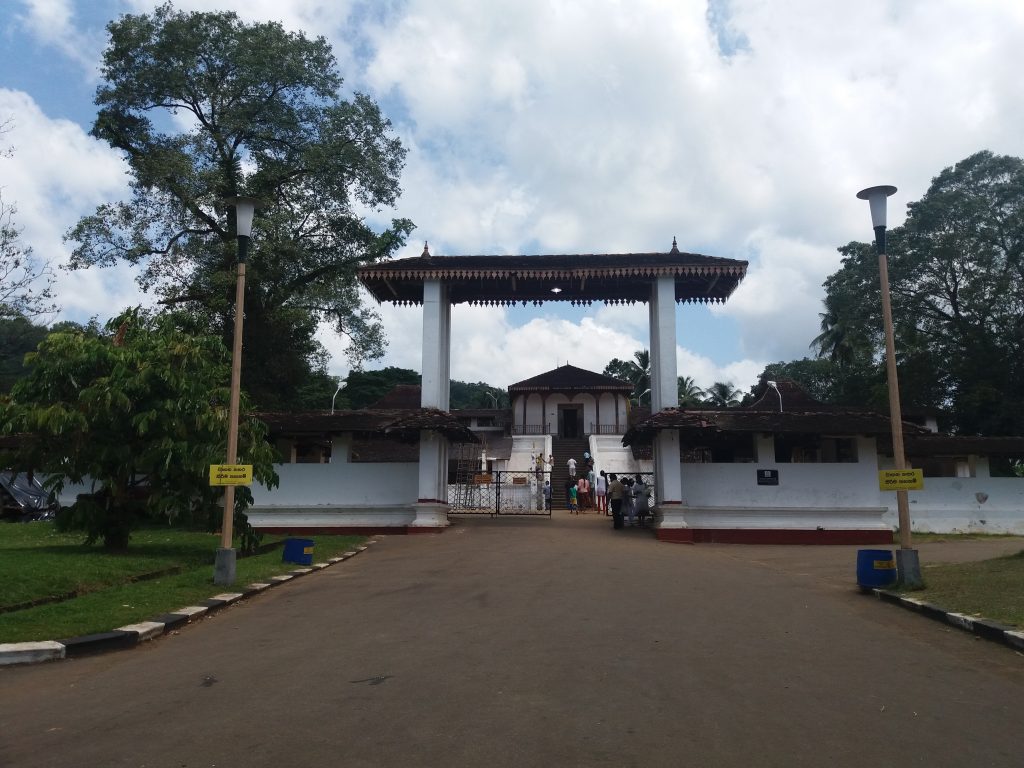
Just outside the town centre, the Maha Saman Devalaya is the main shrine to Saman, the guardian deity of Sri Pada and of the Sabaragamuwa region. According to tradition, a minister of King Parakramabahu II built it in the 13th century. Its story ties in with the search for gems in the area. The shrine was destroyed during the Portuguese period and later rebuilt.
Each year, around July or August (the dates follow the lunar calendar), the devalaya holds its Esala perahera, a procession of drummers, dancers and decorated elephants through the town. Outside festival time, however, it is a calm place to visit. It is still an active place of worship, so cover your shoulders and knees and take off your shoes and hat where others do.
Ratnapura National Museum
The National Museum is in Ehelepola Walawwa, a manor house on the Colombo road that once belonged to Ehelepola, a chief minister of the last king of Kandy. It opened in 1988 and covers the region’s history, natural history and gems, including fossils of animals such as hippopotamus found in gem pits.
Its normal hours are Tuesday to Sunday, 9 am to 4.45 pm, except public holidays. However, when we checked in October 2026, the Department of National Museums listed it as temporarily closed for renovation. Foreign visitors pay USD 5 per adult and USD 3 per child; Sri Lankans pay Rs 100 and Rs 50. Check the Department of National Museums’ website before you go.
Sri Pada from the Ratnapura side
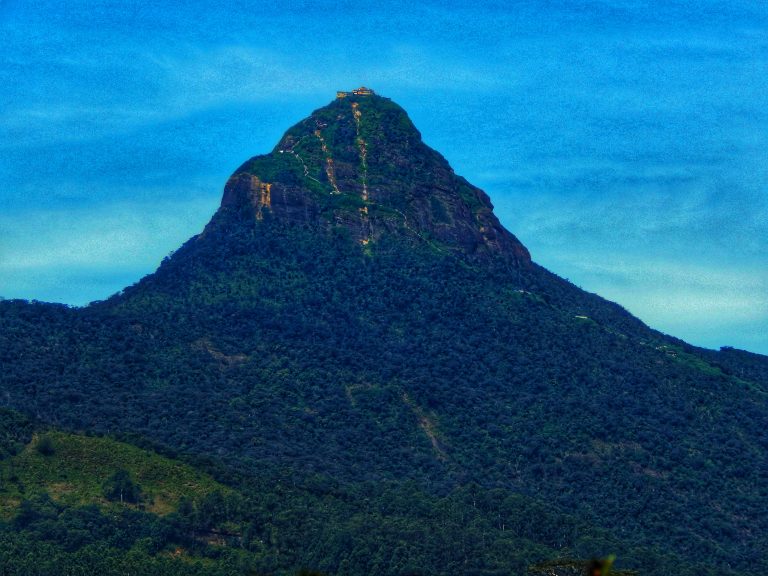
The summit is about 40 km north-east of Ratnapura, and the Palabaddala path is the main route from this side. It is longer than the Hatton–Nallathanniya path, which is the shortest of the six trails. The pilgrimage season runs from December to May. Outside it, though, the weather on the mountain is often wet, windy and misty, and extra rules apply to climbing. Our Sri Pada guide has the routes, rules and season in detail.
Around Ratnapura
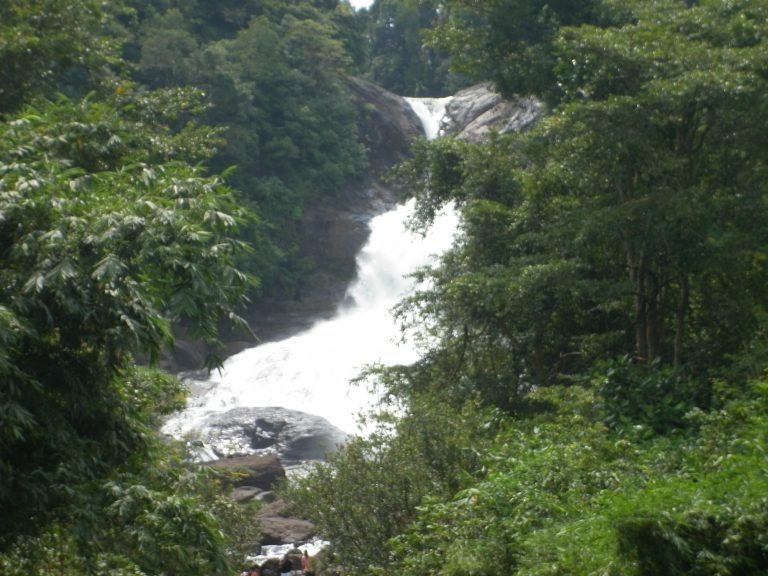
- Bopath Ella: a waterfall at Kuruwita, a town on the A4 just before Ratnapura if you are coming from Colombo, so an easy stop on the way in.
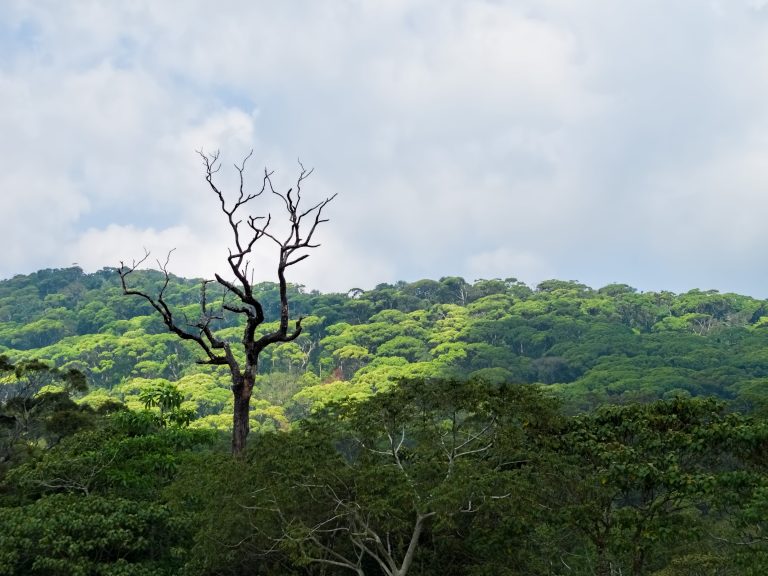
- Sinharaja Forest Reserve: the protected rainforest lies south of Ratnapura; the drive from Colombo runs through Ratnapura and Pelmadulla.
- Udawalawe: for the elephant park, follow the A4 to Pelmadulla and turn south on the A18 through Embilipitiya.
Getting there and the weather
Ratnapura is on the A4, the long Colombo–Batticaloa highway, which passes Kuruwita on the way in from Colombo. The A8 also links it with Panadura on the west coast. There is no railway, though. The old narrow-gauge line to Ratnapura closed decades ago, and the Kelani Valley line from Colombo now ends at Avissawella. Instead, buses run from Colombo and along the A4.
Ratnapura is in the south-west of the island, which takes the south-west monsoon from May to September. The October–November rains then reach the whole island. Expect showers at any time of year. After very heavy rain the Kalu Ganga can flood low-lying parts of Ratnapura and nearby towns, as it did during Cyclone Ditwah in late 2025. If you are travelling in wet weather, follow local warnings.
Frequently asked questions (FAQs)
Is Ratnapura worth visiting?
Yes, if gems interest you, you want to see the Maha Saman Devalaya or you are climbing Sri Pada from Palabaddala. However, it is a busy working town rather than a place to linger.
Is it safe to buy gems in Ratnapura?
Buy carefully. The national regulator warns that sellers offer imitation and undisclosed heat-treated stones as genuine. However, it runs a testing laboratory in Ratnapura, and you can check its certificates online.
What are the National Museum’s opening hours?
Normally Tuesday to Sunday, 9 am to 4.45 pm, except public holidays. However, the Department of National Museums listed it as temporarily closed for renovation when we checked in October 2026. Check its website before you go.
Can you climb Adam’s Peak from Ratnapura?
Yes. The Palabaddala path starts on the Ratnapura side; the summit is about 40 km north-east of the town. The season runs from December to May.
Is there a train to Ratnapura?
No. The nearest railway is the Kelani Valley line, which ends at Avissawella, so travel by bus or by road along the A4.
Sources: srilanka.travel (index.php), en.wikipedia.org (Ratnapura), ngja.gov.lk (gemstone mining industry), ngja.gov.lk (contact gem laboratory centers of ngja), ngja.gov.lk (background of ngja gem testing laboratory), gemlab-certificate.ngja.gov.lk, gulfnews.com, en.wikipedia.org (Maha Saman Devalaya), sundaytimes.lk (hidden treasures in the city…), zeroplastic.lk, museum.gov.lk (museums), museum.gov.lk (ticket pricing), en.wikipedia.org (National Museum of Ratnapura), buildings.gov.lk, srilanka.travel (attraction&), en.wikipedia.org (Adams Peak), en.wikipedia.org (Bopath Ella Falls), en.wikipedia.org (A4 road (Sri Lanka)), en.wikipedia.org (A8 road (Sri Lanka)), en.wikipedia.org (A18 road (Sri Lanka)), en.wikipedia.org (Kelani Valley line), statistics.gov.lk, en.wikipedia.org (2024–2025 floods in Southeast Asia…), sundaytimes.lk (ditwah leaves carnage and catastrophe…) and recent visitor reports. Header photo: L Manju / Wikimedia Commons, CC BY-SA 4.0.