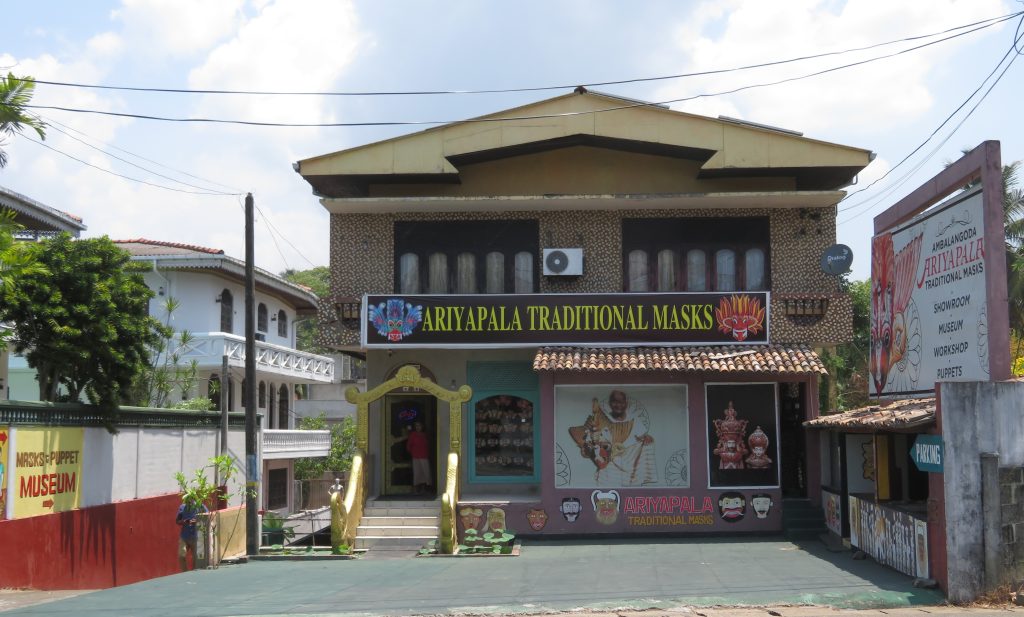
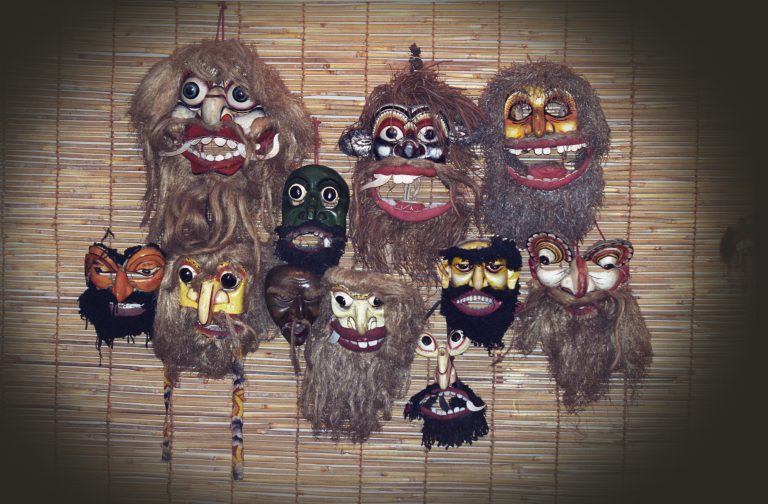

The Ambalangoda Mask Museum is run by the Ariyapala mask makers on the Galle Road through Ambalangoda, about 87 km south of Colombo. The town has long been known for its carved wooden masks and its masked dancers. Here you can see the old ritual masks, learn what each kind was for, and watch carvers at work in the workshop next door. Most visits take well under an hour, unless you get talking.
Is it worth visiting?
Go if you are staying around Hikkaduwa or Bentota and want a cultural stop that isn’t another temple. It is also the place to start if you are thinking of buying a mask and want to know what you are looking at.
Think twice if you dislike any hint of a sales pitch. Entry is free, but the museum is also the front of a family business. There is a large shop upstairs, and the visit tends to end there.
The masks and what they are for
Masks in this part of Sri Lanka belong to three traditions. The displays explain each one with labels and old photographs:
- Kolam: masks for a satirical folk drama. Kings, villagers, soldiers, animals and demons take the stage in turn and poke fun at the society around them. Legend says the first kolam was staged for the pregnant queen of the mythical King Maha Sammata. She longed to see a masked play, and the god of craftsmen supplied the masks.
- Sanni: masks for the sanni yakuma, a healing ritual that traditionally lasts from dusk to dawn. The dancers summon eighteen demons, each blamed for a different illness, then mock them and persuade them to leave the patient alone. People along the south coast still hold the ritual, though now more often as a cultural show than as a cure.
- Raksha: fierce demon masks with bulging eyes and protruding tongues, some crowned with many-headed cobras. Dancers wear them in festivals and processions.
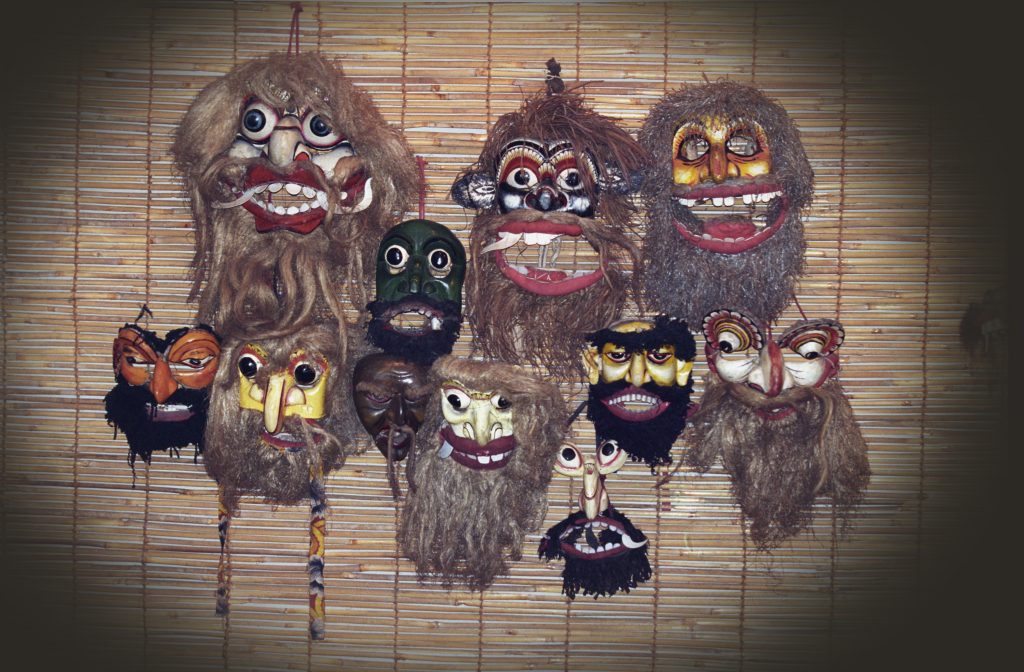
The family behind the museum has carved a complete set of 120 traditional masks, more than there is room to show. According to the museum, the two sets on display come from a kolam play and a sanni yakuma ritual. Both were performed at Batapola and Ambalangoda in 1985 and 1986. A small library holds anthropological writing on masks and masked performance. The family also makes string puppets for folk plays.
The family and the workshop
The museum takes its name from Ariyapala Wijesooriya, a master carver and dancer. He passed his craft on to Mahindapala Wijesooriya, and the Wijesooriya family still runs the business. In the museum’s own account, kolam performances became rare for economic reasons, while mask carving survived as a cottage industry. The museum set out to keep the whole tradition on record.
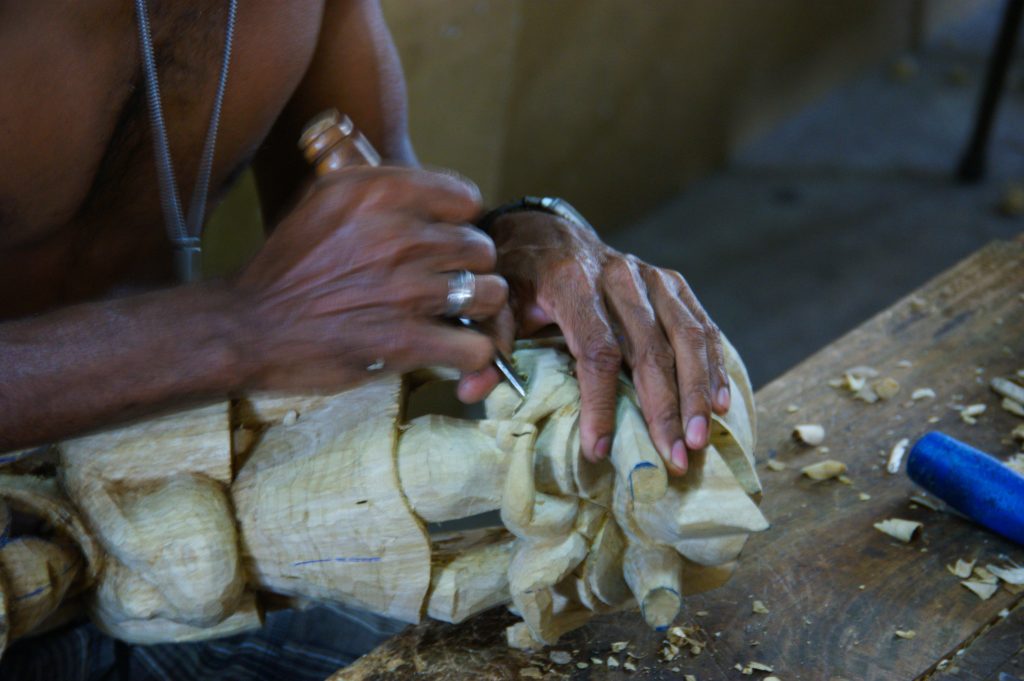
In the workshop, carvers shape each mask from kaduru, a light wood, then smooth and paint it. Recent visitors (2025–26) single out the carvers at work. Some were also shown round in English by a member of staff.
Visiting the museum
Recent visitors (2025–26) report that there is no entry charge. A donation for the museum and the workshop is appreciated. Upstairs, the shop sells masks of every size and quality, and visitors describe the prices as on the high side. Card payment is accepted, according to recent reviews, but in 2024 one visitor was not allowed to take photographs in the shop.
Published opening hours differ. The museum’s own website gives Monday to Saturday, 8 am to 6 pm. However, recent visitors have also found it open on Sundays. If a Sunday is your only chance, contact the museum through its website first.
If you plan to buy, take your time. Ambalangoda has other mask workshops and showrooms, and a visitor in 2024 found another one a couple of hundred metres away. Comparing two or three is the best way to judge quality and price.
Getting there
By train: Ambalangoda station, built in 1894, is a major stop on the coastal line from Colombo Fort to Galle. Reserved seats are sold on the Sri Lanka Railways seat reservation site. The museum is on the Galle Road (A2) through town, and a tuk-tuk from the station is the easiest way to reach it.
By road: the A2 coast road runs through Ambalangoda, so the museum is an easy stop between Bentota and Hikkaduwa. Combine it with a boat trip on the Madu Ganga at nearby Balapitiya. Alternatively, continue south to Galle.
Frequently asked questions (FAQs)
Is the Ambalangoda Mask Museum free?
Recent visitors report that there is no entry charge, though a donation is appreciated. The shop upstairs sells masks.
What are the three types of Sri Lankan masks?
Kolam masks are for satirical folk drama, and sanni masks for a healing ritual against eighteen illness demons. Raksha masks are worn in festivals and processions.
Can you see masks being made?
Yes. Carvers work in the workshop beside the museum, shaping masks from light kaduru wood before painting them.
When is the mask museum open?
The museum’s website gives Monday to Saturday, 8 am to 6 pm. Visitors have found it open on Sundays too, so check ahead if your timing is tight.
Can you visit the mask museum from Hikkaduwa?
Yes. Ambalangoda and Hikkaduwa are neighbouring towns on the A2 coast road and the coastal railway, so the museum makes an easy half-day trip by train or tuk-tuk.
Sources: en.wikipedia.org (Ambalangoda), en.wikivoyage.org, en.wikipedia.org (Sanni Yakuma), en.wikipedia.org (Dance in Sri Lanka), ariyapalamasksmuseum.com (about.html), ariyapalamasksmuseum.com (Mask detail.html), ariyapalamasksmuseum.com (contact.html), en.wikipedia.org (Coastal line (Sri Lanka)) and recent visitor reports. Header photo: Torbenbrinker / Wikimedia Commons, CC BY-SA 4.0.