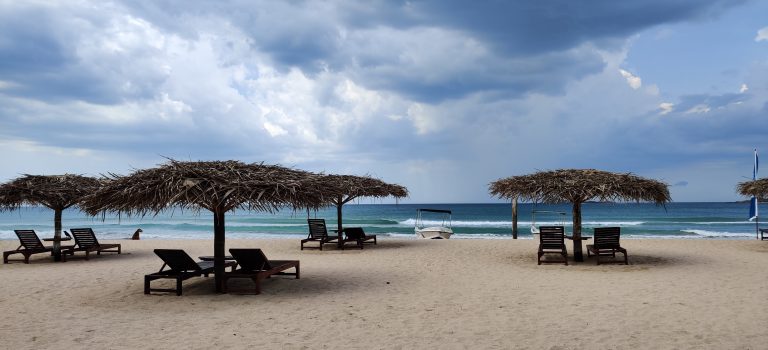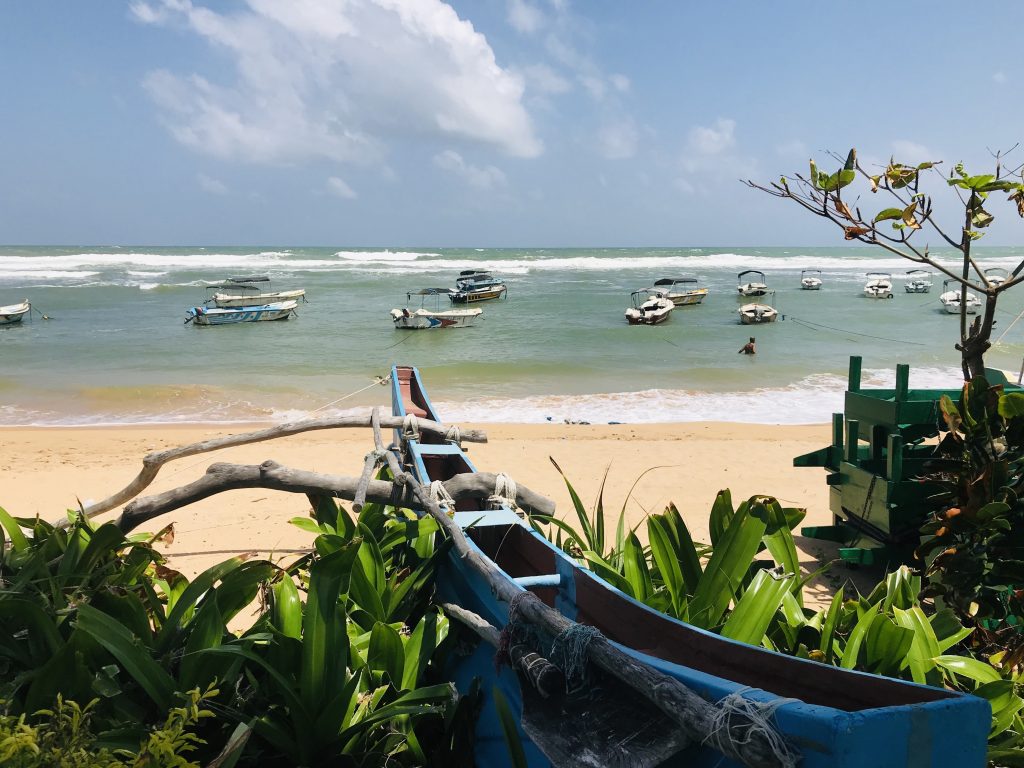
Hikkaduwa National Park is the shallow coral reef and lagoon off Hikkaduwa’s main beach, on Sri Lanka’s south-west coast in Galle District. It is one of the country’s three marine national parks, run by the Department of Wildlife Conservation. You can see it from a glass-bottom boat or with a mask and snorkel, or simply watch sea turtles graze in the shallows a few metres from the sand.
Is it worth visiting?
Go if you are staying on the south-west coast and want an easy first look at a reef, or a chance to see turtles up close without a dive course.
Think twice if you are picturing bright, healthy coral. Much of the reef is dead or slowly recovering, so keen snorkellers and divers should keep their expectations modest.
The reef today
Hikkaduwa was Sri Lanka’s first marine sanctuary. It became a sanctuary in 1979, a nature reserve in 1988 and a national park in 2002. The park covers about 101 hectares of shallow fringing reef, around 5 m deep on average. Surveys have recorded some 60 species of coral and more than 170 species of reef fish. Hawksbill, green and olive ridley turtles visit too.
That is the record; the present is harder. In 1998 an El Niño warmed the sea and bleached the reef, and live coral cover fell from 47 percent to 13 percent. Boats knocking against the coral and visitors walking on it did further damage over the decades. By 2023 the Sunday Times described the reef as 90 percent dead.
That year the Department of Wildlife Conservation started a five-year restoration project. Wildlife officers collect live coral fragments that wash ashore and fix them to small cement blocks. They then grow them in nurseries on the park’s seabed, with help from local boat owners.
Recent visitor reports (2025–26) are mixed. Some found the coral grey and lifeless, but most still saw plenty of reef fish and turtles close to shore. Sri Lanka Tourism also notes that large turtles still live on the reef.

Glass-bottom boat or snorkel?
The Department of Wildlife Conservation lists boat safaris and snorkelling among the marine activities at Hikkaduwa. In practice, you choose between these:
- Glass-bottom boat: the boats wait in the lagoon off the main beach. They suit children, non-swimmers and anyone who would rather stay dry. However, recent visitors (2025–26) say the glass panel is small and rides often last about half an hour. Quotes also vary widely between boatmen, so agree the price, the length of the trip and any snorkelling stop before you get in.
- Snorkelling: you can swim out from the beach to the inner reef, and you can hire a mask along the shore. Many visitors find this better value than the boat, because you see more and stay as long as you like.
- Diving: Sri Lanka Tourism mentions dive shops offering PADI courses, as well as several shipwrecks off this coast. Before you book, ask how deep each site is and what state the coral is in.
Whichever you choose, keep your feet off the coral and never stand on it to rest. Damaging coral here is an offence. In 2025 a court fined a man for it and ordered the reef he damaged to be restored.
Seeing the turtles responsibly
Turtles come right up to the beach to graze, so you will often see them from the water’s edge. Visitors report local sellers offering seaweed to feed them, but say no. Signs on the beach from Hikkaduwa’s police life-saving unit spell it out: don’t touch, ride, feed, harass or chase the turtles. The Sunday Times has also reported conservationists’ warnings that bread and handling harm them.
Stay a few metres away and let the turtle decide how close it comes. Visitors say the beach gets busy later in the day, so go in early in the morning, when fewer people are around.
When to go
Sri Lanka Tourism says the north-east winds make the south-west coast sunny and the sea calm from November to March. Those are the months for clear water and easy snorkelling. In the south-west monsoon, in the middle of the year, the sea is rougher and the water less clear.
Currents can be strong off this coast. Snorkel where other people are swimming, follow the lifeguards’ warnings and never go out alone.
Getting there
The reef lies off the main beach in Hikkaduwa town, on the A2 coast road between Colombo and Galle. Hikkaduwa station is on the coastal railway; you can book reserved seats on the Sri Lanka Railways seat reservation site. From the station, take a short tuk-tuk ride to the beach.
For places to stay, food and surf, see our guide to Hikkaduwa town. If you would rather stay nearer Galle, Unawatuna is another beach base on this coast. On the other side of the island, near Trincomalee, Pigeon Island National Park is another of Sri Lanka’s marine national parks.
Frequently asked questions (FAQs)
Is the coral still alive at Hikkaduwa?
Some is, but much of the reef is dead. The 1998 bleaching cut live coral cover from 47 percent to 13 percent, and the Department of Wildlife Conservation started a coral restoration project in 2023.
Is the glass-bottom boat worth it in Hikkaduwa?
It suits children and non-swimmers. However, recent visitors say the glass panel is small and prices vary a lot, so many find snorkelling from the beach better value.
Can you swim with turtles in Hikkaduwa?
Turtles graze in the shallows near the beach, so you will often see them while snorkelling. Don’t touch, feed, ride or chase them, and keep a few metres away.
When is the best time to snorkel in Hikkaduwa?
From November to March, when Sri Lanka Tourism says the sea on the south-west coast is calm and the weather sunny.
Is there an entrance fee for Hikkaduwa National Park?
We found no official park fee. You pay boatmen for glass-bottom boat rides and shops for snorkel hire, so agree prices first.
Sources: en.wikipedia.org (Hikkaduwa National Park), en.wikipedia.org (Hikkaduwa), dwc.gov.lk, lk.chm-cbd.net, fao.org, sundaytimes.lk (Dept of Wildlife steps into…), sundaytimes.lk (replanting the damaged coral gardens…), dailynews.lk, srilanka.travel (attraction&), srilanka.travel (pristine beach holidays) and recent visitor reports. Header photo: Sendaru Perera / Wikimedia Commons, CC BY-SA 4.0.