

Currently closed or suspended Yala National Park: Blocks 1 and 2 closed until 15 October 2026 Checked 3 October 2026
Because of drought, the Department of Wildlife Conservation has closed Blocks 1 and 2 of Yala National Park from 14 September to 15 October 2026. Check with the department before booking a safari.
There is no single best month for the whole of Sri Lanka, because two monsoons soak opposite sides of the island at opposite times of year. From December to March the south and west coasts and most of the hill country are at their driest; from May to September it is the east coast and the north. Pick your month first and your coast second, or the other way round, and the island almost always has somewhere dry to offer.
The short answer
- December to March: the south and west coasts, Colombo, Galle, Mirissa and the western hill country. The busiest time of year.
- April: a changeover month. Warm everywhere, with afternoon thunderstorms possible anywhere.
- May to September: the east coast, from Trincomalee down to Arugam Bay, plus the north and the ancient cities. The south-west gets the rain.
- October and November: the wettest stretch for the island as a whole. Possible, but keep plans loose.
How the monsoons work
The Department of Census and Statistics, using the meteorological department’s data, splits the year into four seasons:
- South-west monsoon, May to September. Rain falls mostly on the south-western parts of the island: first the coast and lowlands, then inland, with heavy rain in the hill country from June to August.
- Second inter-monsoon, October to November. Light winds, afternoon and evening thunderstorms, and depressions that bring widespread heavy rain. For the island as a whole this is the rainiest time of year.
- North-east monsoon, December to February. The eastern half of the island gets the rain, heaviest over the Rangala range of hills.
- First inter-monsoon, March to April. Similar to October–November, with afternoon thunderstorms that can break out anywhere, but less rain overall.
The monsoons don’t switch on and off on the first of the month, so treat the edges of each season as blurred. Monsoon rain also rarely means rain all day: recent visitors (2025–26) report heavy bursts, often in the afternoon, between long dry spells.
Which coast in which month
The long-term rainfall averages (1991–2020) show the split clearly. At Galle, on the south-west coast, February averages about 71 mm of rain and May about 316 mm. At Trincomalee, on the east coast, it is the other way round: about 26 mm in June against 376 mm in November. Our itineraries follow the same pattern: 10 days of beaches and mountains and 14 days in Sri Lanka for the south and west coast from December to March, and the east coast in 9 days for May to September.
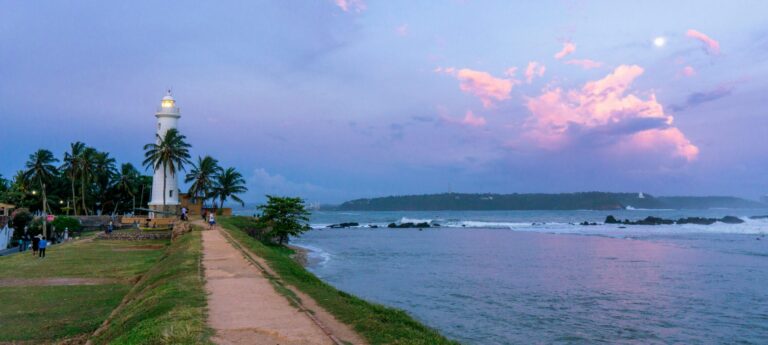
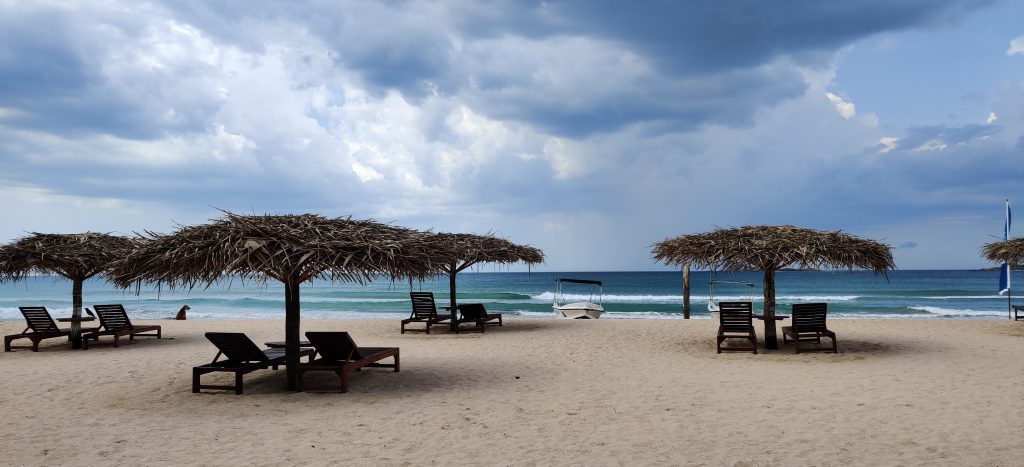
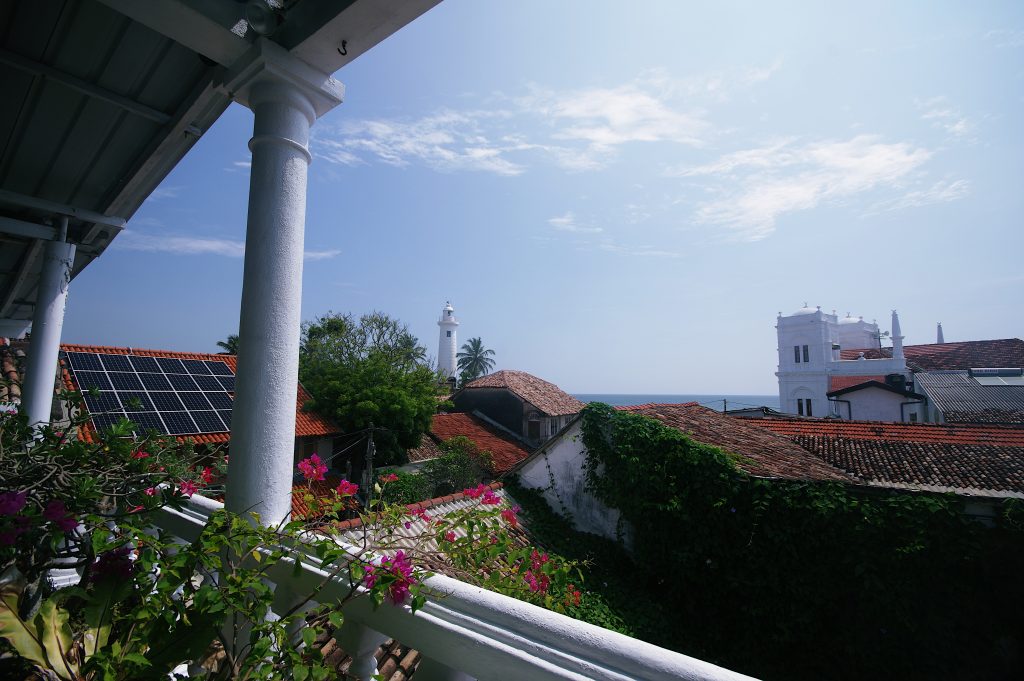
The south and west coast, from Colombo through Bentota, Hikkaduwa and Galle to Mirissa and Tangalle, is best from December to March. Sri Lanka Tourism describes the beaches at Mirissa as at their best from November to April, with calm seas, and the sea as rougher from May to October. Visitors and tour operators report red flags against swimming on south- and west-coast beaches in May and June, and narrower beaches as the waves eat into the sand.
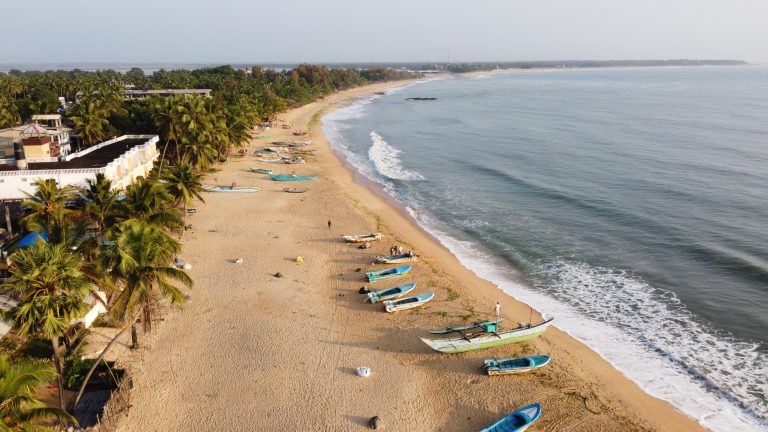
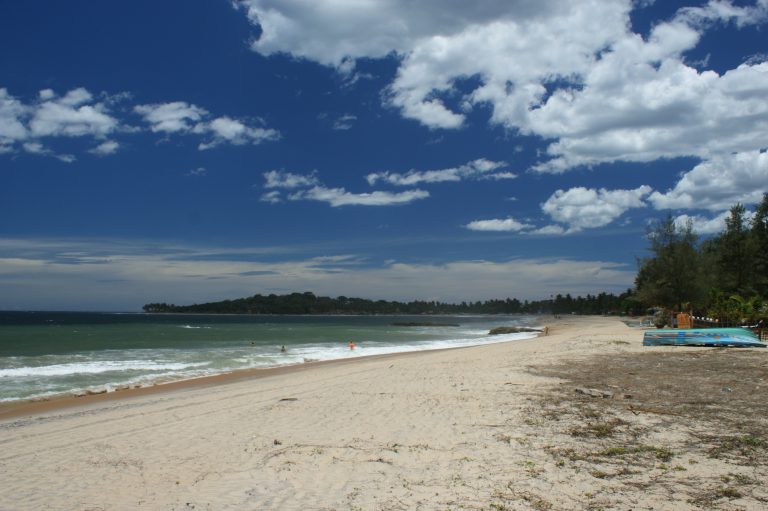
The east coast, from Trincomalee and Nilaveli through Pasikuda to Arugam Bay, works the other way. Its driest months in the averages run from about April to August, while October to January is the wet season. If your trip falls in July or August, this is the coast to head for.
The north, around Jaffna, follows the east-coast pattern: driest in June and July, wettest from October to December.
The hill country and the ancient cities
The hills are cooler all year, not drier. The census department gives a mean temperature of 24.5°C at Kandy and 15.8°C at Nuwara Eliya, against about 27.5°C in the lowlands, and ground frost on a few days in January and February at Nuwara Eliya.
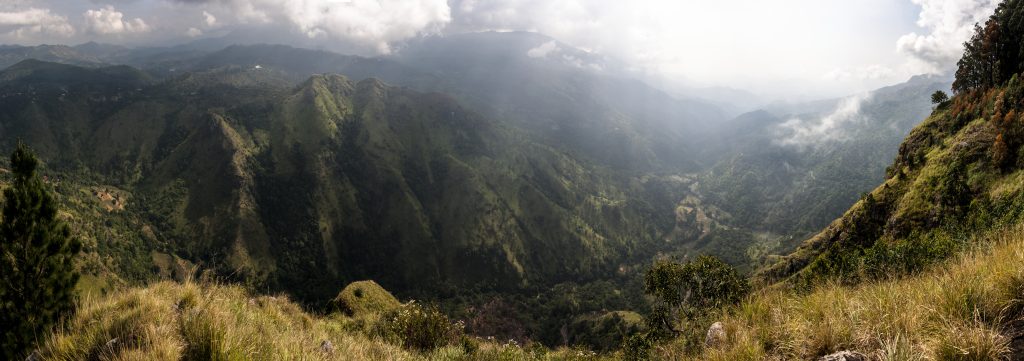
The hill country also splits down the middle. The western slopes catch the south-west monsoon, so expect wet days around Hatton and Nuwara Eliya from June to August. The eastern side, around Ella and Badulla, catches the north-east monsoon: at Badulla, October to January are the wettest months and June and July the driest. Wherever you are in the hills, do the walks and viewpoints early: recent visitors report that cloud and mist often close in by early afternoon.
The ancient cities of the north-central plains, around Anuradhapura, Sigiriya and Polonnaruwa, are driest from June to September and wettest from October to December, with a wet spell in April too. Like the rest of the lowlands they are warm all year, so start early and save the climbs for the cooler hours.
Month by month
- January: dry on the south and west coasts, cool nights in the hills. The east coast and Ella are still wet. The second-busiest month of the year.
- February: often the driest month on the south-west coast, and the north-east monsoon is easing. A strong choice for a first trip.
- March: the inter-monsoon begins, with more afternoon storms, but most of the island is still in good shape.
- April: hot, with afternoon thunderstorms possible anywhere and more rain on the west coast and around Anuradhapura. The east coast is drying out.
- May: the south-west monsoon arrives, and May is one of the wettest months on the south-west coast. The east is dry. The quietest month for visitors.
- June to August: the east coast, the north and the ancient cities at their driest; rough seas in the south-west; wet western hills.
- September: the south-west monsoon fades but the west coast is still wet. The east coast is still a good bet.
- October and November: rain across much of the island, often heavy. Cyclones can form in this season: Cyclone Ditwah crossed the island at the end of November 2025, and its floods and landslides killed more than 600 people.
- December: the south and west start to dry out as the north-east monsoon soaks the east and north. The busiest month for visitors.
Best months for whales, surf, safaris and festivals
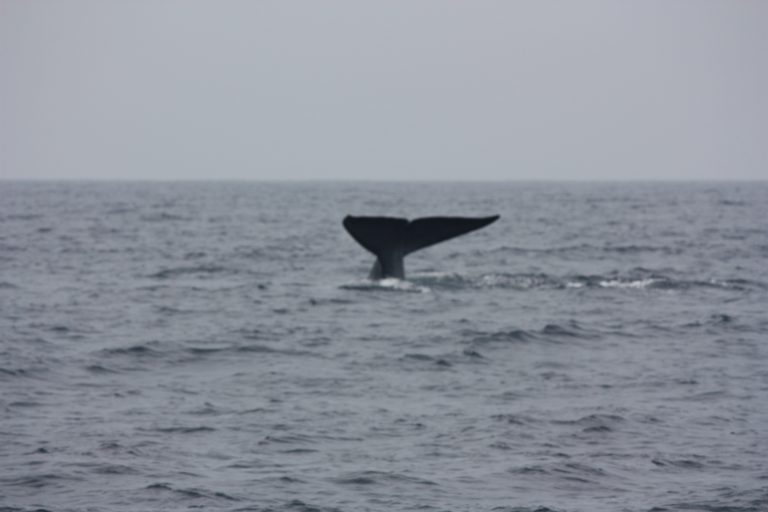
- Whale watching: Sri Lanka Tourism gives the season off the south coast, from Mirissa, as November to April. Off Trincomalee the season is in the middle of the year, though sources disagree on the exact months.
- Surfing: the south-west coast around Hikkaduwa is best from November to March, according to Sri Lanka Tourism. Arugam Bay on the east coast has its season from April to October.
- The elephant Gathering at Minneriya: in the dry season, when grass grows on the banks of the shrinking reservoir. Sri Lanka Tourism names May to October as the popular time; recent visitors report the largest numbers in August and September.
- Safaris at Yala: possible for most of the year, but Blocks 1 and 2 have often closed for several weeks around September and October, in the driest part of the year (see the travel update at the top of this page).
- Climbing Sri Pada (Adam’s Peak): the pilgrimage season runs from Unduvap Poya in December to Vesak Poya in May. Outside it, heavy rain, strong wind and thick mist make the climb hard.
- Kandy Esala Perahera: the procession of the Temple of the Tooth in Kandy takes place in July or August each year, on dates set by the lunar calendar. In 2025 it ran from 25 July to 9 August; in 2026, from 18 to 28 August.
Crowds, prices and the shoulder months
Sri Lanka Tourism’s figures for 2025 show December and January as the busiest months, each with more than 250,000 visitor arrivals, and May and June as the quietest, with fewer than 140,000. July and August make a smaller second peak, with about 200,000 each. For more detail, see Mirissa or Trincomalee for whale watching and south coast or Arugam Bay for surfing.
If you want fewer people and don’t mind some rain, April and September are worth a look: the season is changing, so you can usually find a dry coast, and the crowds of the peak months have gone. Book well ahead for the Christmas and New Year fortnight, and for the Perahera in Kandy.
Travelling in the rainy season
A rainy-season trip can work well if you plan around the weather rather than against it.
- Base yourself on the drier coast for the month and treat the wet side as day trips.
- Do outdoor things in the morning, when the weather is usually more settled.
- Ask your hotel or the lifeguards before swimming. The UK government’s travel advice warns that many beaches have dangerous surf or rip currents at certain times of year, and red flags mean stay out.
- Expect leeches on forest and tea-estate paths after rain, and slippery rocks at waterfalls and viewpoints.
- Keep a spare day or two for landslides or flooded roads, especially in October and November.
Before you travel, check the forecasts and warnings on the Department of Meteorology site and the Disaster Management Centre. If you are still deciding how long to stay, our guide to how many days you need in Sri Lanka shows how the season changes the route.
Frequently asked questions (FAQs)
What is the best month to visit Sri Lanka?
For the south and west coasts and most of the hill country, February is often the driest month and December to March is the main season. For the east coast and the north, May to September is drier.
Which part of Sri Lanka is best in July and August?
The east coast, from Trincomalee to Arugam Bay, the north around Jaffna and the ancient cities are at their driest. The south-west coast has rougher seas during the south-west monsoon.
Is it worth visiting Sri Lanka during the monsoon?
Yes, if you choose the drier side of the island for the month. Monsoon rain usually comes in heavy bursts rather than all day, but seas on the affected coast can be rough and unsafe for swimming.
When is the rainy season in Sri Lanka?
The south-west monsoon brings rain to the south-west from May to September, and the north-east monsoon brings rain to the eastern half from December to February. October and November are the rainiest months for the island as a whole.
When is the best time to see whales in Sri Lanka?
From Mirissa on the south coast, November to April, according to Sri Lanka Tourism. Trips from Trincomalee run in the middle of the year, but sources disagree on the exact months.
When is the quietest time to visit Sri Lanka?
May and June had the fewest visitor arrivals in 2025, and December and January the most.
Sources: statistics.gov.lk, meteo.gov.lk, dmc.gov.lk, en.wikipedia.org (Geography of Sri Lanka), en.wikipedia.org (Galle), en.wikipedia.org (Colombo), en.wikipedia.org (Trincomalee), en.wikipedia.org (Batticaloa), en.wikipedia.org (Jaffna), en.wikipedia.org (Anuradhapura), en.wikipedia.org (Badulla), en.wikipedia.org (Nuwara Eliya), srilanka.travel (attraction), srilanka.travel (attraction), srilanka.travel (attraction), srilanka.travel (attraction), srilanka.travel (attraction&), srilanka.travel (attraction&), en.wikipedia.org (Surfing in Sri Lanka), themorning.lk, en.wikipedia.org (Kandy Esala Perahera), dailymirror.lk, newswire.lk, adaderana.lk, sltda.gov.lk, en.wikipedia.org (Cyclone Ditwah), gov.uk and recent visitor reports. Header photo: Vishnu / Wikimedia Commons, CC BY-SA 4.0.