
Whether to go whale watching from Mirissa or Trincomalee depends almost entirely on the month. Mirissa, on the south coast, has its season from November to April; Trincomalee, on the east coast, has its season in the middle of the year, when the south-west monsoon makes the southern sea rough. So the honest answer is: go from whichever coast is in season when you are in Sri Lanka, and don’t book a trip on the other one.
Is whale watching right for you?
Go if you are happy with an early start and several hours at sea for a chance of seeing whales and dolphins in the open ocean, and you choose an operator that follows the rules.
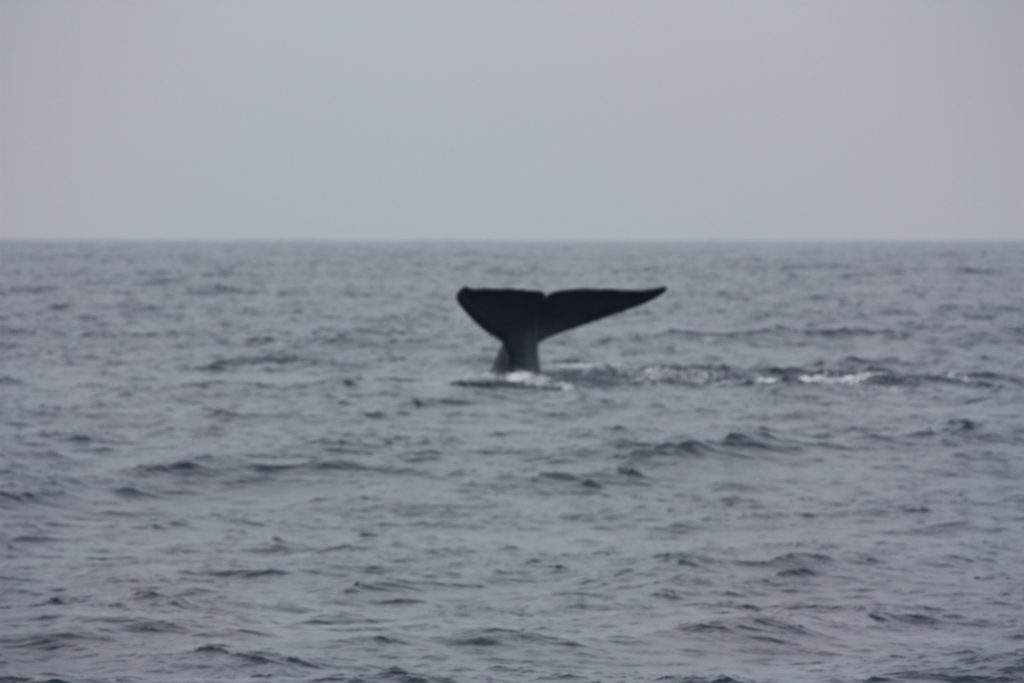
Think twice if seeing a blue whale is the whole point of your trip. Sightings have fallen sharply. The Sunday Times reported that the 2023–24 season had the fewest since 2012, and Mongabay reported in April 2025 that, against 729 blue whale sightings recorded in 2015, researchers logged only four in 2024: three off Mirissa, one off the north-west and none off the east coast. Dolphins and other whales are still seen, but no operator can promise a blue whale.
Which coast in which month
- November to April: Mirissa. Sri Lanka Tourism gives this as the whale- and dolphin-watching season off the south coast.
- May to August: Trincomalee. The Morning (February 2025) gives this as the best period on the east coast.
- March, April and September: the shoulders. Some Trincomalee operators start in March and others run until September, and Mirissa’s season ends in April. Ask operators about recent sightings and sea conditions before you book.
- October: neither coast is in season, and it is one of the wettest months of the year.
The pattern follows the monsoons. From May to September the south-west monsoon brings rain and rougher seas to the south-west, while the east coast is in its driest months. From December to February the north-east monsoon brings rain to the eastern half of the island, and the south coast has its calm, dry season. Our guide to the best time to visit Sri Lanka shows how the monsoons shape the rest of the trip.
Whale watching from Mirissa
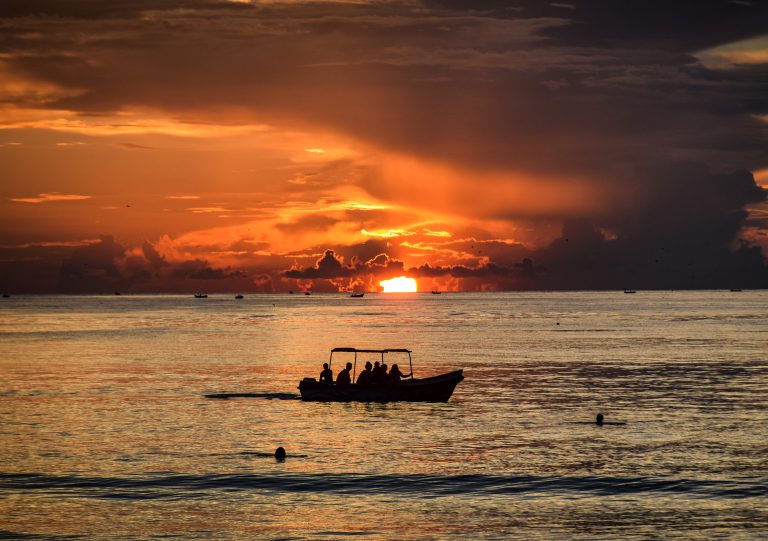
Mirissa’s fishing harbour is the main starting point for trips off the south coast. Sri Lanka Tourism says morning trips leave the harbour at around 6.30 am and last three to four hours, depending on the sea. Blue whales, Bryde’s whales, sperm whales and fin whales are among the species seen, with bottlenose, common and spinner dolphins; they can be found within eight to ten nautical miles of the harbour.
Expect company. A visitor’s account on Sri Lanka Tourism’s own Mirissa page describes a dozen other boats around the same animals, whales seen only briefly as they surface to breathe, and boats chasing them between sightings. Large groups of dolphins are usually easier to see well. A Department of Wildlife Conservation charge is added to the boat fare.

Mirissa suits you if you are travelling in the main winter season and want a beach base with plenty of places to stay and eat. See our Mirissa guide for the town, the beach and swimming safety.
Whale watching from Trincomalee
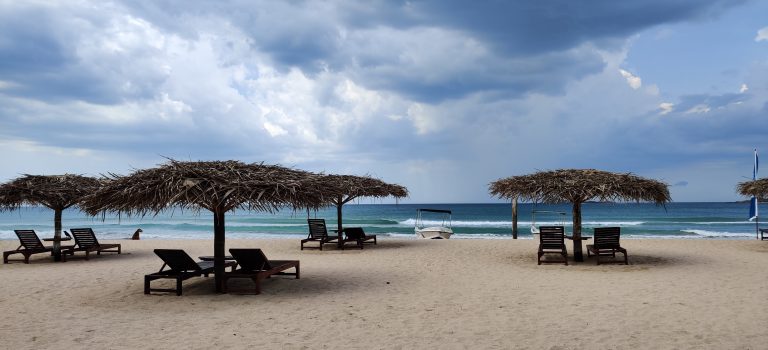
Trips from Trincomalee run in the months when the east coast is driest. Many visitors stay at the beaches of Uppuveli or Nilaveli, north of the town. Recent visitors (2025–26) report that the boats reach the whale grounds about half an hour from shore, with trip lengths from about an hour to five hours.
Blue whales, sperm whales and dolphins are all recorded off Trincomalee, but the same warning applies as in the south: researchers recorded no blue whales on the east coast in 2024. Rule-breaking is, if anything, more common here (see below).

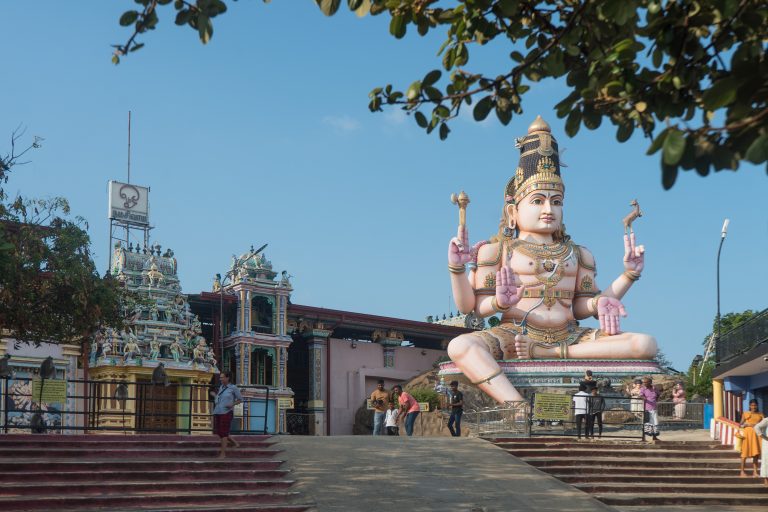
Trincomalee suits you if you are in Sri Lanka between May and August, and want to combine the boat trip with the beaches, snorkelling at Pigeon Island and the temples and fort of the town.
The rules on the water
Whale watching is controlled by the Sea Mammals (Observation, Regulation and Control) Regulations of 2012, made under the Fauna and Flora Protection Ordinance and amended in 2019. The Department of Wildlife Conservation licenses the boats. The 2012 regulations set out what boats must and must not do:
- A licence and a guide: every whale-watching boat needs an annual licence, and must carry a guide trained and registered by the department. Passengers must be briefed on the rules before the boat leaves.
- Distance: once animals are spotted, the boat slows down gradually as it closes to 400 metres, switches off its engine from 100 metres and must never be closer than 100 metres to a whale (50 metres for dolphins and other sea mammals).
- No chasing: no sudden changes of speed or direction, no driving in front of or behind the animals, and never blocking their path.
- No luring: no food, lights or sounds to draw them closer.
- Nobody in the water: passengers may not get into the sea. Diving needs the department’s approval, which its Director-General said in October 2025 he gives only for scientific documentation.
- Daylight and weather: trips only between 5.30 am and 7 pm, never in bad weather, and boats must head back if the weather turns. No alcohol on board.
The Sri Lanka Tourism Development Authority’s guideline for registered operators adds that no more than three boats should be within 300 metres of the animals at a time, that boats keep below 6 knots in that zone, that everyone on board wears a life jacket, and that operators may not offer swimming or diving with whales.
Enforcement is another matter. A study reported by The Morning in 2025 found that 73% of operators in Mirissa and 83% in Trincomalee offered illegal whale-swimming, with boats getting within two to three metres of the animals.
Choosing a responsible trip
- Book a licensed operator, and ask before you pay whether a registered guide will be on board.
- Expect a safety briefing and a life jacket. If you don’t get them, that tells you something about the rest of the trip.
- Walk away from anyone who offers swimming or snorkelling with whales. It is illegal, it stresses the animals, and it is dangerous for you.
- Accept that a good operator will hang back. Watching from 100 metres with the engine off is the trip working as it should.
- Go in the morning, bring water, sun protection and a layer for the ride out, and take your own precautions if you get seasick.
A third option, if dolphins matter more to you than whales, is Kalpitiya on the north-west coast, where Sri Lanka Tourism says the sea has an abundance of dolphins.
Frequently asked questions (FAQs)
When is the whale-watching season in Mirissa?
November to April, according to Sri Lanka Tourism. Morning trips leave the harbour at around 6.30 am and last three to four hours.
When is the whale-watching season in Trincomalee?
In the middle of the year, when the east coast is driest. The Morning gives May to August as the best period; some operators start earlier or run later, so ask about recent sightings.
Is Mirissa or Trincomalee better for whale watching?
Neither is better all year: Mirissa is in season from November to April and Trincomalee from about May to August. Choose the coast that is in season when you visit.
Can you swim with whales in Sri Lanka?
No. The regulations don’t allow passengers to get into the sea, and the Department of Wildlife Conservation allows diving with whales only for scientific documentation.
How close can boats get to whales in Sri Lanka?
Not closer than 100 metres, with the engine switched off from 100 metres. For dolphins and other sea mammals the limit is 50 metres.
Will I see a blue whale?
It is not guaranteed. Against 729 blue whale sightings recorded in 2015, researchers logged only four in 2024, although dolphins and other whales are still seen.
Sources: srilanka.travel (attraction), srilanka.travel (attraction), srilanka.travel (whale watching), faolex.fao.org, sltda.gov.lk, dwc.gov.lk, themorning.lk (h0N7htXGIwtwQmIFTCHE), themorning.lk (XST0nEzbrW14GRYzdv4O), themorning.lk (64d99CKbSgD5oidlIJef), sundaytimes.lk (wildlife dept creaming off millions…), news.mongabay.com, sundaytimes.lk (plus 12.html), statistics.gov.lk, en.wikipedia.org (Trincomalee), en.wikipedia.org (Uppuveli) and recent visitor reports. Header photo: Arian Zwegers / Wikimedia Commons, CC BY 2.0.