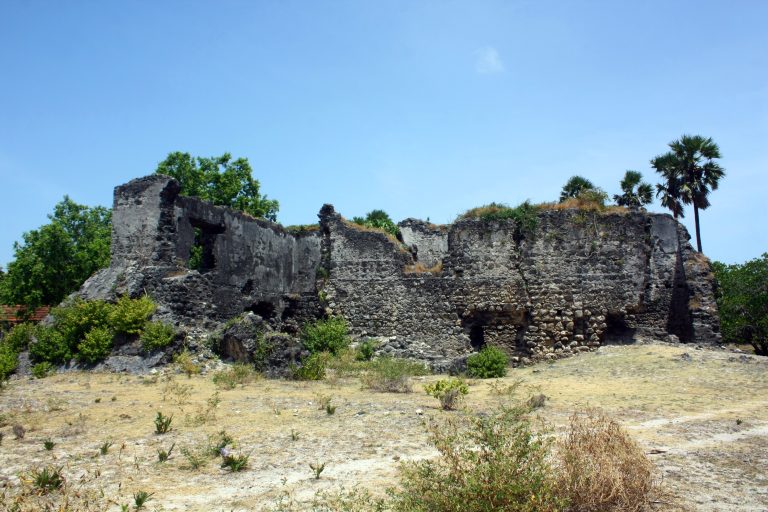
The north is the part of Sri Lanka most first-time visitors never reach, and it feels like a different trip: palmyra palms instead of tea bushes, temple pujas that start before dawn, ferries out to flat, dry islands, and food built on crab, prawns and lagoon fish. This week-long route spends four nights in Jaffna, with a day out on the islands, and two on Mannar Island before heading back south. It works as a trip on its own or as the northern loop of a three-week journey.
Is the north right for you?
Go if you are curious about Tamil culture and Hindu temple life, enjoy colonial history and quiet, flat landscapes, and don’t mind simpler infrastructure than on the main tourist circuit. It is also a good choice if you have seen the classic sights on an earlier visit and want something new.
Think twice if you only have a week or two in Sri Lanka. Jaffna is about 396 km from Colombo, most of a day by train, so the north eats time that a short trip needs elsewhere. It is also hot: Jaffna has the highest average temperature in the country. And if you are after surf, beach bars and nightlife, this is the wrong corner of the island.
When to go
Jaffna has a dry season from February to August and a wet season from September to January, with most of the rain in October, November and December. The heat peaks in April and May and again in August and September, and the coolest months are December and January.
That makes February and March the most comfortable time: the rain has eased and the worst of the heat is still to come. Birdwatchers report flamingos and other migrant waterbirds around Mannar in the cooler months, roughly December to March. In July or August, Jaffna’s Nallur temple holds its 25-day festival, which is a wonderful time to be there but brings big crowds, so book your room early.
The week at a glance
- Jaffna: 4 nights (Days 1–4), with a day on Delft or Nainativu
- Mannar Island: 2 nights (Days 5–6)
- Day 7: back south by train or road
Getting to Jaffna
By train. The Northern Line runs from Colombo Fort through Anuradhapura and Vavuniya to Jaffna and on to Kankesanthurai, and the journey from Colombo takes around seven to eight hours. It is the most relaxed way north. Reserved seats are sold on the Sri Lanka Railways seat reservation site, and you need each traveller’s passport number.
By road. The A9 runs 321 km from Kandy through Dambulla, the Anuradhapura area and Vavuniya, then crosses Elephant Pass, the narrow neck of land that joins the Jaffna peninsula to the mainland. Recent visitors report overnight buses from Colombo taking around seven hours.
By air or sea. IndiGo flies to Jaffna International Airport at Palaly from Chennai and Tiruchirappalli in India. A passenger ferry from Nagapattinam in India to Kankesanthurai, just north of Jaffna, has run since 2024; the crossing takes about four hours, and it has stopped for bad weather in the past, so check before you plan around it. From elsewhere in Sri Lanka, the train or the road is the way in.
Day 1: arrive in Jaffna
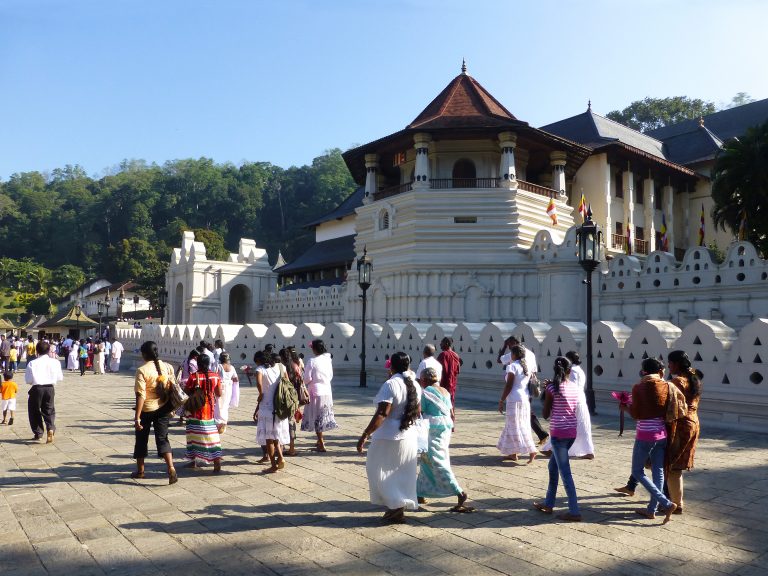
Arrive by mid-afternoon if you can, so there is time to check in and cool down. In the early evening, go to Nallur Kandaswamy Temple, the great Murugan temple on the edge of town. Pujas are held several times a day from before dawn into the early evening, and Nallur is known for starting them exactly on time, so ask at the temple and arrive a little early.
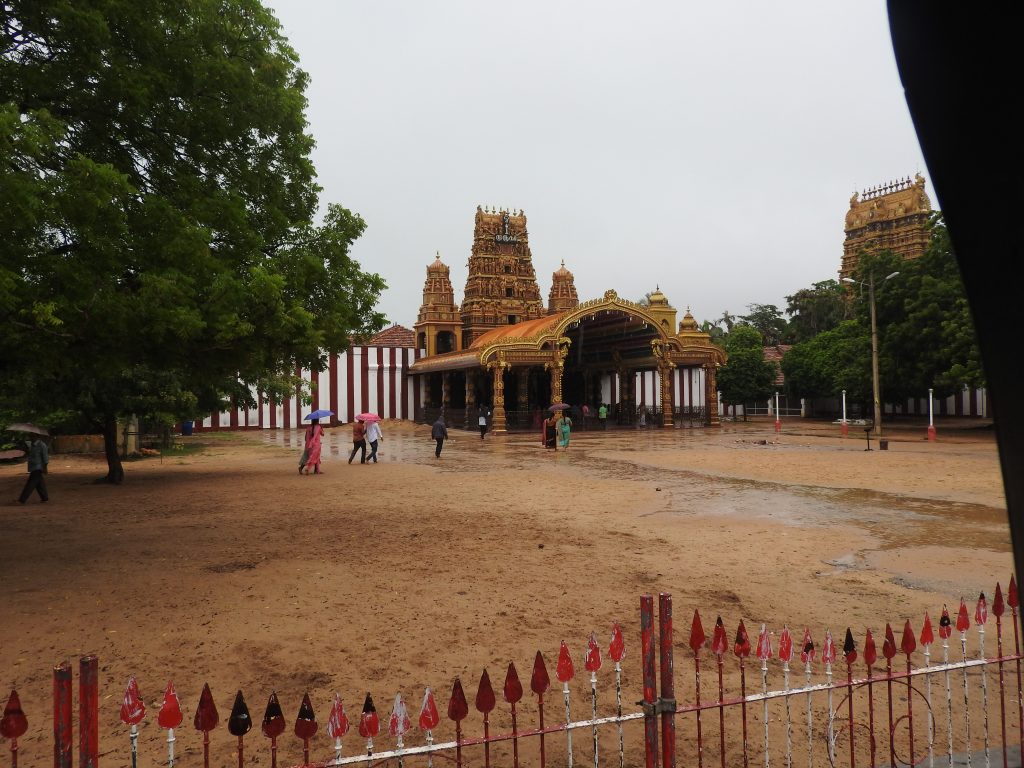
Dress for it. Men go in bare-chested, a rule the temple has kept for decades, and everyone leaves their shoes outside. Women should dress modestly.
Then eat. Jaffna’s cooking leans on the sea and the lagoon: try nandu sodhi, the local crab curry, or odiyal kool, a seafood broth thickened with flour made from palmyra roots.
Day 2: Jaffna town
Start early at Jaffna Fort, before the sun gets fierce. The Portuguese built the first fort here in 1618, the Dutch took it in 1658 and rebuilt it as a five-sided fort, and the British kept a garrison until 1948. It was badly damaged during the civil war and is being restored. Recent visitors (2025) report a ticketed entrance and walks along the ramparts and the moat, with some parts closed for the work.
From the fort it is a short tuk-tuk ride to the white Jaffna Public Library. Its collection of rare Tamil books and manuscripts was largely destroyed when the library was set on fire in 1981; the building has since been rebuilt. Nearby, the small Jaffna Archaeological Museum, run by the Department of Archaeology, holds finds from around the peninsula.
Keep the middle of the day for lunch and a rest. If you missed the evening puja yesterday, go back to Nallur; it is just as striking a second time.
Day 3: Delft or Nainativu
The islands west of Jaffna are reached by ferry from Kurikadduwan jetty on Punkudutivu, an island joined to the peninsula by road. The drive takes about an hour, so leave early. Pick one island for the day; trying to fit in both usually means a lot of time in ferry queues.
Delft (Neduntheevu) is the bigger adventure. The crossing takes about an hour. The ferries are run by the Sri Lanka Navy, and in August 2026 the Sunday Times reported that islanders and island businesses get priority, tourists board only if there is space, and holiday queues can be long. Get to the jetty early and, as soon as you land, confirm when the last boat back leaves.
On the island, tuk-tuks and safari-style jeeps take visitors round the sights. You’ll see feral ponies descended from horses brought in colonial times, fields fenced with stacked coral, a huge hollow baobab in the east of the island, the coral-stone ruins of a colonial fort and an old pigeon house once used to send messages to Jaffna. Drinking water is short on Delft, so bring plenty, along with food and a hat; there is little shade. If you would rather not rush back for the boat, the island has a small number of homestays and one hotel. Our Delft Island guide has more on the ferry and the sights.

Nainativu is the gentler choice, and the one for temple lovers. The small island holds two important shrines: the Hindu Nagapooshani Amman Kovil and the Buddhist Nagadeepa Purana Viharaya, where tradition says the Buddha settled a dispute between two Naga kings. You can be back on the mainland by early afternoon and spend the rest of the day at Casuarina Beach on Karainagar, a long beach of shallow water named after the casuarina trees along it.
Day 4: around the peninsula
Hire a driver for the day and make a loop of the peninsula’s north coast.
- Keerimalai: a freshwater spring beside the sea, next to Naguleswaram, the northernmost of Sri Lanka’s five ancient Shiva temples. Hindus believe the water has healing properties and bathe here, especially during the Aadi Amavasai festival. It is a sacred place, so dress modestly and don’t photograph people bathing.
- Kantharodai: near Chunnakam, a cluster of small stupas built of grey coral stone, the remains of an ancient Buddhist monastery uncovered in the early 20th century. It is a quiet, slightly strange place, nothing like the big white stupas further south.
- Point Pedro: the northernmost town in Sri Lanka, with a lighthouse, a fishing harbour and the Vallipuram temple nearby. A long beach backed by sand dunes runs down the coast to the east.
You’ll pass army camps and checkpoints on this loop. Don’t photograph military sites, and take any landmine warning signs seriously (see “Permits, checkpoints and landmines” below).
Day 5: across the lagoon to Mannar
Leave Jaffna on the A32, which crosses the lagoon on the Sangupiddy Bridge at Pooneryn and runs down the west coast to Mannar. It is the shortest road route between Jaffna and the south. Recent visitors report two to three hours by car, with some rough stretches.
Just before the island, stop at Thiruketheeswaram, another of the five ancient Shiva temples, about 12 km east of Mannar town. Pilgrims walk here from all over the country for Maha Shivaratri.
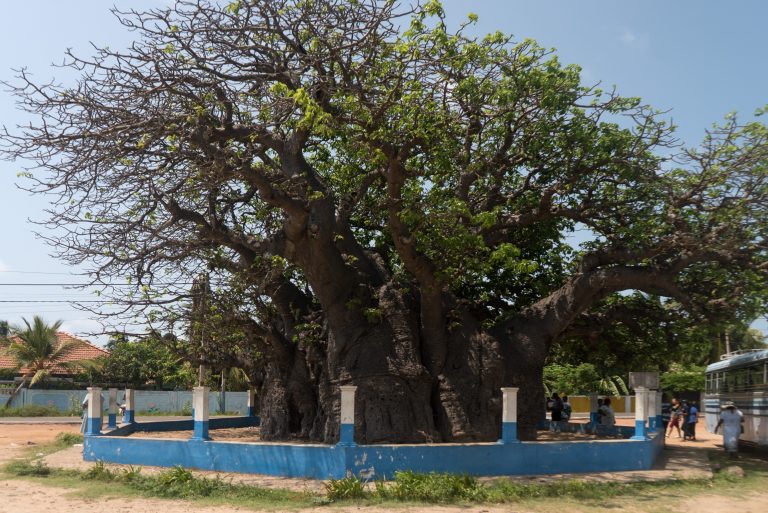
You reach Mannar Island over a causeway and bridge. The fort stands right beside the bridge: the Portuguese built it in 1560, the Dutch took it in 1658, and its four bastions and moat are still there to walk round. Finish at the baobab at Pallimunai, about 1 km from Mannar bus stand. Baobabs are African trees, and local tradition says Arab traders brought them here; this one is enormous, with a trunk you could not begin to reach around.

Day 6: birds and Talaimannar
Go out early for the birds. The Vankalai Sanctuary, declared by the Department of Wildlife Conservation in 2008 and listed as a Ramsar wetland of international importance in 2010, covers lagoons, salt marshes, mangroves and sea-grass beds around the causeway. Greater flamingos and wintering ducks such as northern pintail and Eurasian wigeon are among the birds recorded here.
Later, drive about 32 km west along the island to Talaimannar at its tip. The railway ends at the old pier, which was once the Sri Lankan end of a train-and-ferry route to India; that link stopped after a cyclone wrecked it in 1964. Beyond the lighthouse, the chain of sandbanks and shoals called Adam’s Bridge (Ram’s Bridge) runs out towards Rameswaram in India. Ask locally whether boats are running out towards the sandbanks.
Day 7: heading south
The Mannar line joins the Northern Line at Medawachchiya, so trains run from Mannar and Talaimannar to Anuradhapura and Colombo. By road, take the A14 towards Medawachchiya and turn off at Madhu junction for the Shrine of Our Lady of Madhu, the most important Catholic shrine on the island, which draws huge crowds for its feasts on 2 July and 15 August. From Medawachchiya, the ancient city of Anuradhapura and the hill of Mihintale are close, which makes this a natural link into the ancient cities.
Permits, checkpoints and landmines
No permit needed. Foreign visitors no longer need permission from the Ministry of Defence to travel to the north; the rule was dropped in January 2015.
The military is still visible. You will see army and navy camps and checkpoints. Follow instructions from the security forces, and don’t photograph or fly drones near military bases, as the UK government’s travel advice warns.
Landmines. The UK government’s advice says mine clearance continues in parts of the north. Take warning signs seriously and stay on roads and well-used paths.
Temples. Shoes come off at every temple. At Nallur men go in bare-chested, and modest clothes are expected everywhere.
Shorter or longer
Five days: skip Mannar. Spend four nights in Jaffna and take the train back south.
Ten days: spend a night on Delft and see Nainativu as well, then add two nights in Anuradhapura on the way back for the ancient city and Mihintale.
Part of a longer trip: the north fits best into a journey of three weeks or more. Our guide to how many days you need in Sri Lanka shows how the regions fit together.
Our 21-day itinerary shows one way to combine the north with the ancient cities, the hills and the coast.
Frequently asked questions (FAQs)
How many days do you need in Jaffna?
Three or four nights: one day for the town and Nallur, one for Delft or Nainativu, and one for the peninsula’s north coast. Add two nights on Mannar Island for a full week in the north.
Do foreigners need a permit to visit northern Sri Lanka?
No. The Ministry of Defence dropped the permission rule for foreign visitors in January 2015. There is still a visible military presence, so follow instructions at checkpoints and don’t photograph military sites.
How do I get from Colombo to Jaffna?
By train on the Northern Line from Colombo Fort, which takes around seven to eight hours, or by road on the A9. Book reserved train seats on the official Sri Lanka Railways site.
How do I get to Delft Island?
Drive about an hour from Jaffna to Kurikadduwan jetty, then take the ferry, which takes about an hour. Islanders get priority on the boats, so go early and confirm the last boat back when you arrive.
When is the best time to visit Jaffna?
February and March are the most comfortable months: the rain has eased and the hottest months are still ahead. Most rain falls from October to December.
What is Mannar known for?
Its Portuguese and Dutch fort, giant baobab trees, the Vankalai bird sanctuary, the temple of Thiruketheeswaram, and Talaimannar, where the railway ends at the old pier facing Adam’s Bridge.
Sources: seatreservation.railway.gov.lk, en.wikipedia.org (Jaffna), tourismnorth.lk (weather pattern), en.wikipedia.org (Nallur Kandaswamy temple), tourismnorth.lk (nallur kanthaswamy kovil), sundaytimes.lk (why modi did not visit…), tourismnorth.lk (jaffna fort), en.wikipedia.org (Jaffna Fort), en.wikipedia.org (Jaffna Public Library), tourismnorth.lk (jaffna archaeological museum), en.wikipedia.org (Odiyal), newswire.lk (northern railway line services resume…), english.newsfirst.lk, en.wikipedia.org (A9 road (Sri Lanka)), en.wikipedia.org (Elephant Pass), en.wikipedia.org (Jaffna International Airport), tamilguardian.com, ft.lk (Ferry service between Nagapattinam and…), newswire.lk (india extends financial assistance for…), newsonair.gov.in, en.wikipedia.org (Delft Island), sundaytimes.lk (adrift on delft ferry and…), tourismnorth.lk (wild horses), tourismnorth.lk (baobab tree at delft island), tourismnorth.lk (meehaman fort), tourismnorth.lk (pigeon cage), en.wikipedia.org (Nainativu), tourismnorth.lk (nainativu nagadeepa vihara), tourismnorth.lk (casuarina beach), en.wikipedia.org (Casuarina Beach), tourismnorth.lk (keerimalai spring), en.wikipedia.org (Keerimalai Springs), en.wikipedia.org (Koneswaram Temple), tourismnorth.lk (dagobas at kantharodai), en.wikipedia.org (Kadurugoda Viharaya), tourismnorth.lk (lighthouse point pedro), en.wikipedia.org (Point Pedro), tourismnorth.lk (sangupiddy bridge), en.wikipedia.org (Sangupiddy Bridge), en.wikipedia.org (A32 road (Sri Lanka)), tourismnorth.lk (thirukketheeswaram temple), en.wikipedia.org (Mannar Island), tourismnorth.lk (forts in mannar), en.wikipedia.org (Mannar Fort), tourismnorth.lk (baobab tree), tourismnorth.lk (vankalai birds sanctuary), en.wikipedia.org (Vankalai Sanctuary), tourismnorth.lk (talaimannar light house), tourismnorth.lk (ram s bridge), en.wikipedia.org (Mannar line), newswire.lk (colombo talaimannar train service resumes), tourismnorth.lk (madhu madha church), en.wikipedia.org (Shrine of Our Lady of Madhu), ft.lk (regulations on foreigners visiting north lifted), gulfnews.com, gov.uk (regional risks), gov.uk (safety and security) and recent visitor reports. Header photo: Rehman Abubakr / Wikimedia Commons, CC BY-SA 4.0.