Check before you travel Hill-country railway: repairs after Cyclone Ditwah Checked 5 October 2026
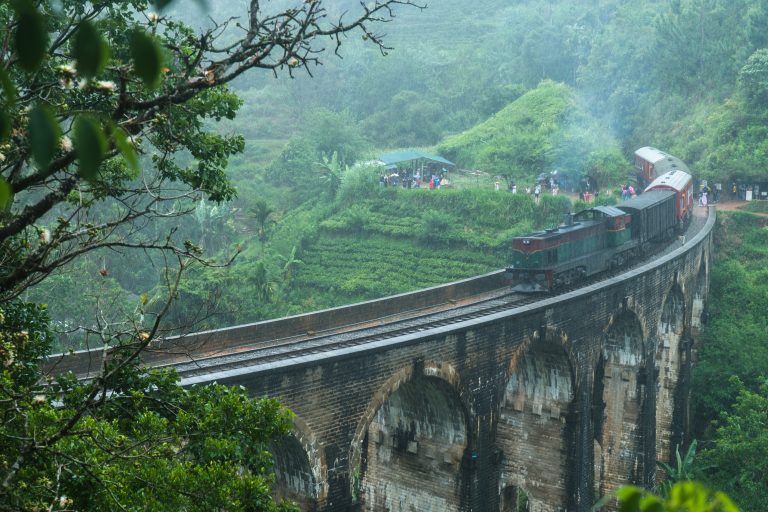
Cyclone Ditwah damaged the hill-country railway in November 2025, and it is reopening in stages. Since 2 October 2026, trains run again from Colombo Fort to Peradeniya and Gampola, but Kandy station itself is not served yet. On 5 October 2026 earth and rocks fell onto the line between Kadigamuwa and Gangoda after heavy rain and derailed an early train; services restarted later the same day, but expect delays or short suspensions after heavy rain. Trains between Nanu Oya and Badulla, which stop at Haputale, Ella and Demodara, restarted on 20 June 2026. The section between Gampola and Nanu Oya is still under repair, so you cannot yet go by train from Colombo or Kandy all the way to Ella. Check the latest services before you plan a rail journey, and book reserved seats on the Sri Lanka Railways seat reservation site.
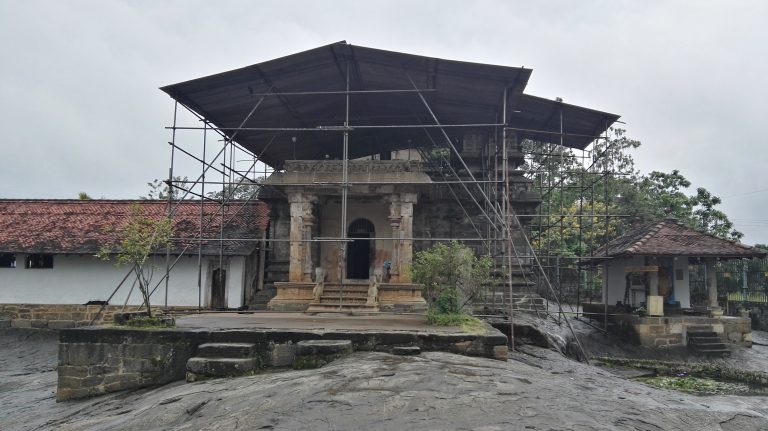
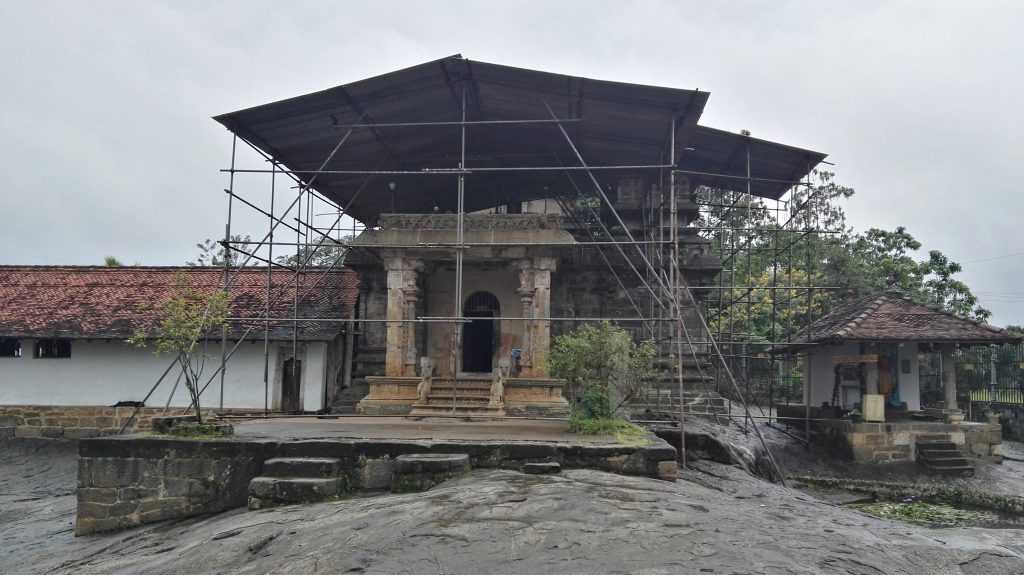
Gadaladeniya Temple (Gadaladeniya Rajamaha Viharaya) is a 14th-century Buddhist temple near Pilimatalawa, about 12.5 km west of Kandy. Its image house uses dressed stone in the Vijayanagara style, so from outside it looks more like a South Indian Hindu temple than the white Sinhalese shrines you see elsewhere. It is also the easiest of the three old temples of Udunuwara to reach.
Is it worth visiting?
Go if architecture or history interests you, or you are doing the three-temples loop from Kandy. Gadaladeniya sits close to the main road, so it is the natural first or last stop.
Think twice if you expect a polished monument. For many years the stone image house has stood under a protective roof and scaffolding, which hides much of its outline, and recent visitors (2025–26) still mention maintenance work. The Vijayothpaya stupa beside it is the more photogenic building.
Who built it
An inscription at the temple, quoted by Sri Lanka Tourism, dates the vihara and its devale to the third year of King Bhuvanekabahu IV. He ruled from Gampola between 1341 and 1351; the temple and most other sources give the year as 1344. Its architect was Ganeshvarachari, a craftsman from South India, and the same inscription also says the devale’s role was to protect the vihara. The temple’s first name was the Dharmakirti Vihara, and according to its own history, the monk Dharmakirti I led its founding.
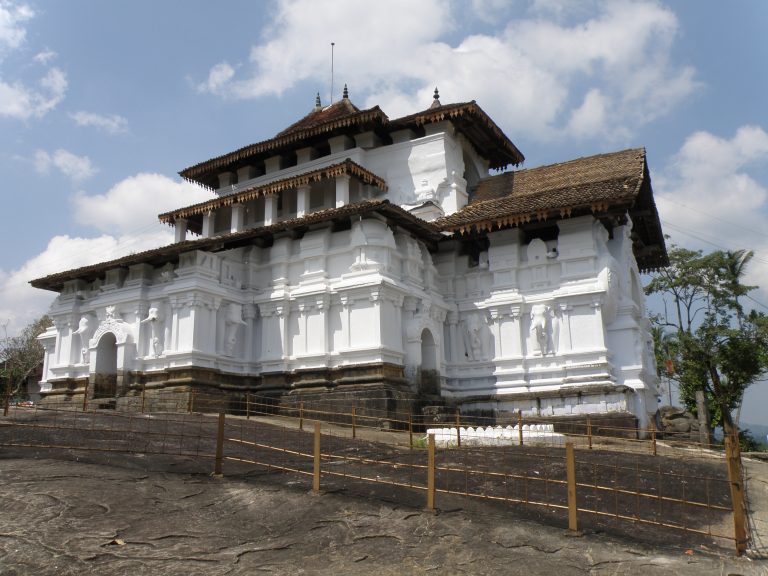
Gadaladeniya and Lankatilaka Temple both date from this reign and both show South Indian influence, but they look nothing alike. Lankatilaka is a tall building on a rock with white plaster walls, while Gadaladeniya is almost entirely grey stone. Over the centuries, one king after another restored Gadaladeniya, and in 1956 it became a protected archaeological monument.
What to see
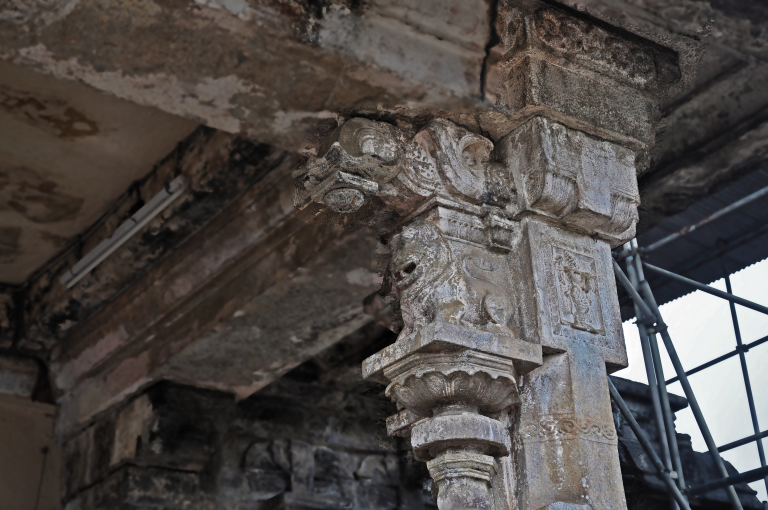
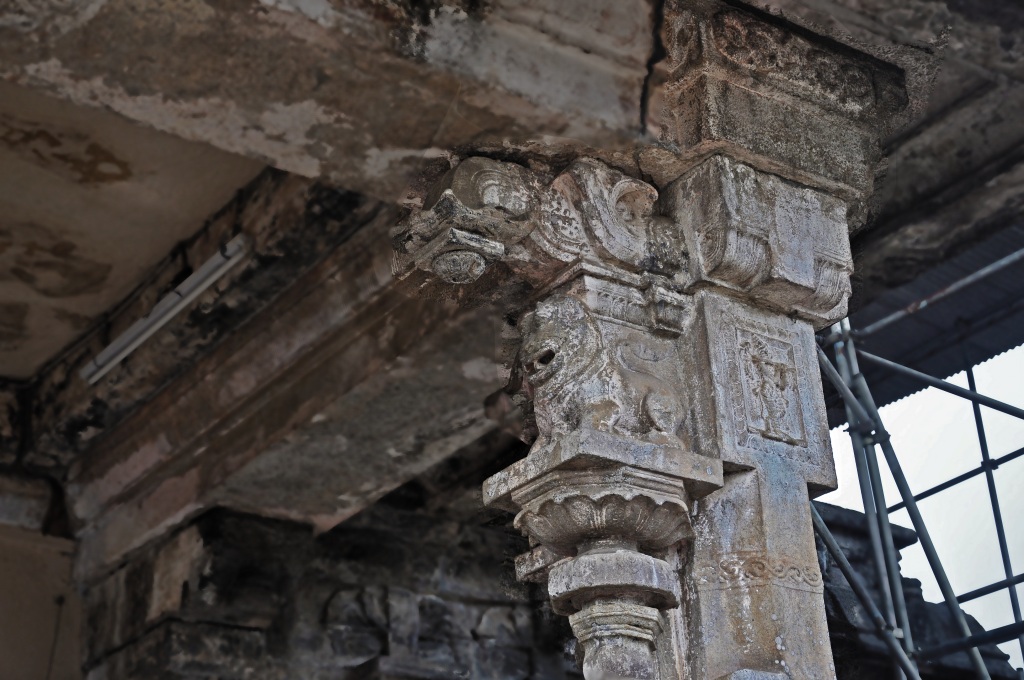
- The image house: a granite building in the Vijayanagara style of South India, with Buddhist and Hindu features side by side. Inside, a Buddha sits beneath a makara torana, a carved dragon arch, with four standing Buddha figures.
- The Vishnu shrine: a shrine to the Hindu god Vishnu also shares the building, which the temple sees as a sign of the religious harmony of the time.
- The Vijayothpaya: a stupa under a roofed shelter on a square platform, with four small stupas around it. The temple says King Parakramabahu V renovated it.
- The rock itself: the temple stands on a broad sheet of bare rock, with small pools of water lilies in the hollows. Bare rock heats up fast in the sun, so go early if you can.
- Also on the grounds: an old Bodhi tree, a chapter house and inscriptions.
The three temples loop
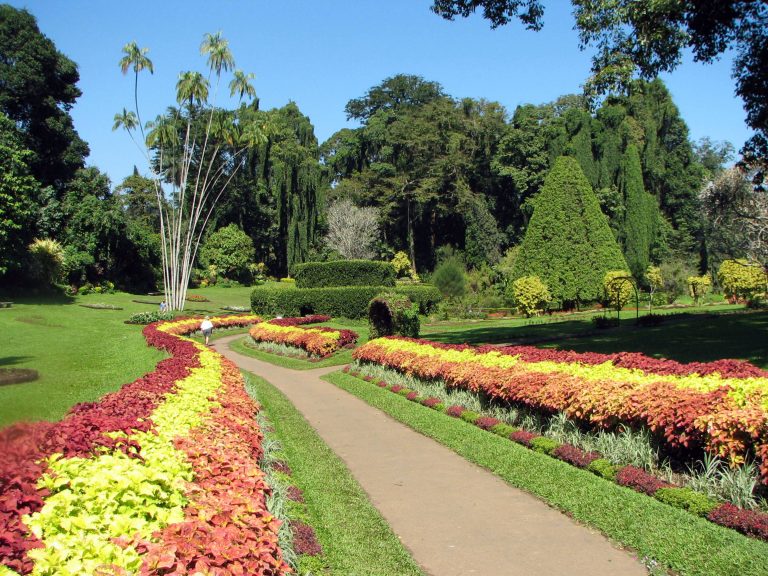
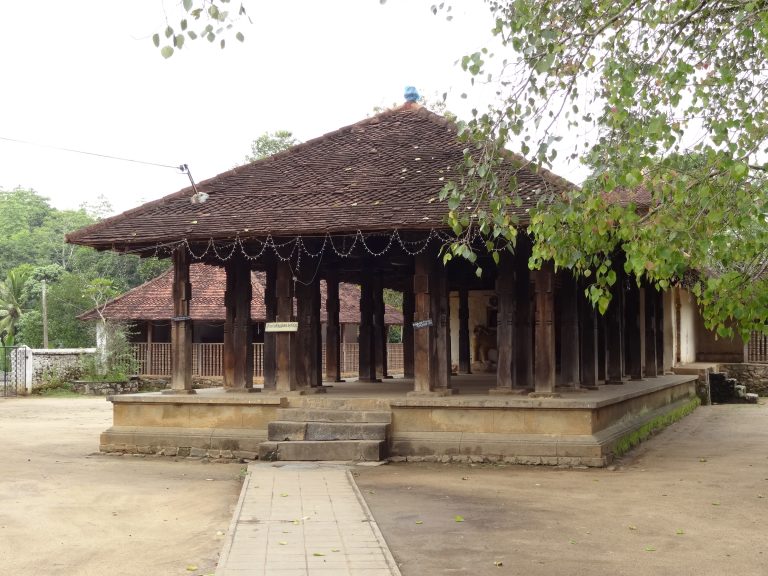
Gadaladeniya, Lankatilaka and Embekke Devalaya are a short drive apart on village roads south of the Colombo–Kandy road, between Pilimatalawa and Peradeniya. Together they make a good half-day out of Kandy. After that, the Royal Botanic Gardens at Peradeniya are close enough to fill the rest of the day.
- By tuk-tuk: the simplest option. Hire one in Kandy to take you round all three and wait at each. Agree the route, the waiting time and the price before you set off, because recent visitors (2025–26) report drivers trying to add other stops.
- On foot: recent visitors report that the village road from Embekke to Lankatilaka takes about 45 minutes and is the pleasant part of the walk. The stretch from Lankatilaka to Gadaladeniya, however, is mostly along a road, so ride that bit if you like.
- Which order: if you walk, start at Embekke, the furthest from the main road, and finish at Gadaladeniya. From there, recent visitors report, buses pass often on the Colombo–Kandy road, about 15 minutes’ walk away.
- Tickets: we found no official information. However, recent visitors report a small ticket of a few hundred rupees at each temple, so bring small notes.
- What to wear: shoulders and knees covered, shoes off at each shrine (more in our temple etiquette guide). Socks help on the hot rock, too.
Getting there
From the Colombo–Kandy road, turn off at Pilimatalawa towards Daulagala; the temple is then a short way along that road. A tuk-tuk or taxi from Kandy is the easiest way.
Train travellers from Colombo can get off at Peradeniya and take a tuk-tuk from there. Before you go, check the travel update at the top of this page for the state of the line. You can book reserved seats on the Sri Lanka Railways seat reservation site.
If you are in the area in September or October, ask about the temple’s own Esala perahera. According to the temple, it runs over several nights. It ends with a water-cutting ceremony on the Mahaweli River at Getambe and a day procession from Peradeniya back to Gadaladeniya.
Frequently asked questions (FAQs)
Who built Gadaladeniya Temple?
It dates from the reign of King Bhuvanekabahu IV of Gampola (1341–1351), and most sources give the year as 1344. The South Indian architect Ganeshvarachari designed it.
Why does Gadaladeniya look like a Hindu temple?
Because its stone image house follows the Vijayanagara style of South India, and it shares the building with a shrine to Vishnu.
Can I visit Gadaladeniya, Lankatilaka and Embekke in one trip?
Yes. All three are on village roads south of the Colombo–Kandy road between Pilimatalawa and Peradeniya. A tuk-tuk from Kandy can take you round them in about half a day.
Is there an entrance fee at Gadaladeniya?
We found no official fee. Recent visitors (2025–26), however, report a small ticket of a few hundred rupees at each of the three temples.
How do I get to Gadaladeniya from Kandy?
By tuk-tuk or taxi along the Colombo–Kandy road, turning off at Pilimatalawa towards Daulagala.
Sources: srilanka.travel, gadaladeniyarajamahaviharaya.lk (about us), gadaladeniyarajamahaviharaya.lk (history), gadaladeniyarajamahaviharaya.lk (annual procession esala perahera), en.wikipedia.org, gov.uk and recent visitor reports. Header photo: Z thomas / Wikimedia Commons, CC BY-SA 3.0.