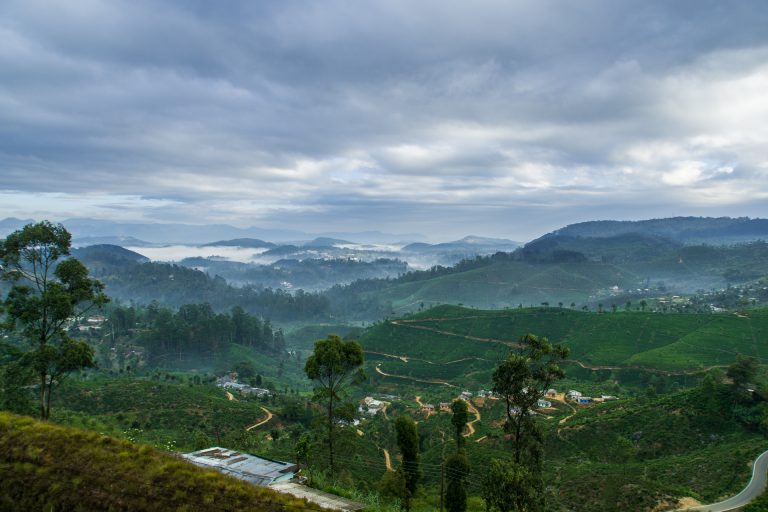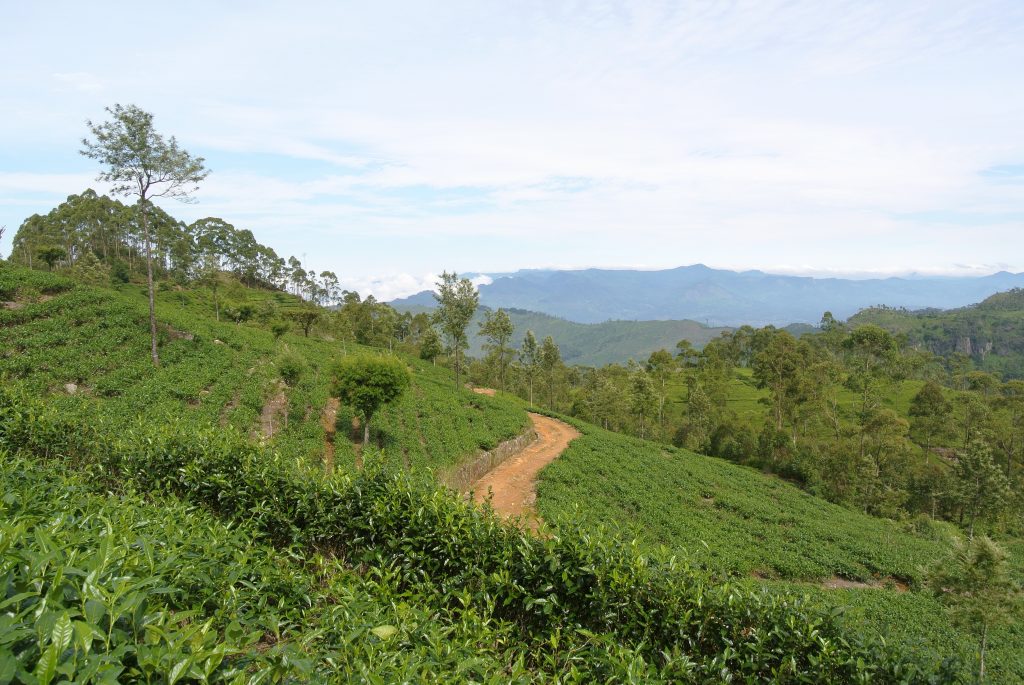
Haputale sits on a ridge at the southern edge of the hill country, and on every side of it the slopes are covered in tea. This is Uva, one of Ceylon tea’s classic growing regions, and the best way to see it is on foot, early, before the mist comes up. This page helps you choose where to watch tea being made, which walks to take through the estates, and how to fit them into a morning.
Is Haputale’s tea country right for you?
Go if you would rather walk through a tea estate than look at one from a car, and you don’t mind an early start. The walks here pass working estates, plantation villages and forest, and the factory visit is in a real working building rather than a visitor centre.
Think twice if you want a polished tea experience with a café, a tasting room and a gift shop. Haputale’s factory visit is short, noisy and unvarnished. If you are staying in Nuwara Eliya, the estate visit there is easier to reach, and Ella has a factory tour with a tasting.
What makes Uva tea different
The Sri Lanka Tea Board describes Uva as the tea-growing region on the south-eastern slopes of the central hills. It is exposed to the winds of both monsoons, but at this height the winds are usually dry, having dropped their rain on the hills below. Gaps in the mountains, such as Ohiya and Idalgashinna just west of Haputale, funnel them through. Tea is picked here all year round, but the Tea Board says the effect of that climate is strongest in the “quality season” from July to September, when the tea takes on the mellow, smooth character Uva is known for. It was with tea from his Uva estates, the Tea Board says, that Thomas Lipton persuaded Americans to drink tea.
Out on the slopes, you will see pluckers working along the rows. According to the Tea Board, plucking is done mainly by women, taking only the top two leaves and a bud from each stem, and a skilled plucker can gather up to 20 kg of leaf a day. Many of the estate families here are Tamils of Indian origin, whose ancestors were brought to work on the plantations.
Where to see tea being made
Every factory here follows the same slow orthodox method that the Tea Board describes: the leaf is withered for 18 to 24 hours, rolled, left to oxidise until it turns coppery, dried and then sorted into grades. So the leaf you see spread out upstairs was usually plucked the day before. What differs is the kind of visit.
- Dambatenne Tea Factory, above Haputale: the long factory Lipton built in 1890, still working. Recent visitors (2025–26) describe a short, noisy walk through the floors with a member of staff, no photos inside and a small cash payment. Go in the morning, when the machines are running. Best if you want the real thing and are heading up to Lipton’s Seat anyway.
- Pedro Tea Estate, near Nuwara Eliya: a guided tour of about 20 minutes, according to visitors, followed by a cup of tea on a terrace above the bushes. Much of the processing happens at night, so a daytime visit can be quiet. Best if you are based in Nuwara Eliya.
- Uva Halpewatte, near Ella: recent visitors describe a guided tour followed by a tasting of several teas, and suggest going before noon to see production. Best if you want a tasting and are staying in Ella.
Neither Dambatenne nor Pedro publishes visiting hours or prices online, so carry cash and ask locally the day before wherever you go.
Walks through the estates
Lipton’s Seat and the walk down. Sri Lanka Tourism describes walking up to Lipton’s Seat in the Dambatenne estate, a trail that climbs to about 1,900 m, then climbing down through the neighbouring Nayabedda estate and stopping at the Dambatenne factory on the way. Most people shorten it by taking a tuk-tuk up for sunrise and walking back down through the tea. It is the classic Haputale morning.
Pekoe Trail stage 13, Haputale to St Catherine. The Pekoe Trail is a 300 km walking route through the tea country in 22 stages, and two of them meet at Haputale. Stage 13 leaves town on the Bandarawela road, climbs through a cool forest reserve and then follows tea paths across the Thotalagala–Dambatenne valley, looking across at Lipton’s Seat for much of the way. It ends at St Catherine, a plantation village high on the Nayabedda estate. The organisers grade it moderate and give it 14.6 km and about four hours. Lipton’s Seat is another 3 km across the plateau, according to the trail’s description.
Stage 14, St Catherine to Makulella. This is the next stage, and mostly downhill: 9.4 km and about three hours, past vegetable plots, eucalyptus and estate bungalows, with views of the Namunukula range. Most of it follows an old estate road, but the organisers warn that careful navigation is needed near the escarpment at Balagala.
Stage 12, Udaweriya to Haputale. The tough one, graded difficult: about 19.7 km and six hours from the remote Udaweriya valley, past Idalgashinna station and along the ridge into Haputale. It includes a stretch of railway track and a short tunnel, and the organisers suggest dropping down to Beragala instead if visibility is poor or the path is too slippery.
The Pekoe Trail asks adult walkers to buy a trail pass, US$10 per person per day on the trail’s official site when we checked, with children under 12 free alongside a paying adult. Waymarking is not complete, so walk with the trail’s GPS file, and check its Trail Watch updates before you go, as stages are closed or put under warning after heavy rain.
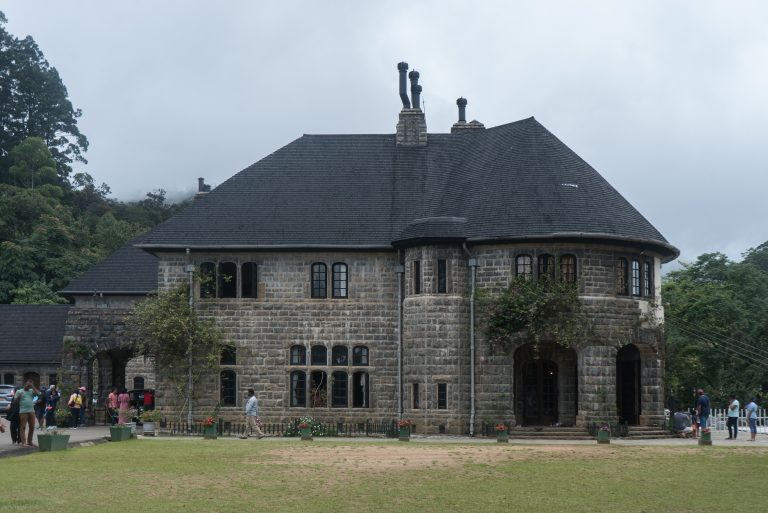
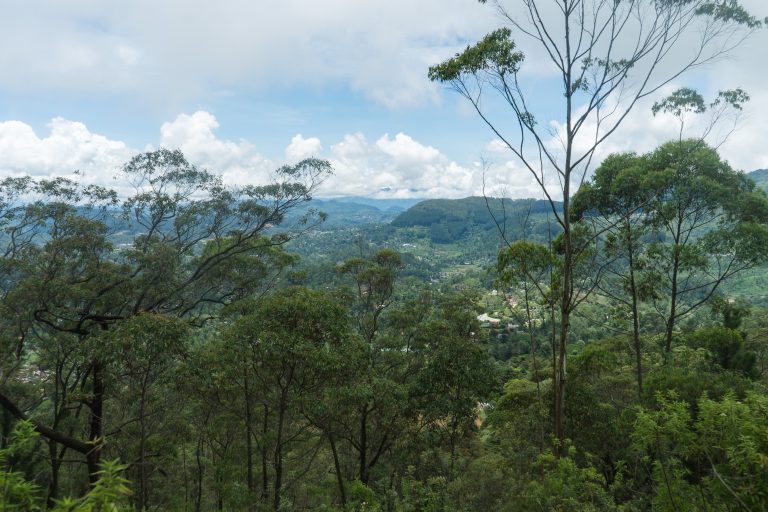
Adisham and Thangamale. For something gentler, Adisham Bungalow, the 1931 stone country house that is now a Benedictine monastery, stands just west of town, and the Thangamale forest beside it was declared a sanctuary in 1938. Paths through the forest give views out over the hills.
When to go
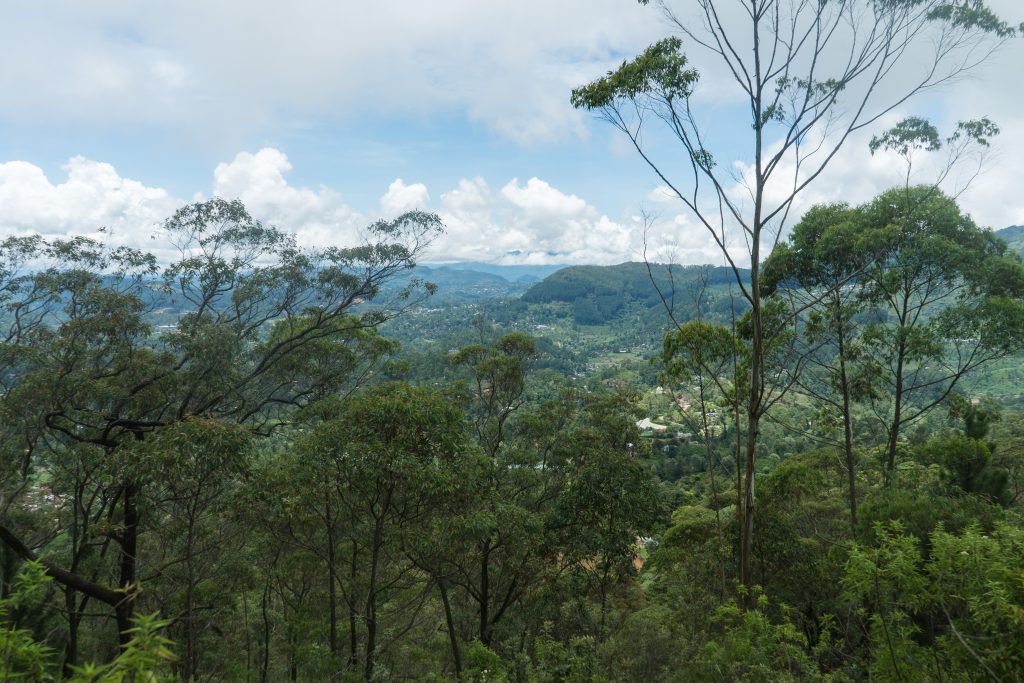
Start early, whatever the month. Recent visitors (2025–26) report that mist and cloud usually build up by late morning around Haputale, and at Lipton’s Seat the view can be gone by mid-morning. The machines at Dambatenne also run hardest in the morning, so an early start serves both.
For the season, the Tea Board’s quality season from July to September is also the drier time on this side of the hills. At Badulla, the nearest long-term weather station, October to January is the wettest part of the year. The Pekoe Trail’s organisers suggest December to April and July to September as the best months for most of the trail.
Being a good guest on the estates
The estates are private, working land, and the lines of houses you walk past are people’s homes. Stay on the paths, don’t pick leaves, and ask before you photograph anyone, especially pluckers at work. Keep your voice down near the houses and close any gates you open. Leeches come out on the tea paths in wet weather, so wear shoes with grip and carry repellent.
A morning in Haputale’s tea country
Take a tuk-tuk up to Lipton’s Seat for sunrise and give the view an hour before the cloud comes in. Walk down through the tea, and stop at the Dambatenne factory while it is busy. Back in town by late morning, you can spend the afternoon at Adisham, or take the train along the ridge; see the travel update at the top of this page for which services are running. With a second day, walk Pekoe Trail stage 13 or 14.
Frequently asked questions (FAQs)
Where can I see tea being made near Haputale?
At Dambatenne Tea Factory, the working factory Lipton built in 1890, on the road up to Lipton’s Seat. Go in the morning, when the machines are running.
Can you walk to Lipton’s Seat from Haputale?
Yes. Pekoe Trail stage 13 runs from Haputale to St Catherine in about four hours, and Lipton’s Seat is about 3 km further. Most people take a tuk-tuk up and walk down through the estates instead.
What is the best time of day for tea-country views?
Early morning. Visitors report that mist and cloud usually build up by late morning.
When is the Uva tea quality season?
July to September, according to the Sri Lanka Tea Board. Tea is picked all year round.
Do I need a pass to walk the Pekoe Trail?
Yes. The trail’s official site asks adult walkers to buy a pass, US$10 per person per day when we checked; children under 12 walk free with a paying adult.
Can I photograph tea pluckers?
Ask first. The pluckers are at work, the estates are private land, and many people prefer not to be photographed.
Sources: srilankateaboard.lk (uva), srilankateaboard.lk (manufacturing), srilanka.travel, thepekoetrail.org (pekoe stages), thepekoetrail.org (stage 12), thepekoetrail.org (stage 13), thepekoetrail.org (stage 14), thepekoetrail.org (faq), dailymirror.lk, en.wikipedia.org (Indian Tamils of Sri Lanka), en.wikipedia.org (Badulla) and recent visitor reports. Header photo: Adbar / Wikimedia Commons, CC BY-SA 3.0.