Check before you travel Hill-country railway: repairs after Cyclone Ditwah Checked 23 November 2026
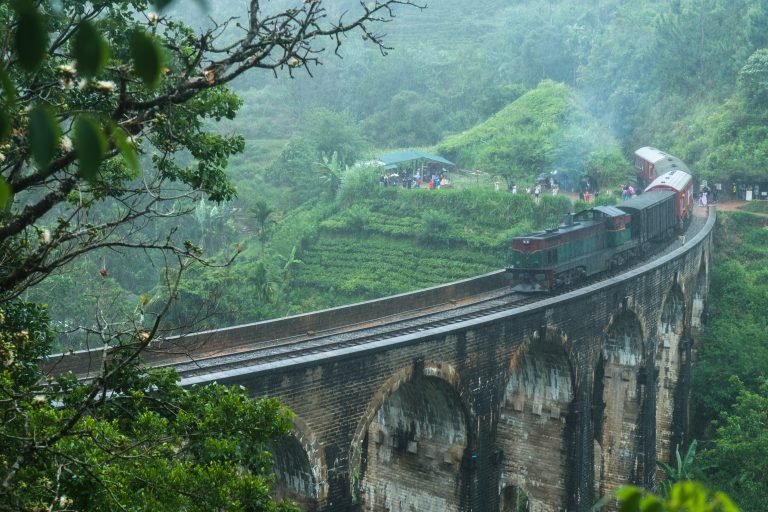
Cyclone Ditwah damaged the hill-country railway in November 2025, and it is reopening in stages. Trains from Colombo Fort reached Peradeniya and Gampola again on 2 October 2026, but earth slips near Kadigamuwa station, between Rambukkana and Peradeniya, have blocked the line several times since. From 25 October 2026 the Department of Railways suspended all trains between Rambukkana and Peradeniya and Gampola until further notice, until repairs are finished and the line is confirmed safe; passengers with reserved seats on cancelled trains can claim a full refund at any railway station. Kandy station itself is not served yet. Trains between Nanu Oya and Badulla, which stop at Haputale, Ella and Demodara, restarted on 20 June 2026. The section between Gampola and Nanu Oya is still under repair, so you cannot yet go by train from Colombo or Kandy all the way to Ella. Check the latest services before you plan a rail journey, and book reserved seats on the Sri Lanka Railways seat reservation site.
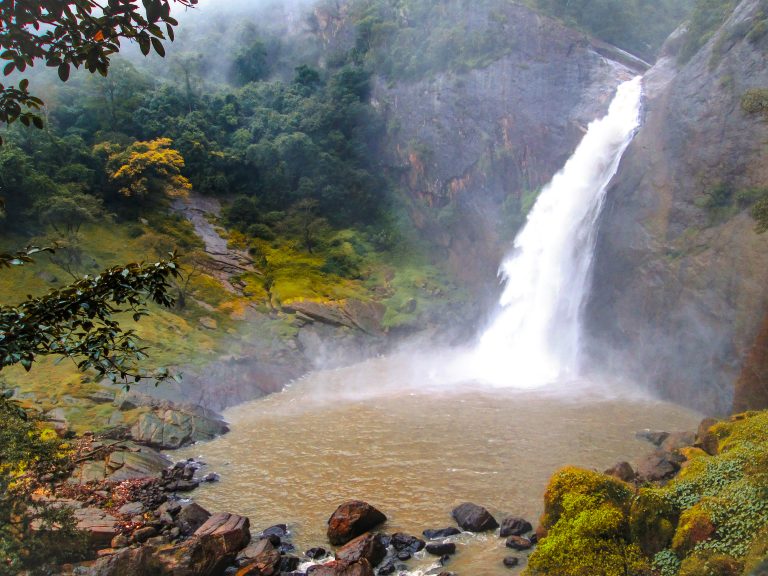
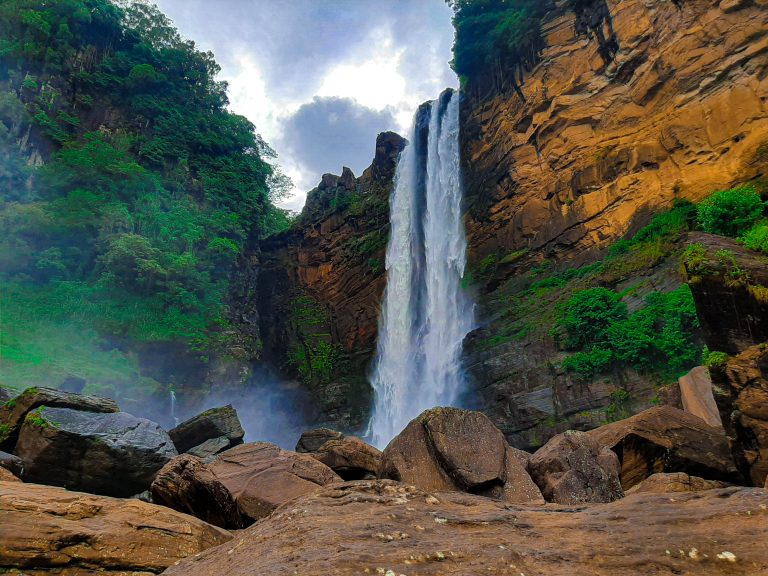
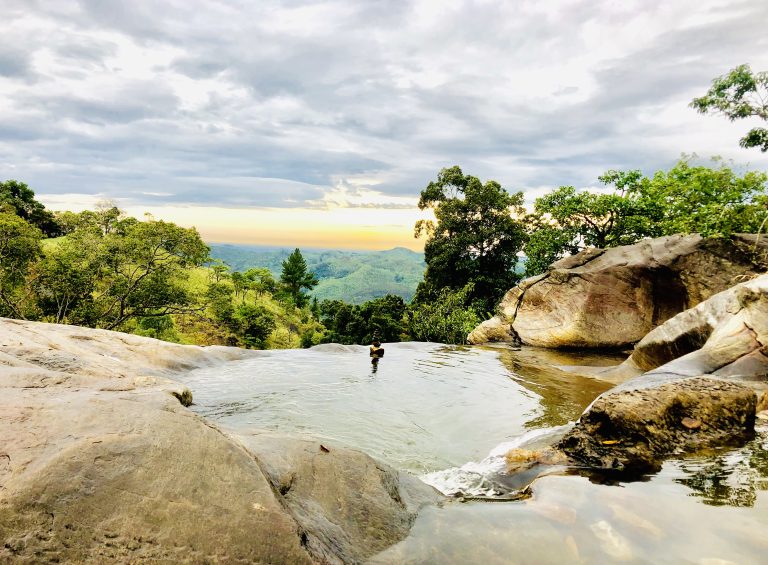
Diyaluma Falls drops off a sheer cliff beside the road between Koslanda and Wellawaya, in the Badulla District. You can see the whole fall from the bottom without walking more than a few steps. These days, though, most people come for what is above it: a chain of rock pools on the stream that feeds the falls, reached by a path from the top. The pools are a beautiful place to swim, but they sit on the lip of one of the tallest drops in Sri Lanka, so how you visit matters more here than at most waterfalls.
Is it worth visiting?
Go if you want a waterfall you can swim at, with a view down over the hills, and you are steady on bare, sloping rock. Even if you skip the pools, the roadside view of the full drop is worth stopping for on the way between Haputale and Wellawaya.
Think twice if you are not a confident swimmer, have small children with you, or it has been raining hard. Some pools are deep, the rock is slippery, and nothing stands between the upper pools and the edge. In that case, see the falls from the road and save the pools for another trip.
Two ways to see the falls
From the road. The falls are about 6 km from Koslanda, beside the main road towards Wellawaya. From the bottom you see the water leave the top of the cliff and fall in one long drop to the rocks below. Sri Lanka Tourism notes that it is at its most dramatic in the rain, and that is when you want to stay at the bottom anyway.
From the top. The stream that feeds the falls, the Punagala Oya, runs across a shelf of rock above the cliff before it goes over, and the pools lie on that shelf. Most visitors go by tuk-tuk or car to Poonagala (also spelled Punagala), above the falls, and then walk down through tea and patches of forest. Recent visitors (2025–26) report 20 to 45 minutes on foot from the trailhead. There is also a much steeper path up from the bottom near Koslanda. Visitors who have done it describe it as hard going and suggest it only with a local guide.
The name means “rapid flow of water”, or “liquid light”. Sri Lanka Tourism retells a story collected by the historian R. L. Brohier, in which a banished young chieftain tried to haul his bride-to-be up the cliff on a rope of creepers. Instead, she crashed against the rocks, and the gods hid the scene behind a veil of falling water.

The pools at the top
There are several pools at different levels, some small and shallow, some deep enough to swim properly, and a few only a short distance back from the edge. Pick a pool well away from the lip and stay in it. Recent visitors (2025–26) report paying about LKR 350 ($1.05 · convert) per person in cash on the way to the upper pools. No official fee is published, so carry small notes.
Plenty of people visit with a local guide, who will show you the safer pools. If you want one, ask your guesthouse to arrange it rather than taking an offer on the path.
Safety at the top
The rock around the pools is smooth, often wet and steeply sloping, and there are no railings at the edge. The Morning described the top as windy, with “slippery rocks with unprotected edges”. News reports show what can go wrong:
- In February 2025 a swimmer got into difficulty in a deep pool, and another visitor pulled them out.
- In May 2023 a wild elephant killed a young woman who was camping overnight near the upper falls. A court later remanded the two men who had taken the couple there, for entering the forest reserve without permission and for working as unlicensed guides.
Keep well back from the lip, especially for photos, and wear shoes with grip for the walk. Stay out of the water when the stream is running fast after rain, and go in daylight rather than as an overnight camp. Heed any warnings from local people at the pools.
Getting there
- From Haputale: buses heading for Wellawaya pass Koslanda and the bottom of the falls, but for the pools a tuk-tuk or car to Poonagala is simpler. Haputale is on the railway line to Badulla, so you can arrive by train. Check the travel update at the top of this page first. You can buy reserved seats on the Sri Lanka Railways seat reservation site.
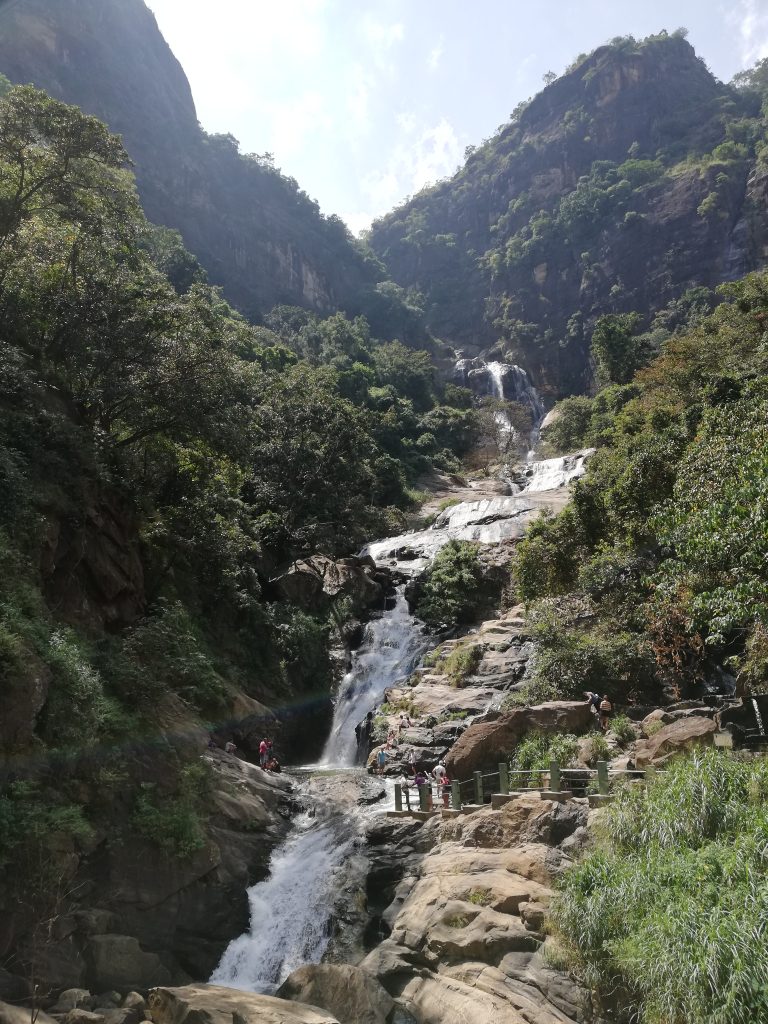
- From Ella: most people hire a tuk-tuk or car for the day. If you go by way of Wellawaya, you pass Ravana Falls beside the Ella–Wellawaya road, so you can see both in one trip. Many visitors base themselves in Ella and do Diyaluma as a day out.
- For the bottom only: any bus on the road between Koslanda and Wellawaya passes the falls. Ask the conductor for Diyaluma.
Frequently asked questions (FAQs)
How tall is Diyaluma Falls?
Published heights differ (Sri Lanka Tourism and other sources give different figures). Both place it among the tallest waterfalls in Sri Lanka. Bambarakanda Falls, the tallest in Sri Lanka, is also in Badulla District.
Can you swim at Diyaluma Falls?
Yes, in the rock pools above the falls. Some are deep and the rock is slippery, so choose a pool well back from the edge and stay out of the water after heavy rain.
How do you get to the upper pools?
Most people go by road to Poonagala, above the falls, and walk down. Recent visitors report 20 to 45 minutes from the trailhead. A steeper path climbs from the bottom near Koslanda, but you are better off doing it with a local guide.
Is there an entry fee for Diyaluma Falls?
No official fee is published. Recent visitors (2025–26) report paying about LKR 350 ($1.05 · convert) per person in cash on the way to the upper pools.
Can you camp at Upper Diyaluma?
It is not a sensible place to camp. In May 2023 a wild elephant killed a camper near the upper falls. Afterwards, a court remanded the two men who brought the couple for entering the forest reserve without permission.
Header photo: Mahesh Malaka Udawatta / Wikimedia Commons, CC BY-SA 4.0.