

Currently closed or suspended Yala National Park: Blocks 1 and 2 closed until 15 October 2026 Checked 3 October 2026
Because of drought, the Department of Wildlife Conservation has closed Blocks 1 and 2 of Yala National Park from 14 September to 15 October 2026. Check with the department before booking a safari.
Check before you travel Hill-country railway: repairs after Cyclone Ditwah Checked 5 October 2026
Cyclone Ditwah damaged the hill-country railway in November 2025, and it is reopening in stages. Since 2 October 2026, trains run again from Colombo Fort to Peradeniya and Gampola, but Kandy station itself is not served yet. On 5 October 2026 earth and rocks fell onto the line between Kadigamuwa and Gangoda after heavy rain and derailed an early train; services restarted later the same day, but expect delays or short suspensions after heavy rain. Trains between Nanu Oya and Badulla, which stop at Haputale, Ella and Demodara, restarted on 20 June 2026. The section between Gampola and Nanu Oya is still under repair, so you cannot yet go by train from Colombo or Kandy all the way to Ella. Check the latest services before you plan a rail journey, and book reserved seats on the Sri Lanka Railways seat reservation site.
This two-week route links the places in Sri Lanka where you have a real chance of watching big animals in the wild: the elephant tanks of Minneriya and Kaudulla, the grasslands of Udawalawe, leopard country around Yala, the whale-watching boats of Mirissa and the rainforest of Sinharaja. A dawn walk on Horton Plains breaks the long drive south. The thing that shapes it most is the calendar: every park and every stretch of sea has its own good months, so read the season notes before you fix the order.
Is this route right for you?
Go if you are happy to set an alarm most days. Animals are most active early and late, Sri Lanka Tourism advises dawn and dusk for a Yala safari, and the views on Horton Plains are clearest before about 10 am. You’ll also want patience with long road days between the parks, and a preference for animals in the wild over animals in pens.
Think twice if you want quiet, guaranteed sightings. Jeeps tend to bunch around elephant herds at Minneriya and around leopards at Yala, and Sri Lanka Tourism’s own Mirissa page warns that boats crowd the same whales, which are often seen only briefly. And if you can only travel in September or October, the main route below won’t suit you: the whale season off the south coast has ended, and the Department of Wildlife Conservation (DWC) has traditionally closed parts of Yala in those driest weeks.
The route at a glance
- Optional first night: Negombo, near the airport, if you land late.
- Nights 1–3: Habarana, for Minneriya and Kaudulla.
- Nights 4–5: Nuwara Eliya, for Horton Plains.
- Nights 6–7: Udawalawe.
- Nights 8–9: Tissamaharama, for Yala and Bundala.
- Nights 10–11: Mirissa, for whale watching.
- Nights 12–13: the Deniyaya side of Sinharaja.
- Day 14: back to the airport.
Two nights or more everywhere matters on a wildlife trip: a single safari can draw a blank, and the second chance is often the good one.
Pick your months first
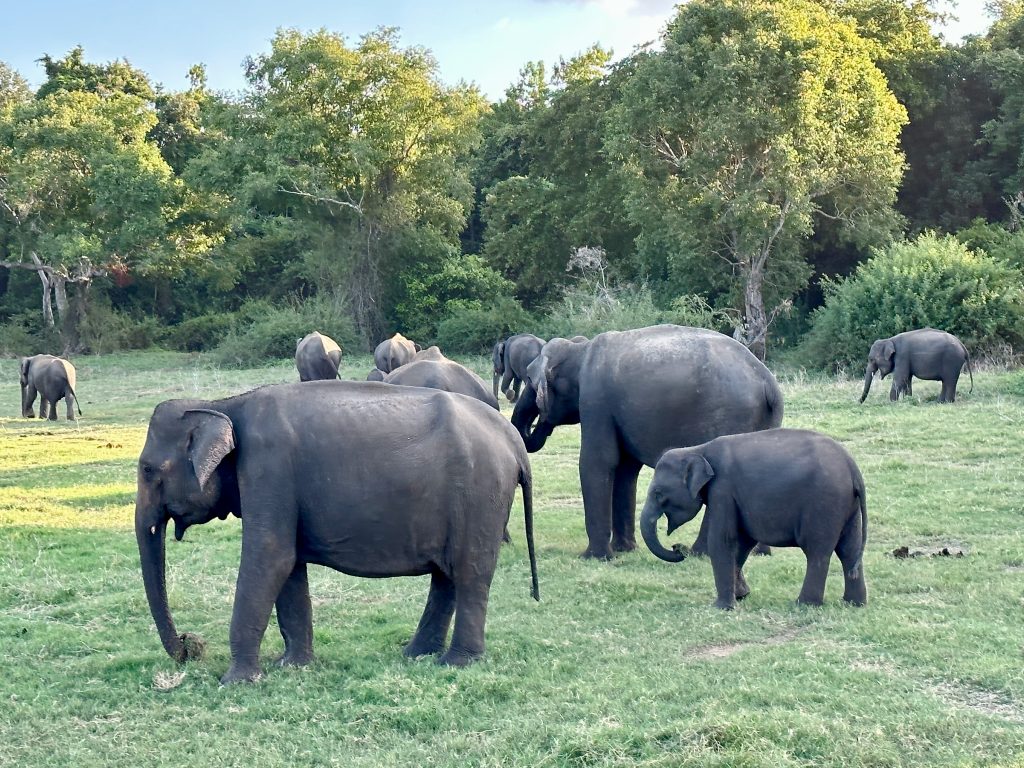
- Minneriya and Kaudulla: elephants are there all year. The famous “Gathering” on the shores of Minneriya Tank happens in the dry season; Sri Lanka Tourism names May to October as the popular time, and recent visitors (2025–26) report the biggest numbers in August and September. Around September many elephants move on to Kaudulla.
- Udawalawe: the reservoir and the Walawe River hold water all year, and elephants are the park’s main draw in every month.
- Yala: open most of the year, but the DWC has traditionally closed the park in the driest months, around September and October. Migrant birds are in and around the park from September to March.
- Whales off Mirissa: November to April, according to Sri Lanka Tourism.
- Sinharaja: Sri Lanka Tourism suggests August to September and January to April.
- Kumana: large flocks of waterbirds gather to breed from about April to July.
Put together, the route as written works best from December to April, when the whales are off the south coast, Yala is open and Horton Plains is usually at its clearest. Elephants are at Minneriya all year, though not in Gathering numbers. If you’re coming between May and October, see the swaps further down.
Nights 1–3: Habarana and the elephant tanks
Recent visitors put the drive from the airport to the Sigiriya and Dambulla area at about four hours, and Habarana sits just beyond it on the Trincomalee road. Use the first afternoon to recover.
The next two afternoons are for jeeps. Minneriya’s park office is at Ambagaswewa, near Habarana; Kaudulla’s is at Gal Oya junction on the road towards Trincomalee. Visitors report half-day safaris starting at about 6 am or 2 pm, and afternoons are often recommended in the dry season, when the herds come down to the water. The herds move from week to week along a protected corridor between the two tanks, so let your jeep driver choose the park on the day; drivers know where the elephants were yesterday.
Look past the elephants, too: Minneriya, Kaudulla and Giritale together form one of Sri Lanka’s Important Bird Areas, with painted storks and spot-billed pelicans on the tanks.
A morning off? Pidurangala Rock gives a view of Sigiriya from above, and is a good short climb at first light.
Nights 4–5: Nuwara Eliya and Horton Plains
This is the long day of the trip. Visitors report about three hours from Sigiriya to Kandy and roughly three more up to Nuwara Eliya, so leave after breakfast, eat lunch in Kandy and arrive in cool air; the town is 1,868 m up, so bring a warm layer.
Next morning, be at Horton Plains early. Sri Lanka Tourism lists the route via Ambewela and Pattipola at 32 km, and recommends visiting roughly between 6 and 10 am, before cloud covers World’s End. The main loop is about 9 km and takes around three hours, across grassland and through cloud forest. UNESCO lists the forests here as a refuge for threatened species such as the Sri Lankan leopard and the Horton Plains slender loris, but the large animal you’re most likely to meet is sambar deer, usually in the early morning. Polythene is banned in the park and bags are checked, so pack your breakfast in paper or a box.
Back in town, Victoria Park is popular with birdwatchers, and it makes a gentle afternoon.
Nights 6–7: Udawalawe
The drive down fills most of a day: recent visitors report about 1½–2 hours from Nuwara Eliya to Ella, and 2½–3 more from Ella to Udawalawe. If you’d like the hill-country train, ride it from Nanu Oya to Ella, about 2½–3 hours, and have your driver meet you there. Other parts of the line are still being repaired after Cyclone Ditwah; see the travel update at the top of this page. Reserved seats are sold on the Sri Lanka Railways seat reservation site.
At Udawalawe, go out in the morning or late afternoon, when Sri Lanka Tourism says animals are most active. Expect elephants, water buffalo, deer, crocodiles around the reservoir and endemic birds such as the Sri Lanka grey hornbill and red-faced malkoha. Leopards, fishing cats and sloth bears live here too but are seldom seen. The park entrance is near the 7th km post on the Thanamalwila road.
Leave time for the Elephant Transit Home, run by the DWC. It raises orphaned calves until they are old enough to be released into the park, and visitors can watch the young elephants. The DWC doesn’t publish feeding times online, so ask locally the day before.
Nights 8–9: Tissamaharama, Yala and Bundala
Taxi operators and recent visitors give well under two hours for the drive to Tissamaharama, the usual base for Yala.

Yala National Park is entered at Palatupana, reached from Tissa via Kirinda. The DWC describes Blocks I and II as the best areas for leopards, and Block I is the most visited part of the park, so expect company. Sri Lanka Tourism says dawn and dusk are the best times, so two shorter safaris, one early and one late, make more sense than a single long one through the midday heat. Besides leopards, look for elephants, sloth bears, mugger and saltwater crocodiles and, around the lagoons, painted and black-necked storks. Parts of Yala close in the driest months and after heavy rain; see the travel update at the top of this page.
If you’d rather spend the second day on birds, Bundala National Park is on the coast near Hambantota. It was Sri Lanka’s first Ramsar wetland, declared in 1991, and Sri Lanka Tourism names September to March as the season, when migratory birds arrive; greater flamingos come in large flocks.
Nights 10–11: Mirissa and the whales
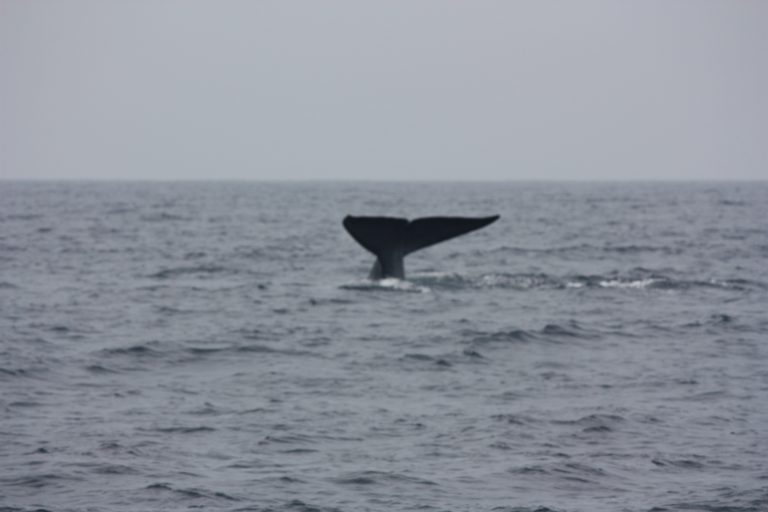
Recent visitors give about two hours along the coast to Mirissa. Whale-watching trips leave the fisheries harbour at around 6.30 am and last three to four hours, depending on the sea. Blue whales are the ones people come for; Bryde’s, sperm and fin whales and several kinds of dolphin are also seen.

Choose your boat carefully. The rules are clear: licensed boats with a registered guide, engines off from 100 metres, never closer than 100 metres to a whale (50 metres for dolphins), no chasing and no swimming. Enforcement is not: a study reported in 2025 found most Mirissa operators offering illegal swimming with whales. Book with an operator that briefs you on the rules, and turn down any offer to get in the water.
Nights 12–13: Sinharaja on foot
The last stop swaps jeeps for boots. Sinharaja Forest Reserve is a UNESCO World Heritage rainforest, and UNESCO says 19 of Sri Lanka’s 20 endemic bird species have been recorded there. Recent visitors coming from the south coast use the Deniyaya side, going inland via Matara.
Walk with a guide: entry is by permit, and recent visitors report that guides are compulsory and can be hired at the entrance or through your guesthouse. Look for the Sri Lanka blue magpie, red-faced malkoha and green-billed coucal, and for purple-faced langurs and giant squirrels overhead. Wear long trousers and closed shoes; leeches are part of the deal, especially after rain.
On the last day, go back down to the coast and join the Southern Expressway towards Colombo. It’s a long day, so fly home late or spend a final night near the airport.
Travelling between May and October
The south coast is rougher in the south-west monsoon and the whales have moved on, but the other side of the island comes into its own.
- The Gathering: give Habarana an extra night in August or September, when recent visitors report the largest herds.
- East coast instead of Mirissa: Trincomalee is straight up the A6 from Habarana. The middle of the year is the dry season there, Pigeon Island’s coral reef is open for snorkelling when the sea allows, and whale-watching boats run from Trincomalee. Sources disagree on the best months for whales off this coast, so ask operators about recent sightings before you book; Mirissa or Trincomalee for whales compares the two.
- Kumana instead of Yala: Kumana National Park, reached from Arugam Bay, has fewer jeeps than Yala by recent visitors’ accounts, and from about April to July its mangrove swamp fills with nesting storks, pelicans and other waterbirds. The entrance road is rough and there are no restaurants inside, so bring food and water.
- Wilpattu at the start: Wilpattu National Park, west of Anuradhapura, is one of Sri Lanka’s older national parks and is known for its leopards, sloth bears and villus, natural sand-rimmed lakes that fill with rain. It makes a good first stop before Habarana, but heavy rain can close its tracks: in October 2025 floods put the Eluwankulama entrance under water and visitors had to be rescued.
For a week on the east coast itself, see our east coast itinerary.
Watching wildlife well
- Stay in the jeep. Visitors have been arrested in Yala for walking outside their vehicles. Ask your driver to keep a distance, approach slowly and switch the engine off near animals, as Yala’s warden has asked drivers to do; a young leopard has been killed by a vehicle in the park.
- Don’t feed anything, and don’t bring pork into a national park: the DWC banned raw pork and pork products in all parks in 2024 to protect wild boar from disease.
- Skip elephant rides and elephant bathing. Rides are still legal in Sri Lanka, with rules since 2021 limiting them to four riders on a padded saddle, but the UK travel association ABTA counts riding and bathing elephants as unacceptable practices. You’ll see elephants behaving like elephants on every safari on this route; our comparison of Pinnawala and wild elephants explains the difference.
- Be choosy about turtle hatcheries. A 2013 study of seven hatcheries in Galle District found that none followed best practice; all kept hatchlings in tanks for a day or more.
- Leave coral alone if you snorkel at Pigeon Island: don’t stand on it, touch it or take it.
Permits, jeeps and costs
Every national park on this route needs a DWC permit, paid at the prescribed fee. Day permits can be reserved online; the DWC explains how in its guide to booking day permits. Each park has a daily limit, and online booking closes when it is reached. Keep the receipt with its QR code for the gate. The DWC website doesn’t currently show a fee table, and the charge depends on your group and vehicle, so confirm the price when you book. Sinharaja is run by the Forest Department, not the DWC; its permit and guide are sorted out at the entrance.
Frequently asked questions (FAQs)
When is the best time for a wildlife safari in Sri Lanka?
It depends on the park. December to April suits the south: whales off Mirissa, Yala open and Sinharaja in season. May to October is the time for the elephant Gathering at Minneriya and Kaudulla, and for the east coast.
Where is the best place to see leopards in Sri Lanka?
The Department of Wildlife Conservation describes Yala’s Blocks I and II as the best areas for leopards. Wilpattu, in the north-west, is also known for them.
When is the elephant Gathering at Minneriya?
In the dry season. Sri Lanka Tourism names May to October as the popular time, and recent visitors report the biggest herds in August and September; around September many elephants move to Kaudulla.
Can you see blue whales in Sri Lanka?
Yes. Boats leave Mirissa from November to April, at around 6.30 am, for trips of three to four hours. Boats also run from Trincomalee, but sources disagree on the best months there.
Is it ethical to ride elephants in Sri Lanka?
Rides are legal, but the UK travel association ABTA counts riding and bathing elephants as unacceptable practices. Seeing wild elephants on a jeep safari, or calves at the Elephant Transit Home, is the better choice.
Sources: dwc.gov.lk, dwc.gov.lk, dwc.gov.lk, srilanka.travel (attraction&), srilanka.travel (wild safaris), en.wikipedia.org (Minneriya National Park), en.wikipedia.org (Kaudulla National Park), en.wikipedia.org (Habarana), srilanka.travel (attraction&), whc.unesco.org (list), en.wikipedia.org (Nuwara Eliya), srilanka.travel (attraction&), en.wikipedia.org (Udawalawe National Park), en.wikipedia.org (Udawalawe Elephant Transit Home), srilanka.travel (attraction&), env.gov.lk, en.wikipedia.org (Yala National Park), adaderana.lk, dailymirror.lk, srilanka.travel (attraction), en.wikipedia.org (Bundala National Park), srilanka.travel (whale watching), srilanka.travel (attraction), faolex.fao.org, themorning.lk, whc.unesco.org (list), srilanka.travel (attraction&), en.wikipedia.org (Trincomalee), dwc.gov.lk, en.wikipedia.org (Pigeon Island National Park), srilanka.travel (attraction), en.wikipedia.org (Kumana National Park), en.wikipedia.org (Wilpattu National Park), hirunews.lk, dawn.com, colombogazette.com, worldanimalprotection.org, abta.com, iotn.org, english.newsfirst.lk, seatreservation.railway.gov.lk and recent visitor reports. Header photo: Josep Renalias / Wikimedia Commons, CC BY 4.0.