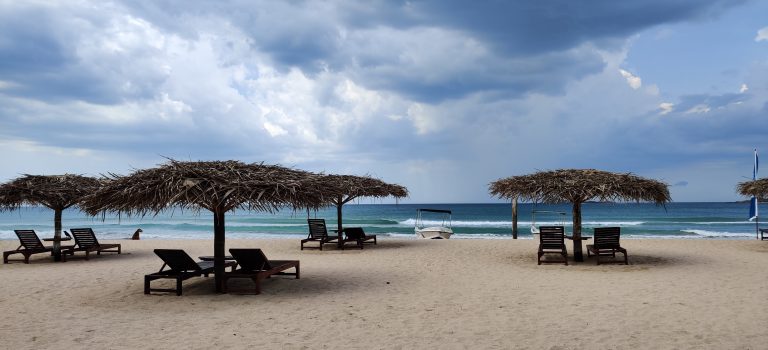
Three days is a good fit for Colombo and Galle: one day in the capital, then two nights at Galle Fort, the walled old town on the south-west coast that UNESCO has listed since 1988. The coastal railway and the Southern Expressway link the two, so the trip costs you one easy morning of travel, and the rest you spend on foot.
Is this route right for you?
Go if you like old streets, churches, ramparts and sea views more than sightseeing at speed, or you have a long weekend or a stopover and don’t want to spend it in a car. Galle Fort is small enough to walk everywhere, and two nights let you see it early in the morning and at sunset, when it is at its best.
Think twice if what you really want is a beach holiday with a little culture. Galle Fort is a walled town on a headland, not a resort; stay in Unawatuna, about 5 km away, or add a few days further down the coast. And from May to September this coast is in the south-west monsoon, with more rain and rougher seas.
The route at a glance
- Night 1: Colombo
- Nights 2 and 3: Galle Fort, or Unawatuna if you want the beach on your doorstep
- Day 4: back to the airport, or on along the coast
Two nights is the minimum we suggest for any stop, and Galle gets them. Colombo works with one, because you are passing through it anyway.
Day 1: Colombo
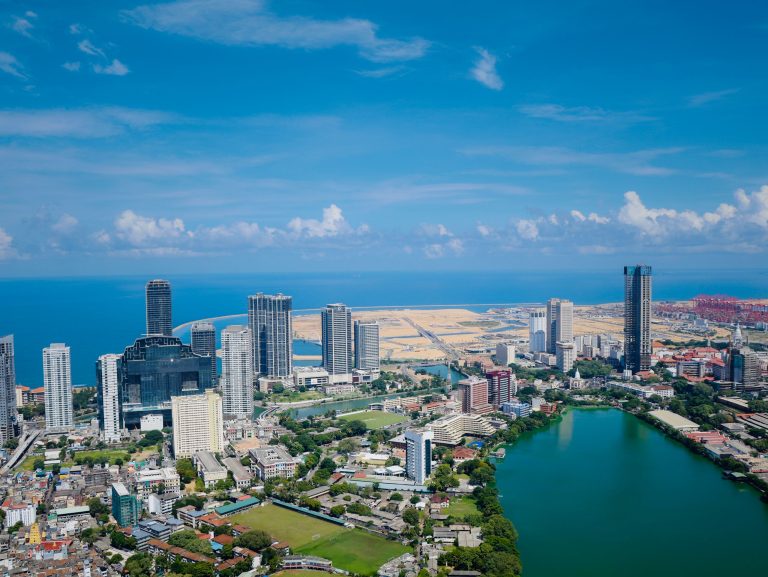
Give the capital a single, well-ordered day. Visit Gangaramaya Temple and its lake pavilion, Seema Malaka, early (the temple opens at 6 am), then the market streets of Pettah in the morning before they get too hot. Spend the middle of the day indoors at the Colombo National Museum, whose galleries follow the island’s history and include the Galle Trilingual Inscription, and finish at Galle Face Green, Colombo’s seafront park, for the sunset over the sea.
Two things to check: the National Museum, like all the national museums, is closed on Mondays, and if you land in the morning after a night flight, it is better to rest and do only the second half of the day. Our Colombo guide covers the city’s areas and getting around.

Day 2: down the coast to Galle
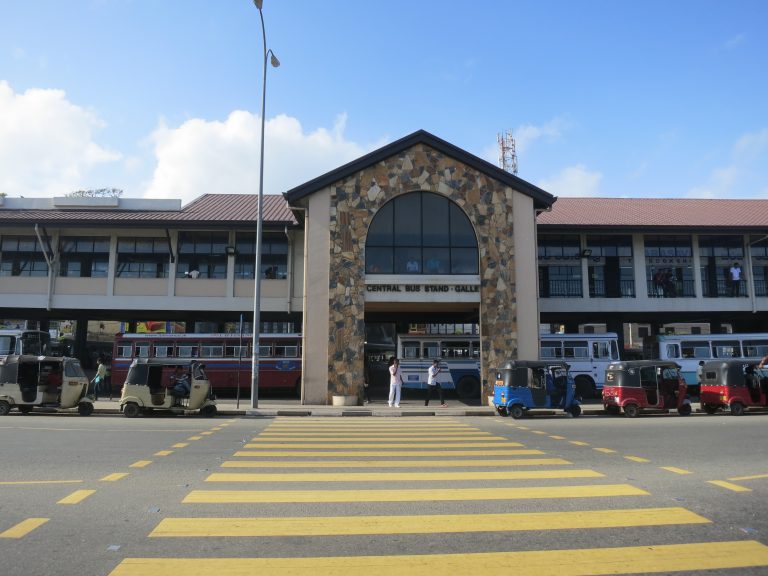
By train. The coastal line runs from Colombo Fort along the shore to Galle, and through Colombo it runs right beside the beaches. Sit on the right-hand side, facing forward, for the sea. Recent timetables and visitor reports put the journey at roughly two to three hours, depending on the train. Most seats are unreserved second and third class, with tickets sold at the station on the day; where a train has reserved seats, you can book them on the Sri Lanka Railways seat reservation site. Galle station is next to the fort, so you can walk in with your bag.
By road. The Southern Expressway (E01) starts at Kottawa, on the south-eastern edge of Colombo, and cut the drive to Galle to about an hour of motorway. Getting out of the city to Kottawa is the slow part: recent visitors allow about one and a half to two hours from central Colombo.
Spend the afternoon settling in, and save the walls for the end of the day. Recent visitors (2026) advise walking the ramparts early in the morning or in the last two hours of daylight, because the sun is strong and there is almost no shade up there. There is no charge to walk the walls. Start at the Clock Tower on the land-side ramparts, a memorial to the doctor P. D. Anthonisz, and follow the walls round towards the sea.
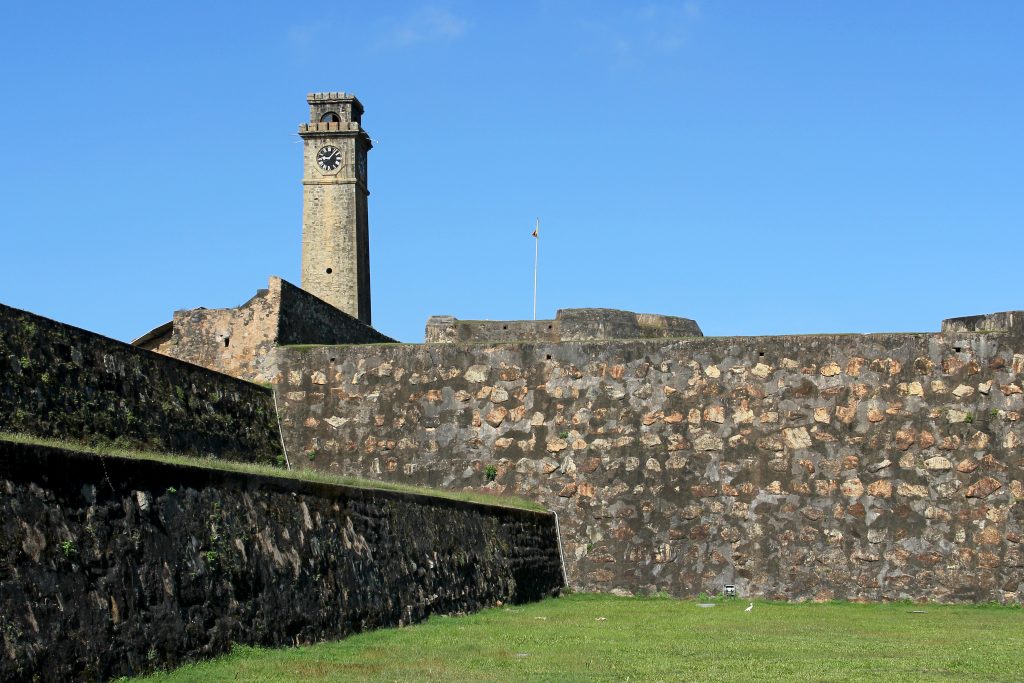
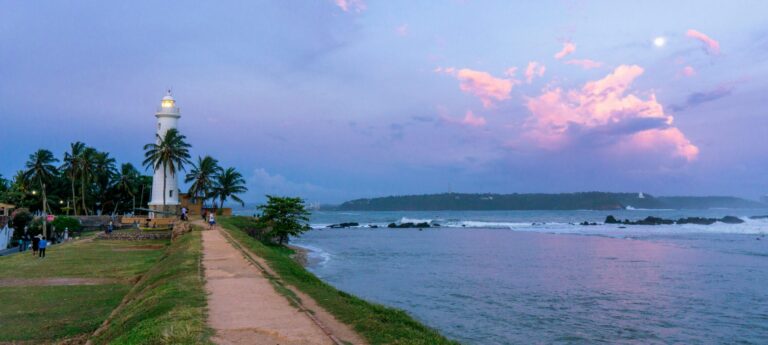
Along the way you pass Flag Rock, the bastion that once warned ships of the rocks in the bay, and the white lighthouse on Point Utrecht Bastion, with the Meeran Mosque close by. Towards sunset the western walls fill with people; recent visitors single out Triton Bastion as the place to watch from. At Flag Rock you will probably also meet the divers who jump from the rampart into the sea for money.
Day 3: the fort by morning, the coast by afternoon
Morning in the fort. The old town keeps its Dutch street grid, and the morning, before the heat, is the time to wander it. Look into the Dutch Reformed Church, completed in 1755, with old gravestones set into its floor, and All Saints’ Church, consecrated in 1871. The Old Gate still carries the emblem of the Dutch East India Company, with the British coat of arms of King George III added later. The Old Dutch Hospital, a colonial building, has been a shopping and dining precinct since 2014.
For more history, there are two kinds of museum. The Galle Heritage Foundation’s display galleries, in old powder magazines at the Black Fort, Star Bastion and Moon Bastion, are open daily from 8.30 am to 5.30 pm, with tickets sold at each gallery; the Black Fort is the oldest surviving part of the fort, begun by the Portuguese. The National Maritime Museum and the Galle National Museum are open Tuesday to Sunday, 9 am to 4.45 pm, except public holidays, and foreign visitors pay USD 5 per adult and USD 3 per child (see the Department of National Museums’ prices). On a Monday, the bastion galleries are your museum stop.
Afternoon: choose one.
- Unawatuna and the Peace Pagoda: Unawatuna’s curved bay is about 5 km south-east along the A2, beside the wooded Rumassala headland, where the white Peace Pagoda built by the Japanese order Nipponzan Myohoji looks out to sea. Swim only where locals say it is safe: rip currents occur, and a visitor drowned off the beach in June 2024.
- Koggala: further east along the coast, Koggala Lake is a mangrove-fringed lagoon with small islands, where local operators run boat trips; agree the route, length and price first, and choose a boat with shade. Nearby, the Martin Wickramasinghe Folk Museum, in the writer’s family home, is open daily from 9 am to 5 pm; non-residents pay Rs 1,000 per adult and Rs 400 per child (museum website). On the beach, the famous stilt fishermen now mostly pose for photos: in 2025 the Sunday Times found them charging foreign adults Rs 1,000 a photo.
- Stay in the fort: if it is hot, there is nothing wrong with a long lunch, the shops in the old streets and a second sunset on the walls.

Leaving Galle
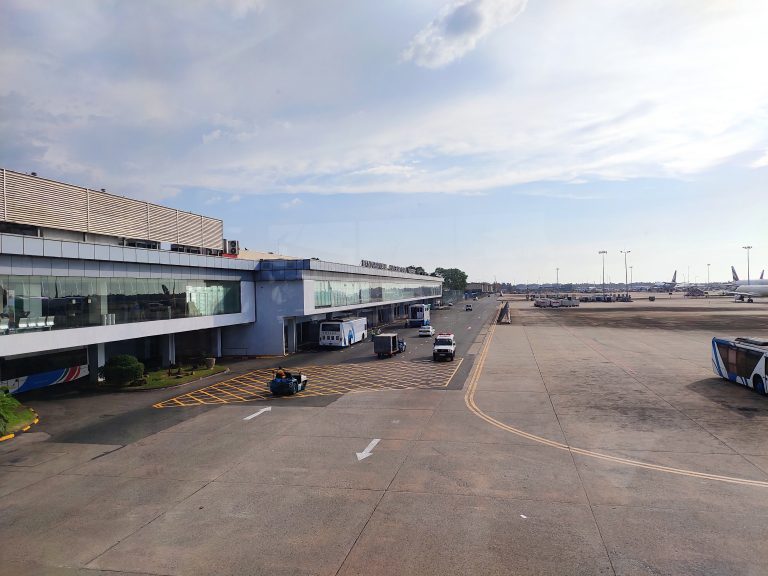
The expressways connect Galle with the airport directly: the Southern Expressway joins the Outer Circular Expressway (E02), which links with the Colombo–Katunayake Expressway, so you don’t need to drive through central Colombo. Recent visitors report two to three hours from Galle to the airport, depending on traffic around Colombo. Check how early your airline wants you at the airport and leave a generous margin.
If your flight leaves late in the evening, turn the route round: drive from the airport straight down to Galle on arrival, and come back to Colombo for the last day, so it ends with the sunset at Galle Face before you head for the airport.
Not flying home yet? The coast carries on east to Mirissa and beyond, and the beach towns of Hikkaduwa and Bentota are up the coast towards Colombo.
If you only have the one day in the city, our day in Colombo times the sights around the heat. With five days, the five-day first trip swaps the coast for Kandy and the tea country.
When to go
This route works all year, but the weather decides how much of it you spend outdoors. The south-west of the island, including Colombo and Galle, gets most of its rain in the south-west monsoon, from May to September, and October and November bring widespread rain across the island. From December to February, during the north-east monsoon, the rain falls mainly over the eastern half, which makes those months the most reliable on this coast. In the wet months, Galle’s museums, galleries and cafés still fill a rainy day; it is the beach afternoon you may lose.
Frequently asked questions (FAQs)
How many days do you need for Colombo and Galle?
Three days works well: one day in Colombo and two nights in Galle, so you see the fort early in the morning and at sunset as well as in the heat of the day.
How do I get from Colombo to Galle?
By train on the coastal line from Colombo Fort, which takes roughly two to three hours depending on the train, or by road on the Southern Expressway (E01). Galle station is next to the fort.
Do you have to pay to enter Galle Fort?
No. Walking the streets and the ramparts is free; the museums and the heritage galleries in the bastions charge for entry.
Is Galle Fort a UNESCO World Heritage Site?
Yes. The Old Town of Galle and its Fortifications has been on the World Heritage List since 1988.
How far is Unawatuna from Galle?
About 5 km south-east of Galle along the A2, close enough for an afternoon on the beach.
How long does it take from Galle to the airport?
Recent visitors report two to three hours on the expressways, depending on traffic around Colombo.
Sources: whc.unesco.org, galleheritage.gov.lk (display galleries), galleheritage.gov.lk (black fort), museum.gov.lk (ticket pricing), museum.gov.lk (museums), dailymirror.lk (All museums to remain closed…), en.wikipedia.org (Galle Fort), en.wikipedia.org (Galle Lighthouse), srilanka.travel (attraction&), gangaramaya.com, en.wikipedia.org (Colombo National Museum), srilanka.travel (attraction&), en.wikipedia.org (Coastal line (Sri Lanka)), seatreservation.railway.gov.lk, en.wikipedia.org (Southern Expressway (Sri Lanka)), adb.org, en.wikipedia.org (Outer Circular Expressway), en.wikipedia.org (Expressways of Sri Lanka), srilanka.travel (attraction&), en.wikipedia.org (Unawatuna), en.wikipedia.org (Peace Pagoda), dailymirror.lk (Foreigner dies swimming off Unawatuna beach), martinwickramasinghe.com, en.wikipedia.org (Koggala Lake), en.wikipedia.org (Colombo) and recent visitor reports. Header photo: Grayswoodsurrey / Wikimedia Commons, CC BY-SA 4.0.