Check before you travel Hill-country railway: repairs after Cyclone Ditwah Checked 5 October 2026
Cyclone Ditwah damaged the hill-country railway in November 2025, and it is reopening in stages. Since 2 October 2026, trains run again from Colombo Fort to Peradeniya and Gampola, but Kandy station itself is not served yet. On 5 October 2026 earth and rocks fell onto the line between Kadigamuwa and Gangoda after heavy rain and derailed an early train; services restarted later the same day, but expect delays or short suspensions after heavy rain. Trains between Nanu Oya and Badulla, which stop at Haputale, Ella and Demodara, restarted on 20 June 2026. The section between Gampola and Nanu Oya is still under repair, so you cannot yet go by train from Colombo or Kandy all the way to Ella. Check the latest services before you plan a rail journey, and book reserved seats on the Sri Lanka Railways seat reservation site.
A honeymoon in Sri Lanka works best when you resist the urge to see everything. This plan has four stays in eleven nights, and never fewer than two nights in one place. You stay in Kandy, a tea estate in the hills, a beach chosen for the time of year, and the old walled town of Galle Fort. There’s one memorable train ride, a few early mornings worth getting up for, and plenty of time with nothing planned at all.
Is this route right for you?
Go if you want variety without living out of a suitcase: cool tea country, warm sea and a historic town, with long enough in each to unpack and settle in.
Think twice if Sigiriya is on your list. The ancient cities are a region of their own, and fitting them into eleven nights would mean moving every other day. Also think twice if you only want a beach: this is a trip of contrasts, and two travel days go on the hills.
One plan, two seasons
Sri Lanka’s two coasts have their good weather at different times of year, so the beach depends on when you travel. The other three stops don’t change; only the order does.
December to April (the south coast is at its best):
- Kandy: 2 nights
- Tea country around Haputale and Ella: 3 nights
- The south coast: 4 nights
- Galle Fort: 2 nights
May to September (the east coast’s dry season):
- Galle Fort: 2 nights
- Tea country around Haputale and Ella: 3 nights
- Pasikuda on the east coast: 4 nights
- Kandy: 2 nights
The days below follow the December to April loop; the mid-year version comes after it.
Kandy: an easy start (Days 1 and 2)
Most flights land at Bandaranaike International Airport, north of Colombo. From there, recent visitors (2025–26) report three to four hours by car to Kandy. If your flight gets in late at night, sleep near the airport in Negombo and travel the next morning.
Kandy is a good place to get over the flight. First, spend a morning at the Royal Botanic Gardens at Peradeniya, about 5.5 km west of the city. They open at 7.30 am and are at their most pleasant before the heat builds. In the evening, walk round the lake to the Temple of the Sacred Tooth Relic for the evening ritual. It takes place at around 6.30 to 8 pm, with drumming and offerings. Cover your shoulders and knees, and buy tickets (LKR 3,000 for foreign visitors) only from the machines inside the temple.
Tea country: three nights on an estate (Days 3 to 5)

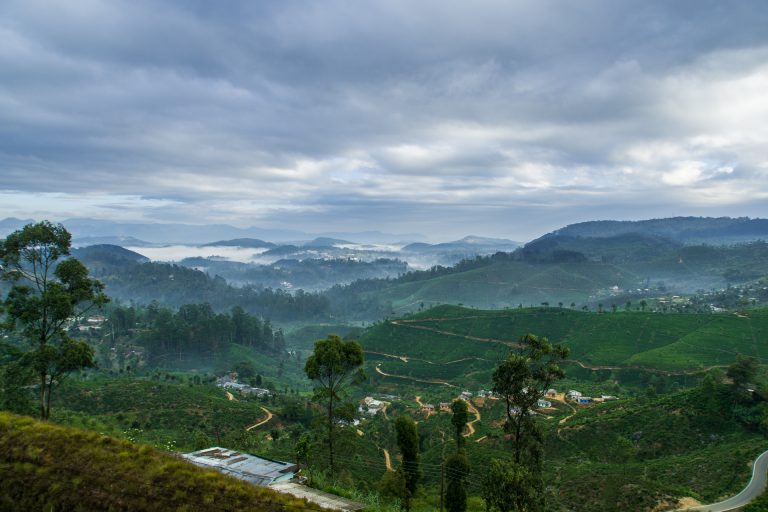
This is the part of the trip many couples remember most. Sri Lanka Tourism’s own ideas for romantic trips lean heavily on the hill country, naming Nuwara Eliya, Bandarawela, Ella and Haputale among its hill stations. Base yourselves around Haputale or Ella for three nights. Several old tea-estate bungalows in the hills now take guests. A stay in one is worth planning around, because the tea slopes are right outside the window. If you’d rather have cafés within walking distance, stay in Ella itself.
Getting there. On Day 3, drive up the A5 from Kandy through Gampola into the tea estates to Nuwara Eliya, about 75 km. Then take the train from Nanu Oya, Nuwara Eliya’s station, down the line through the tea country to Haputale or Ella. It makes for a long day, but it’s the trip’s one great train ride. Reserve seats on the Sri Lanka Railways seat reservation site up to 30 days ahead, with both passport numbers. Then check times at the station, because they change. If you have a driver, they can take the bags round by road and meet you at the other end. Repairs after Cyclone Ditwah still affect the line nearer Kandy; see the travel update at the top of this page.
Your days in the hills. You have two full days here. Start one of them with sunrise at Lipton’s Seat, high above the Dambatenne tea estate. Sri Lanka Tourism calls it the favourite lookout of the tea pioneer Sir Thomas Lipton. Recent visitors report that cloud usually covers the view by mid-morning, so it really is a sunrise trip. Take a tuk-tuk up, then walk back down through the tea. Give the other to Ella: Little Adam’s Peak, an easy climb of 30 to 45 minutes from the start of the path, recent visitors report, then the hillside above Nine Arch Bridge to watch a train cross. Our 2 Days in Ella plan has the detail. Or give it to nothing at all, with a pot of tea and the view.
The south coast: four nights by the sea (Days 6 to 9)
From Ella the road drops through the Ella Gap, past Ravana Falls beside the road, to Wellawaya and on towards the coast. Recent visitors report three to four hours by car from Ella to Mirissa.
Choose your bay for the kind of beach days you want:
- Weligama and Mirissa: neighbouring bays with plenty of places to eat. Recent visitors describe Weligama’s small, slow waves as good for a first surf lesson, and the tiny private island of Taprobane sits just off its beach. Mirissa is the base for whale watching. Sri Lanka Tourism says the season runs from November to April, and boats leave the harbour at around 6.30 am. Before you book, choose an operator that keeps its distance from the whales.
- Hiriketiya: a small horseshoe bay at Dikwella with cafés and surfers. However, recent visitors report it gets busy in the main season.
- Tangalle: a quieter choice, a string of bays either side of a fishing town. At Rekawa, to the east, a community turtle-watch programme takes visitors to see sea turtles nesting at night.
Wherever you stay, treat the sea with care. Currents along this coast can be strong, and visitors have drowned off several of these beaches in recent years. Swim where it’s calm, ask lifeguards or your hotel about conditions, and heed local warnings.
Galle Fort: the last two nights (Days 10 and 11)

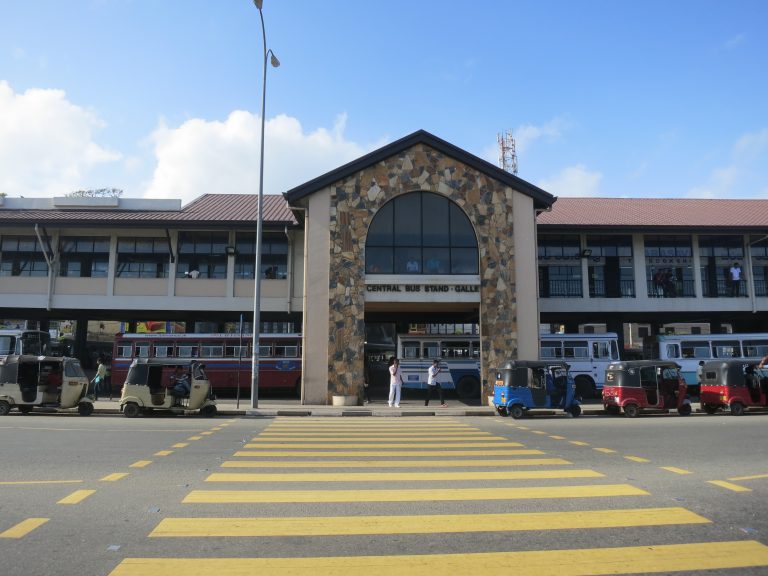
Finish in Galle Fort, the walled old town on a headland that UNESCO has listed since 1988. On the way along the coast, stop at Koggala Lake for a boat trip round its mangrove islands. There are no official prices, so agree one before you set off.
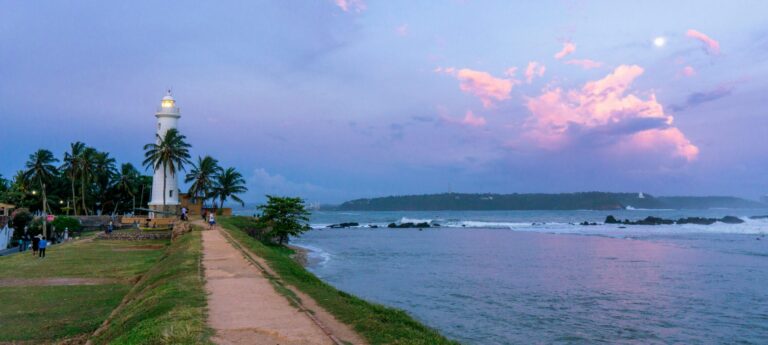
Stay inside the walls if you can. You can then walk the ramparts at sunrise and again at sunset without getting in a car, past the lighthouse and the white Meeran Mosque. In between, look into the Dutch Reformed Church, completed in 1755, and browse the shops and restaurants in the Old Dutch Hospital. Then visit the National Maritime Museum or the Galle National Museum (open Tuesday to Sunday, 9 am to 4.45 pm, except public holidays).
On Day 12, the expressways run from Galle almost all the way to the airport. Traffic around Colombo is the unknown, so leave plenty of time before your flight.
The May to September version
From May to September the south-west monsoon brings rain mostly to the south-west of the island, while the east coast has its dry season. So turn the loop round and swap the south coast for the east.
Galle Fort first (2 nights). Galle is in its rainy season now, so expect showers. The fort’s museums and its heritage galleries in the bastions, open daily from 8.30 am to 5.30 pm, are good for wet afternoons.
Tea country (3 nights). Drive east on the Southern Expressway and up through Wellawaya to Ella. Recent visitors report four to five hours of driving from Galle. The hills are fine in these months, though Horton Plains, the high plateau nearby, is often foggy.
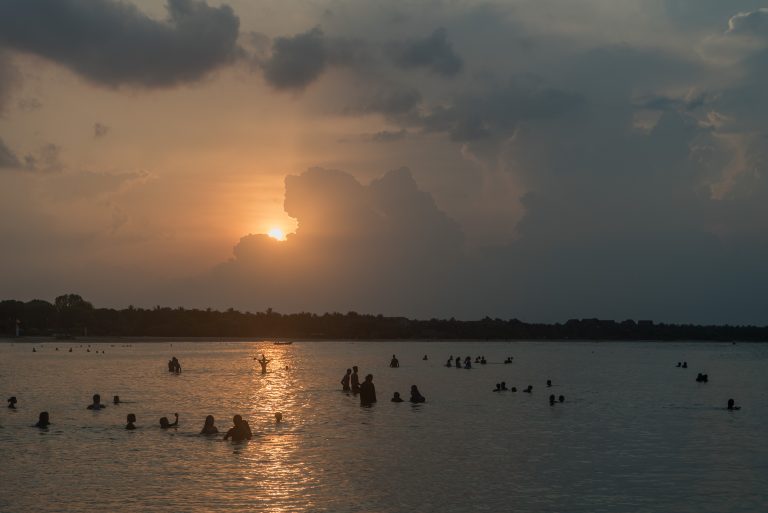
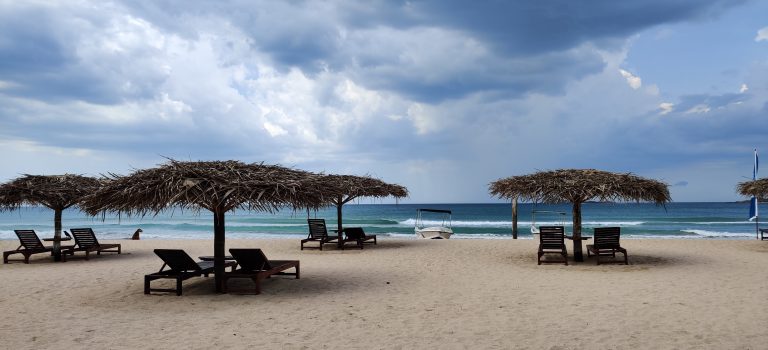
Pasikuda (4 nights). This is a full day on the road, down from the hills through Badulla and across the dry zone to the east coast. It’s worth it. Pasikuda’s bay stays shallow a long way out, so you can wade far from the shore. Its currents are also weaker than on much of the coast. Corals are protected, so don’t stand on them or take any away. If you’d rather snorkel, Nilaveli, north of Trincomalee, has boats to Pigeon Island National Park in the same months, but it adds more driving.

Kandy (2 nights). Another long day takes you west on the A11 through Polonnaruwa and Habarana and on to Kandy. Visiting in July or August? Kandy’s Esala Perahera, a series of night processions, falls in the month of Esala. The temple publishes the dates on its Esala Perahera page, and since hotels fill up early, book ahead.
This version has two long road days, the price of following the dry weather round the island. If that’s too much, skip Kandy and add the two nights to Pasikuda, accepting a longer drive back to the airport at the end.
October and November
These are inter-monsoon months, and rain is possible on both coasts. Most of the east coast’s rain falls from about October to January, while the south coast’s best months start in November. If you’re travelling then, use the December to April loop, keep the hills and Galle, and stay flexible about beach days.
Getting around
A car with a driver for the whole trip is the easy way to do this route. You also avoid luggage on trains and bus changes, and someone meets you at the station after the train ride. Tuk-tuks are handy for short trips in each place; agree the fare first. Pack clothes that cover shoulders and knees for temples, and a warm layer for the hills, where mornings can be cold.
A shorter honeymoon
With nine or ten days, drop Kandy and head straight from the airport to the hills or to Galle, keeping three stays: tea country, a beach and Galle Fort. Don’t cut the beach to fewer than three nights; after the hills, you’ll want the time.
Our ten days of beaches and mountains covers similar ground at a quicker pace.
Frequently asked questions (FAQs)
Where should we go in Sri Lanka for a honeymoon?
A mix of hill country and coast works well: a tea estate around Haputale or Ella, a beach chosen for the season, and Galle Fort. Add Kandy if you have time.
When is the best time for a honeymoon in Sri Lanka?
From December to April for the south coast, and from May to September for the east coast, where that’s the dry season. The hills can be visited all year.
How many days do we need for a honeymoon in Sri Lanka?
About eleven or twelve days lets you spend two nights or more in four places. With nine or ten, keep three stays.
Can we see whales on our honeymoon?
Yes, from Mirissa between November and April. Boats leave the harbour at around 6.30 am, so it suits the beach part of the December to April loop.
Is the train ride worth it?
Yes. The stretch from Nanu Oya down to Haputale or Ella runs through tea country, and it’s the one train journey on this plan. Book reserved seats up to 30 days ahead.
Sources: srilanka.travel (romantic sri lanka), en.wikipedia.org (Bandaranaike International Airport), botanicgardens.gov.lk, sridaladamaligawa.lk (faq), sridaladamaligawa.lk (kandy esala perahera), en.wikipedia.org (A5 road (Sri Lanka)), srilanka.travel (index.php), seatreservation.railway.gov.lk, en.wikipedia.org (Haputale), ft.lk, srilanka.travel (attraction&), en.wikipedia.org (Ella, Sri Lanka), srilanka.travel (attraction&), en.wikipedia.org (Weligama), en.wikipedia.org (Taprobane Island (Weligama)), srilanka.travel (attraction), srilanka.travel (whale watching), en.wikipedia.org (Dikwella), en.wikipedia.org (Tangalle), gov.uk, newswire.lk (foreign tourist rescued from drowning…), newswire.lk (surfing trip ends in tragedy…), whc.unesco.org, galleheritage.gov.lk, museum.gov.lk, uda.gov.lk, en.wikipedia.org (Koggala Lagoon), en.wikipedia.org (Expressways of Sri Lanka), en.wikipedia.org (Pasikudah), newswire.lk (coral reef survey launched in…), en.wikipedia.org (Nilaveli), srilanka.travel (attraction), en.wikipedia.org (A11 road (Sri Lanka)), en.wikipedia.org (Climate of Sri Lanka) and recent visitor reports. Header photo: calflier001 / Wikimedia Commons, CC BY-SA 2.0.