Sri Lankan food starts with rice, coconut and spice, with a lot of seafood around the coasts. Rice and curry is the backbone and can turn up at any meal; hoppers and string hoppers are breakfast and dinner food, and kottu is the classic evening street food. Below are the dishes worth knowing, what goes into them, and where they come from, as far as the record actually shows.
Rice and curry
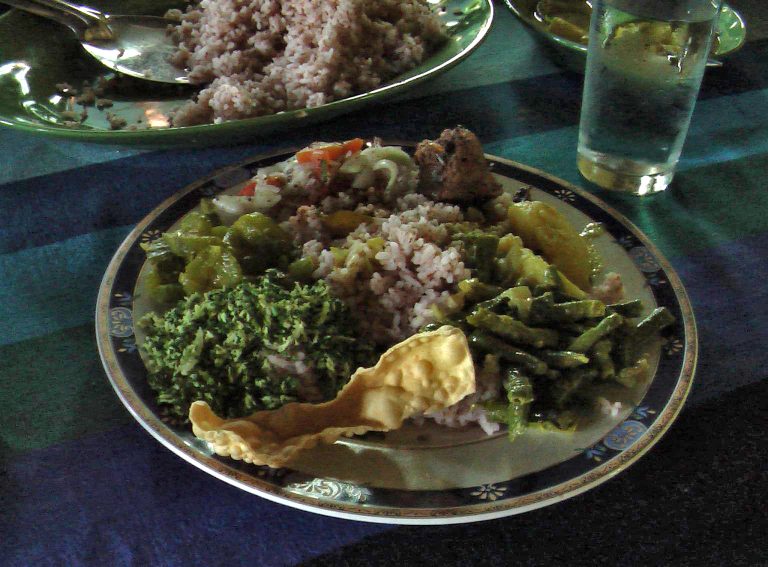
This is the everyday meal: a mound of boiled or steamed rice, often red rice, with several small curries around it. Expect one of fish or meat and the rest made from vegetables, lentils (dhal, or parippu) or fruit such as jackfruit, plus sambols, pickles and a papadum. Each dish is a small portion, and in homes and many local places someone refills an empty bowl.
The sambol is usually the hottest thing on the plate. To make pol sambol, cooks pound fresh grated coconut with chilli, shallots, lime and salt, often with Maldive fish. Coconut runs through the whole cuisine, both grated and as coconut milk.
Recent visitors (2025–26) report that rice and curry is best at lunchtime, when it is fresh from the pot. In the evenings, they say, many local places switch to kottu and hoppers. If you find the chilli too much, mix in more rice and dhal; in tourist areas many restaurants also offer milder versions.
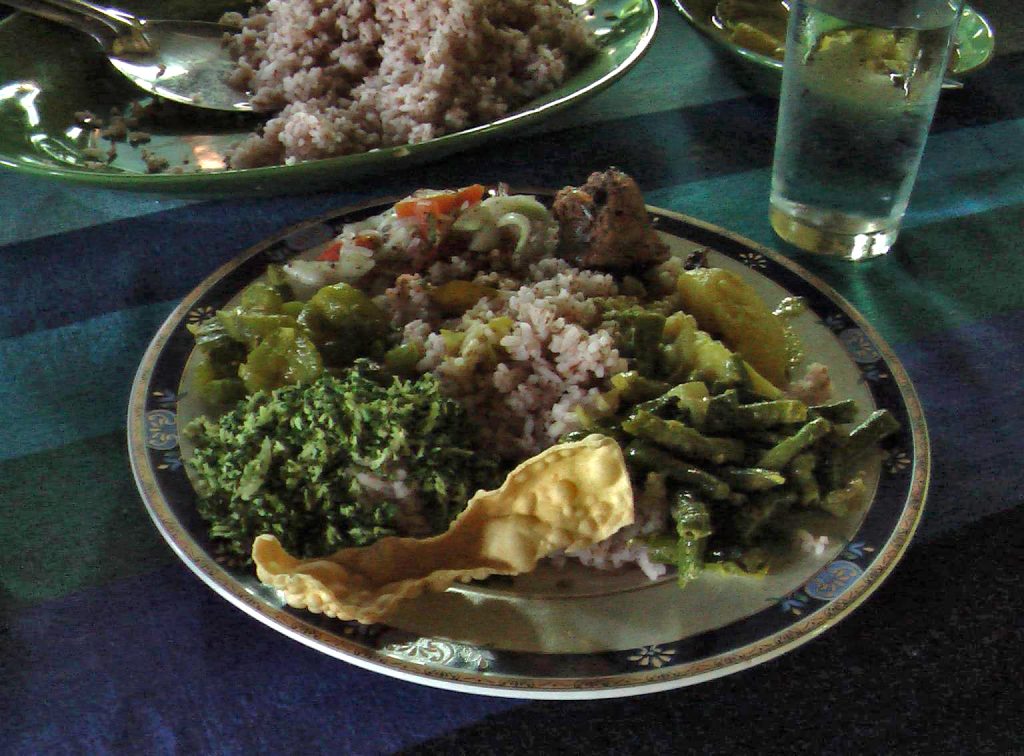
A note for vegetarians: plenty of curries are vegetable or lentil-based, but cooks use Maldive fish, smoked and cured tuna, widely in vegetable dishes and in pol sambol. Ask before you assume a vegetable curry is meat-free. Our guide to eating vegetarian and vegan in Sri Lanka has more.
Hoppers and string hoppers
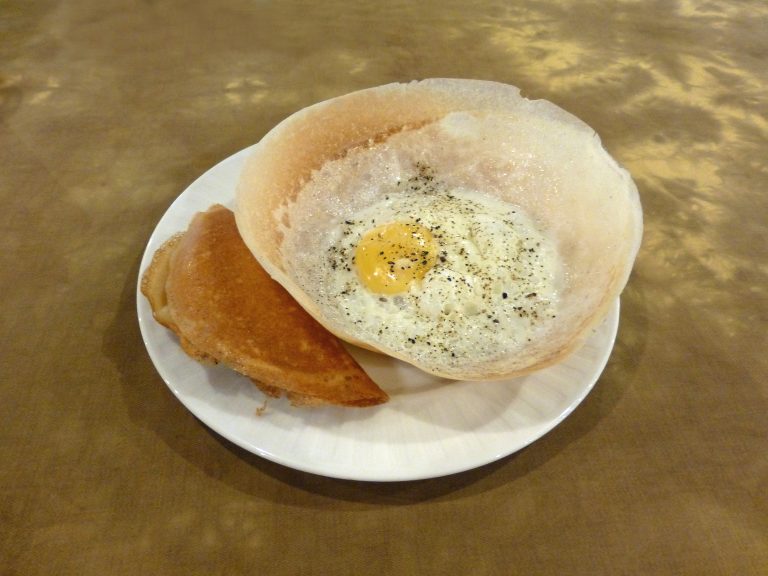
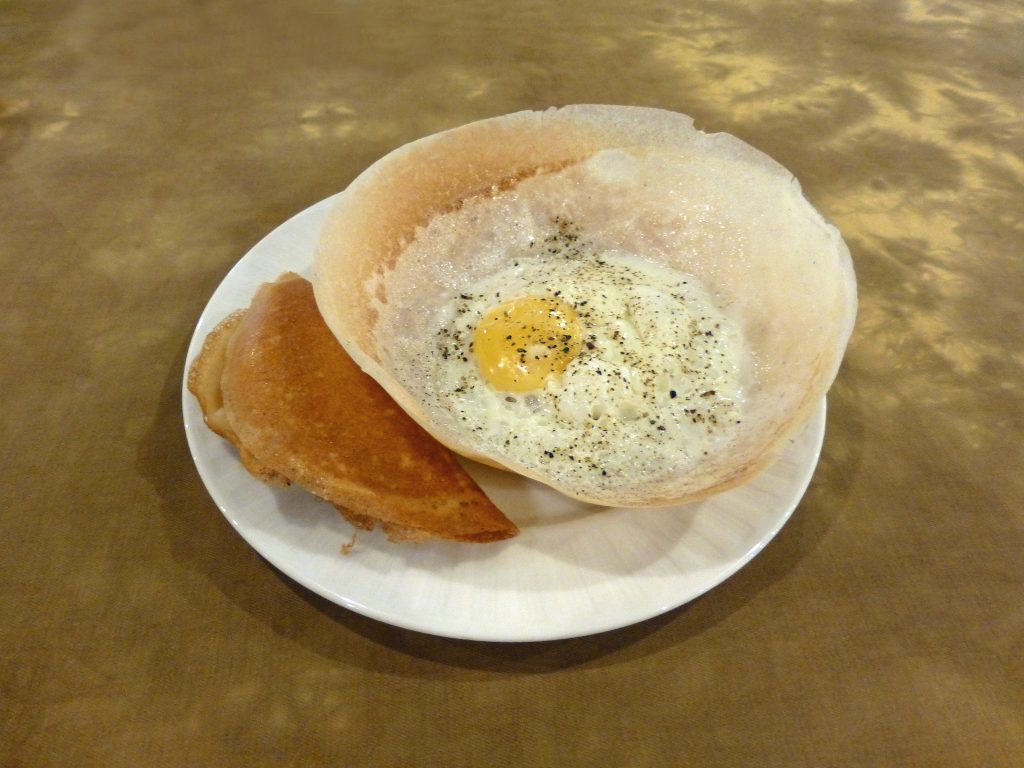
Hoppers (appa in Sinhala, appam in Tamil) are bowl-shaped pancakes of fermented rice flour and coconut milk, crisp at the edges and soft in the middle. An egg hopper has an egg cooked into the bowl. You eat plain ones with lunu miris, a fiery relish of red onion and chilli, and a curry, or with jaggery and bananas if you want something sweet. Sri Lanka Tourism lists them as breakfast and dinner food.
String hoppers (idiappa, or idiyappam in Tamil) are little nests of steamed rice-flour noodles, pressed through a mould and served with a curry, dhal and pol sambol, again mostly at breakfast or dinner.
Neither is unique to the island: people across Tamil Nadu and Kerala in southern India also eat appam and idiyappam, and most accounts say idiyappam originated there.
Kottu
For kottu, or kottu roti, the cook chops godamba roti (a thin wheat flatbread) on a hot iron griddle with vegetables, egg and usually meat. Two heavy metal blades do the chopping. The name comes from the Tamil word for “chopped”. It is evening street food, and you’ll usually hear a kottu stall before you see it: the clatter of blades on the griddle carries down the street.
Where it was first made is less certain than many food guides suggest. Some accounts credit Colombo; others trace it to the east coast, around Batticaloa and Trincomalee, in the 1960s or 1970s. We’d treat any confident claim either way with caution.
Lamprais
Lamprais is the Dutch Burgher community’s contribution to the island’s food. The cook packs rice cooked in meat stock into a banana leaf. In go a mixed-meat curry, frikkadel meatballs, a sweet onion sambol, an aubergine curry and shrimp paste, and then the parcel goes into the oven. The name comes from the Dutch for a lump or packet of rice. It takes a long time to prepare and is filling, which is why it tends to appear at large gatherings.
Kiribath
Kiribath, “milk rice”, is rice simmered in coconut milk, then pressed flat and cut into diamonds or squares. People eat it for breakfast and at auspicious moments, above all at the Sinhala and Tamil New Year in April. In Sinhalese homes it is the first meal of the new year. It comes with lunu miris, or sweet with jaggery and bananas.
Food from Jaffna and the north
Northern cooking is its own thing, close in many ways to southern Indian cooking and built around seafood and the palmyra palm. Look out for two dishes in particular in Jaffna:
- Jaffna crab curry: crab, usually blue swimmer or mud crab, simmered with coconut milk, curry leaves, spices and drumstick (murunga) pods. It comes with rice or pittu and is properly hot, and you’ll be eating it with your fingers.
- Odiyal kool: a thick seafood broth with crab, fish, prawns, cuttlefish and vegetables such as long beans and jak seeds, thickened with flour made from palmyra roots.
Sweet things, fruit and drinks
- Watalappam: a steamed coconut-milk and jaggery custard, spiced with cardamom and nutmeg. Most accounts say it arrived with the island’s Malay community. It has close links with the Muslim community and Eid celebrations.
- Wood apple: the fruit (divul in Sinhala) has a shell hard enough to need cracking open and sticky, sour brown pulp inside. People usually drink it as a sweetened juice, or make it into divul kiri with jaggery and coconut milk.
- King coconut: the orange-skinned thambili is a coconut variety native to Sri Lanka, and you drink its water rather than eat it.
- Toddy and arrack: toddy is the mildly alcoholic, naturally fermented sap of coconut flowers, collected by tappers who climb the palms. Distilled, it becomes coconut arrack, the most popular local spirit, often drunk with ginger beer. Makers often blend cheaper arrack with neutral spirit, so check the label if you want pure coconut arrack.
Drinking and eating sensibly
Buy spirits in sealed bottles from licensed shops and bars; the Sunday Times has written about adulterated arrack and a thriving trade in illicit moonshine (kasippu). The UK government also warns that drinks in Sri Lanka are often stronger than at home because bars and hotels rarely use measures, and not to leave drinks unattended. Liquor shops and bars close on Poya days, once a month at full moon, so plan around those dates.
For food and water safety, and what to do if your stomach objects, see our Sri Lanka health guide. Recent visitors (2025–26) report that busy stalls with a quick turnover are the safest bet for street food, and that small places often have no menu or prices on display, so ask the price before you order.
See the ingredients at Pettah Market
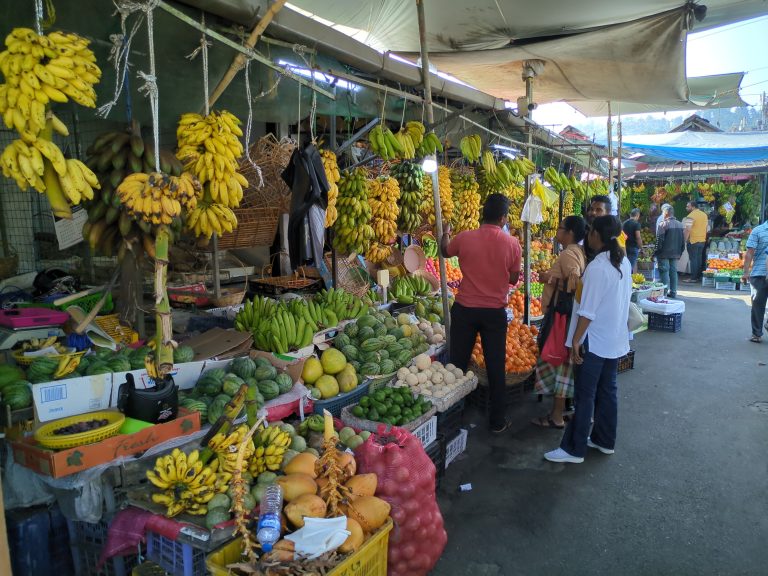
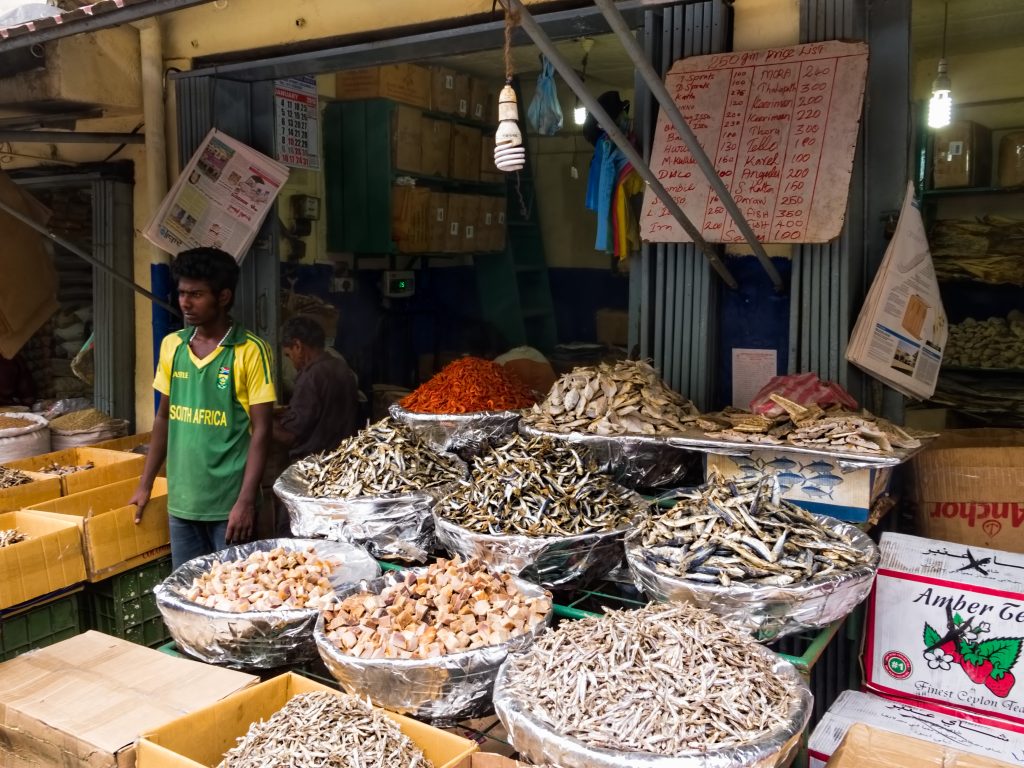
For the raw ingredients, walk through Pettah Market in Colombo, where fruit and vegetable stalls and dried-fish shops sit among the wholesalers. Even if you buy nothing, it shows you what goes into the curries you’ll be eating. To learn to cook them, see our guide to Sri Lankan cooking classes.
Frequently asked questions (FAQs)
What is the national dish of Sri Lanka?
There is no official one, but rice and curry is the everyday meal: rice with several small curries of fish or meat, vegetables and dhal, plus sambols and papadum.
Is Sri Lankan food very spicy?
Often, yes, especially the sambols and northern dishes such as Jaffna crab curry. Rice and dhal calm things down, and many restaurants in tourist areas offer milder versions.
What are hoppers?
Bowl-shaped pancakes of fermented rice flour and coconut milk, eaten at breakfast or dinner. An egg hopper has an egg cooked into the middle.
Is Sri Lankan food good for vegetarians?
There are lots of vegetable and lentil curries, but many vegetable dishes and pol sambol contain Maldive fish, so ask before you order.
What is lamprais?
A Dutch Burgher dish of rice cooked in stock, baked in a banana leaf with a mixed-meat curry, frikkadel meatballs and sambols.
What is arrack made from?
Sri Lankan coconut arrack is distilled from toddy, the fermented sap of coconut flowers. Makers often blend cheaper brands with neutral spirit.
Header photo: Dan Lundberg / Wikimedia Commons, CC BY-SA 2.0.