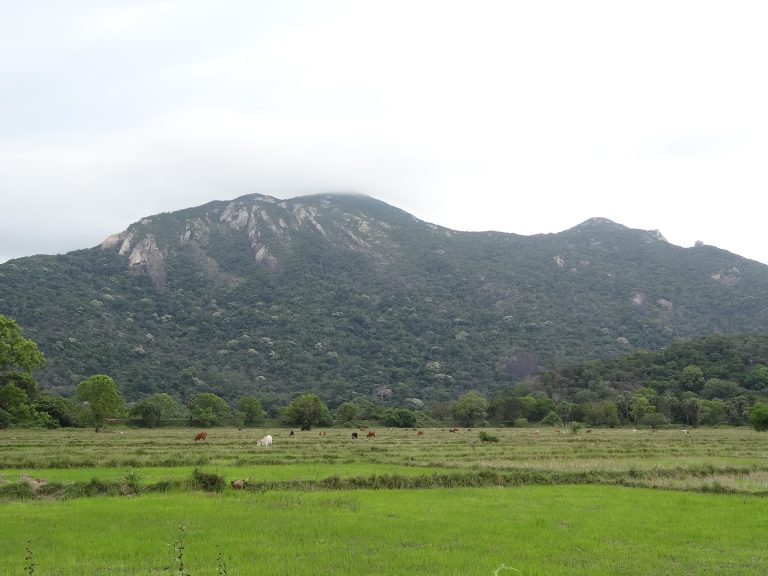
Arankele is the ruin of an ancient Buddhist forest monastery at the foot of a forested hill north of Kurunegala, reached from the Kurunegala–Dambulla road at Ibbagamuwa. It is not a site of grand stupas or carvings. You come for stone meditation paths running through shady forest, the plain stone buildings of monks who chose to live with almost nothing, and the fact that monks still meditate here today.
Is it worth visiting?
Go if you like quiet places and old stonework more than big monuments, or you’ve seen Ritigala and want to see a monastery of the same kind that is still in use. It is a deeply peaceful place.
Think twice if you want carvings, paintings or a dramatic view. Arankele’s buildings were deliberately plain. And because it is a living monastery, it isn’t a place for loud groups, picnics or a photo shoot.
Who lived here
No chronicle records when Arankele was founded. Its caves were in use long before the stone buildings, and tradition holds that the Arahant Maliyadeva, said to be the last arahant (a fully enlightened monk) of Sri Lanka, lived here. The monastery you walk through today is generally dated to the later Anuradhapura period, when it was home to the pansukulika monks.
The name means “rag-robe wearers”. These monks dressed in cloth salvaged from rubbish heaps and cremation grounds, and they wanted their buildings as bare as their robes. You won’t find a single guard stone, carved dwarf or scrolling creeper here. The Sunday Times, visiting in August 2026, noted that the only decoration in the whole complex is on the urinal stones.
The site is now protected by the Department of Archaeology, and a community of meditating monks lives in the forest around it, in the Sri Maliyadeva Aranya.
What you see
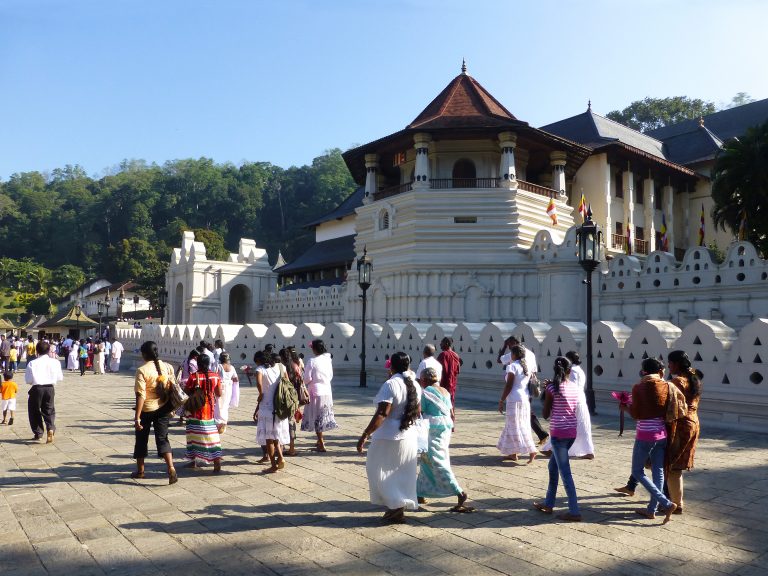
- The bath house: the first ruin by the entrance is a jantaghara, a hot-water bath house built around a square pond. Medicinal leaves were boiled in pots here, and the Temple of the Sacred Tooth Relic‘s own description of Arankele mentions medicinal baths and the remains of a hospital.
- The great pond: a large stone-lined bathing pond with steps leading down to the water. A local story says crows once stole Maliyadeva’s alms food from its steps, and that no crow has been seen at Arankele since.
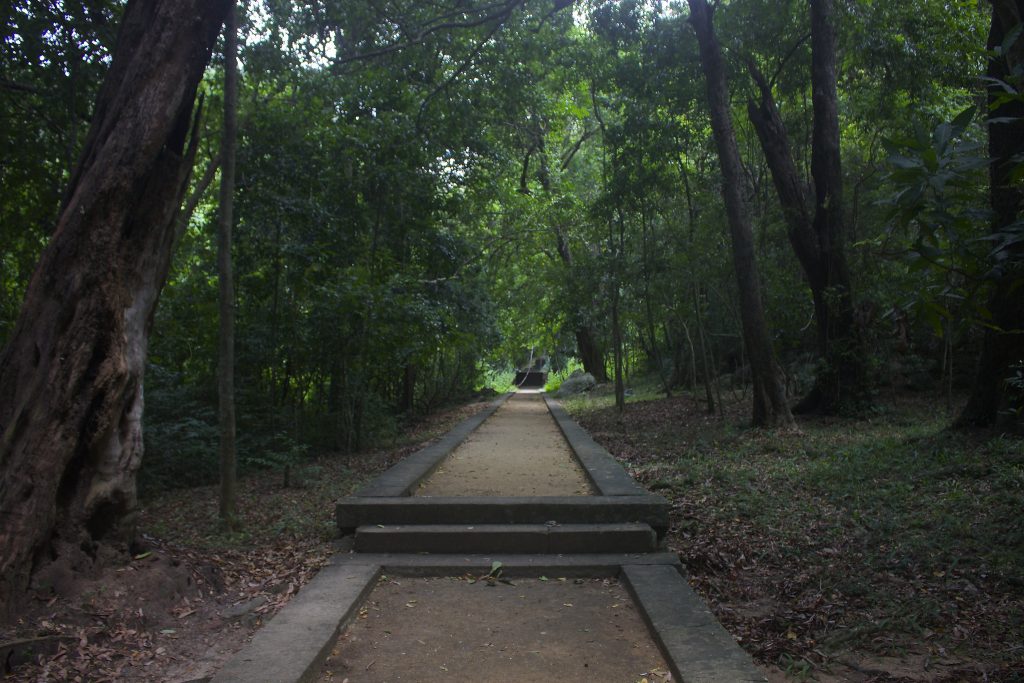
- The meditation walkway: a long, straight path of packed earth edged with dressed stone, raised above the forest floor and broken by short flights of steps. Monks walked it slowly as a form of meditation. Look out for the small circular platforms along the way, which people say let two walking monks pass without breaking concentration, and for the ruins of a walking hall that was once roofed.
- The double platforms: pairs of raised stone terraces joined by a stone bridge, the layout that forest monasteries of this period used for their meditation buildings. You’ll find the same plan at Ritigala.
- Maliyadeva’s cave: the walkway ends at a cave under a rock outcrop, walled with neatly cut stone blocks and divided into a hall and two small rooms. Tradition says this is where Maliyadeva lived.
Visitors suggest allowing two to three hours, which gives you time to walk the main path to the cave and back slowly. The forest is shady, which makes Arankele more pleasant in the heat than many open ruins, but take water and insect repellent, and watch for macaques in the canopy.
How to behave at a working monastery
This is the part that matters most. Monks come to Arankele to meditate, and the ruins are part of their daily practice, not a backdrop.
- Keep your voice low, and stay quiet near the caves and the walkway when monks are using them.
- Don’t go into caves or buildings that are clearly lived in, and never photograph a monk without asking.
- Dress for a temple: shoulders and knees covered, and shoes off where you see others remove theirs. The UK government’s travel advice also warns against posing for photos in front of Buddha statues. Our guide to temple etiquette in Sri Lanka covers the rest.
- Take your rubbish with you. There are no stalls inside the forest.
Getting there and tickets
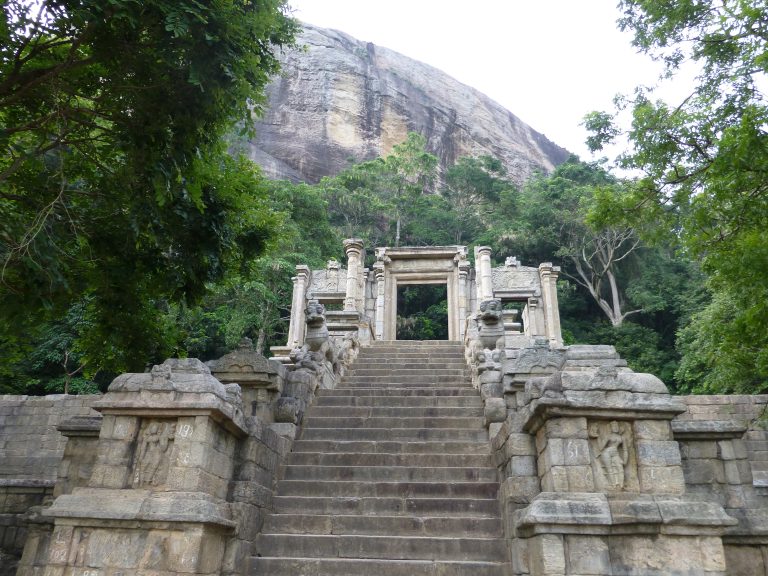
From Kurunegala, follow the Kurunegala–Dambulla road to Ibbagamuwa junction and turn left onto the Madagalla road. Buses run from Kurunegala, but a tuk-tuk or car is far easier, especially if you are combining Arankele with other sights in the district. Also in Kurunegala District, Yapahuwa Rock Fortress was a royal capital in the 13th century.
We found no official entrance fee or opening hours published for Arankele, and visitor reports say there is no ticket. A small donation at the monastery is a kind gesture.
Frequently asked questions (FAQs)
What is Arankele famous for?
Its forest meditation walkway and the plain stone buildings of the pansukulika, or rag-robe, monks who lived here in the Anuradhapura period. Monks still meditate here today.
Where is Arankele?
In the Kurunegala District, reached by turning off the Kurunegala–Dambulla road at Ibbagamuwa junction and following the Madagalla road.
Is there an entrance fee at Arankele?
We found no official fee published, and visitor reports say there is no ticket. A small donation is appreciated.
Can tourists visit Arankele monastery?
Yes, but it is a working monastery. Dress modestly, keep quiet, and stay out of caves and buildings where monks live.
How is Arankele different from Ritigala?
Both were forest monasteries with the same double-platform buildings. Ritigala lies on the slopes of a mountain protected as a strict nature reserve and has a Central Cultural Fund ticket; Arankele is still home to monks.
Sources: sundaytimes.lk, sridaladamaligawa.lk, en.wikipedia.org (Padhanaghara), en.wikipedia.org (Ritigala), ccf.gov.lk, gov.uk and recent visitor reports. Header photo: Suranga D Wijeratne / Flickr, CC BY 2.0.