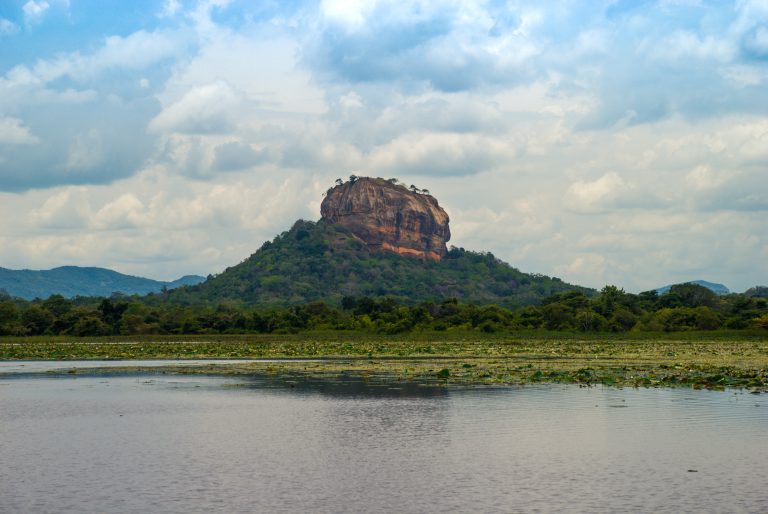
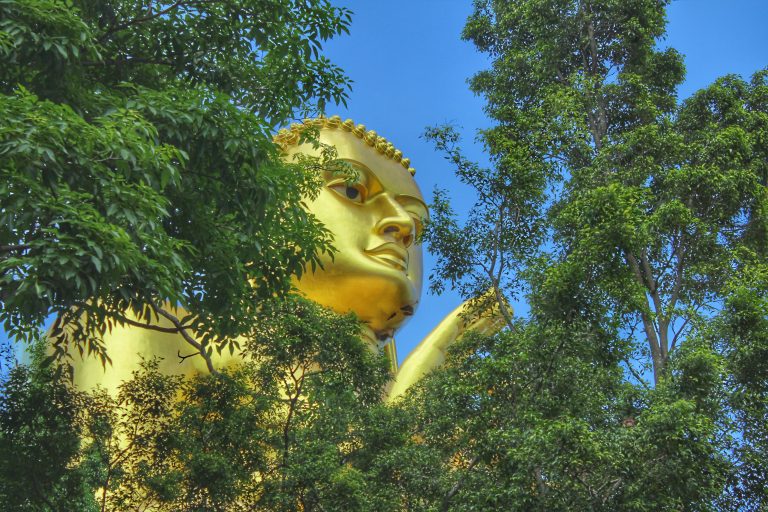
“Sigiriya or Dambulla?” is really two questions. The first is which sight to see if you only have time for one. Is it the rock fortress of Sigiriya or the painted Dambulla Cave Temple? The second is where to sleep while you see them: Sigiriya village or Dambulla town. The two places are only a short drive apart, so the answers don’t have to match.
The short version: if you see one sight, make it Sigiriya. If the ticket price or the climb puts you off, Dambulla’s caves are a superb alternative. To stay, choose Sigiriya village for quiet and early starts on the rocks, and Dambulla for buses, banks and shops.
The sights: a fortress or a cave temple
Sigiriya is the 5th-century capital of King Kassapa I, built on and around a granite rock and listed by UNESCO since 1982. The visit takes you through water gardens, past frescoes, the Mirror Wall and the giant Lion’s Paws. Then steep metal staircases lead to the palace foundations on the summit. It’s a big outing. The Central Cultural Fund allows 1.5 to 2 hours for the climb, and recent visitors (2025–26) report around three hours for the whole site.
The Dambulla Cave Temple is a complex of five cave shrines high on a rock above Dambulla town. UNESCO listed it in 1991. It calls it a sacred pilgrimage site for 22 centuries and the largest, best-preserved cave-temple complex in Sri Lanka. Inside are about 2,100 square metres of murals and 157 statues, including a great rock-cut reclining Buddha. A long climb up granite steps leads to the caves, and shoes come off at the top.

Side by side
- What you see: Sigiriya is ruins, gardens and a view from the top. Dambulla is a working temple full of paintings and statues.
- The climb: both involve steps in the heat. Sigiriya’s upper staircases cling to the rock face, which can be hard with a fear of heights. Dambulla is a long climb on granite steps, but nothing exposed.
- Time: about three hours for the whole of Sigiriya, by visitors’ accounts.
- Cost: Sigiriya’s foreign ticket is USD 35, and USD 20 for children aged 6 to 12, paid in rupees at the CCF rate. That’s from the Central Cultural Fund’s price list updated 24 September 2026. Dambulla isn’t on that list. Foreign visitors pay an entrance fee at the office at the foot of the rock, and no current official price is published.
- Dress: at Dambulla, cover your shoulders and knees; recent visitors report staff turning away those who don’t. Sigiriya isn’t a temple, but you’ll want a hat and water.
- Photos: you may not photograph Sigiriya’s frescoes. At Dambulla, Sri Lanka Tourism asks you not to pose beside statues or murals. It warns that flash damages the old paintings.
Don’t confuse Dambulla’s caves with the modern building at the foot of the rock. That’s a Buddhist museum topped by a large golden seated Buddha. The painted caves are at the top of the climb.
Can you do both in a day?
Yes, and most people do. Start at Sigiriya when the ticket counters open at 7 am, before the heat. Visit the caves in the late afternoon, as Sri Lanka Tourism recommends the morning or evening for Dambulla’s climb. Add Pidurangala Rock at sunrise if you have the energy: our guide to Sigiriya or Pidurangala explains that choice.
Where to stay: Sigiriya village or Dambulla town
Sigiriya village lies a few minutes from the rock. It’s the quieter choice, and it makes the early starts on Sigiriya and Pidurangala easy. Recent visitors warn that wild elephants sometimes cross the roads around Sigiriya, especially in the dark. Heed local warnings if you walk or cycle before dawn.
Dambulla is the crossroads town of the Cultural Triangle, where the A9 from Kandy to Jaffna meets the A6 to Sigiriya, Habarana and Trincomalee. It’s a busy working town, with banks, shops, a wholesale vegetable market and the region’s bus station. Buses run to Colombo, Kandy, Anuradhapura, Polonnaruwa, Trincomalee and Sigiriya. Recent visitors report local buses to Sigiriya until early evening. Stay here if you travel by bus or arrive late. Stay at Kandalama, east of town, if you want a resort by a reservoir and have a car.
Neither has a railway station. The nearest is Habarana, on the Batticaloa line.
Which should you choose?
- One sight, first trip: Sigiriya.
- One sight, on a budget or nervous of heights: the Dambulla Cave Temple.
- Art and living religion over ruins: Dambulla.
- Somewhere to sleep near the rocks: Sigiriya village.
- Travelling by bus: Dambulla.
- Both sights and Polonnaruwa or Minneriya too: either works as a base for two or three nights. Our 5 days in the Cultural Triangle itinerary plans it.
If you’re also weighing up the hill country, Kandy or Sigiriya compares those bases.
Frequently asked questions (FAQs)
Is Sigiriya or Dambulla better?
For a single sight on a first trip, Sigiriya, the 5th-century rock fortress. Choose the Dambulla Cave Temple, with its painted caves and 157 statues, if you prefer art and a living temple. It also avoids Sigiriya’s USD 35 ticket and exposed staircases.
Can you visit Sigiriya and Dambulla in one day?
Yes. Climb Sigiriya when the ticket counters open at 7 am and visit Dambulla’s caves in the late afternoon, when the climb is cooler.
Should I stay in Sigiriya or Dambulla?
Sigiriya village for quiet and early starts on the rocks; Dambulla for buses, banks and shops. They’re a short drive apart.
How much is the Dambulla Cave Temple ticket?
Foreign visitors pay at the office at the foot of the rock, but no current official price is published. Recent visitor reports quote different amounts.
Is there a train to Sigiriya or Dambulla?
No. Neither has a station; the nearest is Habarana, on the Batticaloa line. Most people arrive by road.
Header photo: Cherubino / Wikimedia Commons, CC BY-SA 3.0.