Sri Lanka is small enough to cross in a day, yet a good birding trip can take you from rainforest to salt lagoon to highland park in a week. This guide sorts the places on ConnectLanka by the kind of bird habitat they offer, so you can pick two or three that suit your route and the month you are travelling.
Is this guide for you?
Go if you want to know where in Sri Lanka birds are the main reason to turn up, not an extra on an elephant safari, and which of our guides to read before you go.
Think twice if you want a species checklist or a day-by-day itinerary. This is a map of where to look, and each park guide has the detail on getting in, timing and what recent visitors found.
Where to look, by habitat
Rainforest
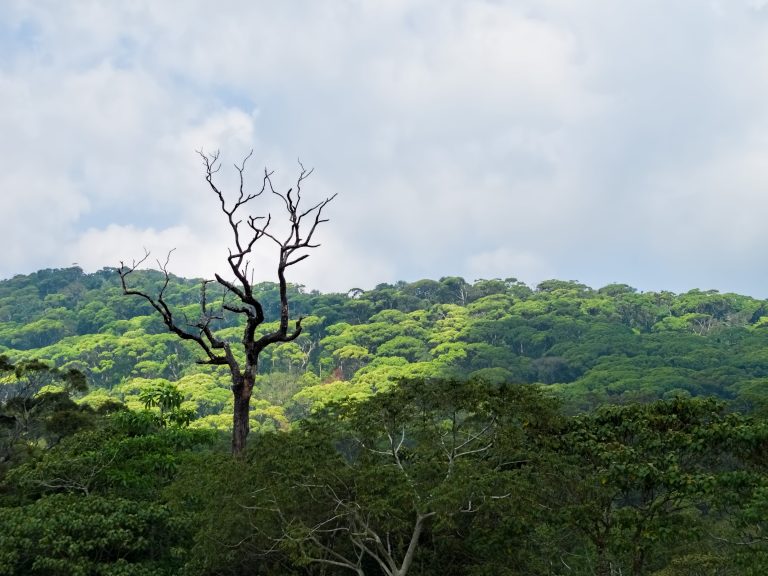
Sinharaja Forest Reserve is the obvious first stop for forest birds: UNESCO records that 19 of Sri Lanka’s 20 endemic bird species have been seen there. Entry is by permit only and recent visitors (2025) report that a guide is compulsory, which suits birding anyway, since most of what you want is heard before it is seen. See Sinharaja Forest Reserve.
If you are working your way down from the hills, Kitulgala is a lower-key way to meet some of the same rainforest species. Birdwatchers stay there because the secondary forest around the town holds many birds also found at Sinharaja, in more open country, and it is where the ornithologist Deepal Warakagoda first detected the Serendib scops owl by its call in 2004. See Kitulgala.
In Kandy, Udawattakele Forest Reserve is a short walk from the Temple of the Tooth and has about 80 recorded bird species, including the endemic Layard’s parakeet and yellow-fronted barbet. It is a good use of an early morning before the temple crowds. See Udawattakele Forest Reserve.
Wetlands and lagoons in the south and east
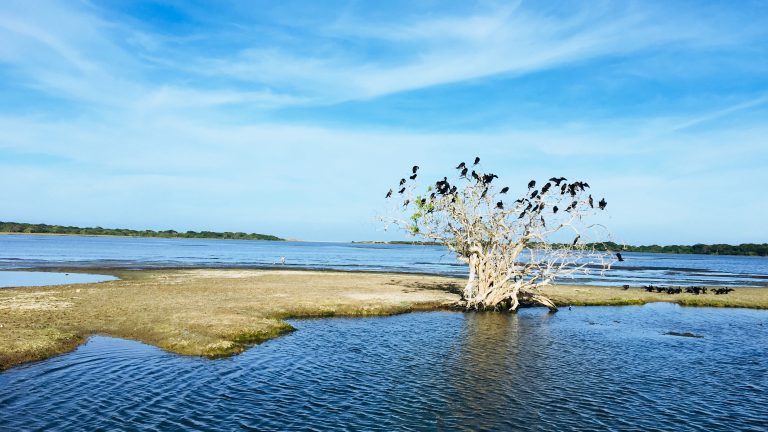
Bundala National Park is the one most birders ask about: a lagoon and shore system where the mix of salt and fresh water, mud and open shore is what draws the birds. Sri Lanka Tourism gives September to March as the best time, when the migrants are in. One caution: reports in 2026 say the flamingos have largely stopped coming as the water has become fresher, so do not plan around them. See Bundala National Park.
Kumana National Park, formerly Yala East, is best known for its birds, especially the waterbirds that nest in the Kumana villu, a mangrove swamp near the coast. Its bird sanctuary dates from 1938, and black-necked storks and lesser adjutants are among the rare breeders. Recent visitors report fewer jeeps than at Yala. See Kumana National Park.
Birds are a side attraction at Yala National Park, but its lagoons and tanks draw painted storks, black-necked storks and spot-billed pelicans, and migrants stay in and around the park from September to March. See Yala National Park.
Reservoirs and dry-zone parks
Udawalawe National Park has about 184 recorded bird species, 33 of them migratory, according to Wikipedia and Ceylon Expeditions. The endemics include the Sri Lanka junglefowl and the Sri Lanka grey hornbill, and painted storks and spoonbills work the reservoir. See Udawalawe National Park.

Wasgamuwa National Park has recorded around 143 bird species, eight of them endemic, among them the red-faced malkoha and the Sri Lanka junglefowl, plus painted storks, black-headed ibises and spoonbills on the water. See Wasgamuwa National Park.
Minneriya and Kaudulla are known for elephants, but together with Giritale they form one of Sri Lanka’s Important Bird Areas, and Sri Lanka Tourism notes the Minneriya tank matters for large water birds such as painted storks and spot-billed pelicans. At Kaudulla more than 160 bird species have been recorded, including spot-billed pelicans and lesser adjutants. See Minneriya National Park and Kaudulla National Park.
Wilpattu National Park is thick forest broken by natural lakes. Wading birds work the margins, and painted storks, openbills, little cormorants, spoonbills, black-headed ibises and purple herons are all on the park’s list. Recent visitors describe quiet half-days there, so it suits you if you would rather watch birds than hunt for leopards. See Wilpattu National Park.
Gal Oya National Park is mostly seen from a boat on the reservoir, which puts you close to Bird’s Island, where birds, eagles among them, nest. See Gal Oya National Park.
The north and the north-west
Quieter and less visited, these are for birders happy to arrange things themselves. Chundikkulam National Park was a bird sanctuary before it became a national park in 2015; the species listed by Wikipedia and tour operators include greater flamingo, Eurasian spoonbill, painted stork, oriental ibis, black-winged stilt, godwits and sandpipers, but treat those as records, not promises. Kokkilai Lagoon has been a bird sanctuary since 18 May 1951. Anawilundawa Wetland is a sanctuary of village tanks and marshes that shelters resident and migratory water birds, roughly October to April. See Chundikkulam National Park, Kokkilai Lagoon and Anawilundawa Wetland.
Hill country
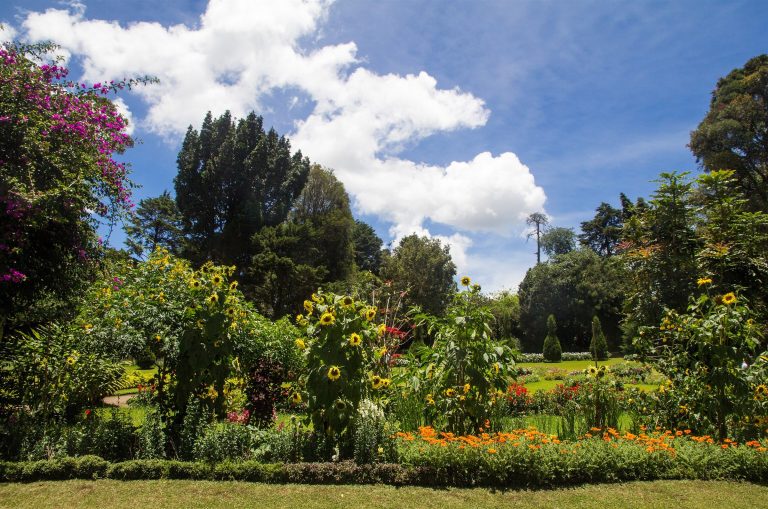
Victoria Park in Nuwara Eliya is one of the better places in the hill country to look for winter migrants. It is best known for the pied thrush and the Kashmir flycatcher, both winter visitors to the highlands, and a birding writer visiting in March 2025 found the thrushes beside the small stream, hidden in the undergrowth. Go early. See Victoria Park, Nuwara Eliya.
Close to Colombo and the south-west coast
If you only have a morning, Beddagana Wetland Park in the Colombo area is run by the Urban Development Authority as a home for wetland birds, butterflies and dragonflies. Diyasaru Park has boardwalks, a bird-watching tower and a bird hide, opens at 6 am, and has recorded more than 50 migratory bird species. On the south-west coast, Madu Ganga‘s mangroves have more than a hundred recorded bird species, from kingfishers and cormorants to herons, best on a slow boat trip in the early morning or late afternoon. See Beddagana Wetland Park, Diyasaru Park and Madu Ganga.
When to go
Resident birds, including the endemics, are there all year. For migrants, the sources we have put the season somewhere between September and April depending on the site: September to March at Bundala and Yala, November to March at Udawalawe, and roughly October to April at Anawilundawa. The winter migrants at Victoria Park are, as the name suggests, a winter sight. Rain and road conditions also shape a trip, so read Best Time to Visit Sri Lanka before you fix dates.
Planning a birding trip
- Go early. Park and lagoon guides here repeat the same advice: the first hours after sunrise are the coolest and the most active for birds.
- Take a guide where it is offered or required. At Sinharaja, recent visitors (2025) report a guide is compulsory; elsewhere a local guide through your accommodation helps with the birds you hear but cannot see.
- Combine, don’t chase. Udawalawe, Yala, Bundala and Kumana can sit on one southern loop, and Minneriya and Kaudulla can be combined from Habarana or Polonnaruwa. Our Sri Lanka Wildlife Safari itinerary joins several of these.
- Check fees and permits officially. The Department of Wildlife Conservation’s site, [dwc.gov.lk](https://www.dwc.gov.lk/), is the official starting point for the national parks, and Sri Lanka Travel Costs covers the budget side. Closures happen, so look at the travel update at the top of each park guide too.
- Go gently. Wildlife etiquette is covered in Responsible Travel in Sri Lanka.
Frequently asked questions (FAQs)
Which place is best for endemic birds?
Sinharaja Forest Reserve: UNESCO’s listing records 19 of Sri Lanka’s 20 endemic bird species there. Udawalawe and Wasgamuwa also hold endemics such as the Sri Lanka junglefowl.
Where can I see migratory waterbirds?
Bundala, Kumana, Udawalawe, Yala and the northern and north-western lagoons such as Chundikkulam and Anawilundawa all list migratory waterbirds, mainly between about September and April.
Can I go birdwatching near Colombo?
Yes. Beddagana Wetland Park and Diyasaru Park are both in the Colombo area, and Diyasaru has a bird-watching tower and a bird hide.
Do I need a guide for birdwatching?
At Sinharaja recent visitors (2025) report that a guide is compulsory. Elsewhere it is optional, but a local guide helps you find and identify birds you only hear.
What time of day is best for birds?
Early morning, in the first hours after sunrise, at the parks and wetlands covered here.
Header photo: Thimindu Goonatillake / Wikimedia Commons, CC BY-SA 2.0.