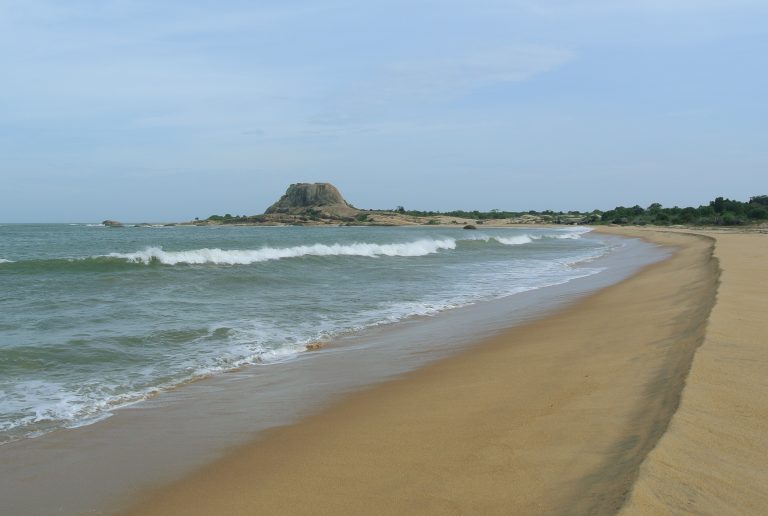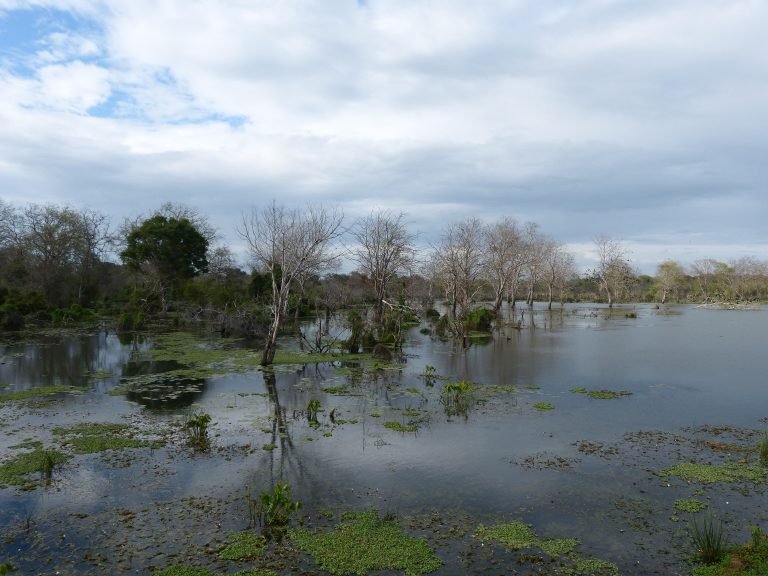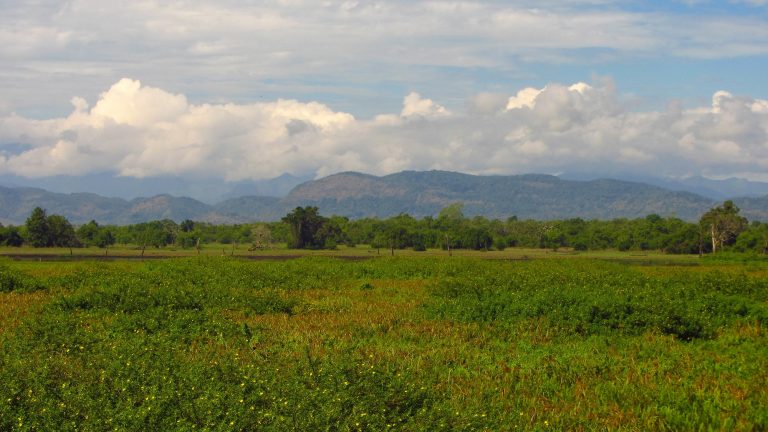

Bundala National Park is a coastal wetland park on Sri Lanka’s south coast in Hambantota District, between Hambantota and Tissamaharama. Its shallow, brackish lagoons, salt pans, thorny scrub and sand dunes are a wintering ground for migrant waterbirds, and it was the first site in Sri Lanka listed as a wetland of international importance under the Ramsar Convention.
Is it worth visiting?
Go if birds interest you even a little. Bundala is open, flat country where waders, storks and pelicans feed out on the shallow lagoons, and safari reviews often mention how few other jeeps there are compared with the bigger parks nearby.
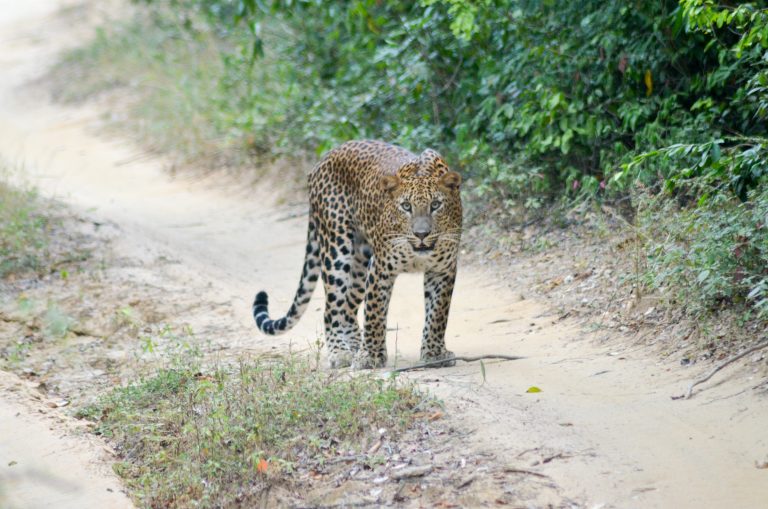
Think twice if you are coming mainly for flamingos or leopards. The big flamingo flocks that made Bundala famous have largely stopped coming (more on that below), and if a leopard is top of your list, Yala is the park to choose.
Bundala or Yala?
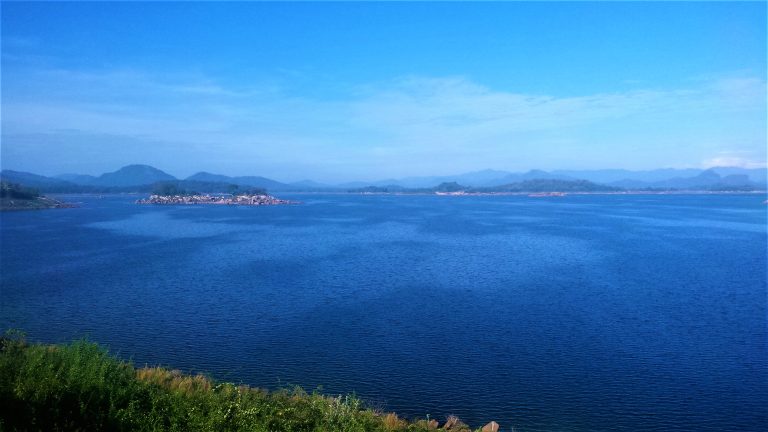
They are neighbours but feel very different. Yala is the big-name park for leopards and elephants, with forest, rock outcrops and a lot of safari traffic. Bundala is much smaller and mostly water: four main lagoons (Bundala, Embilikala, Malala and Koholankala) joined by channels and marshes, with low scrub and dunes in between. If you like watching birds feed, squabble and take off at close range, Bundala is the better morning. If you want the chance of a big cat, it isn’t.
The lagoons and the birds
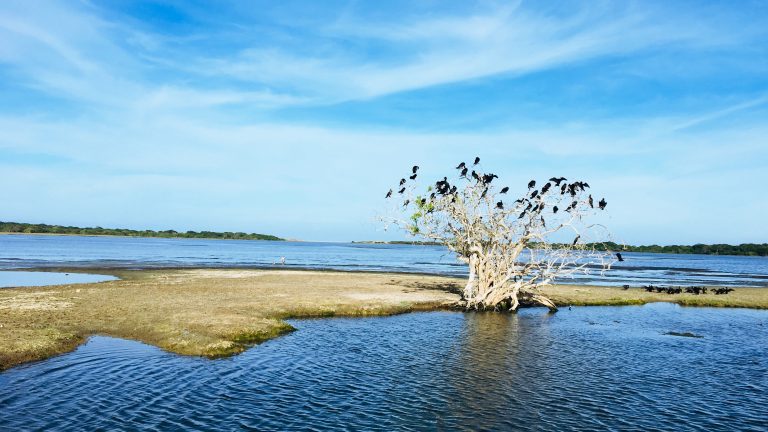
The lagoons are shallow, around a metre or two deep, and Koholankala is largely given over to salt production. That mix of salt and fresh water, mud and open shore is what the birds come for. When the wetland was listed, surveys counted more than 15,000 shorebirds at a time in the season, among them black-tailed godwits and other migrants from the north.
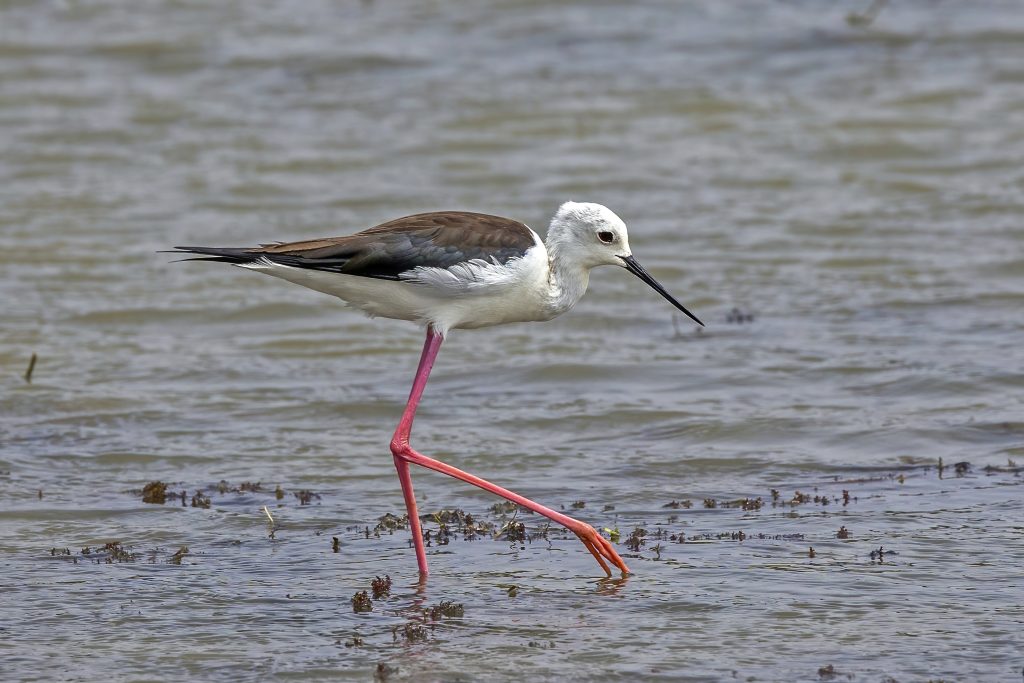
Residents you are likely to see include painted storks, spot-billed pelicans, lesser whistling ducks, cormorants and herons. Sri Lanka Tourism gives September to March as the best time to visit, when the migrant birds are in. For other parks and wetlands worth a trip for birds, see our guide to birdwatching in Sri Lanka.
What happened to the flamingos?
Most older guides still sell Bundala on its greater flamingos, and in the 1980s and early 1990s flocks of more than 1,000 were common on the lagoons. Then irrigation schemes upstream began sending more fresh water into the lagoon system. The Ministry of Environment says the park has been hit by a shortage of food for the flamingos because of this freshwater intrusion, and Mongabay reported in 2026 that, as the salinity fell, the tiny crustaceans the birds feed on disappeared and the flocks gradually stopped coming.
Safari reviews are mixed: some mention a few flamingos, others none at all. Treat any you see as a bonus. If flamingos in numbers are the point of your trip, the lagoons around Mannar in the north are now the place Sri Lankan naturalists point to.
Other wildlife
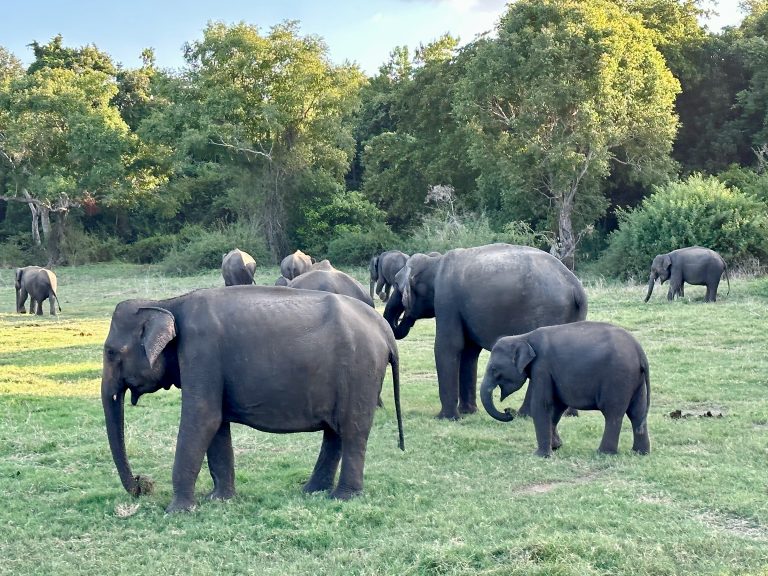
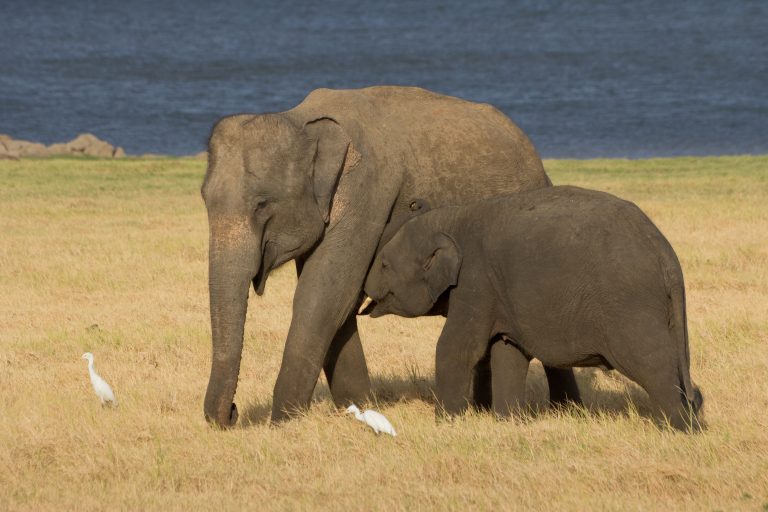
Both mugger and saltwater crocodiles live in the park. A small number of elephants live in Bundala year-round, and others move through from outside the park. Other mammals include golden jackals, langurs, toque macaques, spotted deer and wild boar.
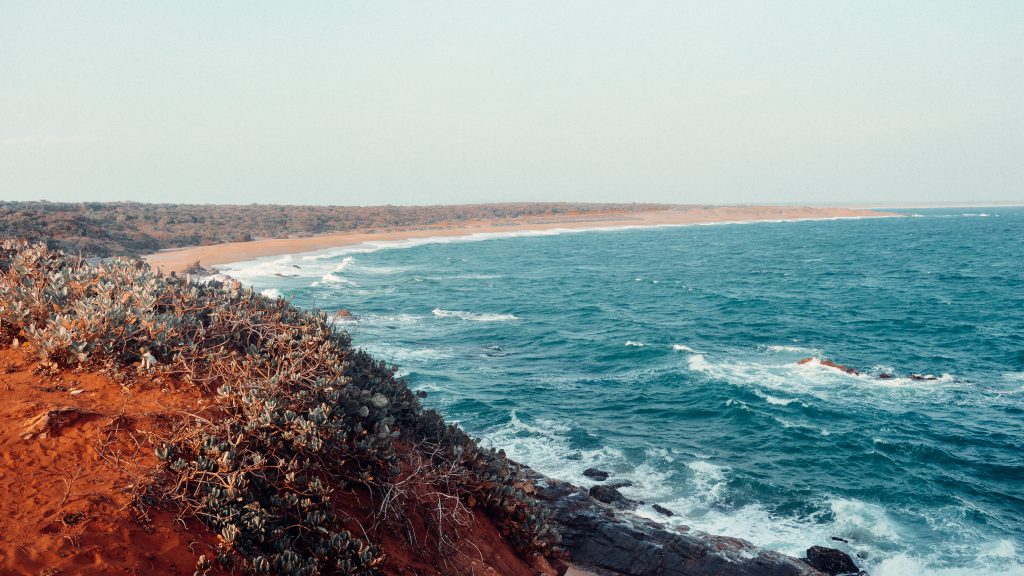
The beach along the park’s edge is a nesting ground for sea turtles; five species have been recorded on this coast. On the dunes east of Bundala village there is a strip of palu (Manilkara hexandra) forest, which Sri Lanka Tourism describes as a forest type unique in the country.
Visiting: permits, safaris and timing
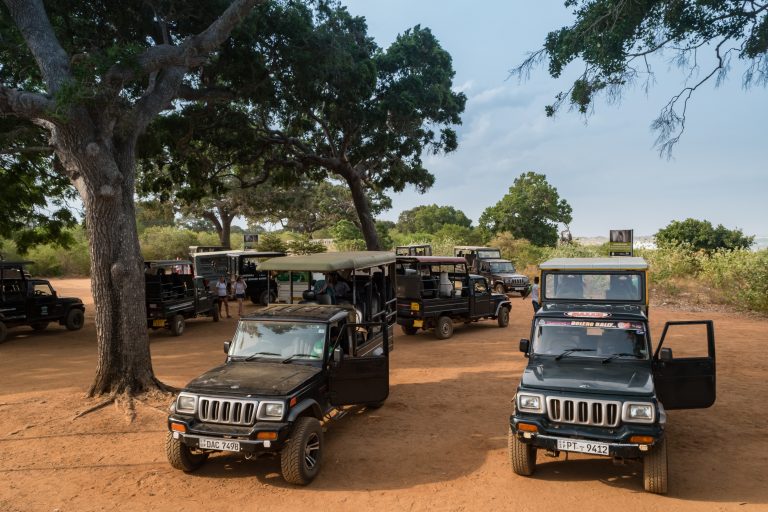
- Getting there: turn off the main road from Hambantota towards Tissamaharama at Weligatta junction; the park office is about 1.6 km from there. Most visitors come by jeep from Tissamaharama or Weligatta, or from Hambantota.
- Permits: the park is run by the Department of Wildlife Conservation (DWC), and you need a permit, paid at the park office. DWC’s current fees for Bundala aren’t published on its website, so check them at the office or on the DWC day-permit page, which explains how to book day-visitor permits online.
- A jeep and a guide: you tour the park in a safari jeep. Agree the price, the length of the drive and whether the park ticket is included before you set off.
- When to go: early morning is best for birds and for the heat. This is the dry zone, with a mean temperature around 27 °C and little shade on the open tracks, so bring a hat, sunscreen and water.
- Facilities: there is a visitor centre with a small shop and a bird-watching pavilion. There are campsites but no bungalows.
- Safety: elephants and crocodiles can be dangerous. Stay in the vehicle and follow your guide.
Planning several parks in one trip? Our wildlife safari itinerary pairs Bundala with Yala from a base in Tissamaharama.
Frequently asked questions (FAQs)
When is the best time to visit Bundala National Park?
Sri Lanka Tourism recommends September to March, when migrant birds are in the park. Go early in the morning, when the birds are most active and it is cooler.
Are there still flamingos in Bundala?
Sometimes a few, but not the big flocks of the 1980s and early 1990s. Fresh water from irrigation has lowered the lagoons’ salinity and the flamingos’ food has disappeared, so don’t plan a visit around them.
Is Bundala better than Yala?
For birds, yes: Bundala is smaller, mostly lagoons and much quieter. For leopards and a classic big-game safari, choose Yala.
How do you get to Bundala National Park?
Turn off the Hambantota–Tissamaharama road at Weligatta junction; the park office is about 1.6 km away. Most people come by safari jeep from Tissamaharama, Weligatta or Hambantota.
Is Bundala a Ramsar site?
Yes. Bundala was the first wetland in Sri Lanka listed under the Ramsar Convention, and it is also a UNESCO biosphere reserve.
Header photo: Shenal Sadurshan / Wikimedia Commons, CC BY-SA 4.0.