

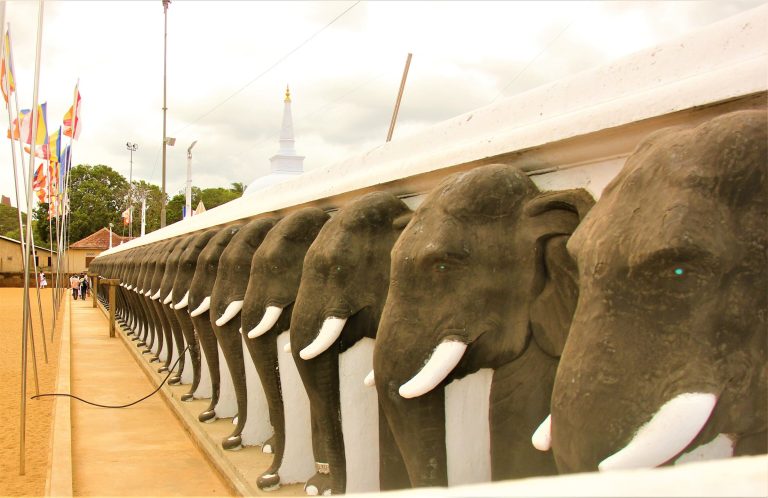
Anuradhapura rewards an unhurried visit. The Sacred City, Sri Lanka’s first great royal capital, is a wide spread of stupas, monastery ruins and living shrines. You walk barefoot on stone at every temple. Rushed in a single hot afternoon, it blurs. With two days you can see the ancient city in the cool of the morning and the soft light of the evening. You can also climb Mihintale at dawn, and add an extra on the way out.
This plan assumes two nights in Anuradhapura, arriving the afternoon before Day 1.
Is two days right for you?
Go if early Buddhist history interests you, and you’d rather see one ancient city properly than three in a rush. The pace suits anyone who finds the heat hard going, because the plan rests through the middle of each day.
Think twice if you’re short of time and based around Sigiriya or Habarana. Anuradhapura is on the northern edge of the Cultural Triangle. If you can only fit in one ancient capital, Anuradhapura or Polonnaruwa helps you choose.
Before you go: tickets, clothes and the heat
Foreign visitors need a Central Cultural Fund (CCF) ticket for the archaeological sites. The [https://ccf.gov.lk/is/index.php]CCF’s price list, last updated on 24 September 2026, gives Anuradhapura as USD 30 for a full ticket. Children aged 6 to 12 pay USD 15, and you pay in rupees at the CCF rate. Tickets are sold at the counters on site from 7 am to 5 pm, or online through the CCF’s eTicket service. A ticket is valid for a single entry on its day of issue. That’s why this plan puts all the CCF sites on Day 1.
At every temple you cover your shoulders and legs and take off your shoes and hat. Average daytime highs at Anuradhapura’s weather station are around 30°C in December and January and nearer 35°C in March and April. The stone gets very hot by late morning. Recent visitors (2025–26) suggest carrying socks and wearing light-coloured clothes, as many pilgrims do.
Day 1: the Sacred City
7 am: the great stupas. Be at the ticket counter when it opens. Start at the Sri Maha Bodhi, the sacred fig tree grown from a branch of the tree at Bodh Gaya. Pilgrims make offerings here every morning. A short walk away is the great white dome of Ruwanwelisaya, begun by King Dutugemunu in the 2nd century BC. Nearby is Thuparamaya, by tradition the first stupa in Sri Lanka. Stone pillars ring it, from a shrine that once had a roof.
Mid-morning: Jetavanaramaya and Abhayagiri. Move on by bicycle or tuk-tuk to Jetavanaramaya, the massive brick stupa built by King Mahasena in the 3rd century AD. Then head north to Abhayagiri, one of the city’s three great monasteries. The Twin Ponds and the Samadhi Buddha statue are in its grounds. Don’t pose for photos beside a Buddha statue: disrespecting Buddhist images is a serious offence in Sri Lanka.
Midday: rest. Go back for lunch and a rest through the hottest hours. If you’d rather stay out, the Anuradhapura Folk Museum, near the Archaeological Museum, is a calm hour indoors among farming tools and village pots. The Department of National Museums lists it as open from 9 am to 5 pm. It’s closed on Mondays and public holidays.
Late afternoon: Isurumuniya and Tissa Wewa. Isurumuniya is a rock temple by the Tissa Wewa reservoir. It’s known for its carvings, including the “Isurumuniya Lovers” and a pond with carved bathing elephants. Recent visitors (2026) report that, as a working temple, it charges its own small fee. Stay for the sunset over the water from the rock, which recent visitors single out.
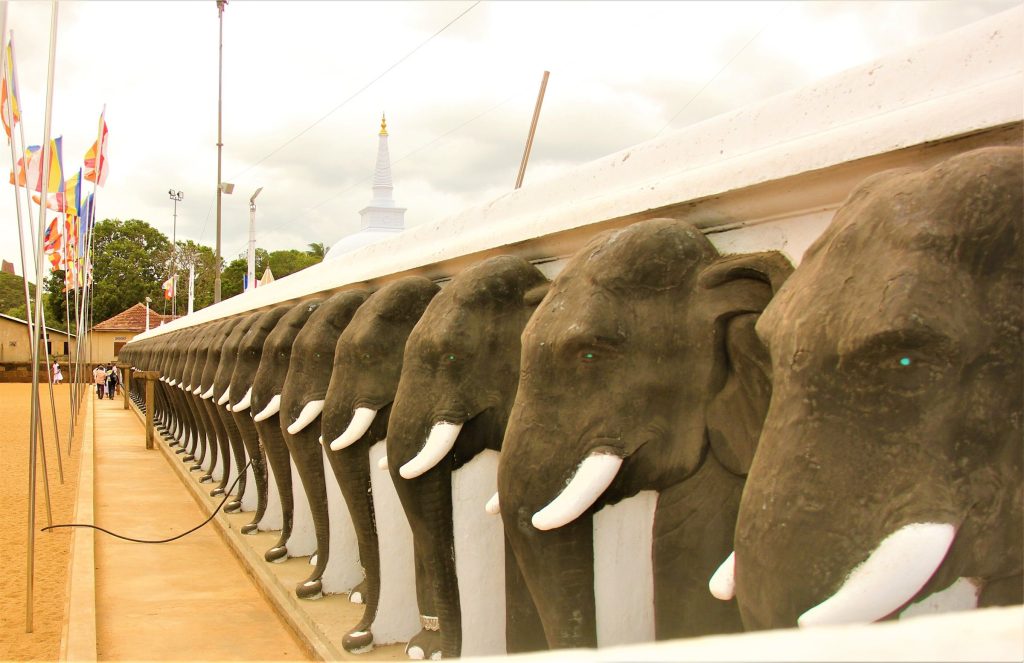
Day 2: Mihintale, then onwards
Early morning: Mihintale. By tradition, the monk Mahinda met King Devanampiya Tissa on this hill east of town. He brought Buddhism to Sri Lanka in the 3rd century BC. A long granite stairway climbs past the ruins of the monks’ refectory and hospital. At the top are the Ambasthala stupa, the white seated Buddha and the Mahaseya stupa, with wide views over the plains and lakes. The upper terraces are walked barefoot on bare rock, so go as early as you can. There’s no official price list online. Recent visitors (2025) report a cash ticket of about LKR 1,000 ($3.01 · convert) for foreigners aged 12 and over.
Late morning: back to town, for breakfast and to check out.
Afternoon: one of three extras, depending on where you go next.
- Heading south towards Dambulla or Sigiriya: stop at the colossal standing Avukana Buddha statue near Kekirawa, which faces the Kala Wewa reservoir. Or visit the forest monastery ruins of Ritigala, just north of the A11 between Habarana and Maradankadawala. Stay on the archaeological site at Ritigala; the rest of the mountain is a strict nature reserve.
- Staying a third night: book a safari in Wilpattu National Park, about 30 km west. Its main entrance, Hunuwilagama, is on the Anuradhapura side. A morning game drive means leaving before dawn, so do it on Day 3.
- Heading north: take the train on to Jaffna; see getting to Jaffna.
Getting around
The monuments are spread over a wide, flat area. Recent visitors (2025–26) hire bicycles through their guesthouse. Others take a tuk-tuk and driver for the morning, for a little shade between stops. For Mihintale, recent visitors take a bus or tuk-tuk from town. Cycling? A room close to the sacred area saves a hot ride at each end of the day.
Getting there
Anuradhapura is on the Northern Line from Colombo Fort. Intercity trains such as the Yal Devi and the Uttara Devi stop here. The town has two stations, Anuradhapura and Anuradhapura New Town, about 3 km apart. Check which is nearer your room. Reserved seats are sold on the [https://seatreservation.railway.gov.lk/]Sri Lanka Railways seat reservation site. By road, Anuradhapura is linked directly to Dambulla, Kurunegala, Kandy and Trincomalee.
When to go, and Poson
October to December are the wettest months, and June and July have the fewest rainy days. Poson, the June full moon, marks the arrival of Buddhism in Sri Lanka. Very large numbers of pilgrims come to Anuradhapura and Mihintale. It’s a remarkable time to be here, with crowds in white and traffic controls. If you’d rather have quiet monuments, avoid that week. Liquor sales stop on every Poya day. In recent years, outlets in and around the sacred city have stayed shut for the whole of Poson week. The festival and Poya calendar has the dates.
Frequently asked questions (FAQs)
Is two days enough for Anuradhapura?
Yes, for most people. One day covers the Sacred City at a comfortable pace, with a rest in the heat. The second morning is for Mihintale before you move on.
How much is the Anuradhapura ticket?
The Central Cultural Fund lists USD 30 for a full foreign ticket and USD 15 for children aged 6 to 12, paid in rupees. Its price list was updated on 24 September 2026. It’s valid for a single entry on its day of issue.
Should I cycle or take a tuk-tuk around Anuradhapura?
Either works on the flat roads. A bicycle is cheaper and freer if you’re happy riding in heat and traffic. A tuk-tuk gives you shade between the stops.
Is Mihintale included in the Anuradhapura ticket?
No official price list for Mihintale is published online. Recent visitors report paying a separate cash ticket of about LKR 1,000 ($3.01 · convert) there.
What should I wear in Anuradhapura?
Clothes that cover your shoulders and legs. Shoes and hats come off at every temple, so carry socks for the hot stone.
Header photo: Wimukthi Bandara / Wikimedia Commons, CC BY-SA 4.0.
