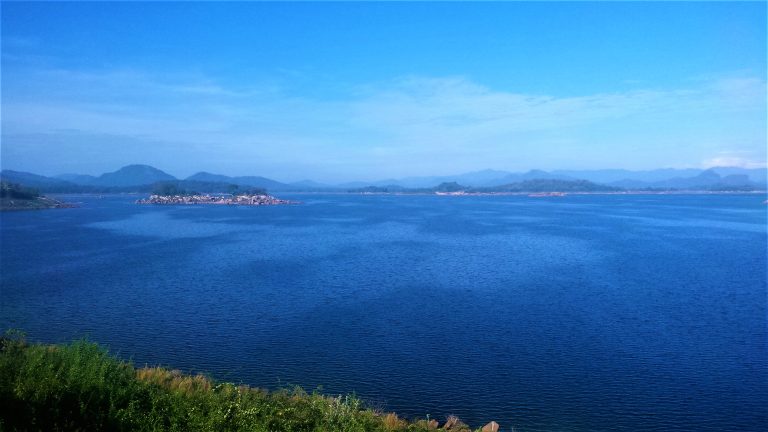
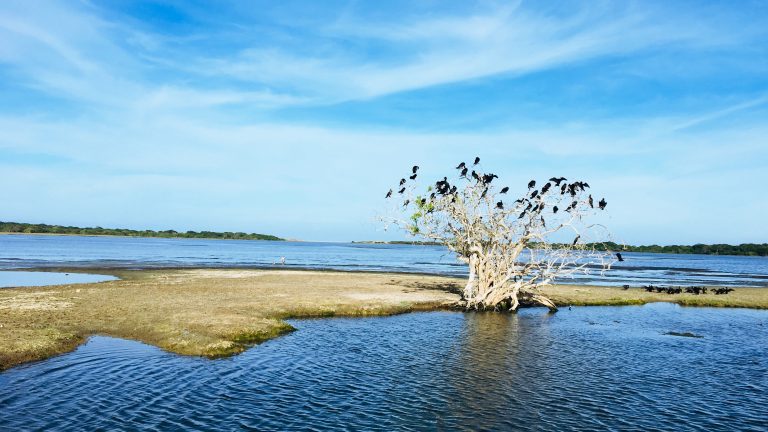
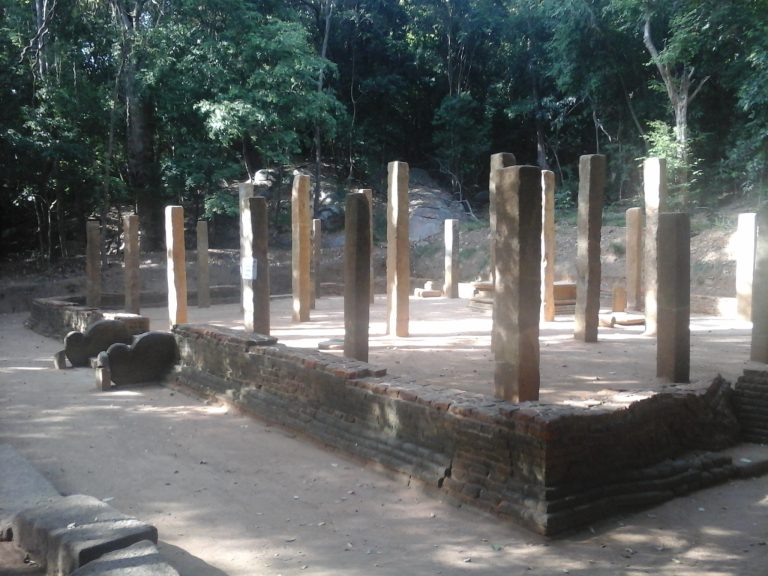
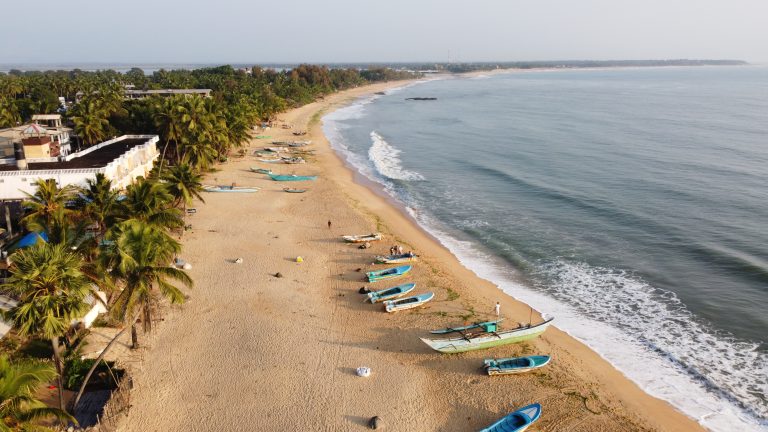
Deegavapi (also spelt Dighavapi or Deegawapiya) is one of the sixteen most sacred Buddhist sites in Sri Lanka: a huge brick stupa standing in the farmland east of Ampara town, in the Eastern Province. Tradition says the Buddha rested here on his last visit to the island. Since 2020 a vast rebuilding project has turned the stupa into a shrine and a building site at the same time, and that is exactly what you will find when you arrive.
Is it worth visiting?
Go if you are a Buddhist pilgrim working your way round the sixteen sacred places, or you are curious to see how Sri Lanka rebuilds an ancient monument, because here you can watch the work in progress.
Think twice if you are hoping for photogenic ruins or a finished dome, since while the rebuilding lasts you will mostly see scaffolding, stacks of new brick and a working temple, which makes it a long detour from Arugam Bay for a short stop.
The Buddha’s visit, as tradition tells it
The Pali name Dighavapi means “long reservoir”, and the place appears in both of Sri Lanka’s ancient chronicles, the Dipavamsa and the Mahavamsa. According to the Mahavamsa, the Buddha came here on his third and final visit to the island, after a day on Sri Pada (Adam’s Peak). He sat in meditation with a group of arahats, and a stupa was later built on that spot.
The visit belongs to tradition rather than recorded history. For Buddhists, however, it makes Deegavapi one of the Solosmasthana, the sixteen great places of worship, along with Sri Pada and the Kelaniya Raja Maha Vihara near Colombo.
Who built the Deegavapi stupa
The chronicles credit Saddhatissa, the younger brother of King Dutugemunu, who later ruled from Anuradhapura. He built the Dighavapi vihara and its great stupa, and according to tradition he enshrined relics of the Buddha inside.
After that, the monument fell into ruin more than once. In the eighteenth century the Kandyan king Kirti Sri Rajasinha restored the temple and endowed it with land. It became an archaeological protected monument in 1947, but until 2020 it was still a broad brick mound overgrown with grass, as older photographs show.

The rebuilding since 2020
In November 2020, while excavating at the southern entrance of the stupa, archaeologists found four gold caskets and a crystal casket holding relics. The Director General of Archaeology said it was the first time four gold caskets had been found in one place. The caskets now rest in a new relic chamber in the temple grounds.
The same month, work began on rebuilding the stupa. The Ministry of Defence runs the project under the guidance of the Department of Archaeology, and soldiers and members of the Civil Security Department lay the bricks, which they also make themselves. Donations from Buddhist devotees in Sri Lanka and abroad pay for the work. In July 2024 relics and offerings were enshrined in the dome at a ceremony attended by the President, and the project reports that the relic chamber had risen to about 72 feet by August 2025. Work was still going on in 2026, so expect scaffolding and building materials rather than a finished monument.
A site with a complicated recent history
The Eastern Province is shared by Tamil, Muslim and Sinhala communities, and Deegavapi has been at the centre of arguments about land. In 2009 the Supreme Court upheld a Buddhist monk’s petition against allocating about 60 acres of state land near the temple to 500 Muslim families for tsunami housing, finding the allocation had no legal authority. The Saudi-funded houses then stood unoccupied for years, and the Daily FT reported in 2018 that they still had not been handed over.
In 2020 the government also set up a Presidential Task Force for Archaeological Heritage Management in the Eastern Province. The Tamil leader R. Sampanthan objected that all its members were Sinhala Buddhists, and warned that its powers over land could be used to change the make-up of the province. You don’t need to take sides to visit, but it helps to know why the site matters so much to different people.
Visiting Deegavapi
- Getting there: the temple lies east of Ampara town, off the road towards Akkaraipattu on the coast. Without your own driver, take a tuk-tuk from Ampara; from Arugam Bay or Batticaloa it makes a long day out by car.
- Dress: it is an active temple, so cover your shoulders and knees, take off your shoes and hat in the shrine areas, and don’t pose with your back to a Buddha statue. Our guide to temple etiquette in Sri Lanka covers the details.
- When to go: early morning or late afternoon, since the open grounds have very little shade.
- Combine it with: a trip along the east coast. Deegavapi lies inland between Batticaloa and Arugam Bay, so it fits into a route such as our 9-day east coast itinerary.
Frequently asked questions (FAQs)
Where is Deegavapi?
In Ampara district in Sri Lanka’s Eastern Province, east of Ampara town and off the road towards Akkaraipattu on the coast.
Did the Buddha really visit Deegavapi?
According to the Mahavamsa, the Buddha meditated here on his third and final visit to Sri Lanka. That is a matter of religious tradition rather than recorded history, but it makes Deegavapi one of the sixteen great Buddhist places of worship.
Who built the Deegavapi stupa?
The chronicles credit King Saddhatissa, the younger brother of King Dutugemunu. The Kandyan king Kirti Sri Rajasinha restored the temple in the eighteenth century.
Is the Deegavapi stupa finished?
No. Rebuilding began in November 2020 under the Ministry of Defence, with the Department of Archaeology’s guidance, and work was still going on in 2026.
What should I wear to Deegavapi?
Cover your shoulders and knees, and take off your shoes and hat in the shrine areas, as at any working Buddhist temple in Sri Lanka.
Header photo: Rehman Abubakr / Wikimedia Commons, CC BY-SA 4.0.