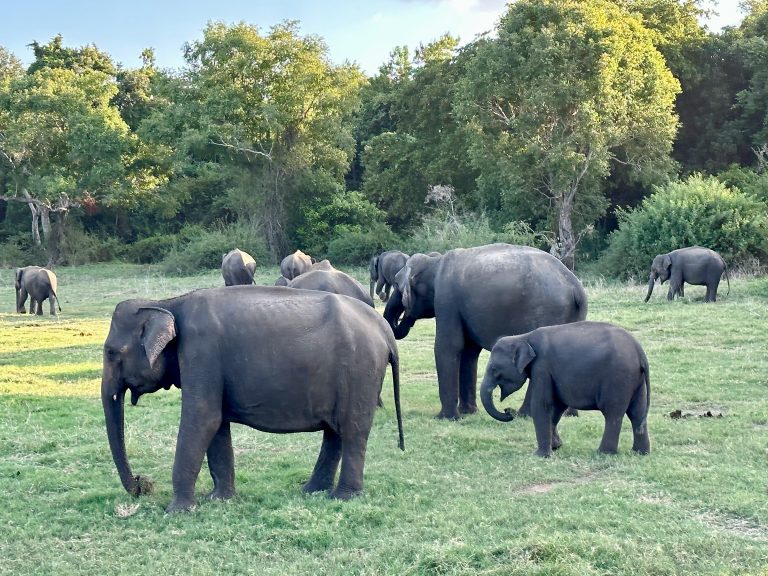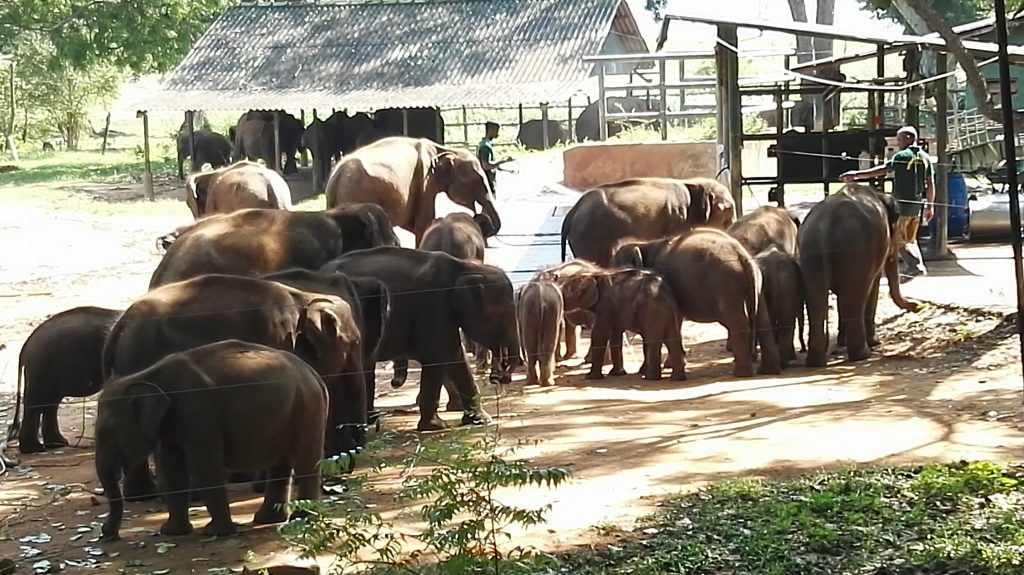


The Elephant Transit Home (Ath Athuru Sevana) at Udawalawe is where the Department of Wildlife Conservation (DWC) raises elephant calves that have been orphaned or separated from their herds, until they are old enough to go back to the wild. Visitors watch the calves come in for their milk from a viewing pavilion. There’s no riding, bathing or touching, and that is the point.
Is it worth visiting?
Go if you’d like to see young elephants up close without paying for rides or bathing sessions, and you’re already in the Udawalawe area for a safari. It suits families, and a feeding session fits easily into the same day as a jeep trip.
Think twice if you’re expecting contact with the calves or a long visit. You watch from behind a barrier, and recent visitors (2025–26) report that a feeding session lasts only 20 to 35 minutes. On long weekends and school holidays the pavilion can be packed with school groups; the Sunday Times reported in 2024 that big crowds were leaving many foreign visitors frustrated.
How the Transit Home works
Calves arrive here after losing their mothers or getting separated from their herds, many of them casualties of the conflict between people and elephants in farming areas. Keepers feed them milk and raise them as a group beside Udawalawe National Park, so they grow up close to the country they’ll eventually be released into.
When they’re old enough they are released in groups. In July 2025 six young elephants, after nearly five years in care, went back to the wild in the Maw Ara area of Udawalawe National Park: the Transit Home’s 26th release. World Animal Protection’s 2017 study of elephant venues in Asia listed the Transit Home among those with the best welfare conditions it found.
For the difference between this and the Pinnawala orphanage, see our comparison of Pinnawala and wild elephants.
Watching the feeding
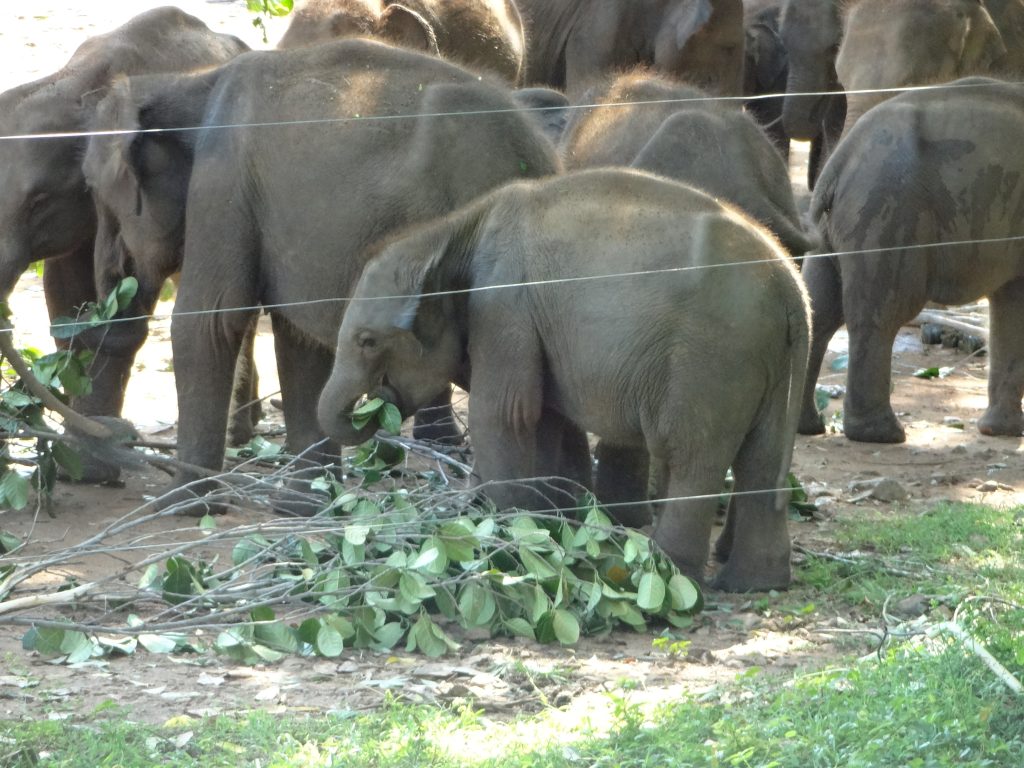
The viewing pavilion holds about 350 people. At feeding time the calves walk in from the grounds and keepers give them their milk in front of the pavilion; cut branches are put out for them too. One visitor recommends arriving early to watch the calves come across from a small island before the feed.
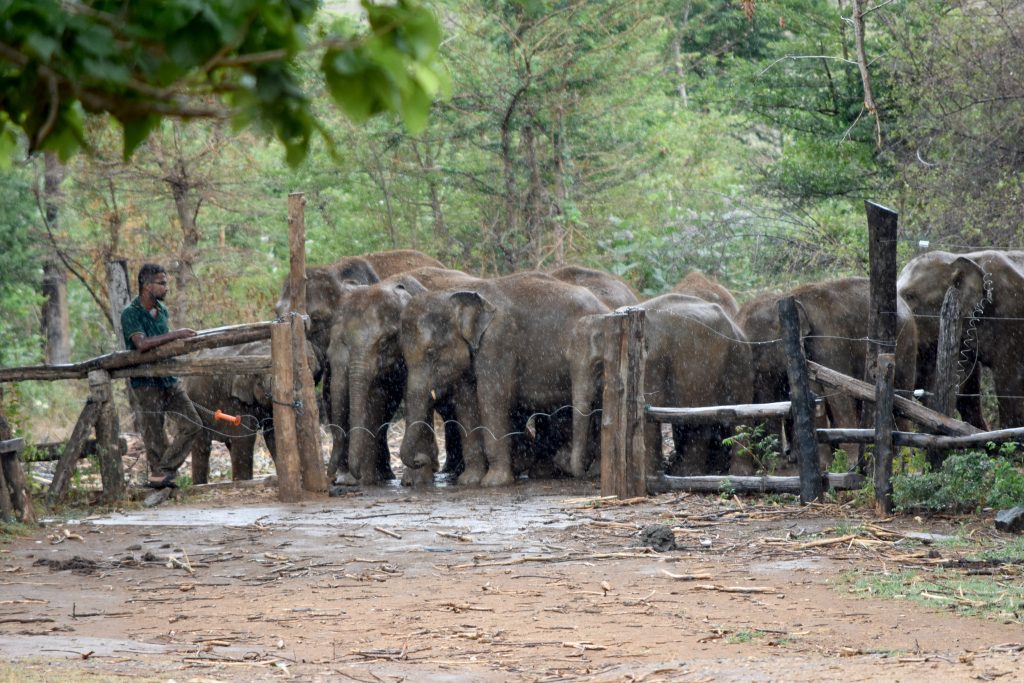
Tips from recent visitors and local guides:
- Arrive 15–20 minutes early if you want a spot at the front, especially for the first session of the day.
- Bring a zoom lens rather than leaning over the barrier, and leave the flash off.
- Keepers carry sticks to steer the calves, which one visitor noted can look harsh if you’re not expecting it; even young elephants are powerful and unpredictable.
Feeding times and tickets
The DWC doesn’t publish the feeding times or ticket prices online, and visitor reports disagree: some list four sessions a day, others three, at different times. Ask your guesthouse or jeep driver the day before, or call in at the gate, and plan around the answer. Recent visitors buy tickets at the entrance on the day.
The Elephant Knowledge Walk
The Transit Home’s information centre was rebuilt by Dilmah Conservation with the DWC and reopened in March 2024 as the Elephant Knowledge Walk. It covers how elephants live, where they are found in Sri Lanka and the threats they face, with displays in Sinhala, Tamil and English. It’s a good way to fill the wait before a feeding.
Getting there
The Transit Home is in Udawalawe village, west of the reservoir dam, while the main entrance of Udawalawe National Park is further east, near the 7th km post on the Thanamalwila road. They.re a short drive apart, so the two combine easily: a morning or late-afternoon safari in the park, and a feeding session before or after.
If you’re travelling with children, our family itinerary breaks the long drive from the hills to the south coast here, and our wildlife safari route includes it on the Udawalawe stop.
Frequently asked questions (FAQs)
What is the Elephant Transit Home?
A rehabilitation centre run by the Department of Wildlife Conservation at Udawalawe. It raises orphaned and separated elephant calves and releases them into Udawalawe National Park when they are old enough.
What are the feeding times at the Elephant Transit Home?
The DWC doesn’t publish them online, and visitor reports give different times. Ask locally the day before and arrive 15–20 minutes early.
Is the Elephant Transit Home better than Pinnawala?
For welfare, World Animal Protection’s 2017 study listed the Transit Home among the best venues it found. Calves here are raised to be released, and visitors only watch.
Can you touch or feed the elephants?
No. Keepers do all the feeding, and visitors watch from the pavilion behind a barrier.
Is the Elephant Transit Home at the Udawalawe National Park entrance?
No. It’s in Udawalawe village, west of the reservoir dam. The national park’s main entrance is a short drive east, near the 7th km post on the Thanamalwila road.
How long does a visit take?
A feeding session lasts about 20 to 35 minutes. Allow a little longer if you want to see the Elephant Knowledge Walk.
Sources: en.wikipedia.org (Udawalawe Elephant Transit Home), newswire.lk, dailymirror.lk (Six elephants released into Udawalawe…), sundaytimes.lk, themorning.lk, dilmahconservation.org, worldanimalprotection.org, dailymirror.lk (Ath Athuru Sevana), openstreetmap.org, en.wikipedia.org (Udawalawe Dam), srilanka.travel and recent visitor reports. Header photo: Z thomas / Wikimedia Commons, CC BY-SA 3.0.