

Check before you travel Hill-country railway: repairs after Cyclone Ditwah Checked 5 October 2026
Cyclone Ditwah damaged the hill-country railway in November 2025, and it is reopening in stages. Since 2 October 2026, trains run again from Colombo Fort to Peradeniya and Gampola, but Kandy station itself is not served yet. On 5 October 2026 earth and rocks fell onto the line between Kadigamuwa and Gangoda after heavy rain and derailed an early train; services restarted later the same day, but expect delays or short suspensions after heavy rain. Trains between Nanu Oya and Badulla, which stop at Haputale, Ella and Demodara, restarted on 20 June 2026. The section between Gampola and Nanu Oya is still under repair, so you cannot yet go by train from Colombo or Kandy all the way to Ella. Check the latest services before you plan a rail journey, and book reserved seats on the Sri Lanka Railways seat reservation site.
Sri Lanka works well with children if you plan it around them rather than around the map. This two-week route moves only five times, keeps most drives to a morning, and lines up the things children tend to remember: wild elephants from a jeep, a slow train through tea country, cool hill air after the heat of the plains, and a few days on the beach at the end. It is written for families with a hired car and driver, and it is pitched at children of about five and over; with toddlers, cut the climbs and keep the rest.
Is this trip right for your family?
Go if your children enjoy animals, being outdoors and a bit of adventure, and you’re happy to build each day around an early start and a quiet afternoon. Most of the big sights here are best before the heat of the day, which suits early-waking children nicely.
Think twice if your family needs swimming every day: the sea on the south-west coast can be dangerous, especially from May to September, and several of the sights involve long flights of steps. And if your children hate car journeys, know that even on this route some days have three or four hours on winding roads.
The trip at a glance
- Night 1: Negombo, close to the airport.
- Nights 2–4: Sigiriya or Habarana, for elephants and the rock.
- Nights 5–6: Kandy.
- Nights 7–8: Nuwara Eliya, the cool one.
- Nights 9–10: Ella, reached by train.
- Nights 11–13: the south coast between Galle and Mirissa.
- Day 14: back to the airport.
This version suits December to April, when the south-west coast is in its dry season. For May to September, see the mid-year version below.
Day 1: land and rest in Negombo
Negombo is the nearest town to the airport, which is the only reason you need after a long flight. If everyone wakes early with jet lag, use it: visitors say the fish market near the lagoon mouth is busiest in the early morning, with fish laid out in long rows on the sand to dry, and hotels can arrange boat trips on the lagoon to look for herons and egrets in the mangroves. Ask before anyone swims; this beach can be rough.
Days 2–4: Sigiriya, elephants and an easy pace
Recent visitors put the drive from the airport area to Sigiriya at about four hours. Break it with a snack stop and arrive for an afternoon at the pool.
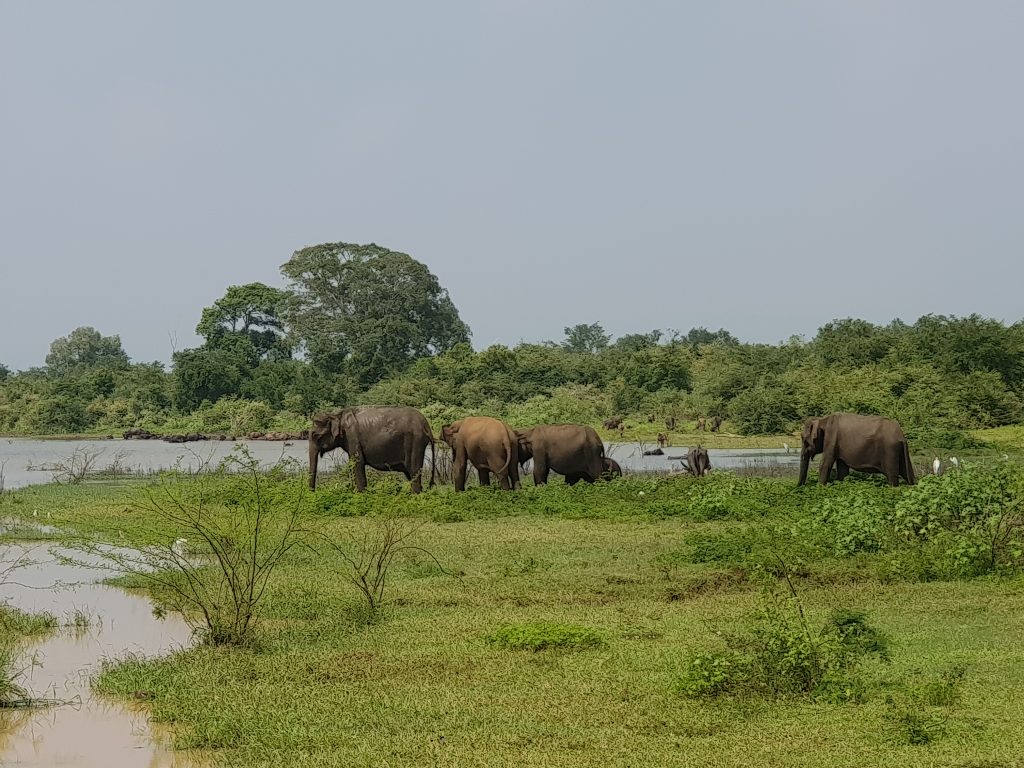
The safari. For most children this is the highlight of the trip. Jeeps go out from Sigiriya and Habarana to Minneriya or Kaudulla, where elephants come down to graze around the old reservoirs; recent visitors (2025–26) report half-day safaris starting at about 6 am or 2 pm. The afternoon one is easier with children. Elephants are in the parks all year, though the largest herds gather in the dry season. Bring hats and water; open jeeps get hot.
Sigiriya rock. Sigiriya is a real climb: many steps, then steep metal staircases on the rock face to the summit. Ticket counters open at 7 am, so go then. Children aged 6 to 12 pay a half ticket (USD 20, against USD 35 for adults, on the Central Cultural Fund’s September 2026 list). Wasps nest on the rock, and in 2024 wasp attacks put dozens of visitors in hospital, so do as site staff say if they close the climb. With small children, the water gardens and the Lion’s Paws are a fine place to stop; recent family travellers with toddlers skipped the climb altogether.
The cave temple. Dambulla’s five painted caves are a long climb up granite steps, and shoes come off at the top. Go in the morning, and bring socks for the hot stone.
Days 5–6: Kandy
About three hours’ drive brings you to Kandy and its lake. At the Temple of the Tooth, time your visit for the evening ritual, from about 6.30 pm, when drumming and offerings fill the temple. Shoulders and knees must be covered, shoes are left at the entrance, and everyone is screened at the door; plastic bags aren’t allowed.
Spend the next morning at the Royal Botanic Gardens, Peradeniya, a few kilometres out of town: big lawns to run on, a giant Java fig whose canopy spreads over the Great Lawn, and a bamboo whose new shoots can grow about 30 cm a day. Children aged 5 to 12 pay LKR 1,770, adults LKR 3,540. Monkeys live in the forest above the temple; don’t let children feed them or carry food in the open.
Days 7–8: Nuwara Eliya, the cool one
Visitors report about three hours up the A5 to Nuwara Eliya, winding through tea estates. At 1,868 m it is cool all year, which feels wonderful after the plains, but pack a fleece for each child; evenings are chilly.

It’s an easy town for a family day: boats on Gregory Lake, Victoria Park with its stream, the red-brick post office, and the roses and tree ferns of Hakgala Botanic Gardens on the Badulla road (same ticket prices as Peradeniya). Families who walk well can do Horton Plains: a 9 km loop of about three hours to World’s End, best between 6 and 10 am, with cold mornings and no polythene allowed in the park. It’s a big outing for under-tens, so judge your own.
Days 9–10: the train to Ella
Ride the hill-country train from Nanu Oya, a short drive from town, to Ella: about 2½–3 hours through tea country, and for many families the best day of the trip. See the travel update at the top of this page for the current service. Reserved seats are sold on the Sri Lanka Railways seat reservation site up to 30 days ahead, and you need each traveller’s passport number. Your driver can take the bags by road and meet you at Ella.
One firm rule for the train: everyone stays inside the carriage. Photos of people hanging out of the doors are everywhere, but the UK government warns that people have died falling from moving trains.
In Ella, two outings suit children best. Little Adam’s Peak takes 30 to 45 minutes up, on steps for much of the way, to an open ridge with wide views; it has steep drops, so hold small hands near the edges. Nine Arch Bridge has no entrance fee, and watching a train cross from the hillside usually goes down well, as long as you watch from the slope and never from the track or the tunnel. Trains often run late, so bring snacks. Leave Ella Rock for another trip: it takes 3–4 hours, and touts on the path try to send hikers the wrong way. Children under 10 are not allowed into Nil Diya Pokuna, the cave pool near Ravana Falls, and 10- to 18-year-olds need a guardian with them; the falls themselves are a roadside stop, but keep everyone on the viewing area.
Day 11: down to the coast, with orphan elephants on the way
This is the longest day. Recent visitors report about 2½–3 hours by car from Ella to Udawalawe, and the coast is a further drive on from there. Break it at the Elephant Transit Home near Udawalawe, run by the Department of Wildlife Conservation, where orphaned calves are raised until they can be released into the national park. Feeding times aren’t published online, so ask your driver or hotel to check the day before. If you’d like a jeep safari in Udawalawe too, add a night here rather than cramming it in.
Days 12–13: the south coast
Base yourselves at Unawatuna, about 5 km from Galle, or at Mirissa if whale watching is on the list. Three nights gives you two full days and a lazy morning.

- Galle Fort: walk the ramparts in the late afternoon, with the sea on one side and the old town on the other. The National Maritime Museum inside the fort charges foreign visitors USD 5 per adult and USD 3 per child.
- Whale watching from Mirissa (November to April): boats leave at around 6.30 am and are out for three to four hours, which is a long time for a seasick child. Choose a licensed operator that keeps its distance; swimming with whales is not allowed.
- Koggala Lake: a boat trip around small mangrove islands, with kingfishers and herons. Pick a boat with shade.
About the sea: many Sri Lankan beaches have dangerous surf or rip currents at certain times of year, and visitors have drowned off Unawatuna and Mirissa. Swim only where it’s calm, ask the lifeguards, and never let children in alone. Some turtle hatcheries on this coast keep hatchlings in tanks for days; a 2013 study found that none of the seven it surveyed in Galle District followed best practice, so think twice before paying for one.
On the last day, the Southern Expressway gets you from Galle towards Colombo, and the Colombo–Katunayake Expressway on to the airport.
Health and safety with children
These are the points that matter most with children; our Sri Lanka health guide and guide to staying safe in Sri Lanka cover the rest.
- Mosquitoes: there is no malaria in Sri Lanka, but dengue is a risk all year. The mosquitoes that spread it bite during the day and are commonest in and around towns, so use repellent, cover up in the evenings and sleep under nets where provided.
- Animals: rabies is present, and the UK’s National Travel Health Network says children are at greater risk because they are less likely to avoid animals or to mention a bite, scratch or lick. Keep them away from dogs, cats and monkeys, and get urgent medical help for any bite or scratch.
- Before you go: see a travel clinic at least eight weeks ahead for vaccines; Japanese encephalitis occurs in rural areas year-round.
- Medical care: the UK government warns that emergency treatment outside the main cities is limited. Carry travel insurance that covers evacuation. The ambulance number is 1990.
- Roads: driving is erratic and accidents are frequent, particularly at night, so plan to arrive before dark. Car seats are not standard in hired vehicles, and recent family travellers advise bringing your own, one that fits with an ordinary lap-and-shoulder seat belt.
- Heat and food: hats, sun cream and a long midday break do more than any schedule. Sri Lankan curries are often very spicy; hotels usually serve plainer food too, and recent visitors say children tend to like hoppers, bowl-shaped rice pancakes.
The mid-year version: May to September
From May to September the south-west monsoon brings rough seas to the south and west coasts, while the east coast has its dry season. Turn the trip round: Negombo (1 night), Kandy (2), Nuwara Eliya (2), Sigiriya (3), then four nights at Pasikuda. Its bay stays shallow a long way from the shore and currents are weaker than on much of the coast, which is why families like it; even so, lifeguards rescued a seven-year-old there in 2025, so keep watching. Mid-year is also when the elephant gathering at Minneriya builds up. The catch is the return: Pasikuda to the airport is a long day, so allow for it.
With ten days instead
With ten days, drop either Sigiriya or the two hill-country stops. Two regions and a beach are plenty; trying to fit all of this in faster is the quickest way to tired, unhappy children. Our guide to how many days you need in Sri Lanka explains the trade-offs.
Dropping Sigiriya leaves something close to our ten-day hills and beaches route.
Frequently asked questions (FAQs)
Is Sri Lanka safe for children?
There is no malaria, but take care with three things: the sea, where rip currents can be dangerous; mosquitoes, because dengue is present all year; and dogs and monkeys, because of rabies.
Can children climb Sigiriya?
Yes, if they can manage many steps and steep metal staircases in the heat. Children aged 6 to 12 pay a half ticket of USD 20. Go when the ticket counters open at 7 am.
Do I need a car seat in Sri Lanka?
Car seats are not standard in hired cars. Recent family travellers recommend bringing your own seat that fits with an ordinary lap-and-shoulder belt.
Which beach is best for kids in Sri Lanka?
It depends on the month. From December to April, the south coast around Galle and Mirissa is in its dry season. From May to September, Pasikuda on the east coast has a shallow bay with weaker currents.
Where can children see elephants without riding them?
On a jeep safari in Minneriya, Kaudulla or Udawalawe national parks, and at the Elephant Transit Home near Udawalawe, where orphaned calves are raised for release into the wild.
Sources: gov.uk (safety and security), gov.uk (health), travelhealthpro.org.uk, srilanka.travel (index.php), en.wikipedia.org (Negombo), srilanka.travel (attraction&), en.wikipedia.org (Minneriya National Park), ccf.gov.lk, whc.unesco.org (list), dailymirror.lk (Visits to Sigiriya suspended), srilanka.travel (attraction), sridaladamaligawa.lk, botanicgardens.gov.lk (royal botanic gardens peradeniya), en.wikipedia.org (Udawatta Kele Sanctuary), srilanka.travel (index.php), en.wikipedia.org (Nuwara Eliya), en.wikipedia.org (Lake Gregory (Nuwara Eliya)), botanicgardens.gov.lk (botanic gardens hakgala), srilanka.travel (attraction&), english.newsfirst.lk (badullananu oya train services resume today), seatreservation.railway.gov.lk, srilanka.travel (attraction&), english.newsfirst.lk (woman survives cliff plunge at…), en.wikipedia.org (Nine Arch Bridge), newswire.lk (new regulations gazetted to protect…), srilanka.travel (attraction&), en.wikipedia.org (Udawalawe Elephant Transit Home), dwc.gov.lk, en.wikipedia.org (Unawatuna), dailymirror.lk (Foreigner dies swimming off Unawatuna beach), srilanka.travel (whale watching), faolex.fao.org, hirunews.lk, whc.unesco.org (list), museum.gov.lk, en.wikipedia.org (Koggala Lagoon), iotn.org, en.wikipedia.org (Pasikudah), newswire.lk (vigilant lifesavers rescue drowning child…), statistics.gov.lk, en.wikipedia.org (Bandaranaike International Airport) and recent visitor reports. Header photo: wsThushansenevirathna / Wikimedia Commons, CC BY-SA 4.0.