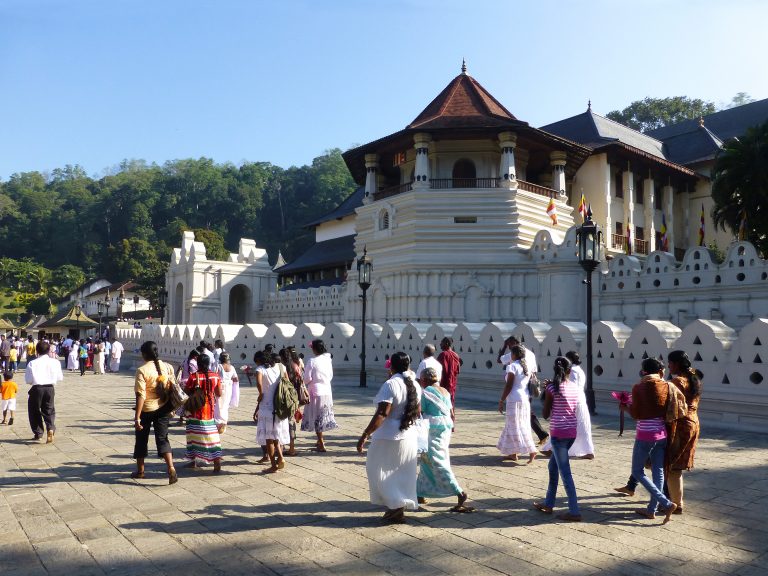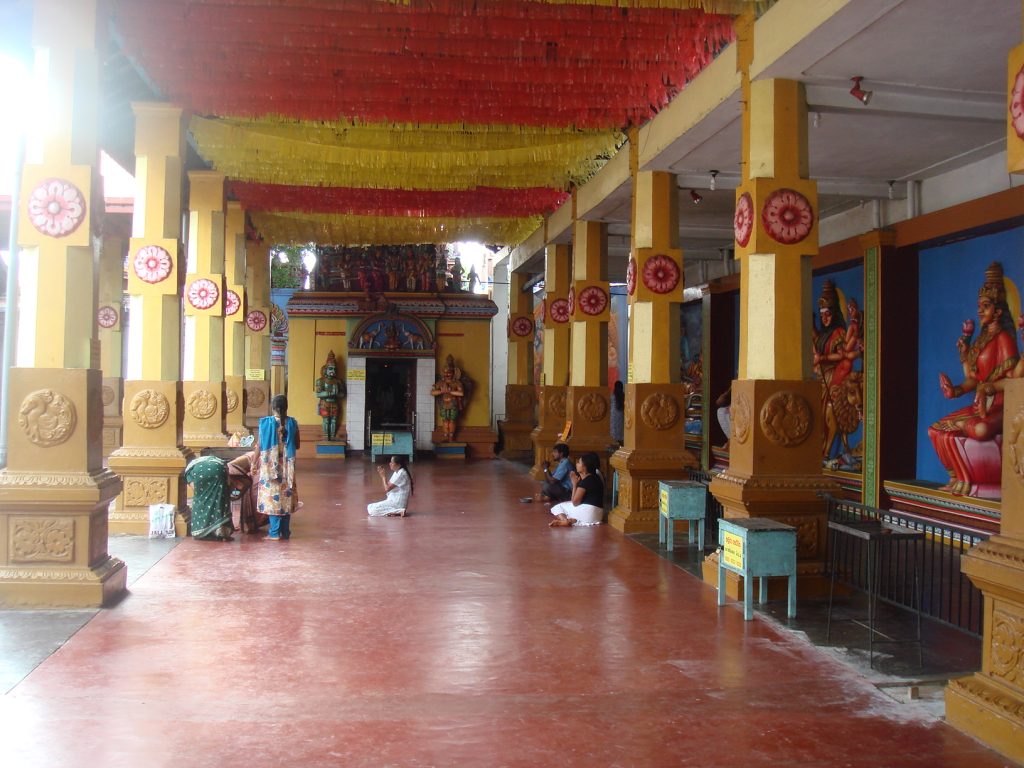

Munneswaram is a Hindu temple complex just east of Chilaw, on Sri Lanka’s west coast. At its heart is a Shiva temple, one of the island’s five ancient temples to Shiva. Around it stand shrines to Kali, Ganesha and the Sinhala god Ayyanayake, as well as a Buddhist temple. Most of the people who pray here today are Sinhala Buddhists, and that mix is what makes Munneswaram worth a detour.
Is it worth visiting?
Go if you’re curious about how Hindu and Buddhist worship blend in Sri Lanka, or you have an hour to spare on the coast road north of Negombo. Time it with the annual festival if you can.
Think twice if you want a monument to photograph at your own pace, because this is a busy place of worship and the temple asks visitors to leave cameras and phones behind.
One of Shiva’s ancient temples
The temple has stood here since at least 1000 CE. Tradition also links it to the Ramayana: Rama is said to have built it to fulfil a vow made while searching for Sita. Sri Lanka Tourism marks it on its map of Ramayana sites. Along with Koneswaram in Trincomalee, it belongs to the Pancha Ishwarams, the five ancient abodes of Shiva.
Kings of Kotte gave the temple land in the 15th century. Then, in 1578, Portuguese soldiers razed it to the ground. The temple rose again, and in 1753 the Kandyan king Kirti Sri Rajasinha restored it and granted lands to its priests. Its granite sanctum is the largest of any kovil in Sri Lanka, according to the temple’s own history. In front lies a sacred pond, with a Bo tree beside it.
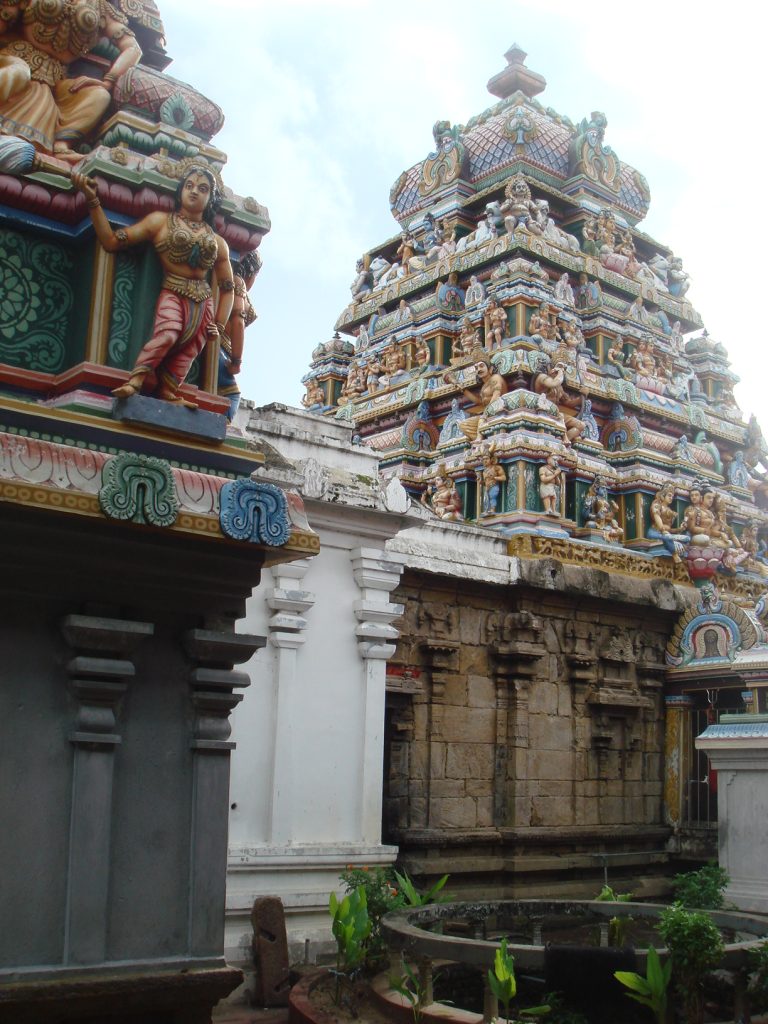
Inside, the Shiva lingam stands in the main sanctum, while the goddess Vadivambika has her own shrine. Smaller shrines hold Ganesha, Murugan, Durga, Vishnu and the nine planets. A separate hall keeps a bronze of Shiva as Nataraja, the dancer.
The Kali temple
For many visitors, though, the Kali temple on the northern side is the main draw. A Sinhala legend says the goddess Kali landed from India near Chilaw and settled at Munneswaram. People of all faiths come to her for protection from enemies. The shrine also has a long association with vows and curses.
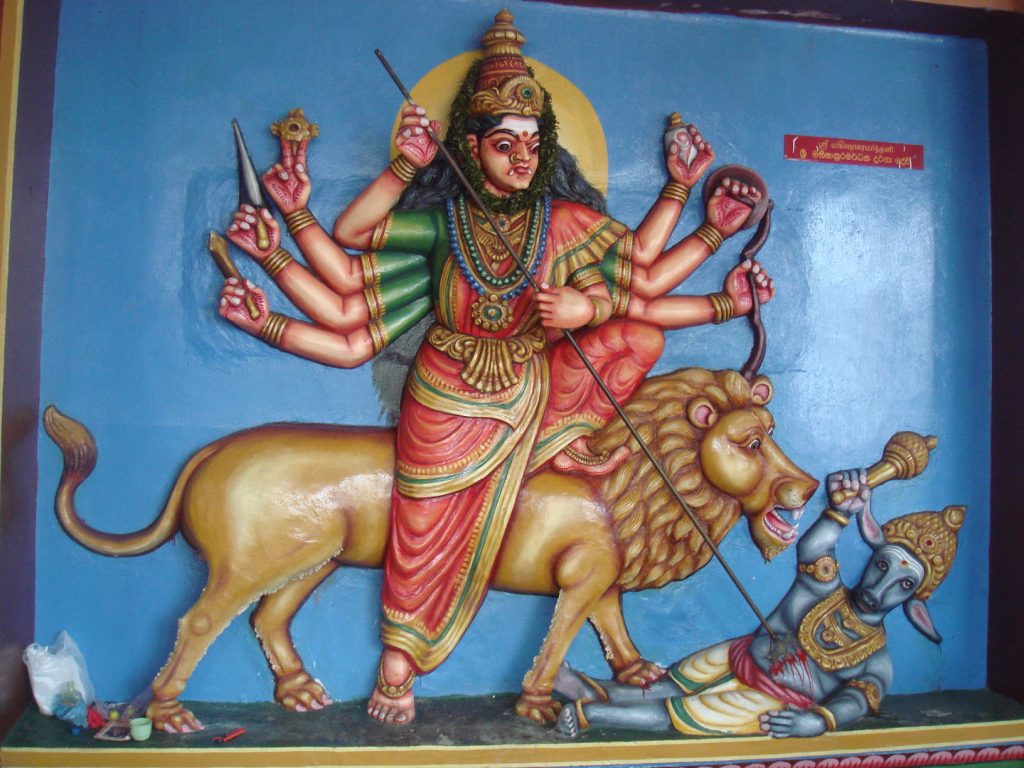
Animal sacrifice here has long been disputed. Buddhist monks and animal-rights groups have campaigned against it for years. In 2013 the Court of Appeal told the police to make sure any slaughter had a licence from the local authority and was humane. After a Supreme Court decision in 2014 that also required a licence, the Sunday Times reported that the temple chose not to allow animal sacrifice at that year’s festival.
The annual festival
Munneswaram’s own festival lasts about four weeks and draws Hindu and Buddhist pilgrims from all over Sri Lanka. Its dates follow the traditional calendar, so they change every year. According to the temple, the 2026 festival began with the flag-hoisting on 31 July. The fire-walking followed on 22 August, the great chariot procession on 26 August and the water-cutting ceremony on 27 August.
For the water-cutting, devotees draw the chariots to the Deduru Oya. There the images of the deities go into the water, and thousands of worshippers jump in after them. On the big days, expect crowds, traffic and long queues.
The temple also celebrates Navaratri, nine nights in honour of the goddess, and Maha Sivarathri, an all-night vigil for Shiva. For each year’s dates, check the festival page on the temple’s website.
Visiting: hours and temple rules
The temple opens every day from 5.30 am to 8 pm. Pujas take place at 5.30 am, 7.30 am, 12 noon, 5 pm, 7 pm and 8 pm, though times change during festivals. Arrive around a puja if you want to see the temple at its busiest.
The temple’s own rules for visitors are clear:
- Wear clean, modest clothes.
- Take off your shoes before you enter the grounds, because footwear isn’t allowed in or around the temple.
- Leave phones, cameras and other gadgets behind before you go into the temple.
- No smoking, alcohol or meat on the premises.
- Queue for darshan, the viewing of the deity, and don’t use touts.
- Put offerings in the hundi (the offering box), or hand them to temple staff and ask for a receipt.
At many Hindu temples men remove their shirts before the inner shrine, so watch what local men do at the door. Our guide to cultural etiquette in Sri Lanka covers kovil manners in more detail. Recent visitors (2025–26) describe a calm, clean temple with helpful staff, and report no entrance fee. The temple also serves a free lunch, annadhanam, to devotees every day.
Getting there
Chilaw is about 80 km north of Colombo. The Colombo–Puttalam road (A3) runs there through Negombo, and the town is also on the Puttalam railway line. From the town centre, the temple is a short tuk-tuk ride east, off the road towards Kurunegala.
Munneswaram fits easily into a drive up the coast. Stop on the way from Negombo to the kitesurfing lagoons of Kalpitiya, ideally around a morning or evening puja.
Frequently asked questions (FAQs)
When is the Munneswaram festival?
It lasts about four weeks, and the dates change each year. In 2026 it ran from the flag-hoisting on 31 July to the water-cutting ceremony on 27 August.
What are the opening hours of Munneswaram temple?
It opens every day from 5.30 am to 8 pm. Pujas take place at 5.30 am, 7.30 am, 12 noon, 5 pm, 7 pm and 8 pm, but times change during festivals.
Can non-Hindus visit Munneswaram?
Yes. Most worshippers today are Sinhala Buddhists, and people of all faiths visit. Dress modestly, take off your shoes and follow the temple’s rules.
Can you take photos at Munneswaram?
The temple asks visitors to leave phones and cameras behind before entering the temple.
Is Munneswaram connected to the Ramayana?
Tradition says Rama built the temple to fulfil a vow made while searching for Sita. Sri Lanka Tourism marks it on its map of Ramayana sites.
Where is Munneswaram temple?
Just east of Chilaw in Puttalam District, about 80 km north of Colombo.
Header photo: Leon Meerson / Wikimedia Commons, CC BY-SA 2.0.