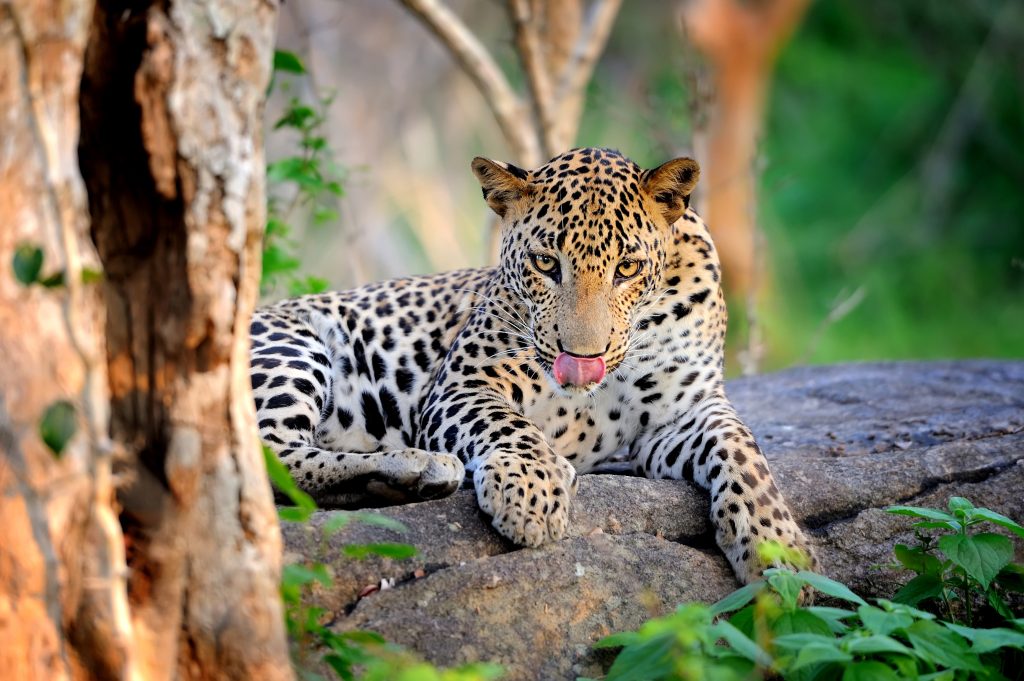
Leopards in Sri Lanka live almost everywhere there is cover, from dry coastal scrub to the tea estates and cloud forest of the hills. Seeing one is a different matter. In practice, almost every sighting a visitor gets comes from a jeep in one of two parks, Yala in the south-east and Wilpattu in the north-west, and even there nothing is guaranteed.
This page sets out where your chances are best, how to give yourself a better one, and how to watch a leopard without becoming part of the problem.
The Sri Lankan leopard
The leopard here is its own subspecies, *Panthera pardus kotiya*, found only in Sri Lanka, and it is the country’s top predator. The IUCN lists it as Vulnerable and estimates fewer than 800 mature animals, probably declining. Habitat loss, wire snares and poisoning after attacks on livestock are the main threats.
Leopards are mostly active at night, but they also move around at dawn and dusk, which is why safari timings matter so much.
Yala: your best chance
Yala National Park has one of the highest leopard densities in the world. The Department of Wildlife Conservation (DWC) describes Blocks I and II as the best areas for them, and Block I is entered at Palatupana, reached from Tissamaharama via Kirinda. Sri Lanka Tourism says dawn and dusk are the best times for a safari.
The catch is company. Block I is the most visited part of the park, and jeeps often bunch around a leopard. In June 2026 five visitors were arrested for walking outside their jeeps, and vehicles have killed a young leopard and a jungle cat in the park.
Yala also closes. The DWC has traditionally shut it in the driest months, around September and October; in 2026 Blocks I and II closed from 14 September because of drought, with reopening announced for 16 October. Heavy rain can close it at short notice too.
Wilpattu: quieter, wilder, less certain
Wilpattu National Park is Sri Lanka’s largest, about 1,317 km² of dry forest around natural lakes called villus. A 2018 camera-trap survey identified 133 individual leopards in the park, so they’re here in good numbers. The thick scrub hides them, though, and recent visitors (2025–26) describe days that ranged from several leopards and a sloth bear to five hours of deer and buffalo.
What Wilpattu gives you is space. Recent visitors say the jeeps spread out soon after the gate. A full day, or two half-days, gives you a better chance than one short drive. Sri Lanka Tourism gives February to October as the best period.
Torn between the two? Wilpattu or Yala compares them in detail.
Parks where leopards live but are rarely seen
These parks have leopards on their species lists, and you might be lucky. Don’t plan a trip around one, though.
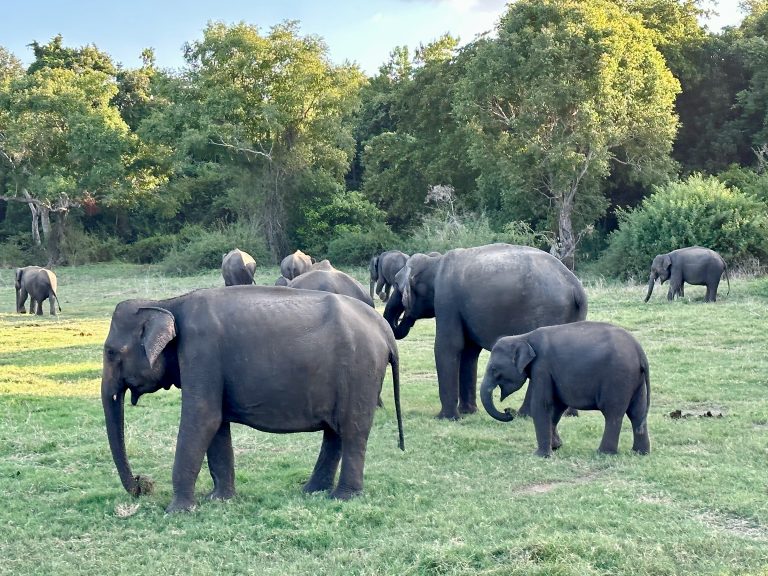
- Udawalawe: the elephant park. Leopards live here but visitors rarely see them.
- Kumana: next to Yala on the east side, with fewer jeeps, recent visitors (2024) report. Its birds are the main draw.
- Wasgamuwa, Lunugamvehera and Maduru Oya: quiet parks where leopard and sloth bear are present but seldom seen.
- Gal Oya, Minneriya and Kaudulla: leopards are recorded, but elephants are the reason to go.
- Horton Plains: UNESCO lists the Sri Lankan leopard among the threatened species of these highland forests. The large animal you’re likely to meet on the walk is a sambar deer.
How to improve your chances
- Go early or late. The first and last hours of the day are when leopards move, and recent visitors report better sightings then than in the heat of midday.
- Book two shorter drives rather than one long one. At Yala, a morning and an afternoon safari make more sense than a single drive through the midday heat.
- Choose your driver carefully. In thick scrub a leopard can sit a few metres from the track unnoticed, and an experienced driver who knows where animals have been seen helps more than any camera.
- Give it time. Two or three drives over two days give you far better odds than one, especially at Wilpattu.
- Check the dates. If you’re travelling in September or October, check whether Yala is open before you build a route around it.
Watching responsibly
A leopard surrounded by jeeps isn’t a good sighting for anyone. The rules, and a few habits, keep it that way.
- Stay in the jeep. Walking outside your vehicle breaks park rules, and visitors have been arrested for it at Yala.
- Ask your driver to hang back. Yala’s warden has asked drivers to switch off their engines near animals. You’re paying, so it is reasonable to ask your driver not to chase sightings or squeeze in close.
- Keep quiet, and don’t feed anything.
- Leave pork at home. Since October 2024 the DWC has banned raw pork and pork products in all national parks, to protect wild boar from disease.
Our guide to responsible travel in Sri Lanka covers the wider rules for wildlife watching.
Permits and planning
You enter every national park in a safari jeep with a driver, with a DWC permit. You can reserve a day permit online. The DWC’s website doesn’t currently show a fee table, so confirm the price when you book, and ask whether a jeep quote includes the park ticket. Our travel costs guide explains how the two are charged.
Yala fits a trip along the south coast or down from Ella. Wilpattu fits a route through the Cultural Triangle from Anuradhapura. Our two-week wildlife safari itinerary uses both.
Frequently asked questions (FAQs)
Where is the best place to see leopards in Sri Lanka?
Yala National Park. The DWC describes its Blocks I and II as the best areas for leopards, and the park has one of the highest leopard densities in the world. Wilpattu is the quieter alternative.
What time of day is best for seeing leopards?
Dawn and dusk, according to Sri Lanka Tourism. Leopards are mostly active at night and rest out of sight in the midday heat.
Is a leopard sighting guaranteed at Yala?
No. Your chances are better than anywhere else in Sri Lanka, but sightings are never certain. Two or more drives improve the odds.
Are Sri Lankan leopards endangered?
The IUCN lists the Sri Lankan leopard as Vulnerable, with fewer than 800 mature animals, probably declining.
When is Yala closed?
The DWC has traditionally closed it in the driest months, around September and October, and heavy rain can close it at short notice. Check before you book.
Header photo: Aldshakya / Wikimedia Commons, CC BY-SA 4.0.