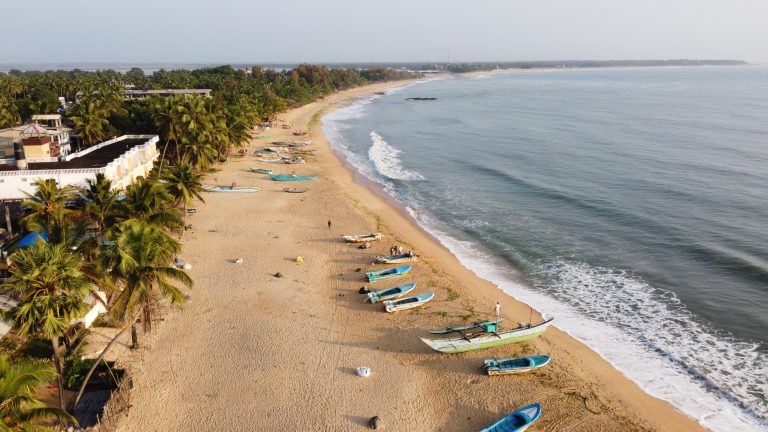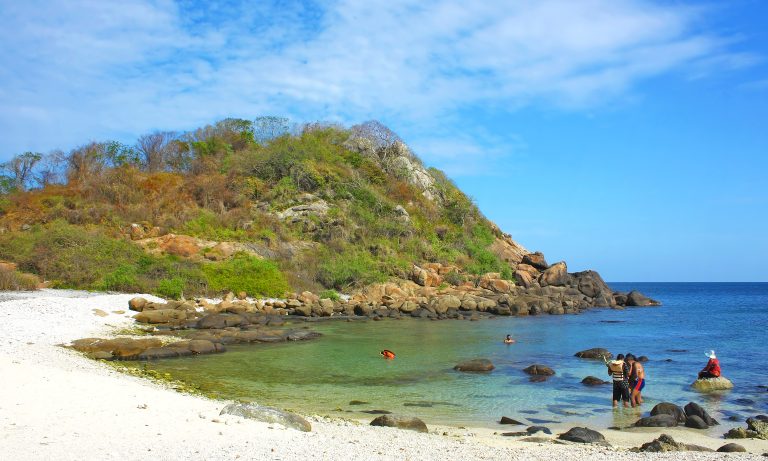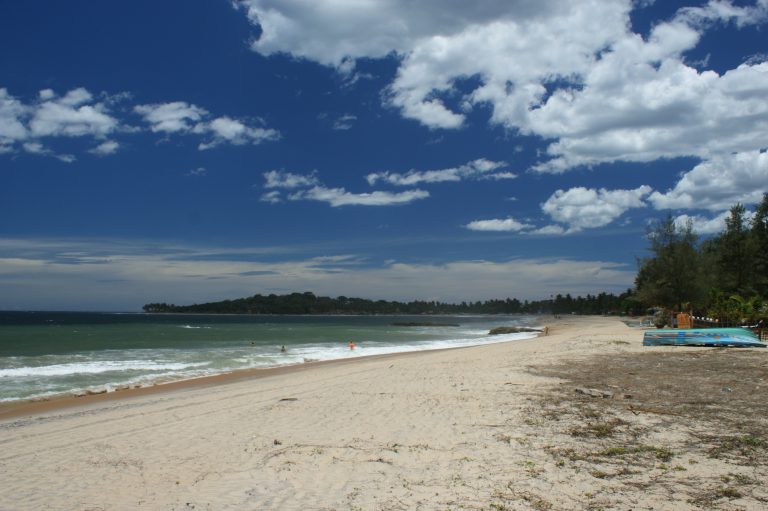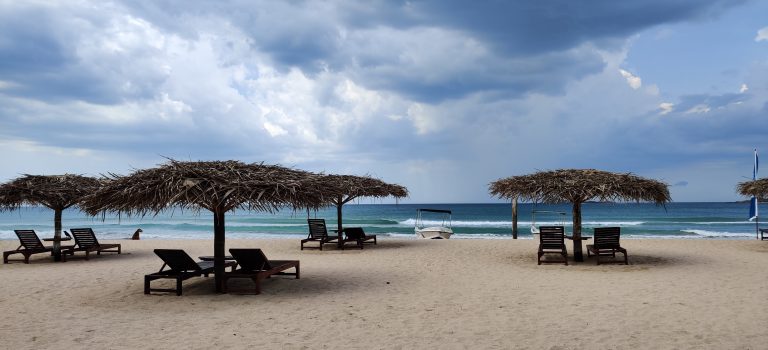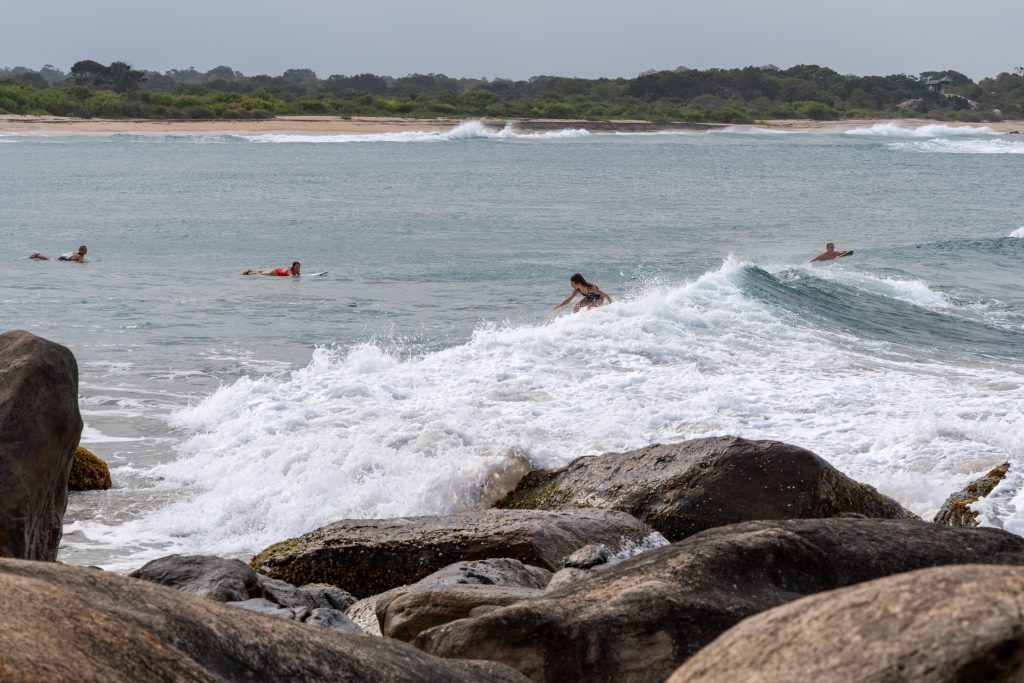
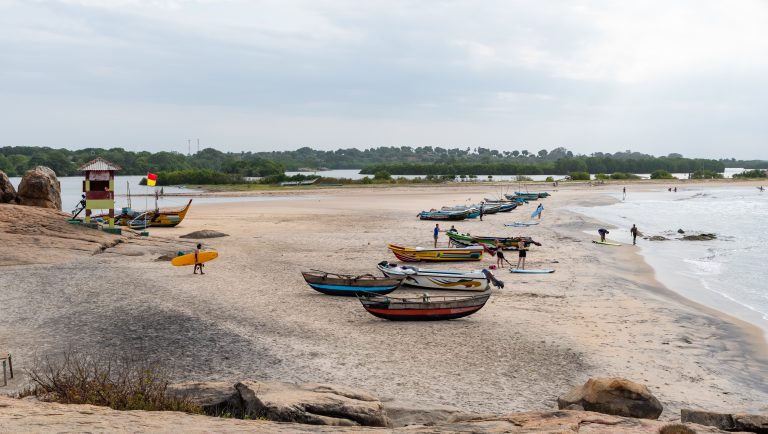
Arugam Bay is a surf trip more than a beach holiday. The town at Arugam Bay and Pottuvil sits in the middle of a string of point breaks, and Sri Lanka Tourism gives the season as April to October. This page is about the surfing itself: how a day runs, getting to the breaks, choosing lessons or a board, sharing the line-up and the hazards that catch people out.
Is it right for you?
Go if you already surf, or you’re keen to learn and happy to spend most of your time in or near the water. Days here are built around the waves, and in season the whole town keeps the same early hours.
Think twice if you’re coming between November and March. That is outside the season, and recent visitors report that most hotels and restaurants close. It’s also a long way from anywhere else: if you only want to try surfing once, the south coast is easier to fit in. Our guide to the south coast or Arugam Bay for surfing compares the two by month and level.
How a surf day runs
Plan on early starts. Sri Lanka Tourism’s own advice for Pottuvil Point is that the surf builds through the day, so be on the beach by about 10 am, and recent visitors (2025) recommend morning sessions at most breaks, before the wind picks up. The middle of the day is hot, with little shade at the breaks, so it is a good time to eat, rest and plan the next session.
The Point, the break at the southern end of the bay that surfers call Main Point, is the one you can walk to. Sri Lanka Tourism says it is about 15 minutes on foot from the guesthouses, while the other main breaks are within an hour by local transport. That means a tuk-tuk most mornings, so agree the fare and the waiting time before you set off.
Which way to go: north or south
Apart from the Point, the breaks fall into two groups.
- North, towards Pottuvil. Pottuvil Point is a long sandy point; Sri Lanka Tourism describes rides of up to 800 metres from the outside section to the beach. Recent visitors (2025) describe Whiskey Point, also north of town, as an intermediate wave that is usually less crowded than Main Point.
- South, along the Panama road. Crocodile Rock, also called Elephant Rock, is one of the three main breaks named by Sri Lanka Tourism; recent visitors describe it, and the inside of Peanut Farm further south, as softer waves where many lessons take place. Okanda, far down the coast, is reported as a powerful wave for experienced surfers only.
- In town. Main Point itself is for confident surfers, while the gentler inside section, often called Baby Point, is where recent visitors see beginners on smaller days.

Lessons and board hire
Surf schools that serve tourists should be registered with the [Sri Lanka Tourism Development Authority](https://www.sltda.gov.lk/en/register-with-us) as water sports centres, and its guideline for surf schools sets out what a good one should have. Basic lessons should be on soft boards, every board should have a leash, and the instructor should wear a vest in a different colour from the students. There should be a first-aid kit and a rescue board of at least 8 feet on the beach. Instructors are expected to hold the International Surfing Association’s Level 1 award plus a surf lifeguard or aquatic safety award, and the school should ask about your swimming and your health before you start.
So ask before you pay: who is teaching, what qualifications they hold, how many students share one instructor and which break you’ll use that day. Sri Lanka Tourism lists [registered water sports centres](https://www.srilanka.travel/water-sport-centres) with their registration numbers. When we checked in October 2026 the list had only 30 centres for the whole island and just one in Arugam Bay, so many schools won’t appear on it. Still, a school that can show you its registration has been through an inspection.
Recent visitors report that boards can be hired almost everywhere. Check the leash and fins before you carry it to the water, and agree in advance what you would pay if it comes back damaged.
Sharing the line-up
Arugam Bay’s line-ups have become crowded, and locals say it shows. In 2025 surfers told the Daily Mirror that people now paddle out whatever their level, so beginners get in the way of intermediates and intermediates in the way of experienced surfers. Their answer was to ask the authorities for trained lifeguards and a surf patrol.
You can help by picking a break that suits your level and learning the basic rules. One surfer rides each wave, and the person closest to the peak has priority. Paddle round the breaking waves rather than through people riding them, and never let go of your board in a crowd. If you’re not sure, watch from the beach for ten minutes before you go out.
The town itself is a mostly Muslim fishing village, and the Daily Mirror found that many restaurants ask customers to cover up before they come in. Swimwear is for the beach, so carry a shirt.
Hazards to know about
- Little emergency cover. The Daily Mirror reported in 2025 that there are no emergency vehicles in Arugam Bay, and that people have to wait for an ambulance from Pottuvil District Hospital. The free national ambulance service is on 1990; the police are on 119.
- Crocodiles. They live in the lagoons beside several breaks. In 2017 a young British visitor on a surf trip was killed by a crocodile in the lagoon near Crocodile Rock. Keep out of lagoon water and river mouths, and don’t wash or wade there.
- Elephants. Recent visitors report wild elephants on the roads to the southern breaks, so travel in daylight and ask your driver to go slowly.
- Rip currents. The UK government warns that many Sri Lankan beaches have dangerous surf or rip currents at certain times of year. If you’re pulled out, stay with your board, don’t fight the current, and paddle parallel to the beach until you are free of it; raise an arm and shout if you need help.
- Sun. There is very little shade at most breaks. A rash vest, a hat and plenty of water matter more than any wax.
Fitting it into a trip
There is no railway to Arugam Bay, and it is on the far side of the island from Colombo, so give it several days rather than a single night; the waves also change from day to day. If you have spare mornings, there are boat safaris at Gal Oya National Park inland, and our east coast itinerary shows how Arugam Bay links up with Batticaloa and Trincomalee. For general advice on staying safe, see our Sri Lanka travel safety guide.
Frequently asked questions (FAQs)
When is the surf season at Arugam Bay?
Sri Lanka Tourism gives the season as April to October. Recent visitors report that most hotels and restaurants close from November to March.
Can beginners surf at Arugam Bay?
Yes, with a teacher. Main Point is for confident surfers, but recent visitors report that lessons use the softer waves at Crocodile Rock (Elephant Rock), the inside of Peanut Farm and Baby Point.
How do you get to the surf breaks around Arugam Bay?
Main Point is a short walk from the guesthouses. The other breaks are within an hour by local transport, usually a tuk-tuk, so agree the fare and waiting time first.
What should I look for in a surf school?
Soft boards for beginners, leashes, a first-aid kit and a rescue board on the beach, and instructors with an International Surfing Association Level 1 award and a lifeguard award, which is what the Sri Lanka Tourism Development Authority expects.
Are there crocodiles at Arugam Bay?
Yes, in the lagoons beside several breaks. A visitor was killed by one near Crocodile Rock in 2017, so stay out of lagoon water and river mouths.
What happens in an emergency at Arugam Bay?
The Daily Mirror reported in 2025 that there are no emergency vehicles in the town and that ambulances come from Pottuvil District Hospital. Call 1990 for the free national ambulance service and 119 for the police.
Header photo: Steffen Schmitz / Wikimedia Commons, CC BY-SA 4.0.