Check before you travel Hill-country railway: repairs after Cyclone Ditwah Checked 5 October 2026
Cyclone Ditwah damaged the hill-country railway in November 2025, and it is reopening in stages. Since 2 October 2026, trains run again from Colombo Fort to Peradeniya and Gampola, but Kandy station itself is not served yet. On 5 October 2026 earth and rocks fell onto the line between Kadigamuwa and Gangoda after heavy rain and derailed an early train; services restarted later the same day, but expect delays or short suspensions after heavy rain. Trains between Nanu Oya and Badulla, which stop at Haputale, Ella and Demodara, restarted on 20 June 2026. The section between Gampola and Nanu Oya is still under repair, so you cannot yet go by train from Colombo or Kandy all the way to Ella. Check the latest services before you plan a rail journey, and book reserved seats on the Sri Lanka Railways seat reservation site.
Four days takes you from Kandy, the last royal capital, up through the tea estates to Nuwara Eliya and Horton Plains, then down the railway to Ella. It’s a route of early mornings. The hills are usually clearest before the cloud builds, so the walks and viewpoints come first and the travelling fills the afternoons.
The plan starts in Kandy, which most people reach by road from Colombo, the airport or the ancient cities. If you can get there the evening before Day 1, do: it puts the temple’s early-morning ritual within reach.
Is this route right for you?
Go if you want temples, tea country, cool air and one proper walk in a short trip, and you like the idea of finishing with a train ride through the tea estates.
Think twice if you hate early starts or winding roads. Four days with three bases means you move almost every day; if you can spare a fifth, add it (see the end of this page). And if Ella’s hikes are the main reason you’re coming, spend less time on the way and more in Ella itself: our 2 Days in Ella plan covers them properly.
The route at a glance
- Night 1: Kandy (plus the night before, if you arrive then)
- Nights 2 and 3: Nuwara Eliya
- Night 4: Ella, or Haputale if you’d rather wake up in quiet tea country
- Getting between them: by road from Kandy to Nuwara Eliya, then the train from Nanu Oya, Nuwara Eliya’s station, down to Ella
Trains from Kandy into the hills are affected by repairs after Cyclone Ditwah, which is why this plan uses the railway only for the last stretch. See the travel update at the top of this page for the current position.
Day 1: Kandy’s temple and the forest behind it

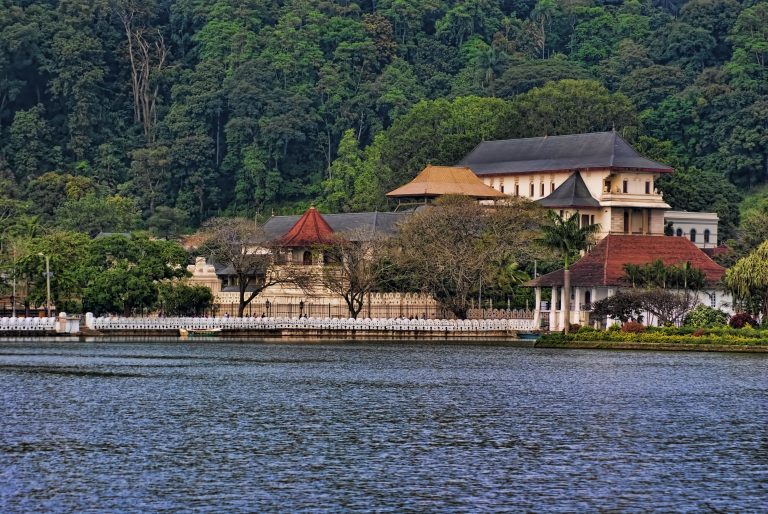
Start at the Temple of the Sacred Tooth Relic, beside Kandy Lake. It opens at 5.30 am, and the daily rituals, with drumming and offerings, take place at around 5.30 to 7 am, 9.30 to 11 am and 6.30 to 8 pm. If you can face it, the early ritual is the one to see; if not, come back in the evening. Cover your shoulders and knees, leave your shoes at the booths by the entrance, and buy your ticket only from the machines inside: LKR 3,000 for foreign visitors (LKR 2,500 for visitors from SAARC countries, Thailand and Myanmar), which also covers the temple’s museums.
Afterwards, walk round the lake, which was made by the last king of Kandy, Sri Vikrama Rajasinha. When the town gets hot in the afternoon, head into the shade of Udawattakele, the old royal forest on the ridge behind the temple. Its entrance is a 15 to 20 minute walk uphill from the temple, and about 80 bird species have been recorded there, including the endemic Layard’s parakeet. After rain, leeches wait along the paths, so wear closed shoes.
Day 2: Peradeniya, then up the A5
The Royal Botanic Gardens at Peradeniya open at 7.30 am and lie about 5.5 km west of Kandy, where the A5 to Nuwara Eliya begins, so they fit neatly into the morning you leave. Give them a couple of hours for the palm avenues, the Orchid House and the huge Java fig that spreads over the Great Lawn. Foreign adults pay LKR 3,540.
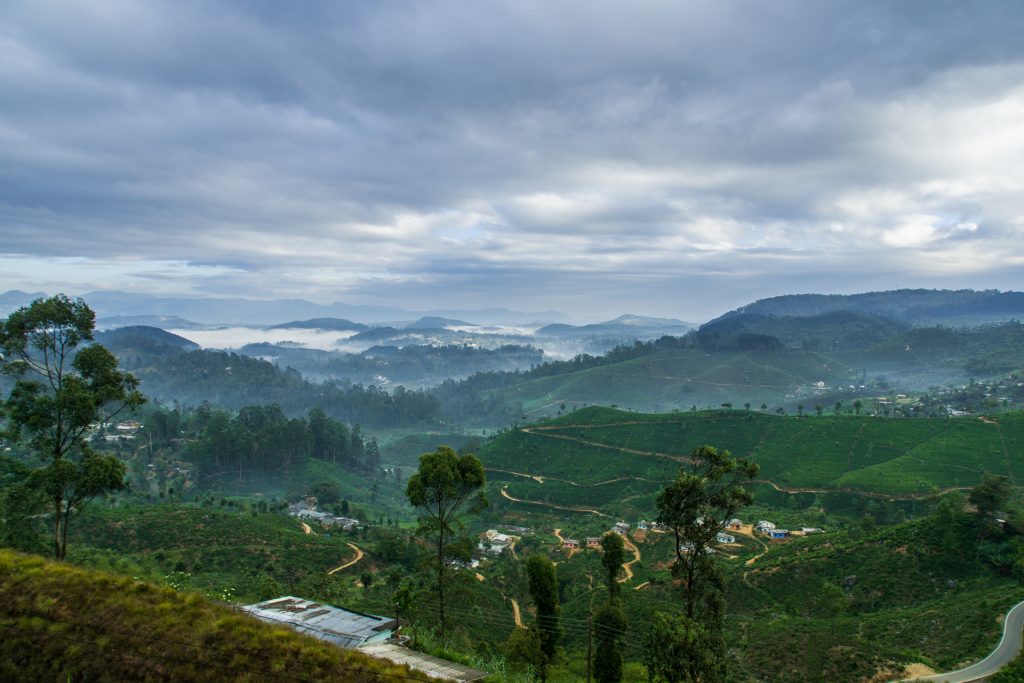
Then climb. Nuwara Eliya is about 75 km from Kandy on the A5, through Gampola and Pussellawa and up into the tea estates. Recent visitors (2025–26) report two and a half to three hours by bus and a little less by car, plus whatever time you spend stopping for the views.
Nuwara Eliya sits at 1,868 m, and you’ll feel it: the air is cool all year, so have a warm layer to hand. Spend the late afternoon around Gregory Lake and Victoria Park, and walk past the red-brick, Tudor-style post office, still in use, and the town’s other colonial-era buildings. Have an early night. Tomorrow starts in the dark.
Day 3: Horton Plains at first light
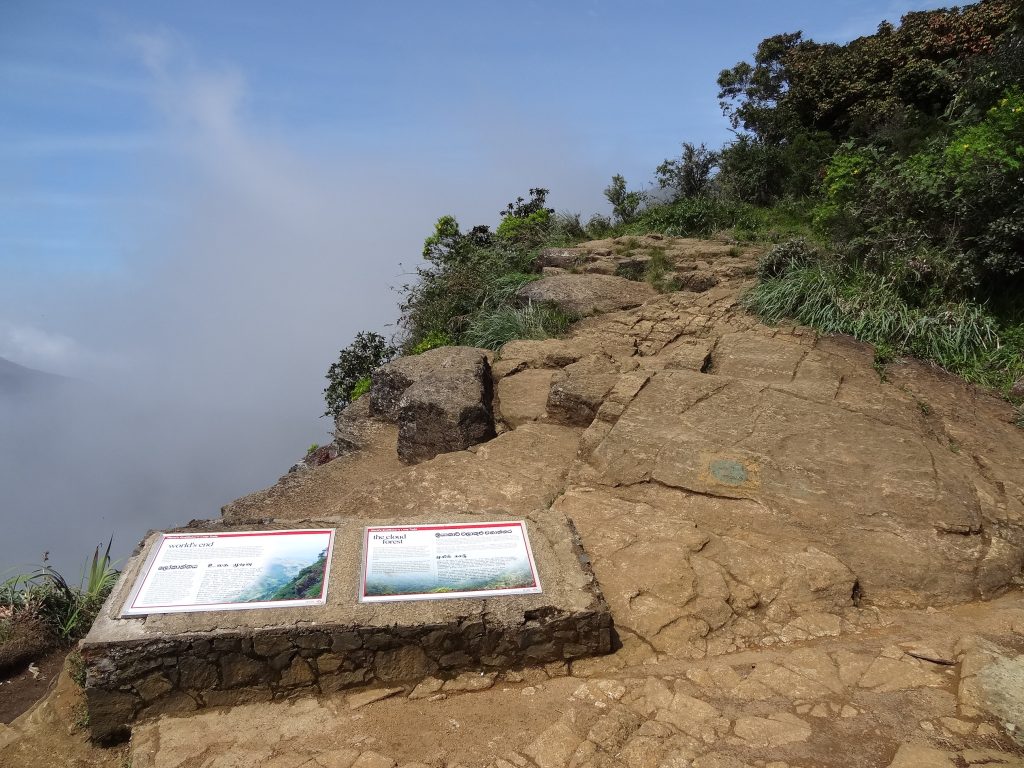
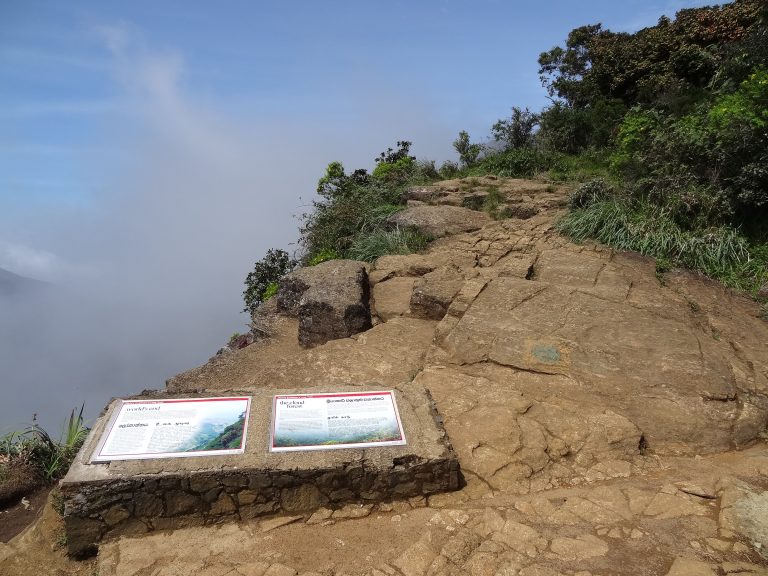
Horton Plains National Park is the reason for the second night in Nuwara Eliya. Sri Lanka Tourism advises visiting roughly between 6 and 10 am, before cloud rolls over the escarpment, and the park is 32 km from town by road via Ambewela and Pattipola. So leave before dawn, by hired car or tuk-tuk.
The main trail is a loop of about 9 km from the visitor centre, across open grassland and through cloud forest, past World’s End, where the plateau ends in a sheer drop, and Baker’s Falls. Allow around three hours. It’s cold at the start, so wear long trousers and a warm layer, and bring a hat for when the sun comes through. No polythene is allowed in the park, and recent visitors report that bags are checked at the entrance, so pack food in paper or a reusable box. You pay for a permit at the ticket office; the total depends on your group and vehicle, and the Department of Wildlife Conservation doesn’t publish a current price list online.
You’ll be back in town by early afternoon. If you still have the energy, Hakgala Botanic Gardens, on the Badulla road south-east of town, is open until 6 pm (tickets until 5 pm) and makes a gentle end to the day among roses and tree ferns beneath Hakgala Rock. Foreign adults pay LKR 3,540. It is at its best from mid-March to the end of April.
Day 4: Down the line to Ella
Take a tuk-tuk to Nanu Oya station, a short ride from town, and catch the train down through the tea country, past Ohiya and Haputale, to Ella. Recent visitors report a little over two and a half hours for the journey. Sri Lanka Tourism singles out the stretch between Idalgashinna and Haputale as a highlight of the line, so have your camera out after Ohiya.
Reserved seats are sold on the Sri Lanka Railways seat reservation site up to 30 days ahead, and you need each traveller’s passport number. Unreserved second- and third-class tickets are sold at the station on the day. Train times change, so check them at the station the day before rather than relying on times posted online.
If the times don’t suit you, go by road instead: the A5 passes Hakgala on its way to Welimada, then the road turns south through Bandarawela to Ella. Recent visitors report two to three hours.
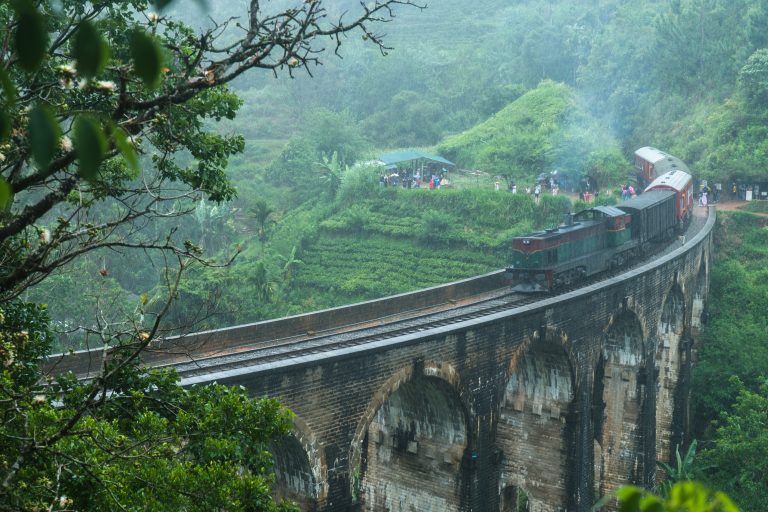
You’ll reach Ella in the afternoon. Keep it easy: a wander along the main street, or a tuk-tuk to Nine Arch Bridge to watch a train cross from the hillside. Little Adam’s Peak and Ella Rock are morning walks, and if you can stay on, 2 Days in Ella shows how to fit them in.
Ella or Haputale?
Ella is the busier of the two, with more cafés and the best-known walks. Haputale, a few stations earlier on the same line, is a small town on a ridge among tea estates, and it suits people who want views and quiet more than a menu of activities.
If you get off at Haputale, go up to Lipton’s Seat at sunrise the next morning. The lookout is on the Dambatenne estate, founded in 1890, the year the tea pioneer Sir Thomas Lipton first visited Ceylon, and recent visitors report that cloud usually covers the view by mid-morning. Take a tuk-tuk up the narrow estate road; many people ride up and walk back down through the tea. Adisham Bungalow, a 1931 stone country house that is now a Benedictine monastery, is nearby, but recent visitors report it opens mainly at weekends and on holidays, so check in town first.
Getting around
Most visitors cover this route with a hired car and driver, which makes the pre-dawn run to Horton Plains much simpler. Buses run between Kandy and Nuwara Eliya, and tuk-tuks handle the short hops; agree the fare before you set off. If you have a driver, they can take your bags on to Ella by road while you ride the train.
When to go and what to pack
The hill country can be visited all year, but the weather decides how much you’ll see. At Nuwara Eliya, Sri Lanka Tourism says rainfall is usually highest in October and lowest in March. Horton Plains tends to be clearer from January to March, while fog often hides World’s End from April to September. Around Ella, the nearest long-term weather station, Badulla, records October to January as its wettest months. April is the busiest time in Nuwara Eliya, with races, golf and a flower show around the Sinhala and Tamil New Year, so book ahead then.
Whatever the month, walk in the mornings, and pack a warm layer, a rain jacket, shoes with grip and leech repellent.
A day more, or a day less
- Five days: add a second night in Kandy and give Peradeniya a morning of its own, or stay a second night in Ella and climb Little Adam’s Peak.
- Six days: finish with two full days in Ella, following our two-day plan.
- Three days: skip Kandy and start in Nuwara Eliya, keeping the Horton Plains morning and the train.
From Ella, most travellers continue down the A23 to Wellawaya, the road towards the south coast.
To finish on a beach after the hills, our ten days of beaches and mountains continues south to the coast.
Frequently asked questions (FAQs)
Is four days enough for Sri Lanka’s hill country?
It’s enough for Kandy, Nuwara Eliya, Horton Plains and a first afternoon in Ella, with one move almost every day. Add a fifth day if you want more than a taste of Ella.
How long does it take from Kandy to Nuwara Eliya?
It’s about 75 km on the A5. Recent visitors report two and a half to three hours by bus, and a little less by car.
Can I take the train from Kandy to Ella?
The hill-country line runs all the way, but part of it has been under repair since Cyclone Ditwah, so this plan uses the train only between Nanu Oya and Ella. Check the travel update at the top of this page before you book.
What time should I get to Horton Plains?
As early as you can. Sri Lanka Tourism recommends roughly 6 to 10 am, before cloud covers the view from World’s End.
Should I stay in Ella or Haputale?
Ella if you want cafés and the classic walks; Haputale if you want quiet tea country and a sunrise at Lipton’s Seat. They are a few stations apart on the same line.
Is it cold in Nuwara Eliya?
It’s cool all year at 1,868 m, and early mornings on Horton Plains are cold. Bring long trousers and a warm layer.
Sources: sridaladamaligawa.lk, whc.unesco.org, en.wikipedia.org (Kandy Lake), en.wikipedia.org (Udawattakele Forest Reserve), botanicgardens.gov.lk (royal botanic gardens peradeniya), en.wikipedia.org (A5 road (Sri Lanka)), srilanka.travel (index.php), en.wikipedia.org (Nuwara Eliya), srilanka.travel (attraction&), dwc.gov.lk, botanicgardens.gov.lk (botanic gardens hakgala), srilanka.travel (romantic sri lanka), seatreservation.railway.gov.lk, en.wikipedia.org (Main Line (Sri Lanka)), en.wikipedia.org (Haputale), ft.lk, en.wikipedia.org (Adisham Hall), en.wikipedia.org (Ella, Sri Lanka), en.wikipedia.org (Badulla) and recent visitor reports. Header photo: Eleleleven / Wikimedia Commons, CC BY-SA 2.0.