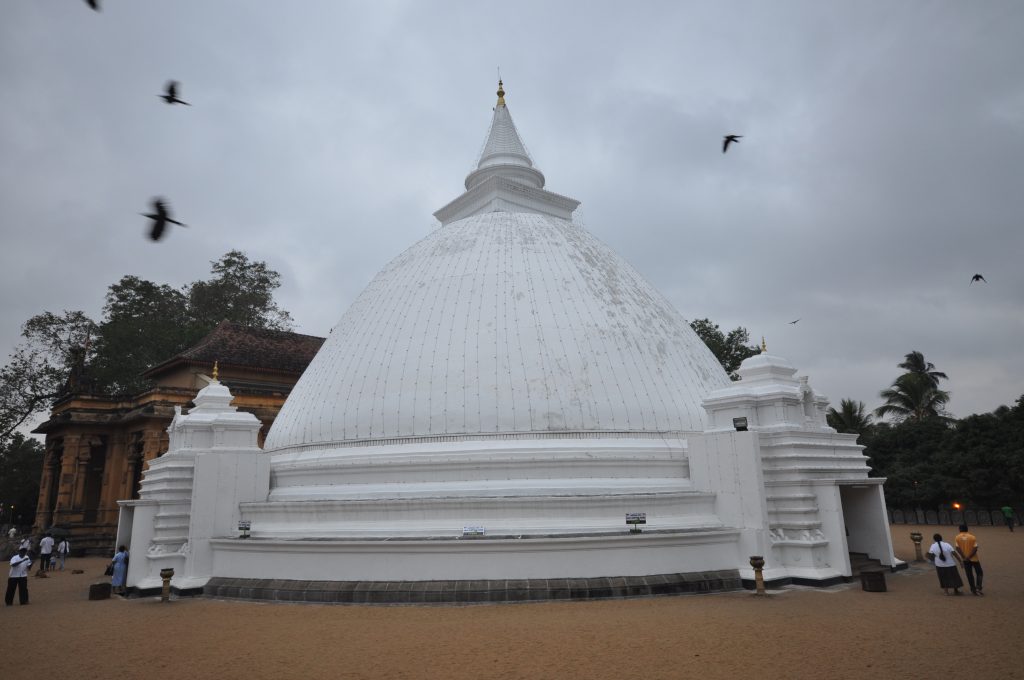
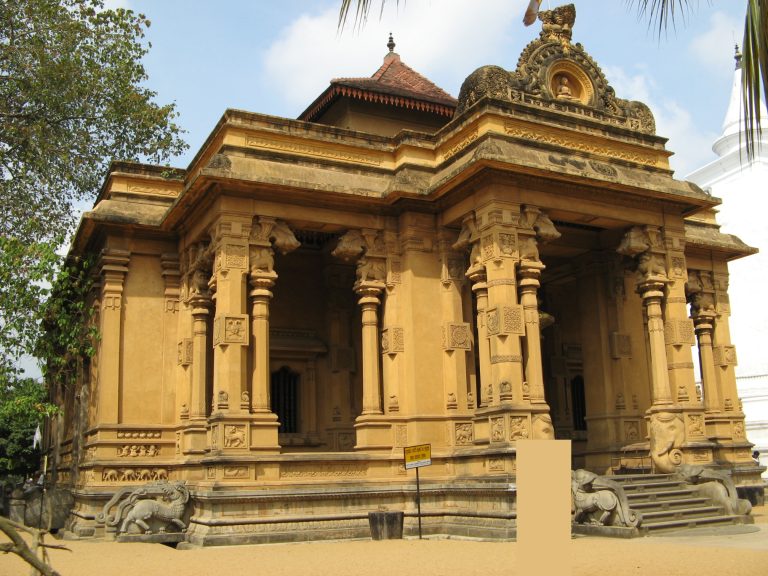
Kelaniya Raja Maha Vihara, usually just called Kelaniya Temple, stands on the bank of the Kelani River about 11 km north-east of Colombo. Buddhists believe the Buddha visited this spot on his third and last visit to the island, and the temple is known for three things: its white stupa, the murals by Solias Mendis inside the image house, and the Duruthu Perahera procession every January.
Is it worth visiting?
Go if you have a spare half-day in Colombo and want to see a working temple with a long story behind it. The murals alone are worth the trip if you like painting.
Think twice if you have already seen the big temples of Kandy and Anuradhapura and are short of time: the ancient history here is mostly told through legend, and most of what you see was rebuilt in the last few centuries.
The story behind the temple
According to Sri Lanka Tourism, the Buddha came to Kelaniya eight years after his enlightenment, invited by the Naga king Maniakkhika. Tradition counts this as his third visit; the first two took him to Mahiyangana and Nagadeepa. The Mahavamsa, the island’s great chronicle, records that the original stupa here enshrined a jewelled throne on which the Buddha sat and preached. That is why the temple’s history is traced back to around 500 BCE.
What you see today is much later. The temple was rebuilt more than once, and its present look owes most to Helena Wijewardene and her family, who supported its restoration in the first half of the 20th century.
What to see
- The stupa: a large white dagoba built in the “paddy heap” shape (dhanyakara), modelled on a heap of grain.
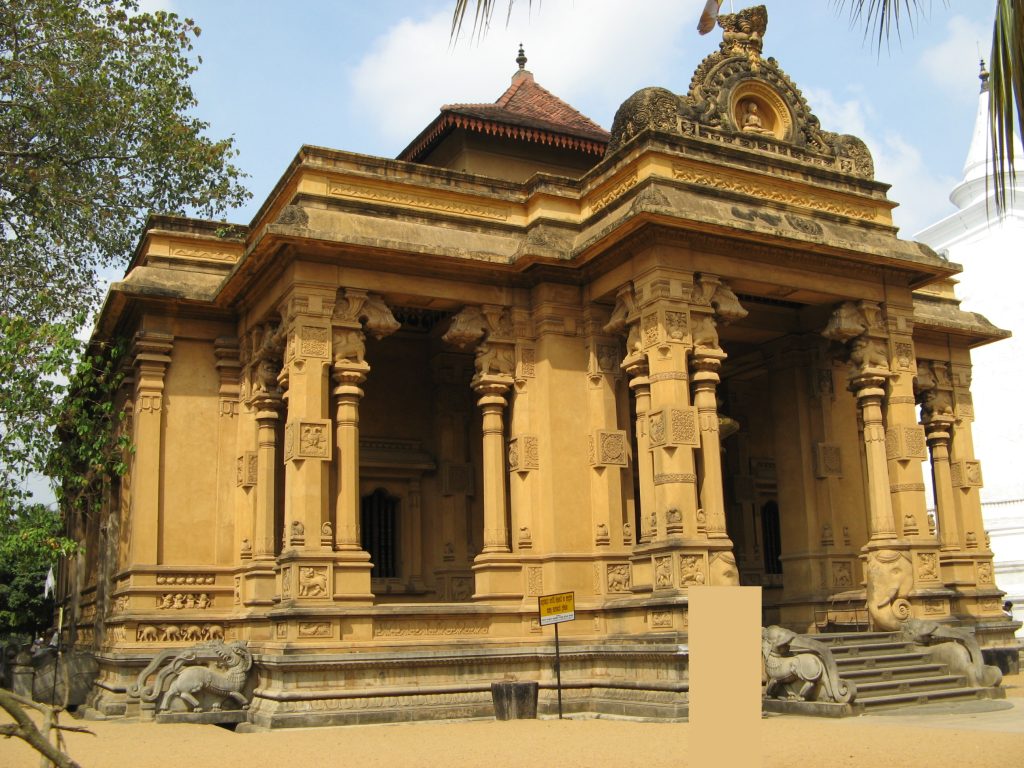
- The image house and its murals: the walls are covered with paintings by Solias Mendis, who spent about twenty years on them. They show scenes from the life of the Buddha, Jataka stories and the history of Buddhism in Sri Lanka, including the history of Kelaniya itself. He drew on old Sinhalese and Indian Buddhist painting rather than European styles, and developed a style of his own. The temple also has a reclining Buddha image.
- The devales: shrines to gods including Vibhishana, Vishnu and Kataragama stand within the temple grounds; each sends out its own procession before the main Duruthu Perahera.
The Duruthu Perahera
The Kelaniya Duruthu Perahera was first held in 1927 and marks the Buddha’s visit. It takes place in January, around the Duruthu full moon (Poya), with elephants and Kandyan, low-country and Sabaragamuwa dancers. The temple announces the dates each year: in 2026 it ran over three nights, 8 to 10 January, with each procession starting at 8 pm and the grand procession on the last night, and the temple arranged a viewing enclosure for foreign visitors.
If you want to see it, watch the Sri Lankan news in early January for the dates and arrive early to find a place along the route.
Visiting
- Dress: cover your shoulders and legs, and take off your shoes and hat before entering, as the UK government’s travel advice says for any Buddhist temple. Our guide to temple etiquette in Sri Lanka covers the rest.
- Photos: don’t pose in front of or beside statues or murals, which Sri Lanka Tourism says is strictly forbidden, and don’t use flash on the paintings.
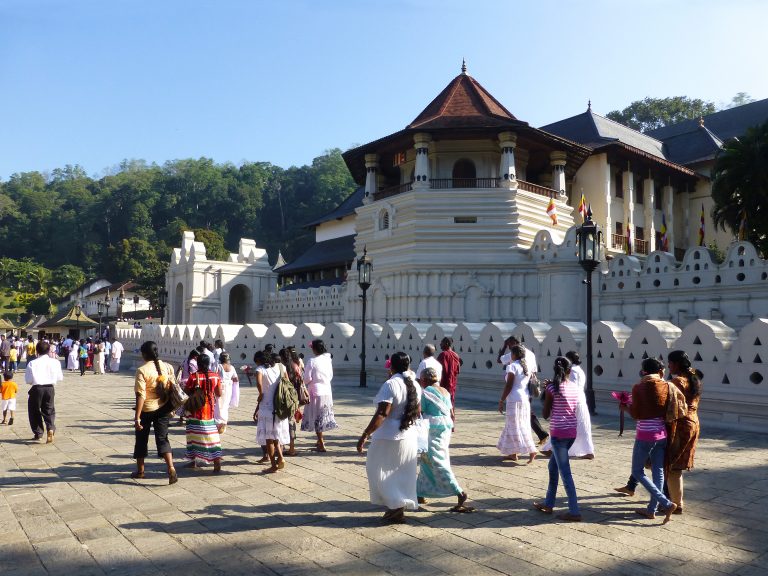
- When to go: Poya (full-moon) days bring crowds of worshippers, many dressed in white. That is a sight in itself, but pick another day if you want to look at the murals in peace.
- Tickets and hours: we found no official information on opening hours or an entrance fee.
Getting there
Kelaniya is just across the Kelani River from Colombo, close to the Colombo–Kandy road (A1). A tuk-tuk or taxi from the city is the simplest way; traffic decides how long it takes.
By public transport, Kelaniya station is on the main railway line from Colombo Fort, and the temple is a short tuk-tuk ride from the station. Recent visitors (2025–26) report that bus 235 from the Pettah area goes to Kelaniya.
Kelaniya combines well with a day in the city: the Gangaramaya Temple shows a very different, eclectic side of Buddhist Colombo.
Frequently asked questions (FAQs)
Why is Kelaniya temple important?
Buddhists believe the Buddha visited Kelaniya on his third and last visit to Sri Lanka, eight years after his enlightenment, and the Mahavamsa records that the original stupa enshrined a jewelled throne on which he sat and preached.
When is the Kelaniya Duruthu Perahera?
Every January, around the Duruthu full moon. The temple announces the dates each year; in 2026 it was held on 8, 9 and 10 January, starting at 8 pm.
Who painted the murals at Kelaniya temple?
Solias Mendis, who spent about twenty years painting scenes from the life of the Buddha, Jataka stories and the history of Buddhism in Sri Lanka.
What should I wear to Kelaniya temple?
Clothes that cover your shoulders and legs. Take off your shoes and hat before you go in.
How far is Kelaniya temple from Colombo?
About 11 km north-east of the city, across the Kelani River. A tuk-tuk or taxi is easiest; Kelaniya also has a station on the main line from Colombo Fort.
Sources: srilanka.travel (attractions.php), en.wikipedia.org (Kelaniya Raja Maha Vihara), en.wikipedia.org (Kelaniya), en.wikipedia.org (Solias Mendis), dailymirror.lk (Kelaniya Duruthu Perahera to be…), dailymirror.lk (Kelaniya Rajamaha Viharaya History behind…), srilanka.travel (travel tips), gov.uk and recent visitor reports. Header photo: Jorge Láscar / Wikimedia Commons, CC BY 2.0.