Mahiyangana Raja Maha Vihara is a great white stupa on the plain near the Mahaweli River, below the eastern edge of the hill country. Buddhist tradition holds that the Buddha’s first visit to Sri Lanka brought him here, nine months after his enlightenment. That makes it one of the island’s most important pilgrimage sites.
Is it worth visiting?
Go if you want to see a living pilgrimage site rather than a ruin, especially on a Poya (full-moon) day, or you are crossing between Kandy, Badulla and the east anyway.
Think twice if you are hoping for ancient stonework, because the stupa you see today is a twentieth-century rebuilding, and Mahiyangana is a long detour if you are not passing this way.
The story of the first visit
The Mahavamsa, Sri Lanka’s great chronicle, records that the Buddha came to Mahiyangana on his first visit to the island. In its account, the Yakkhas lived here then, and the Buddha preached to them. Temple tradition places the visit on the full moon of Duruthu, the month that usually falls in January.
The temple tells the rest of the story. A local leader named Saman heard the Buddha’s teaching and asked for something to worship after he had gone. The Buddha gave him a handful of hair from his head. Saman enshrined it in a small stupa, which tradition counts as the first in Sri Lanka.
Saman is now venerated as a god, the same deity linked to Sri Pada (Adam’s Peak). Later, the story continues, the monk Sarabhu brought a bone relic of the Buddha here, and the stupa grew larger to hold it.
Mahiyangana is one of the Solosmasthana, the sixteen places Buddhists believe the Buddha visited. Tradition puts his second visit at Nagadeepa in the north and his third at Kelaniya near Colombo. For that reason, pilgrims often think of the three as a set.
The stupa today
Kings enlarged and repaired the stupa many times over the centuries. The present structure comes from a long restoration that began in 1953. It ended in 1980 with a new pinnacle, and in 2002 the government declared the temple an archaeological protected monument.
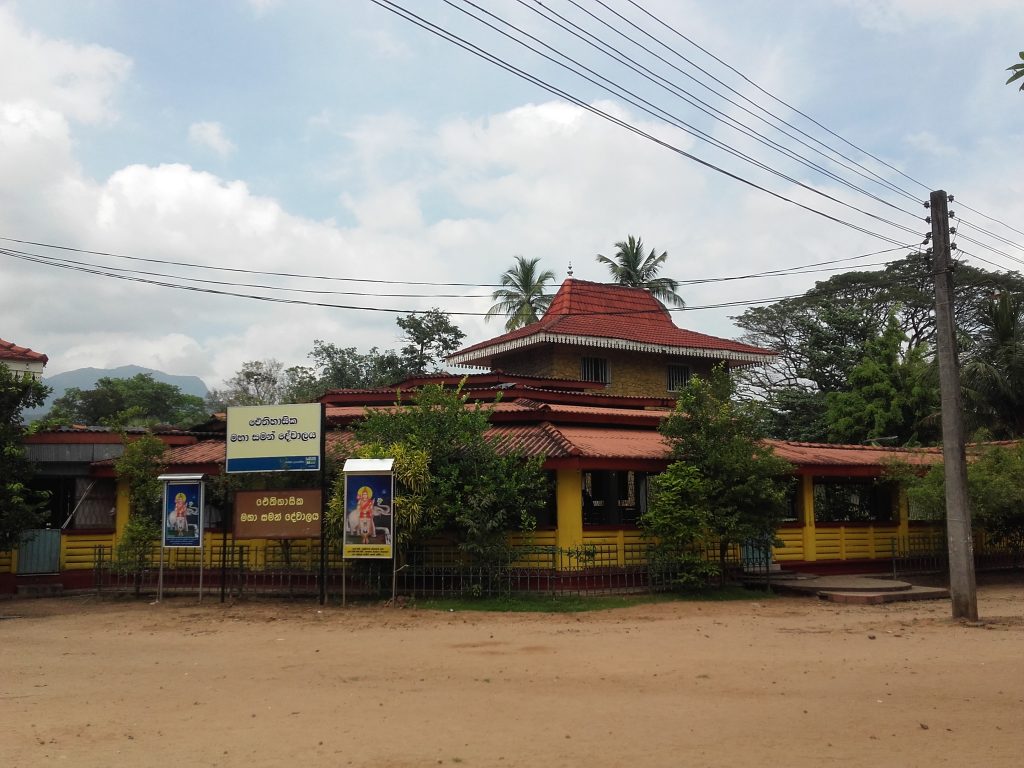
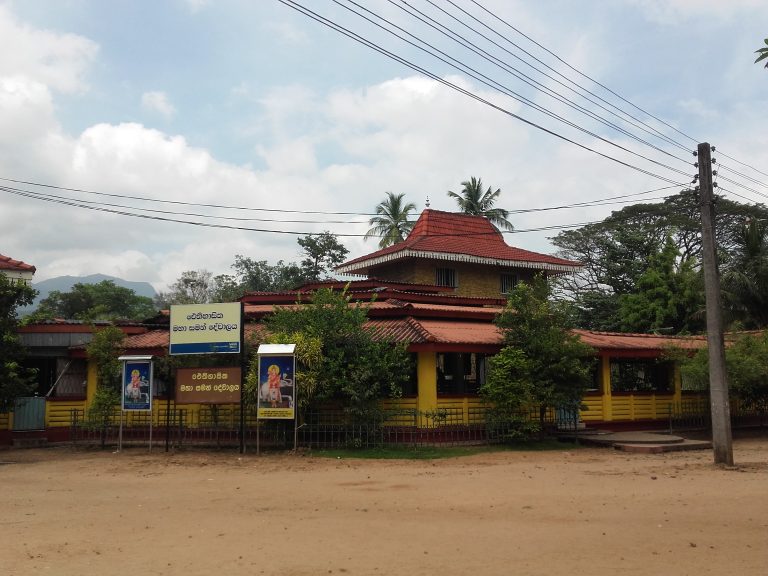
Around the stupa you will find a Bo tree inside a gilded railing, the image house and the temple’s museum. Nearby stands the Maha Saman Devalaya, the shrine to the god Saman, which shares the annual perahera with the temple.
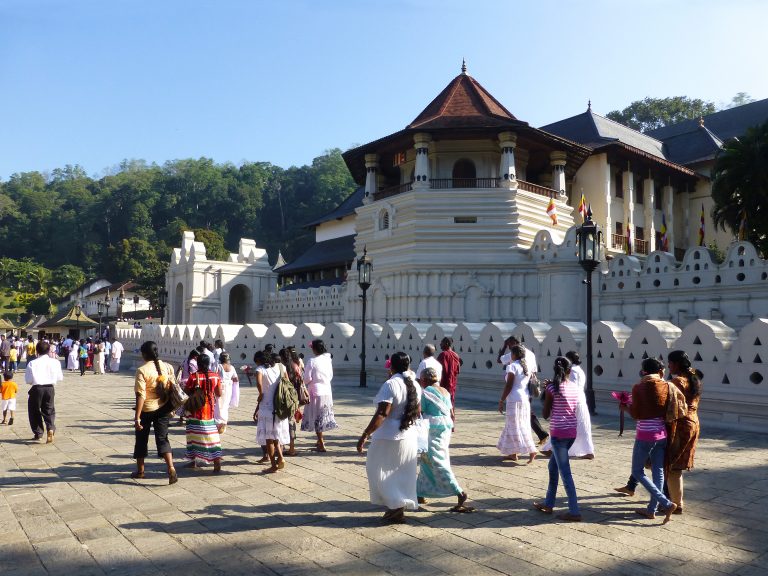
As at any active temple, cover your shoulders and knees. Take off your shoes and hat before you step onto the terrace. Photograph the Buddha images by all means, but don’t pose in front of or beside them. Our guide to temple etiquette in Sri Lanka explains the rest.
The Mahiyangana Esala Perahera
Every year the temple and the Saman Devalaya hold a perahera, a religious procession through the town’s streets. The temple’s own elephants take part. Its dates follow the lunar calendar. In 2026, for example, it opened with the planting of the kap, a ceremonial post, on 14 September and ended with a daytime procession on 27 September. The temple publishes the coming dates and streams the processions on its official website.
The Vedda community
Mahiyangana lies in Bintenna, the old name for this flat country below the hills. Nearby is Dambana, home to members of the Vedda (Wanniyalaeto) community, Sri Lanka’s indigenous people. Some people there still speak the Vedda language. The temple’s own website lists Dambana among the places to visit around Mahiyangana.
If you go, remember that you are visiting people’s homes, not a show. The community’s traditional forest way of life has changed a great deal in recent decades. Go with a local guide or through your hotel, and ask before you photograph anyone. If you buy anything, buy it directly from community members.
Getting there
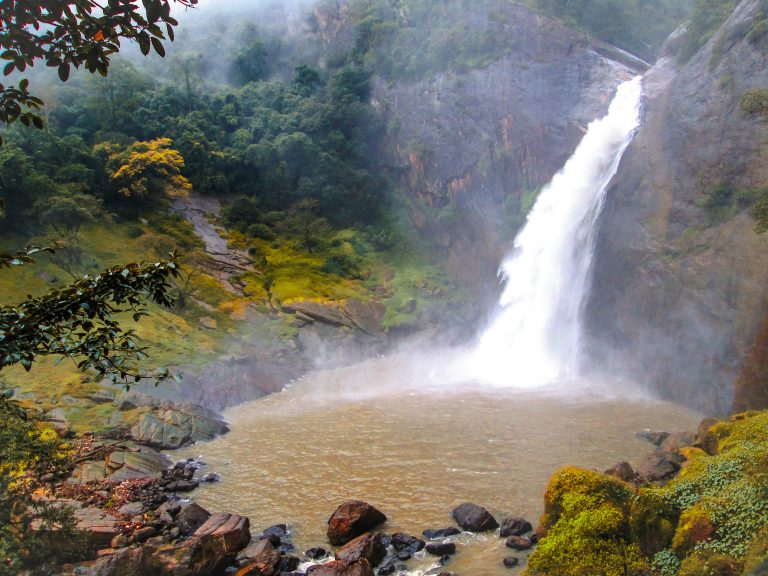
From Kandy, the A26 runs through Hunnasgiriya and then drops to Mahiyangana by a famous series of eighteen hairpin bends. The British first built the road, and it has since been widened and rebuilt. From Badulla, the road north past Dunhinda Falls leads down to Mahiyangana.
The temple is in the town, on the road to Bibile. The nearest railway station is Badulla; for the current train service, see the travel update at the top of this page.
Frequently asked questions (FAQs)
Why is Mahiyangana important to Buddhists?
Buddhist tradition, recorded in the Mahavamsa, says the Buddha’s first visit to Sri Lanka brought him here. It is one of the sixteen sacred places, the Solosmasthana.
Is Mahiyangana the first stupa in Sri Lanka?
Tradition says so: Saman enshrined the Buddha’s hair relic here in a small stupa. The present stupa is the result of a restoration between 1953 and 1980.
When is the Mahiyangana perahera?
It follows the lunar calendar. In 2026 it ran from 14 to 27 September, and the temple publishes each year’s dates on its website.
Can you visit the Vedda village near Mahiyangana?
Yes. Dambana, home to members of the Vedda community, is near Mahiyangana, and the temple lists it as a place to visit. Go with a local guide and ask before taking photographs.
What should I wear to Mahiyangana temple?
Wear clothes that cover your shoulders and knees. You take off your shoes and hat before entering the temple terrace.
Sources: srilanka.travel (attractions.php), mahiyanganarajamahaviharaya.com, mahiyanganarajamahaviharaya.com (about), mahiyanganarajamahaviharaya.com (place detail.php), up.gov.lk, en.wikipedia.org (Mahiyangana Raja Maha Vihara), en.wikipedia.org (Mahiyangana), en.wikipedia.org (Vedda), en.wikipedia.org (Dambana, Sri Lanka), srilanka.travel (index.php), en.wikipedia.org (A26 highway (Sri Lanka)) and recent visitor reports. Header photo: Gihan Jayaweera / Wikimedia Commons, CC BY-SA 3.0.