
Nagadeepa Purana Viharaya is the Buddhist temple on Nainativu, a small island off the Jaffna peninsula, and one of the Solosmasthana, the sixteen places in Sri Lanka that Buddhists hold most sacred. Tradition says the Buddha came here on his second visit to the island to end a quarrel between two Naga kings. Since the war ended in 2009 it has drawn growing numbers of pilgrims, all of whom arrive the same way: by boat from Kurikadduwan jetty.
Is it worth visiting?
Go if you are following Sri Lanka’s great Buddhist pilgrimage sites, or if you want to see a Buddhist shrine on an island where most people are Tamil Hindus. Together with the Hindu temple a short walk away, it makes one of the more unusual half-days you can spend from Jaffna.
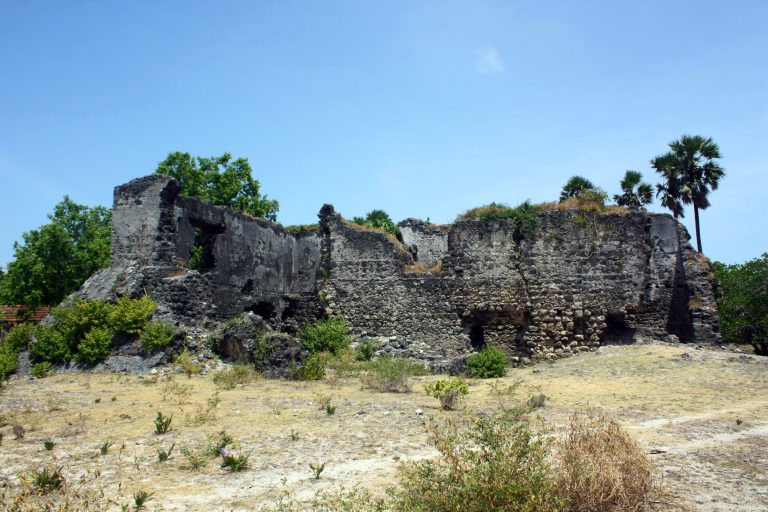
Think twice if you are hoping for ancient ruins. The temple’s age lies in its story and its place on the pilgrim route; the buildings you see are modern, and it takes most of a morning to get there and back.
The Buddha and the two Naga kings
The story comes from the Mahavamsa, the great chronicle of Sri Lanka. In the fifth year after his Enlightenment, it says, the Buddha learned that two Naga kings, Mahodara and his nephew Chulodara, were about to go to war over a throne set with gems. He came to Nagadipa and, through his powers and his teaching, brought the two sides to make peace. The grateful kings offered him the throne, and tradition holds that it was later enshrined in a stupa beside the temple.
This was the Buddha’s second visit to Sri Lanka in Buddhist tradition, after his first at Mahiyangana, and it is why Nagadeepa stands in the list of sixteen sacred places alongside Sri Pada (Adam’s Peak) and the great stupas of Anuradhapura. Treat it as what it is: a tradition recorded in a chronicle written centuries later, and one that matters deeply to the people praying around you.
A turbulent recent history
The chronicles credit early kings, among them Devanampiya Tissa and Dutugemunu, with developing the temple. An old rock inscription in the temple grounds has been a protected archaeological monument since 2007.
The 20th century was hard on it. The temple was attacked and damaged during the communal violence of 1958. During the war, in 1986, the LTTE attacked the island’s jetty. In 1990, when the LTTE drove Muslims out of the north, the temple’s chief monk sheltered Muslim islanders in its grounds.
After 2009 the temple was rebuilt and enlarged with donations from Buddhists in Sri Lanka and abroad. Most of what you see today dates from that period.
What to see
- The stupa: silver-coloured, with a gilded pinnacle, it is the centrepiece of the temple. Walk round it clockwise, keeping it on your right, as Buddhists do.
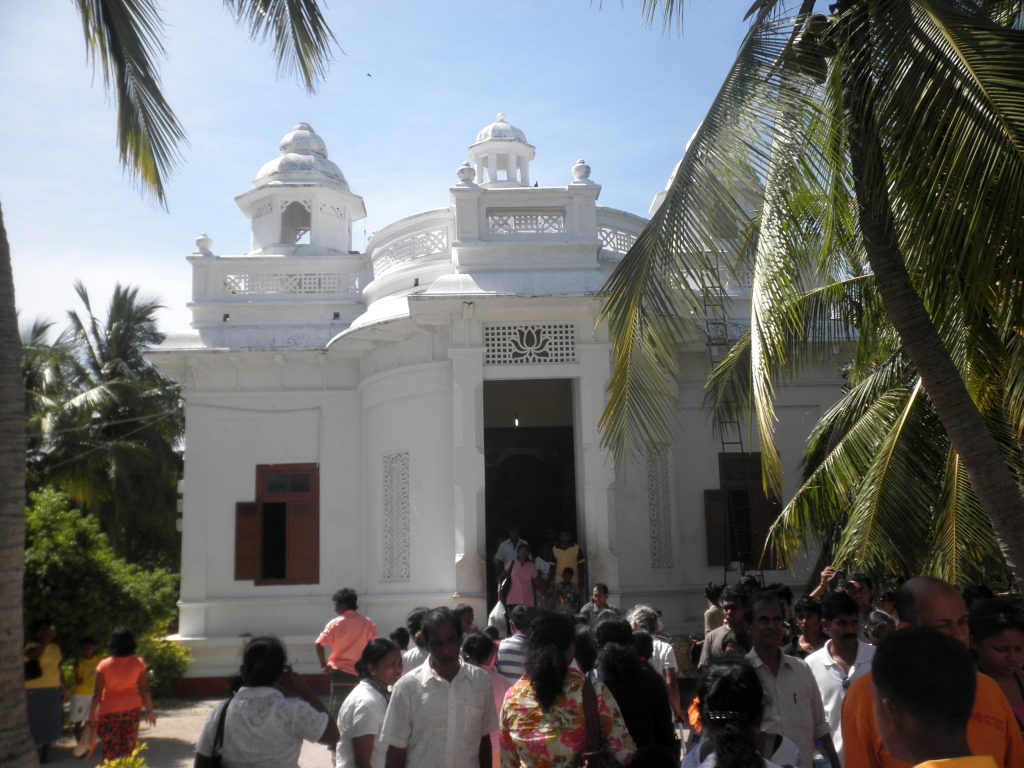
- The image houses: the white shrine building with its small domed turrets holds Buddha statues, including ones given by Myanmar and Thailand.
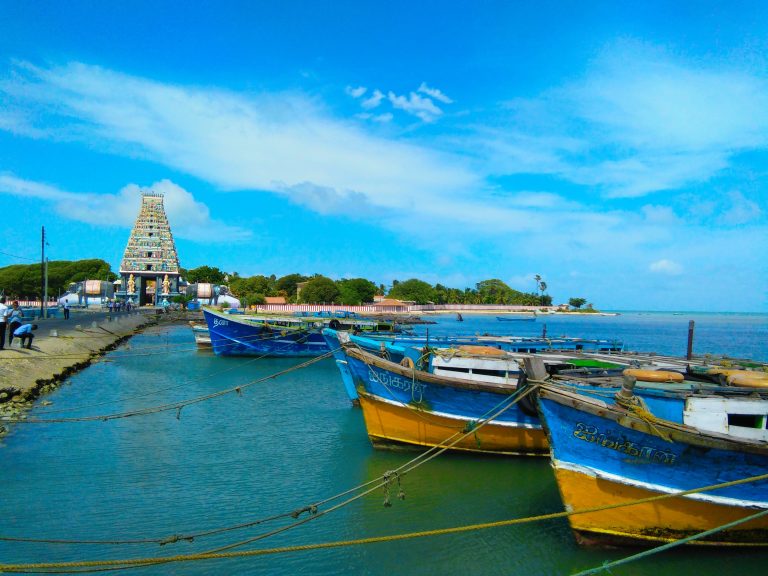
- The shoreline: the temple sits close to the water, and boats from Kurikadduwan land near it.

Temple etiquette
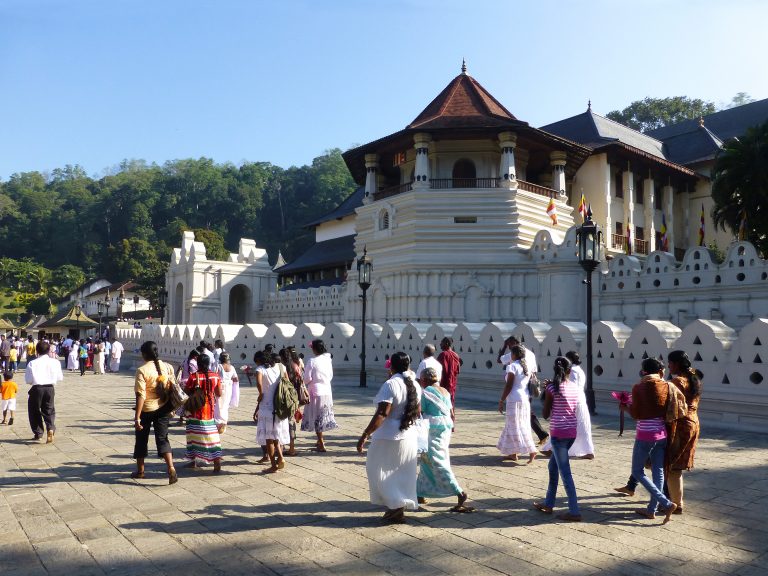
Cover your shoulders and knees, and take off your shoes and hat before you enter the temple grounds. Many Sri Lankan pilgrims wear white; visitors are not expected to, but plain, pale clothes fit in well. Don’t pose for photos with your back to a Buddha statue, and ask before photographing monks. Our guide to cultural etiquette in Sri Lanka has more on what to wear and how to behave at temples.
Expect the biggest crowds on Poya (full-moon) days, when many Buddhists visit temples, and go early if your visit falls on one.
Getting there and combining your visit
The trip starts with a drive of about an hour from Jaffna to Kurikadduwan jetty on Punkudutivu, an island linked to the peninsula by road. From there, passenger boats make the short crossing to Nainativu. Recent visitors (2024–25) report that they leave when full and cost around Rs 80 ($0.24 · convert) each way; no official timetable is published, so ask locally and confirm the last boat back as soon as you land.
The Hindu Nagapooshani Amman Temple, with its tall painted gateway tower beside the water, is about 700 metres north along the shore. The two temples belong to different faiths and keep different customs (recent visitors report that men are asked to take off their shirts at the Hindu temple, for example), but they are an easy walk apart and most visitors see both.
Boats to Delft Island leave from the same jetty at Kurikadduwan, but Delft is a full day on its own, so most people choose one island per trip. Our week in northern Sri Lanka shows how to fit the islands into a stay in Jaffna.
Frequently asked questions (FAQs)
Why is Nagadeepa sacred to Buddhists?
Buddhist tradition, recorded in the Mahavamsa, says the Buddha came here on his second visit to Sri Lanka to settle a dispute between two Naga kings over a gem-set throne. It is one of the sixteen most sacred Buddhist sites in Sri Lanka.
How do you get to Nagadeepa temple?
Drive about an hour from Jaffna to Kurikadduwan jetty on Punkudutivu, then take a passenger boat across to Nainativu. Boats land close to the temple.
What should I wear to Nagadeepa?
Clothes that cover your shoulders and knees. Shoes and hats come off before you go in, and plain, pale clothes fit in well.
Is Nagadeepa near the Nagapooshani Amman Temple?
Yes. The Hindu temple is about 700 metres north along the shore, an easy walk, and most visitors see both on the same trip.
Can you visit Nagadeepa and Delft Island on the same day?
Both boats leave from Kurikadduwan jetty, but Delft’s sailings are few and the island needs a full day, so most people do them on separate days.
Header photo: Ghostface Buddha / Wikimedia Commons, CC BY-SA 2.0.