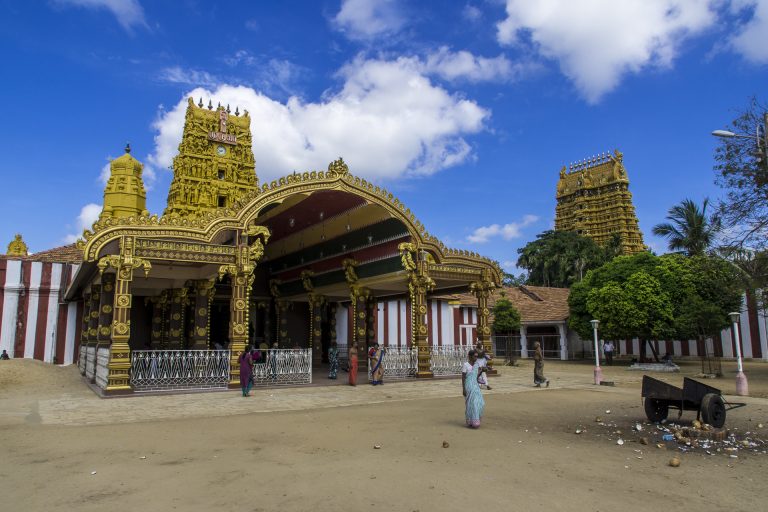
Nagapooshani Amman Temple (Nagapooshani Amman Kovil) is the main Hindu temple on Nainativu, a small island off the Jaffna peninsula that you reach by boat from Kurikadduwan jetty. It is dedicated to the goddess Parvati, worshipped here as Nagapooshani, and to Shiva as Nayinaar. Its painted eastern gateway tower stands right at the water’s edge, so it is the first thing you see as the boat comes in.
Is it worth visiting?
Go if you want to see a working island temple where most pilgrims arrive by boat, with carved and painted towers, serpent imagery everywhere and a festival in June or July that fills the island. Devotees count it among the Shakti Peethas, the sacred seats of the goddess.
Think twice if you are short of time. The road from Jaffna to the jetty and the boat across take up most of a morning, and on festival days the boats and the temple are packed.
The goddess of the Nagas
The island’s Sinhala name, Nagadeepa, ties it to the Nagas, the serpent people of early legend, and serpents are everywhere in this temple. Look for the five-headed cobra sculpture, and for the goddess shown under a cobra’s spread hood on the towers.
The old temple was destroyed by the Portuguese in 1620. The present temple was built between 1720 and 1790 and has been renovated since. The temple has four gopurams, or gateway towers. The tallest, the eastern Raja Raja Gopuram, rises about 33 metres (108 feet) beside the jetty; the others are much smaller.
One find here matters to historians: a 12th-century Tamil inscription of the Sinhala king Parakramabahu I, found in the temple grounds. It tells his officials in Jaffna how to treat foreign traders whose ships are wrecked on the coast.
Visiting the temple
- Dress: shoes and hats come off at the entrance. Recent visitors (2024–25) report that men are asked to remove their shirts before going in, as at Nallur Kandaswamy Temple in Jaffna, and that everyone should cover their shoulders and knees. Watch what local men do at the door.
- Photos: recent visitors report that photography is not allowed inside the temple. Taking pictures of the towers and the courtyard from outside is fine.
- Free meals: the Northern Province Tourism Bureau says the temple serves devotees a free rice meal every day at noon, and there are halls where pilgrims can rest.
- Respect the worship: it is a busy, working temple. Keep your voice down and stand back from people at prayer.
Our guide to temple etiquette in Sri Lanka covers the general rules at Hindu and Buddhist temples.

The festival in June and July
The temple’s great annual festival, the Mahotsavam, is held in the Tamil month of Aani, which falls in June and July. It starts with the raising of the temple flag and runs for about two weeks of daily ceremonies and processions. On the chariot day, the goddess is carried out on her carved temple car and drawn round the temple, and in 2026 the Tamil Guardian reported devotees fulfilling vows by carrying kavadi, bearing fire pots and rolling round the temple on the ground. The festival ends with the Theertham, the sacred bathing ceremony, which the provincial tourism bureau says falls on the full moon day of Aani.
Expect very large crowds and long queues for the boats, and get to Kurikadduwan as early as you can. The dates move each year with the Tamil calendar, so check before you plan around them.
Getting there: the boat from Kurikadduwan
Boats to Nainativu leave from Kurikadduwan jetty on Punkudutivu, an island joined to the Jaffna peninsula by road. The drive from Jaffna takes about an hour; recent visitors report that bus 776 runs from Jaffna’s central bus stand to the jetty.
The crossing itself is short. Recent visitors (2024–25) describe wooden passenger boats that leave when they are full and a fare of around Rs 80 each way, paid in cash. We found no official timetable, so ask at your guesthouse or at the jetty, and when you land, check when the last boat back leaves. Boats for Delft Island use the same jetty, so make sure you are in the right queue.
The Buddhist temple next door
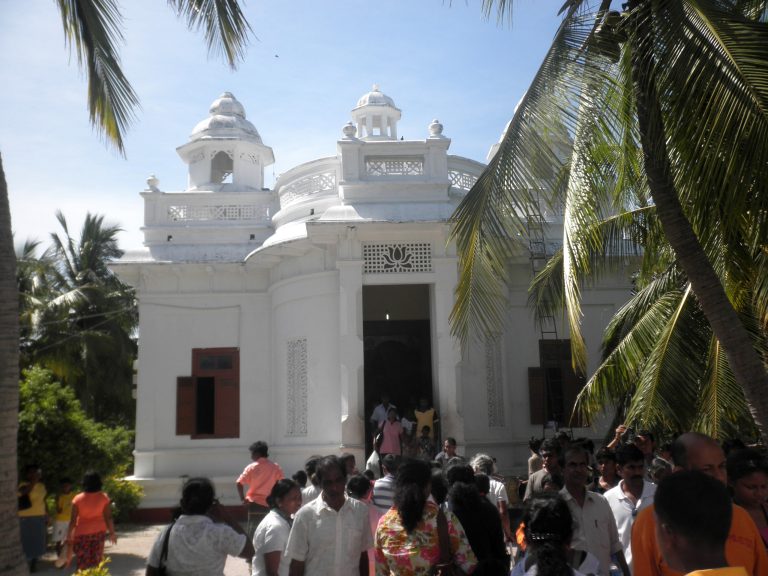
Nainativu is also holy to Buddhists. The Nagadeepa Purana Viharaya, where Buddhist tradition says the Buddha settled a quarrel between two Naga kings, stands about 700 metres south along the shore. It is an easy walk between the two, and most visitors see both on the same trip. Allow half a day from Jaffna for the island, and keep the afternoon for something close to town.
Frequently asked questions (FAQs)
How do I get to Nagapooshani Amman Temple?
Travel by road from Jaffna to Kurikadduwan jetty on Punkudutivu, about an hour, then take a boat across to Nainativu. The temple’s tall eastern tower stands beside the island jetty.
Do men have to take off their shirts at Nainativu temple?
Recent visitors report that men are asked to remove their shirts before going in, and that everyone takes off shoes and hats. Watch what local men do at the entrance.
When is the Nainativu Nagapooshani festival?
In the Tamil month of Aani, in June and July. It lasts about two weeks and ends with the Theertham on the full moon.
How far is the temple from Nagadeepa Buddhist temple?
About 700 metres along the shore, an easy walk. Most visitors see both on the same trip.
Can you visit Nainativu and Delft on the same day?
Boats to both islands leave from Kurikadduwan jetty, but they are separate services and Delft’s sailings are few. Most people choose one island per day.
Sources: tourismnorth.lk (nainativu sri nagapoosani amman kovil), tourismnorth.lk (nainativu nagapoosani amman kovil grand festival), npgov.lk, en.wikipedia.org (Nainativu Nagapooshani Amman Temple), en.wikipedia.org (Nainativu), tamilguardian.com, en.wikipedia.org (Nagadeepa Purana Vihara), en.wikipedia.org (Delft Island) and recent visitor reports. Header photo: Wanigasooriyaawanr / Wikimedia Commons, CC BY-SA 4.0.