Sri Lanka sits just north of the equator, between about 6 and 10 degrees north, and that gives its night sky a treat that visitors from Europe or North America rarely see: stars of the far southern sky, including the Southern Cross, low over the southern horizon. Add dry-zone nights far from town lights and cool, clear nights in the hills, and the island is a better place to look up than most people expect.
There are no official dark-sky reserves or public observatories to plan a trip around, so this is about making the most of the nights you already have. The three things that matter most are where you are, the moon and the weather.
What you can see from Sri Lanka
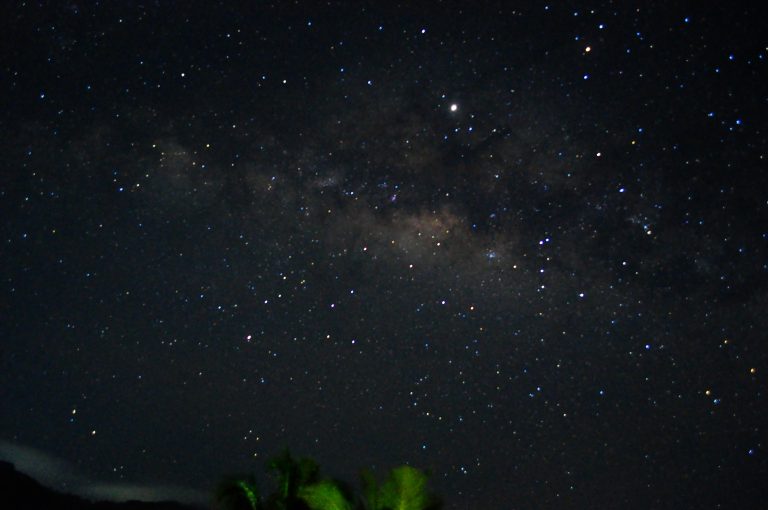
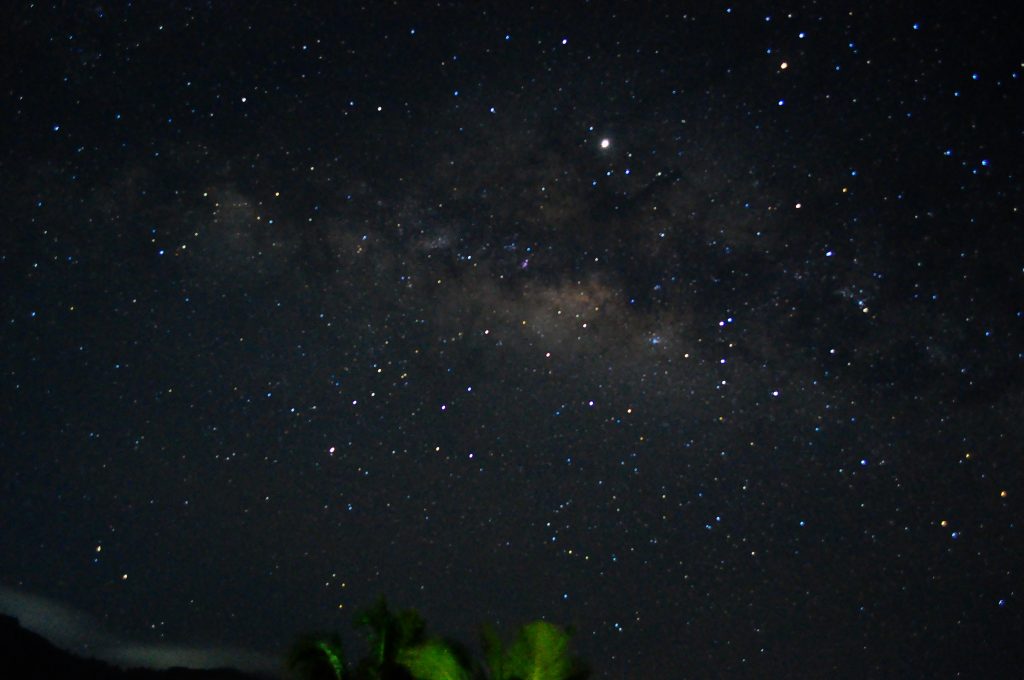
- The Milky Way. From a dark site it is easy to see with the naked eye, a pale band across the sky.
- The Southern Cross. In tropical regions the constellation Crux, the Southern Cross, is in the night sky from about April to June. Look low in the south.
- The planets and the Moon. Bright planets show up even from towns, and a pair of binoculars turns the Moon into something worth staring at.
You don’t need a telescope. Binoculars, a star-chart app and a red torch, which protects your night vision better than white light, are plenty.
Check the moon: Poya matters
Every full moon in Sri Lanka is a Poya day, a public holiday, so the dates are published in advance. That makes the island’s holiday calendar a handy moon calendar. For the darkest skies, aim for the week or so around the new moon, roughly halfway between two Poyas. On and around Poya, the full moon washes out all but the brightest stars. Our festival and Poya calendar lists the dates.
Choose the dry side of the island
Clouds are the biggest obstacle. The two monsoons bring rain to opposite sides of the island at opposite times of year, so pick the drier region for your month:
- December to March: the south and west coasts and most of the hill country are at their driest.
- May to September: the east coast, the north and the ancient cities of the dry zone are driest.
- October and November: the rainiest stretch for the island as a whole, and the hardest time for clear nights.
Our guide to the best time to visit Sri Lanka has the month-by-month picture.
Where to go
The darkest skies are well away from Colombo and the larger towns. In practice, that means:
- The dry zone and its national parks. The plains around Anuradhapura, Sigiriya and the edges of Wilpattu and Yala have few big towns. Most park visits are daytime safaris, but the Department of Wildlife Conservation runs bungalows inside some parks, including Yala, which are one of the few ways to spend a night inside a park. Tour operators also advertise guided night-sky sessions at lodges on park edges.
- The hill country. Nights are cool, and towns are small and far apart. Around Nuwara Eliya, the coldest nights of the year bring ground frost on a few days in January and February, so bring warm layers. Horton Plains is a daytime park, but villages nearby, such as those around Ohiya, are a long way from bright town lights.
- The Knuckles range. Remote villages and viewpoints such as Riverston, in the Knuckles Conservation Forest, have very little light around them. Night-sky photographers go there for the Milky Way. Roads are steep and narrow, so stay nearby rather than driving up and down after dark.
- The beach. A quiet stretch of the south or east coast, away from the bars and hotel lights, can be surprisingly good in its dry season, with an open horizon to the south.
Staying safe after dark
The best dark sites are also wild places, so take care:
- Elephants. In elephant country, especially around Sigiriya and the dry-zone parks, wild elephants use roads and paths at night. A visitor walking back from Pidurangala, near Sigiriya, was killed by one in February 2026. Don’t walk or cycle unlit lanes after dark; stay in your guesthouse grounds or go with someone local.
- Roads. The UK government warns that road accidents are frequent, particularly at night. Plan to be where you’re sleeping before dark rather than driving to a viewpoint and back.
- Snakes and leeches. Carry a torch and watch where you step, especially on grass and forest paths.
Frequently asked questions (FAQs)
Is Sri Lanka good for stargazing?
Yes, away from the towns and in the dry season. Its latitude lets you see stars of the southern sky, such as the Southern Cross, and the dry-zone plains and hill country have dark, clear nights.
Can you see the Southern Cross from Sri Lanka?
Yes. In tropical regions the Southern Cross is in the night sky from about April to June, low in the south.
When is the best time for stargazing in Sri Lanka?
On nights around the new moon, about halfway between two Poya full-moon days, in the dry season for the region you’re in: December to March in the south, west and hills, May to September in the east, north and dry zone.
Where is the darkest sky in Sri Lanka?
Away from Colombo and the larger towns: the dry-zone plains and national park edges, the hill country and the remote villages of the Knuckles range.
Can I go stargazing inside a national park?
Most park visits are daytime safaris. Staying in one of the Department of Wildlife Conservation’s bungalows inside a park, such as at Yala, is one of the few ways to spend a night there.
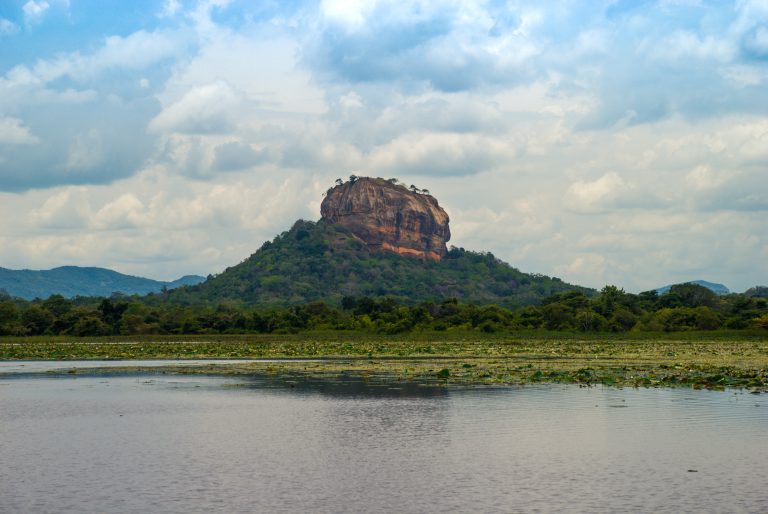
Header photo: Binxla / Wikimedia Commons, CC BY-SA 4.0.