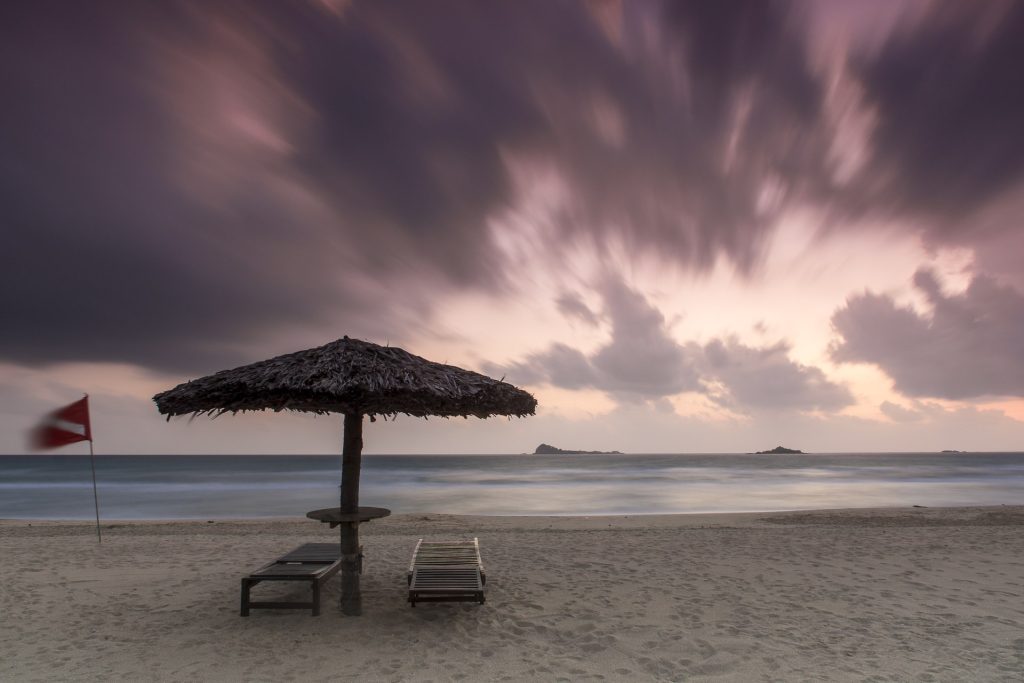
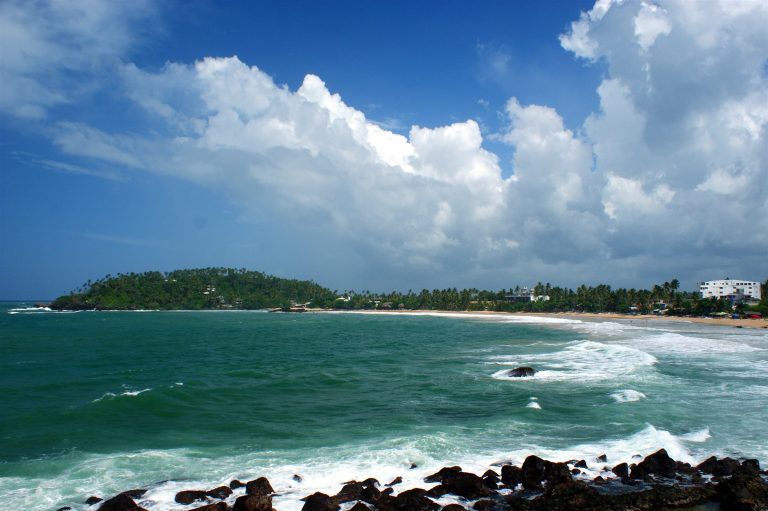
Swimming safety in Sri Lanka comes down to the sea. It is the main way visitors get hurt on a beach holiday. Most beaches are fine in the right month, and several are not fine in the wrong one. This guide explains why, how to spot trouble and what to do if you are pulled out. It also lists the beaches with a record you should know about. It sits alongside our guide to the best beaches in Sri Lanka.
The short version
- Ask before you swim. The UK government’s travel advice says many beaches in Sri Lanka have dangerous surf or rip tides at certain times of the year. It tells you to check with your hotel or tour operator first.
- Swim near lifeguards, and between any flags they set. If lifeguards tell you to get out, get out.
- Respect the monsoon. On the south and west coasts the sea is calm from about November to March and rougher from May to September. The east coast works the other way round.
- Don’t swim alone, and keep children within arm’s reach.
- If a current takes you, don’t fight it. Swim along the shore, not back towards it (see below).
Why the sea changes
Sri Lanka has two monsoons. The south-west monsoon runs from about May to September and brings rain and rough sea to the south-west side of the island. The north-east monsoon, from about December to March, affects the north and east. Between them come the inter-monsoon periods, in October and November and again from March to mid-May, with squalls and thunderstorms.
The Department of Meteorology issues rough-sea warnings for the coast. In June 2026, for example, it warned of rough seas from Kalpitiya to Pottuvil by way of Colombo. Before a beach day, check the forecasts on the Department of Meteorology site and the Disaster Management Centre site. Then ask at your hotel.
Rip currents
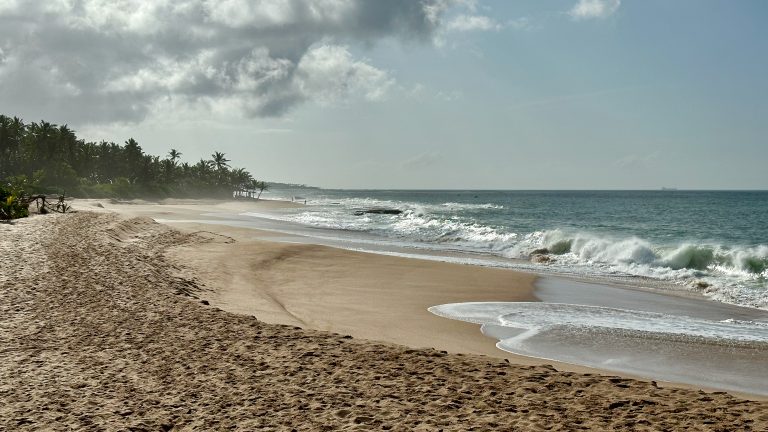
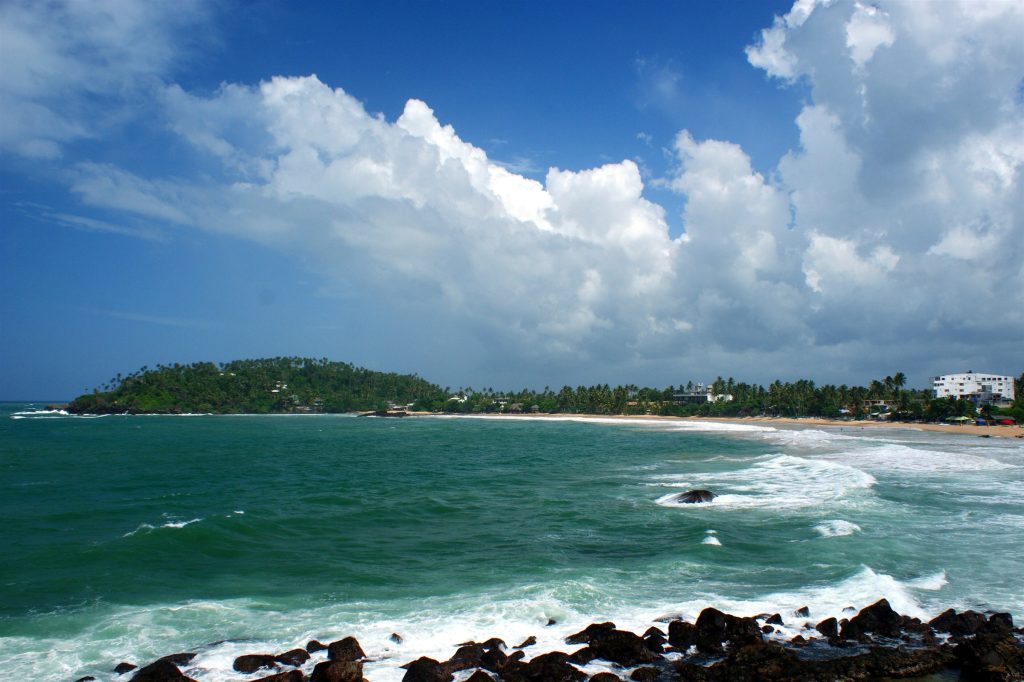
NOAA, the US ocean agency, describes a rip current as a narrow, fast-moving section of water travelling away from the shore. Rips are usually no more than about 25 metres wide. They tend to form at low spots or gaps in sandbars and near structures such as jetties and piers. They usually fade out just beyond the line of breaking waves. A rip does not pull you under. The danger is panic and exhaustion.
NOAA’s advice if you are caught:
- Stay calm and keep your head above water.
- Don’t try to swim straight back against the current. You will tire yourself out.
- Swim parallel to the shore until you are clear of the current, then angle back towards the beach.
- If you can’t get out of it, float or tread water, and wave or shout for help.
If someone else is caught, don’t swim out after them. Get a lifeguard, or call for help, and throw them something that floats.
Lifeguards and flags
Sri Lanka Coast Guard lifesavers have worked from posts at Mirissa, Unawatuna and Bentota. Police lifeguards have also made rescues at Mirissa. A 2019 Coast Guard report credits lifesavers at Mirissa, Unawatuna and Bentota with rescuing ten foreign visitors in one week. Pasikuda’s lifeguards rescued a child in September 2025.
That is not the same as a guarantee. Many stretches of beach have no lifeguard, and a post on one end of a bay does not cover the other end. Recent visitors report that a red flag means stay out of the water. If there are no flags and no lifeguards, treat that as a reason for more care, not less.
Beaches with a record
These incidents are in the news reports behind our beach guides. They are a reason to take care, not a reason to avoid the coast.
- Mirissa: in October and December 2025 police lifeguards rescued visitors caught in strong currents, and a man drowned on 25 December 2025. See Mirissa Beach.
- Unawatuna: a visitor died after being caught in rip currents in June 2024. See Unawatuna Beach.
- Hikkaduwa: in January 2025 a young visitor was swept away after ignoring warning signs. See Hikkaduwa Beach.
- Bentota: two visitors died in February 2025 and a young man in April 2026. See Bentota Beach.
- Weligama: two visitors died in the sea in 2026, one of them while surfing. See Weligama.
- Tangalle: visitors have drowned, including in September 2023. See Tangalle.
The calmest places are the sheltered ones: the shallow bay at Pasikuda, the long shallows at Casuarina Beach near Jaffna, and the reef-sheltered coves. Even there, children need an adult in reach. In September 2025 lifeguards rescued a seven-year-old off Pasikuda.
Other sea hazards
Corals are protected, so don’t stand on them, and recent visitors mention sharp coral near the water’s edge at Kalkudah. Touching coral is not allowed at Hikkaduwa and Pasikuda, and the guidance at Pigeon Island is the same. Don’t chase or touch turtles and sharks. Keep away from breakwaters and harbour mouths too. At Bentota a visitor drowned in February 2025 after a strong current pulled them in near the breakwater.
If something goes wrong
Call 119 for the police and 1990 for an ambulance. Our guide to staying safe in Sri Lanka lists the numbers. If you see someone in difficulty, shout for the nearest lifeguard first, and don’t go in without something that floats.
Frequently asked questions (FAQs)
Is it safe to swim in the sea in Sri Lanka?
It can be, in the right month and at the right beach. The UK government says many beaches have dangerous surf or rip tides at certain times of the year. Ask your hotel or the lifeguards before you swim.
Which months are safest for swimming?
On the south and west coasts, about November to March, when Sri Lanka Tourism says the sea is calm. On the east coast, the dry middle of the year.
What should you do if you are caught in a rip current?
Stay calm, don’t swim against it, and swim parallel to the shore until you are out of the current. If you can’t, float or tread water and signal for help.
Are there lifeguards on Sri Lankan beaches?
Some. Coast Guard lifesavers have worked at Mirissa, Unawatuna and Bentota, but many stretches have none. Ask where the lifeguards are and which flags they are using.
What number do I call in an emergency?
119 for the police and 1990 for an ambulance.
Header photo: Eleleleven / Wikimedia Commons, CC BY-SA 2.0.