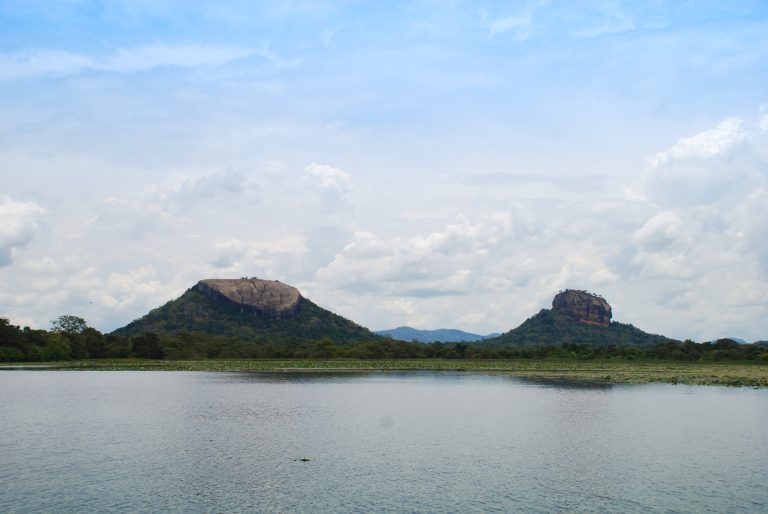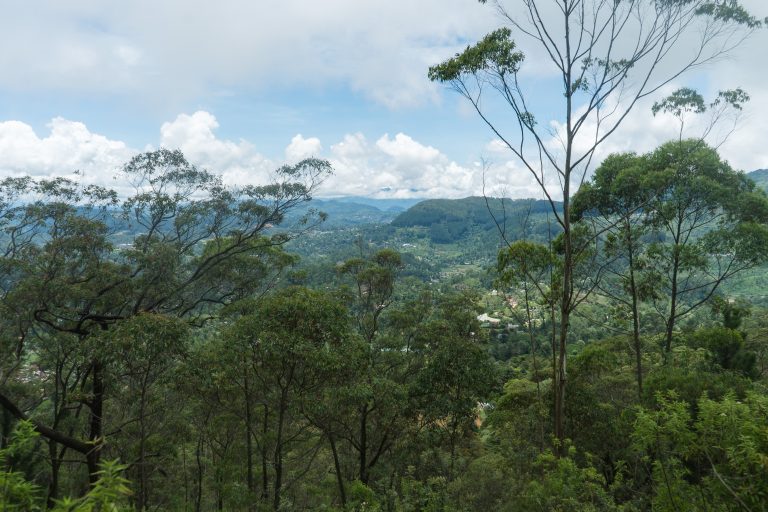
Rajagala is a forested rock north of Ampara, in Sri Lanka’s Eastern Province, and its slopes hide the ruins of a large Buddhist forest monastery more than 2,000 years old. You reach the ruins by climbing ancient stone stairways through the jungle. At the top you find stupas, monks’ caves and a rock inscription that names the stupa of Mahinda, the monk who brought Buddhism to the island.
Is it worth visiting?
Go if you like your ruins half-wild, with the forest still pressing in on them, and you don’t mind a steep, sweaty climb to reach them.
Think twice if you have bad knees or little time, since the steps are steep and uneven, and the heat builds quickly.
A monastery on “crocodile mountain”
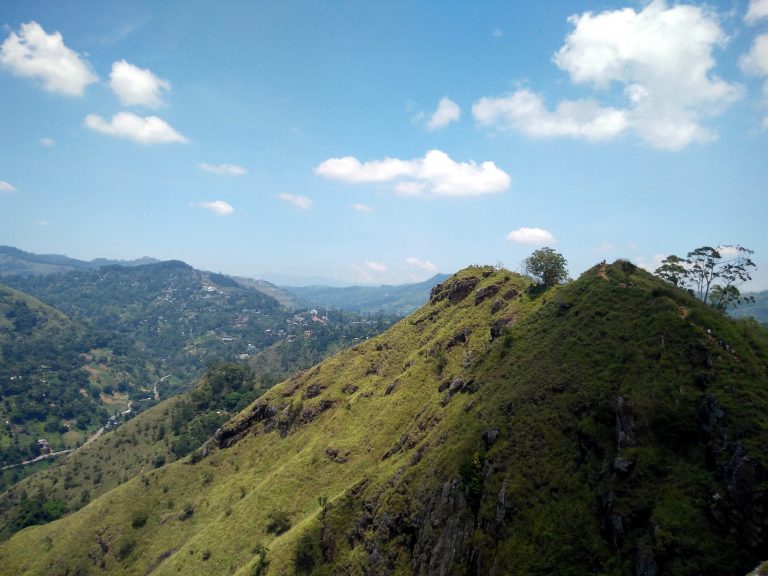
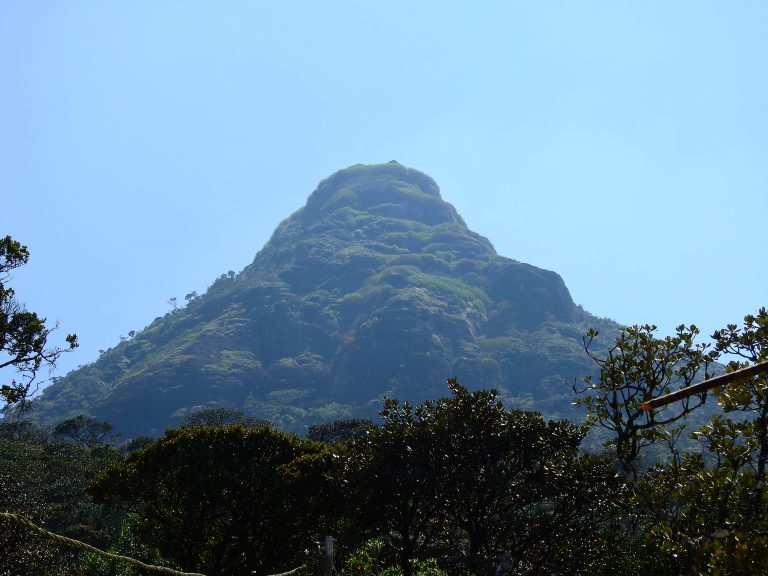
The rock’s oldest recorded name is Girikumbhila. Kumbhila means crocodile in Pali, and seen from a distance the hill does look like one lying down. It is also called Rassagala, but today most people know it as Rajagala, “the king’s rock”. The monastery itself has had several names; Sri Lanka’s submission to UNESCO identifies it as the Ariyakara Vihara of the old texts.
Sri Lanka Tourism dates the monastery to the second century BC, and inscriptions and chronicles link its founding to King Lanjatissa (also written Lajjitissa), who is said to have begun it while he was still a prince in the east. At its height around 500 monks may have lived here. According to Sri Lanka’s UNESCO submission, the monastery was abandoned after the Chola invasions at the end of the tenth century and the start of the eleventh, and the forest slowly took it back.
The Mahinda inscription
Rajagala’s best-known find is a short rock inscription in early Brahmi script. It reads, in translation, “This is the stupa of the elder Ittiya and the elder Mahinda”, the two monks who, according to tradition, brought Buddhism to Sri Lanka from India. It is the only inscription in Sri Lanka that says where Mahinda’s remains were enshrined, which gives this remote hill a special place in the island’s Buddhist history. Mahinda is most closely linked with Mihintale, where tradition says he first met the king of Anuradhapura, so the two sites make a natural pair.
Dozens of other inscriptions are scattered around the reserve, many of them carved below the drip ledges of caves to record who donated them. Sadly, visitors have scratched names and drawings over some of them, so please look without touching or adding your own mark.

What to see at Rajagala
The ruins spread over several levels of the hill, and you won’t see them all in one visit. The main sights are:
- The stairways: two ancient stone stairways climb through the forest from the foot of the hill, with small rest caves along the way.
- The common buildings: on a broad plateau partway up stand the pillars and brick bases of the monastery’s halls, including what archaeologists believe were the refectory and the uposathaghara, where the monks met for religious observances.
- The stone bowls: two huge carved stone bowls once held spring water for cooking and drinking, fed through stone spouts.
- Ponds and the tank: rock-cut ponds caught rain and spring water, and a small reservoir served the monastery. Elephants now drink at some of the pools.
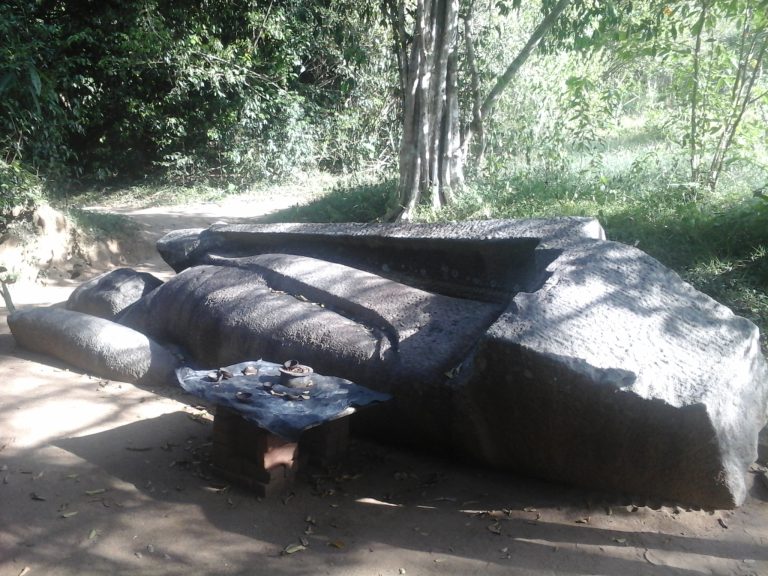
- The great Buddha figure: a large Buddha figure carved into a block of stone lies on the ground in the forest. Sri Lanka Tourism describes it as roughly shaped and never finished.
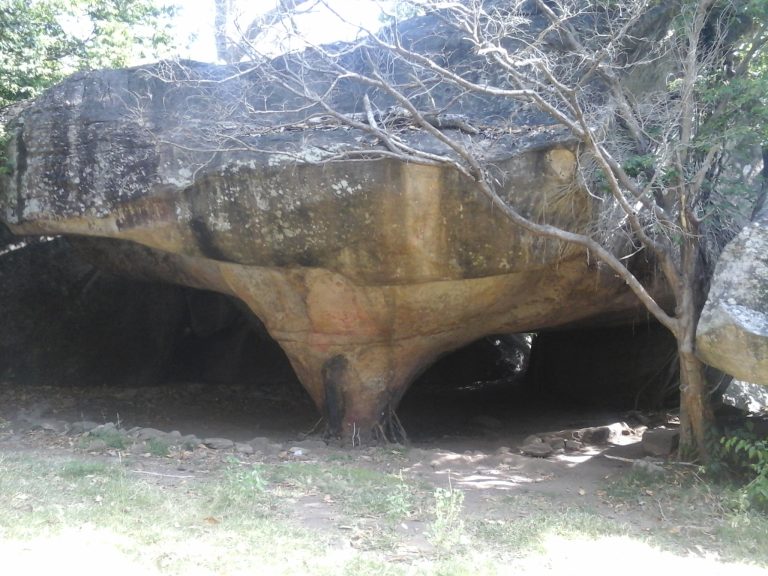
- The caves: higher up, dozens of caves were turned into monks’ cells, many still with their stone or brick walls and doorways in place. Some were built to catch the breeze and still feel cooler inside, and the monks even had toilets.
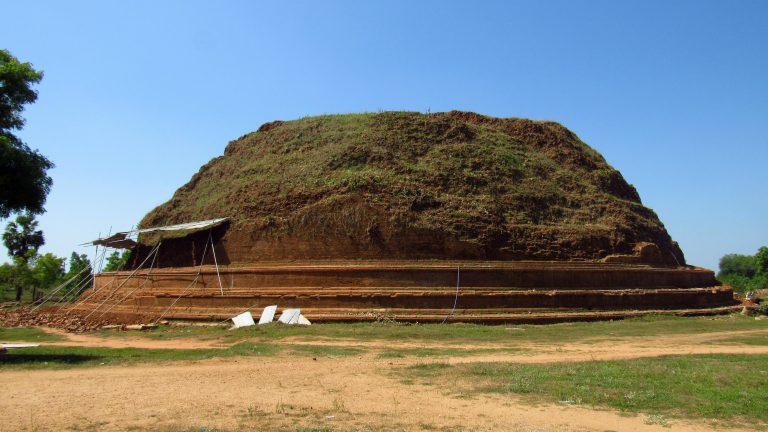
- The stupas: the stupa identified with the Mahinda inscription, a platform holding two more stupas, and smaller ones elsewhere on the rock.
Excavation and protection
Archaeologists first documented Rajagala in the 1890s, but no systematic excavation followed for more than a century. During the civil war the site, close to the border of Ampara and Batticaloa districts, was neglected for nearly thirty years. In 2011 the Department of Archaeology began excavating, and since September 2012 it has run the reserve jointly with the University of Sri Jayewardenepura, helped by a team of Indian archaeologists led by Professor Vasant Shinde. The United States Ambassador’s Fund for Cultural Preservation helped pay for the survey and conservation work. In 2020 Sri Lanka placed Rajagala on its Tentative List for UNESCO World Heritage status, the first step towards a nomination.
Planning your visit
- Getting there: Rajagala lies off the Ampara–Maha Oya road (A27), north of Ampara and beyond Uhana, near the village of Rajagala Tenna. You need a car, a hired driver or a tuk-tuk from Ampara.
- Timing: start in the morning and leave plenty of daylight for the walk down, since wild elephants live in the surrounding forest. Recent visitors (2025–26) who began the climb at 10 am describe arriving at the top drenched and out of breath.
- Guides: recent visitors (2025–26) recommend going round with a local guide, both to find the scattered ruins and for the stories. Agree any fee before you set off.
- What to bring: plenty of water, a hat and shoes with good grip for the uneven steps. The weather can turn quickly, so carry something against the rain as well.
- Wildlife: elephants regularly cross the paths, so stay on the main routes, keep your distance from any animal you see, and listen to your guide.
- Combine it with: a boat safari in Gal Oya National Park, south-west of Ampara, or a night in Batticaloa on the coast. If forest monasteries are your thing, Arankele in Kurunegala district is another one worth seeking out.
Frequently asked questions (FAQs)
Where is Rajagala?
In Ampara district, Eastern Province, off the Ampara–Maha Oya road (A27) north of Ampara, near the village of Rajagala Tenna.
Are Mahinda’s ashes at Rajagala?
A rock inscription at Rajagala reads “This is the stupa of the elder Ittiya and the elder Mahinda”. It is the only inscription in Sri Lanka that names a stupa holding Mahinda’s remains, and in 2018 the University of Sri Jayewardenepura team said it confirmed that his ashes were enshrined there.
When is the best time of day to climb Rajagala?
Early morning. The climb is steep and the heat builds quickly, and recent visitors (2025–26) who started at 10 am describe reaching the top drenched.
Is Rajagala a UNESCO World Heritage Site?
Not yet. Sri Lanka added it to its UNESCO Tentative List in 2020, which is the first step towards a nomination.
Header photo: L Manju / Wikimedia Commons, CC BY-SA 4.0.