Whale-watching boats run from the beaches north of Trincomalee in the middle of the year, when the south coast is in its monsoon and the east coast is dry. The draw is deep water close to land, and the trip is usually a short morning outing rather than a long haul. This page covers what the morning is like, which months to aim for, and how to tell a licensed trip from an illegal “swim with whales” one.
Is it right for you?
Go if you are on the east coast between about May and August, you like the idea of an early morning on calm water, and you would count a big pod of dolphins as a good day even if no whale shows.
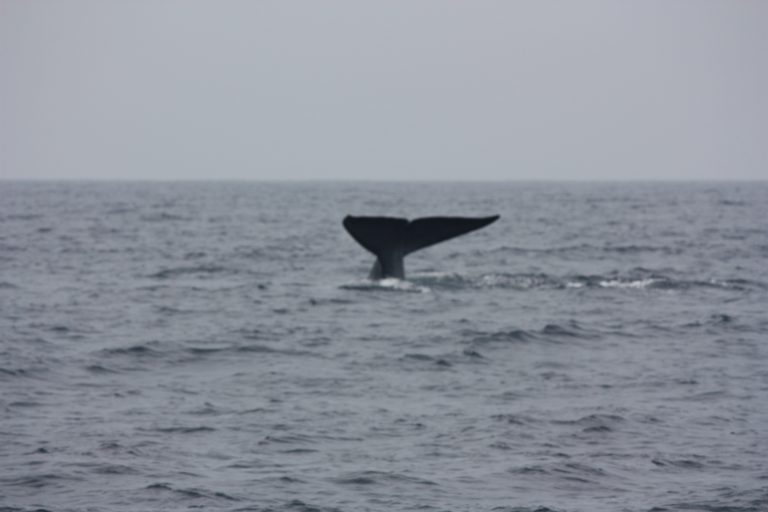
Think twice if you are here from about October to January, the rainy season on this coast, or if a blue whale is the point of the trip. Mongabay reported in April 2025 that researchers recorded no blue whales off the east coast in 2024, and only four around the whole island.
Why Trincomalee
Trincomalee Bay is cut by a deep submarine canyon, which is why the harbour is so deep. In a 2011 Sunday Times column, the naturalist Gehan de Silva Wijeyeratne pointed out that the same canyon reaches into the harbour and explains why people have seen blue whales from the shore here, and that Trincomalee has been known for blue whales for around 30 years. The practical upshot is a shorter ride: recent visitors (2025–26) report reaching the whale grounds about half an hour from shore.
The Morning notes that sperm whales and several kinds of dolphin are seen here as well as blue whales.
Which months
There is no official season for the east coast, and sources don’t agree:
- The Morning (February 2025) gives May to August as the best period off Trincomalee.
- Operators advertise trips from as early as March and as late as September, recent visitors (2025–26) report.
- The Sunday Times column found in 2010 that most blue whales had left by the end of April, and warned that the south-west monsoon’s strong offshore winds make the sea rougher the further out you go, even on this side of the island.
So aim for the middle of the year and ask operators about recent sightings before you book. Most of Trincomalee’s rain falls from about October to January, and boats don’t go out in bad weather. For the island-wide picture, see our guide to the best time to visit Sri Lanka, and if you are choosing between coasts, Mirissa or Trincomalee for whale watching compares them month by month.
How the morning goes
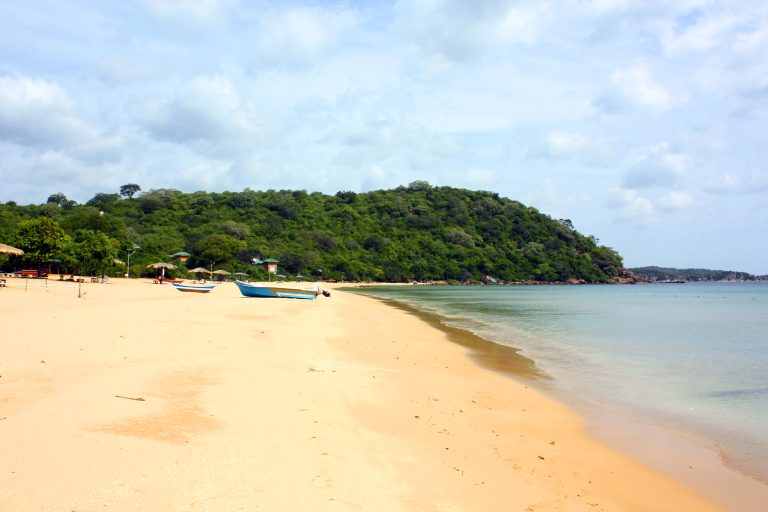
Expect an early start. Recent visitors (2025–26) describe boats setting off around sunrise, usually from the beaches at Uppuveli or Nilaveli, and getting back before midday; trip lengths range from about an hour to five hours, so check what you are paying for.
Before you go, you need a Department of Wildlife Conservation permit. The 2012 sea-mammal regulations say everyone going out to watch whales needs one, issued by a wildlife officer at the departure point, and the department has an office in Trincomalee. Ask if your operator arranges it or if you pay for it yourself.
Out at sea, a licensed boat slows down from about 400 metres, switches its engine off at 100 metres and goes no closer to a whale; for dolphins the limit is 50 metres. Nobody is allowed into the water.
Spotting an illegal trip
Trincomalee has a particular problem. A study reported by The Morning in February 2025 found that 83% of operators here offered illegal swimming with whales, against 73% at Mirissa, with boats getting within two or three metres of the animals. The Morning reported in October 2025 that many of these trips run on small boats holding sports-fishing licences rather than whale-watching licences, that they don’t always leave from fishing harbours, and that the conservation group Oceanswell had counted 32 swim-with-whales operators at Mirissa and Trincomalee in May 2025, about half of them foreign-owned.
Swimming with whales is illegal without the department’s approval, and its director-general said in October 2025 that he grants it only for scientific documentation. Before you book, check:
- The licence. A whale-watching boat must carry its Department of Wildlife Conservation licence, have its registration number painted large enough to read from 50 metres away, and start and finish at its registered boatyard.
- The crew. There should be an operator, an assistant and a guide trained and registered by the department.
- Safety. The Sri Lanka Tourism Development Authority’s guideline says everyone wears a life jacket and gets a safety briefing first.
- The sales pitch. Skip anything sold as swimming, snorkelling or “diving with whales”, anything that guarantees a sighting, and anything booked through a chat group. A March 2026 column in The Morning also warns against trips that set off from beaches or river mouths instead of dedicated departure points, so ask exactly where your boat is licensed to leave from.
If you see swimming with whales, the Department of Wildlife Conservation asks you to tell a wildlife officer or call its hotline, 1992.
Seasickness and what to bring
The NHS advice holds: sit in the middle of the boat, keep your eyes on the horizon, get fresh air, and skip heavy food and alcohol beforehand. Ginger or tablets from a pharmacist can help. Alcohol isn’t allowed on board anyway under the licence conditions.
Bring sunscreen, a hat, water and a camera with a zoom lens, because at 100 metres a phone camera makes a whale look like a pebble.
Fitting it into an east-coast trip
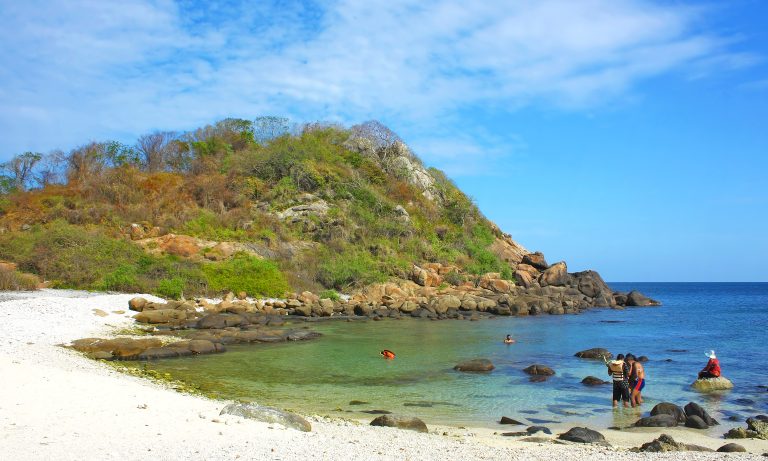
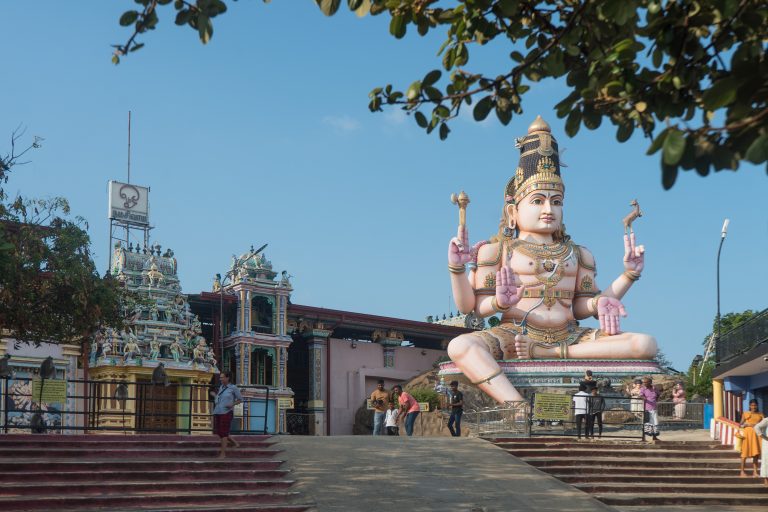
Because the boats leave early, stay at Uppuveli or Nilaveli the night before. A whale-watching morning pairs well with an afternoon on the reef at Pigeon Island National Park, whose boats leave from Nilaveli beach and which needs its own park permit; it closes when the sea is rough. On a free afternoon, Fort Frederick and the Koneswaram Temple on Swami Rock are a short ride away in town.
The Sri Lanka Navy has run whale-watching cruises from the naval dockyard at Trincomalee in the past, but its whale-watching website still says all cruises are cancelled until further notice, so don’t plan around them.
Frequently asked questions (FAQs)
When is the whale-watching season in Trincomalee?
There is no official season. The Morning gives May to August as the best period, and some operators run from March to September, so ask about recent sightings before you book.
Where do whale-watching boats leave from in Trincomalee?
Recent visitors report that most trips leave from the beaches at Uppuveli and Nilaveli, north of the town. A licensed boat has to start and finish at its registered boatyard, so ask where yours departs.
Can you swim with whales in Trincomalee?
No. Passengers may not get into the sea, and the Department of Wildlife Conservation allows diving with whales only for scientific documentation.
Will I see a blue whale off Trincomalee?
Don’t count on it. Researchers recorded no blue whales off the east coast in 2024, though dolphins and other whales are still seen.
Can I combine whale watching with Pigeon Island?
Yes. You can go whale watching in the morning and visit Pigeon Island National Park, reached by boat from Nilaveli beach, later in the day; it needs its own park permit.
Header photo: Sandeepa05 / Wikimedia Commons, CC BY-SA 4.0.