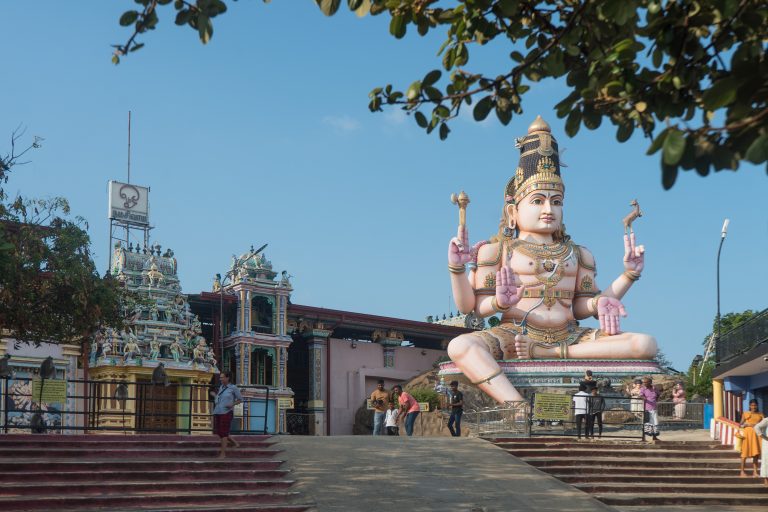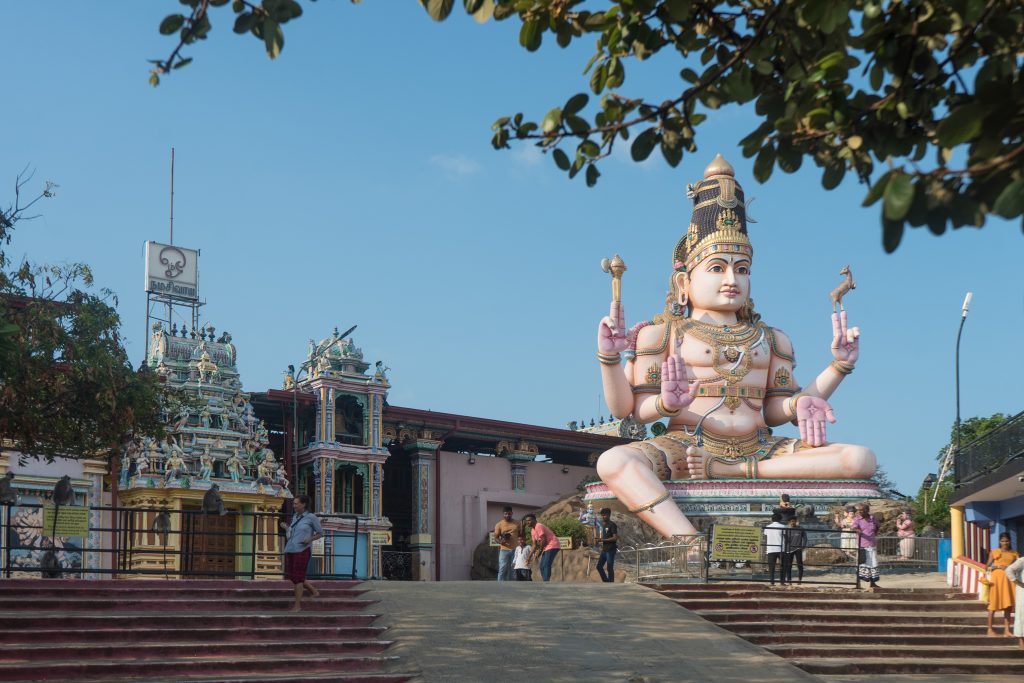

Koneswaram is a Hindu temple to Shiva on Swami Rock, the cliff-edged headland at the end of the Trincomalee peninsula. To reach it you walk or ride through the gate of Fort Frederick, which is still a military base. The temple you see today is a 20th-century rebuilding: the Portuguese pulled down the old one in 1622 and used its stone for their fort.
Is it worth visiting?
Go if you are in Trincomalee and want one short outing that combines a working temple, four centuries of history and a clifftop view straight down into the sea. An hour or two is enough, and it pairs well with a beach day.
Think twice if you would rather not cover up, walk barefoot on stone or share the space with worshippers at prayer. Koneswaram is a place of worship first and a viewpoint second, and in the middle of a sunny day the paving gets hot underfoot.
Through Fort Frederick to the rock
The only way up is through Fort Frederick. The Portuguese built the first fort here in the 1620s, the Dutch rebuilt it, and the British gave it the name it still has. It remains a military base but is open to visitors, so expect soldiers at the gate and military buildings along the road. Photography is restricted in the military areas, so keep your camera for the temple and the views, and ask before you point it at anything else.
Recent visitors (2025–26) report an ID check at the gate, so carry your passport or a copy. Inside the fort, spotted deer graze by the road and are used to people. The road then climbs past the Gokanna Buddhist temple and a line of stalls selling offerings and snacks to the temple at the top. It is a steady uphill walk with patchy shade, so bring water.
A short history of Koneswaram
Sri Lanka Tourism describes Koneswaram as one of the Pancha Ishwarams, the island’s five ancient abodes of Shiva (another is Munneswaram, just east of Chilaw on the west coast). Its origins are old and not precisely known. What is well recorded is its end: on Tamil New Year’s Day in April 1622 Portuguese forces under Constantino de Sá de Noronha attacked the temple, and over the next two years it was demolished and its carved stone used to build the fort.
In 1950 workers digging a public well in the town found statues from the old temple, and the rebuilt Koneswaram opened in 1963 with the recovered images reinstalled. The rock’s early history is also contested: Buddhist chronicles place the ancient Gokanna Vihara on the same summit, and the Buddhist temple of that name stands lower down inside the fort.

What to see at the top
- The temple: a colourful building with carved gateway towers in the South Indian Dravidian style. It is a working temple, and worshippers come daily for pujas and offerings.
- The Shiva statue: a giant, brightly painted seated figure of Shiva stands beside the temple at the top of the steps.
- Ravana’s Cleft: a narrow, sheer split in the rock that drops to the water. Legend says King Ravana’s sword made it when he tried to move the temple.
- Lover’s Leap: the clifftop edge named after a local legend of a heartbroken lover. Stories differ on who she was, but the drop to the waves is real, so stay behind the railings.
Koneswaram’s big event is the Ther chariot festival, which lasts 22 days in April and leads up to the Tamil New Year; Navaratri and Shivaratri are also celebrated. During the chariot festival the deities are paraded through the streets of Trincomalee town, so expect crowds.
Dress, shoes and timing
Cover your shoulders and knees, and take your shoes off before you enter the temple. Recent visitors (2025–26) report shoe-keepers near the entrance who look after footwear for a small fee. The stone is painful to walk on at midday, so come early in the morning or in the late afternoon, when the light over the sea is softer. Our guide to cultural etiquette in Sri Lanka covers temple manners in more detail.
We could not find official opening hours or an official fee. Recent visitors (2025–26) report the temple open from early morning until about 6 pm, with no entry ticket and donations welcome.
Getting there
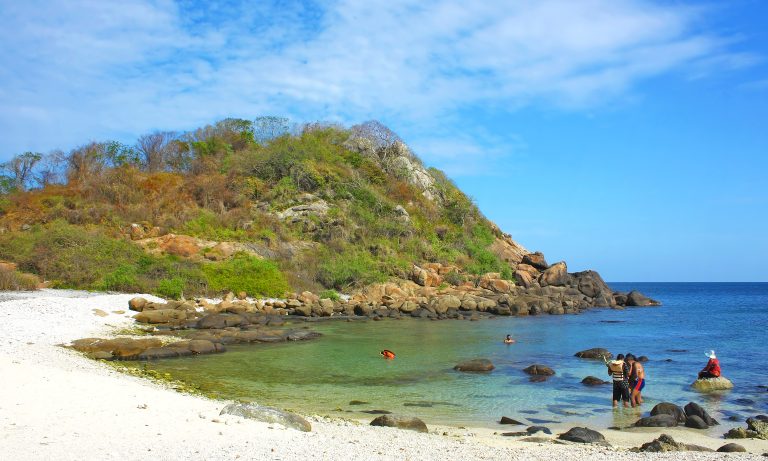
Fort Frederick sits on the headland at the edge of Trincomalee town, a short tuk-tuk ride from the centre. If you are staying up the coast in Nilaveli, it makes an easy half-day trip from the beach. Pair it with a morning snorkelling at Pigeon Island National Park for a full day of sea and history.
Frequently asked questions (FAQs)
Is Koneswaram Temple free to enter?
We found no official fee. Recent visitors (2025–26) report no entry ticket, with donations welcome and a small charge for leaving your shoes.
Do I need my passport to visit Koneswaram?
The temple is inside Fort Frederick, which is still a military base. Recent visitors (2025–26) report an ID check at the gate, so carry your passport or a copy.
What should I wear to Koneswaram Temple?
Cover your shoulders and knees, and be ready to take your shoes off and walk barefoot inside the temple.
When was Koneswaram Temple destroyed and rebuilt?
The Portuguese attacked it in April 1622 and used its stone to build their fort. Statues from the old temple were found in 1950, and the rebuilt temple opened in 1963.
What is the best time of day to visit Koneswaram?
Early morning or late afternoon, when the stone is cooler underfoot and the light over the sea is softer.
Sources: srilanka.travel, ccf.gov.lk, en.wikipedia.org (Koneswaram Temple), en.wikipedia.org (Fort Fredrick), sundaytimes.lk (trincos hot wells forts beaches…), sundaytimes.lk (fut 05.html), sundaytimes.lk (head to the east for…), archives1.dailynews.lk and recent visitor reports. Header photo: Alexey Komarov / Wikimedia Commons, CC BY-SA 4.0.