Check before you travel Hill-country railway: repairs after Cyclone Ditwah Checked 23 November 2026
Cyclone Ditwah damaged the hill-country railway in November 2025, and it is reopening in stages. Trains from Colombo Fort reached Peradeniya and Gampola again on 2 October 2026, but earth slips near Kadigamuwa station, between Rambukkana and Peradeniya, have blocked the line several times since. From 25 October 2026 the Department of Railways suspended all trains between Rambukkana and Peradeniya and Gampola until further notice, until repairs are finished and the line is confirmed safe; passengers with reserved seats on cancelled trains can claim a full refund at any railway station. Kandy station itself is not served yet. Trains between Nanu Oya and Badulla, which stop at Haputale, Ella and Demodara, restarted on 20 June 2026. The section between Gampola and Nanu Oya is still under repair, so you cannot yet go by train from Colombo or Kandy all the way to Ella. Check the latest services before you plan a rail journey, and book reserved seats on the Sri Lanka Railways seat reservation site.
On a Sri Lanka trip, which towns you sleep in matters more than which hotel you pick. Most trips revolve around a handful of bases. A good one turns a long drive into a short tuk-tuk ride at dawn, when the walks are clearest and the rocks still cool. This guide goes region by region through the usual bases and who each suits. It also covers the kinds of places you’ll find there, and how to check that a place is registered with Sri Lanka Tourism. It names no hotels and quotes no prices.
Choosing a base by region
- First and last night: Negombo for a late arrival or an early flight; Colombo if you have energy to spare.
- Ancient cities: Sigiriya or Habarana for the rock, Polonnaruwa and the elephant parks; Dambulla if you’re travelling by bus.
- Kandy: the city itself, for the temple, the lake and the botanic gardens.
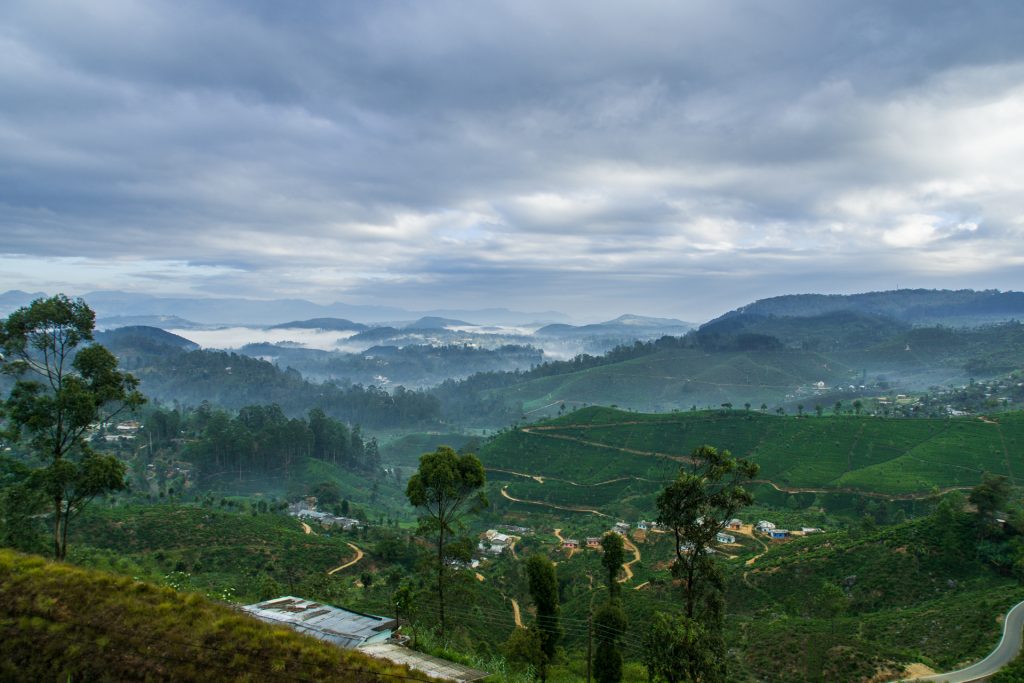
- Tea country: Nuwara Eliya for Horton Plains, Ella for walks, Haputale for quiet, Hatton or Nallathanniya for Adam’s Peak.
- South coast (December to March): Galle Fort or Unawatuna for history, Weligama or Ahangama for surf, Mirissa for whales, Tangalle for quiet.
- Yala: Tissamaharama.
- East coast (about May to September): Trincomalee, Uppuveli or Nilaveli, Pasikuda, or Arugam Bay for surf.
- The north: Jaffna, for at least two or three nights.
Whatever the region, stay two nights or more where you can. Our guide to how many days you need in Sri Lanka explains why moving every day wastes the trip.
Your first and last night: Negombo or Colombo
Most international flights land at Bandaranaike International Airport at Katunayake, just south of Negombo. That short ride is Negombo’s biggest advantage. It is the obvious choice if you land late at night or fly out early. It also has a beach, a fish market and a lagoon for a spare day. The sea can be rough in the south-west monsoon, from May to September.
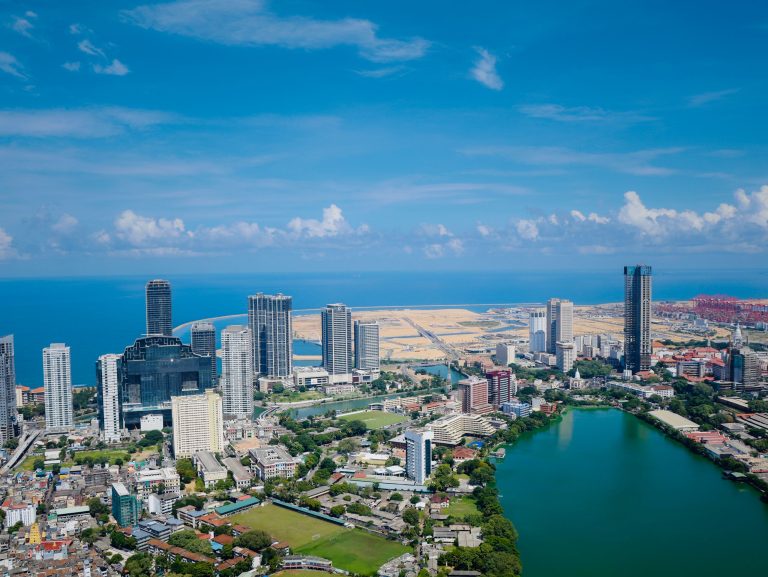
Colombo makes more sense if you land in the morning with energy left, or want a train the next day: Colombo Fort station is the hub of the rail network, with the main bus stations beside it. If you’re heading straight for the south coast, you can skip both. Our guide to arriving in Sri Lanka covers taxis, buses and the first night in more detail.
The ancient cities: Sigiriya, Habarana or Dambulla
These three towns sit close together in the dry zone, and each suits a different trip.
- Sigiriya puts you closest to the rock, which matters when you want to be at the gate as the ticket counters open at 7 am. Pidurangala, the rock opposite with the view back to Sigiriya, is a short tuk-tuk ride away.
- Habarana is a small roadside town on the A6, where the road to Polonnaruwa turns off, with a station on the Batticaloa line. It has no sights of its own, but it is well placed for Polonnaruwa and the elephant parks of Minneriya and Kaudulla.
- Dambulla is a proper town where the main roads meet, handy if you’re travelling by bus, with the cave temple on its doorstep.
Sri Lanka Tourism places Minneriya between Habarana and Polonnaruwa, and recent visitors (2025–26) report that most safari jeeps for it start from Sigiriya and Habarana. Three nights in one of them covers the rock, Polonnaruwa, Dambulla and a safari without packing a bag in between. Our five-day Cultural Triangle itinerary does exactly that.
Kandy
Kandy is a city rather than a resort, and it is worth sleeping in, not just passing through. The Temple of the Sacred Tooth Relic stands beside the lake. Its daily rituals start early and finish in the evening, so staying in town lets you see one without a long drive. The Royal Botanic Gardens at Peradeniya are about 5.5 km west of the city.
Book early if your dates fall around the Esala Perahera, the temple’s great procession, held in July or August on dates set by the lunar calendar. In 2026 it ran from 18 to 28 August. If you were hoping to arrive by train, see the travel update at the top of this page.
Tea country: Nuwara Eliya, Ella, Haputale and Hatton
The hill country gives you the widest choice of character, so pick by what you want to do in the mornings.
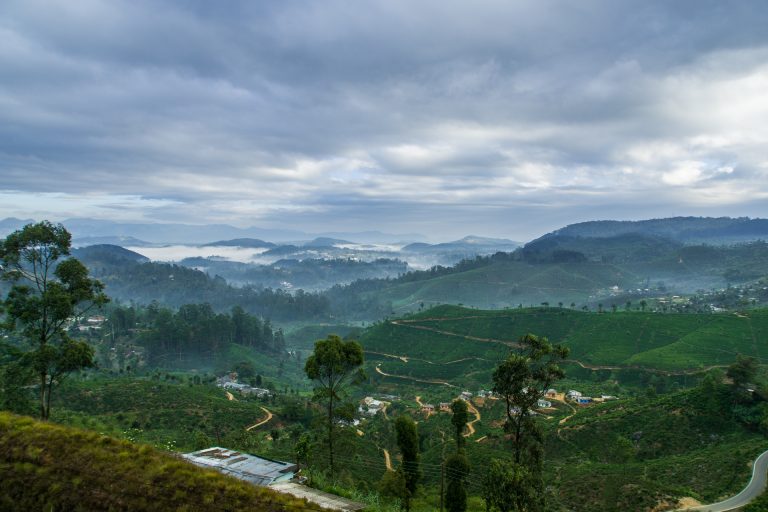
- Nuwara Eliya, at 1,868 m, is cool all year, with colonial-era buildings around the town and Horton Plains about 32 km away by road. Sri Lanka Tourism recommends being on the plains between about 6 and 10 am, so this is the base for it. April is the town’s busiest month, with racing, golf and a flower show around the Sinhala and Tamil New Year.
- Ella, at around 1,040 m, is a small town built around walking. Little Adam’s Peak and Ella Rock both start within walking distance. Two nights let you climb both in the early morning, and our two-day Ella itinerary shows how.
- Haputale, a few stations further along the line, is quieter, with Lipton’s Seat and Adisham Bungalow close by. Recent visitors (2025–26) report that cloud usually covers the view at Lipton’s Seat by mid-morning, so sleeping nearby helps.
- Hatton is a working tea town and the usual base for climbing Sri Pada (Adam’s Peak). Recent visitors (2025–26) say it has more rooms and places to eat. Nallathanniya, at the foot of the path, has simpler guesthouses, but it saves you a drive of about an hour and a half in the middle of the night. Many people do a night in each.
This is also where you’ll find tea-estate bungalows: planters’ houses from the colonial era, some of which now take guests. Parts of the hill-country railway have been under repair since Cyclone Ditwah. So if the train is part of your plan, see the travel update at the top of this page.
The south coast: which beach town?
The south and west coasts are at their best from December to March. Sri Lanka Tourism describes Mirissa’s beaches as at their best from November to April and its sea as rougher from May to October. That goes for most of this coast. Going west to east, the main bases are:
- Bentota: one of Sri Lanka’s first planned resorts, opened in 1969, with a river to explore and water sports. This stretch, around Bentota and Beruwala, is also where resort listings show Ayurveda resorts, usually with programmes of a week or more.
- Hikkaduwa: a beach town with surf in season and a shallow reef lagoon, protected as a national park.
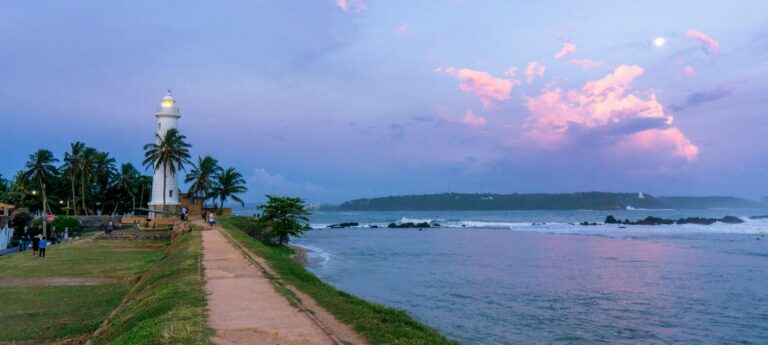
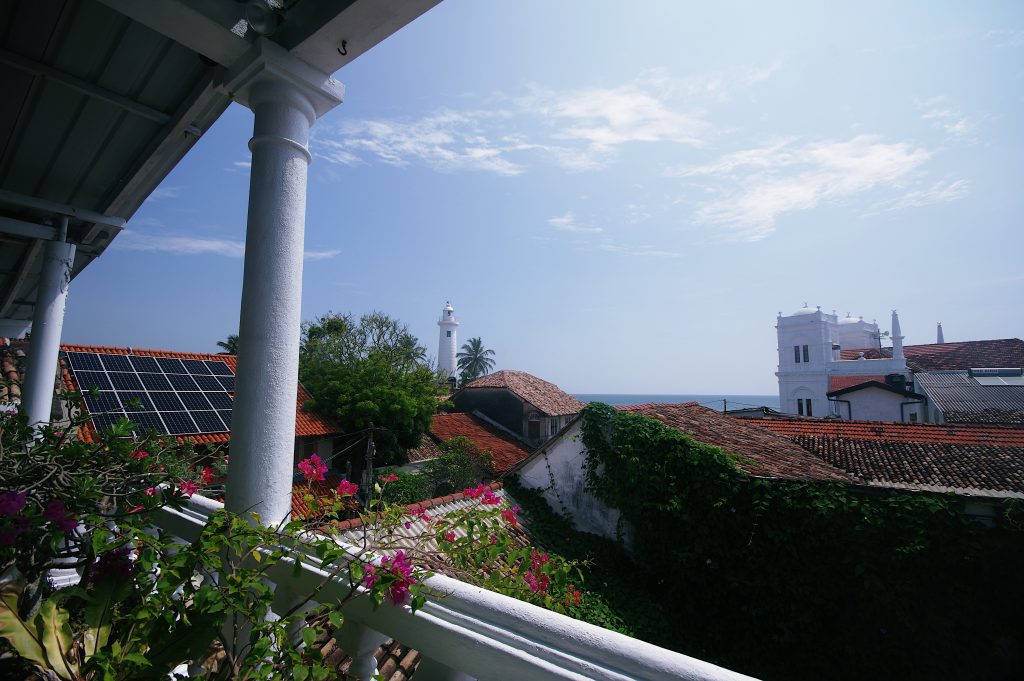
- Galle Fort: a walled town on a headland, not a resort. Stay inside the walls and you can walk the ramparts at sunrise and again at sunset without getting into a car.
- Unawatuna: a curved bay about 5 km from Galle, for a beach stay within easy reach of the fort.
- Ahangama and Weligama: surf towns. Weligama’s sandy bay suits beginners. Ahangama, by contrast, is a string of reefs and points with surf camps, villas and cafés, and plenty of people stay a week or a month.
- Mirissa: the harbour for whale-watching trips, from November to April.
- Hiriketiya: a small horseshoe bay near Dikwella, popular with surfers, with new places to stay opening around it.
- Tangalle: a quieter base further east, within reach of the Mulkirigala rock temple and the turtle watch at Rekawa.
Wherever you stay, ask your hotel about the sea before you swim. The UK government warns that many Sri Lankan beaches have dangerous surf or rip currents at certain times of year.
Yala and Udawalawe
Tissamaharama, usually shortened to Tissa, is the usual base for Yala National Park, close to its main entrance, with Kataragama nearby. For Udawalawe, stay near the park itself. If you want to sleep inside a park, the Department of Wildlife Conservation runs bungalows and campsites in several of them, which you book through the department. They can close at short notice, for example in a drought, so check before you build a trip around one.
The east coast, from about May to September
The east coast works on the opposite calendar to the south-west: its driest months run from about April to August, and October to January is its wet season. Choose it for a summer trip.
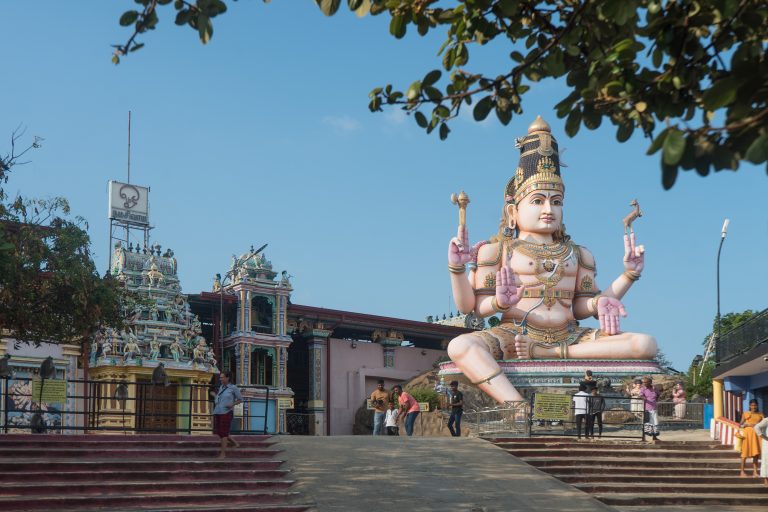
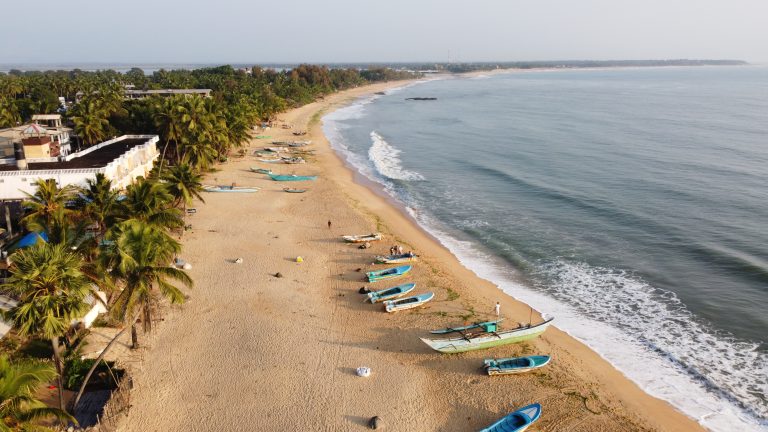
- Trincomalee: a harbour town with a colonial fort and Koneswaram Temple. Uppuveli, on its northern edge, has plenty of places to stay close to town.
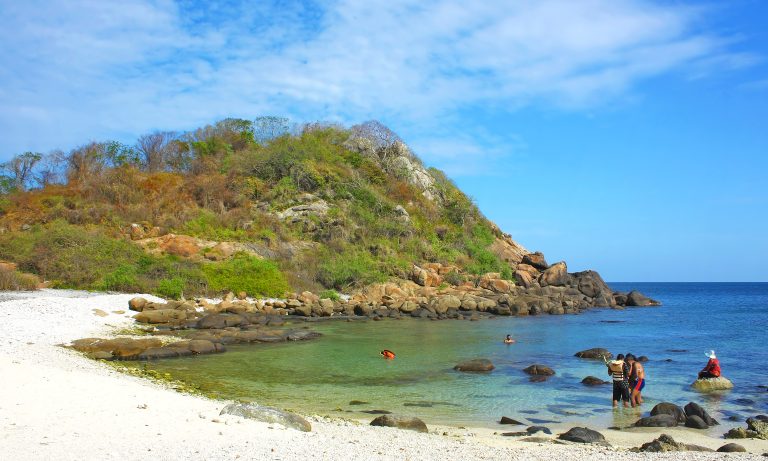
- Nilaveli: quieter, north of Trincomalee, with boats to Pigeon Island National Park from the beach.
- Pasikuda: hotels line a bay that stays shallow a long way out, with weaker currents than much of the coast; Kalkudah next door is quieter.
- Arugam Bay: the surf town, with its season from April to October, according to Sri Lanka Tourism. Recent visitors (2025) report that most hotels and restaurants close from November to March.
Allow for the journey home: getting back across the island to the airport from the east coast takes most of a day.
Jaffna and the north
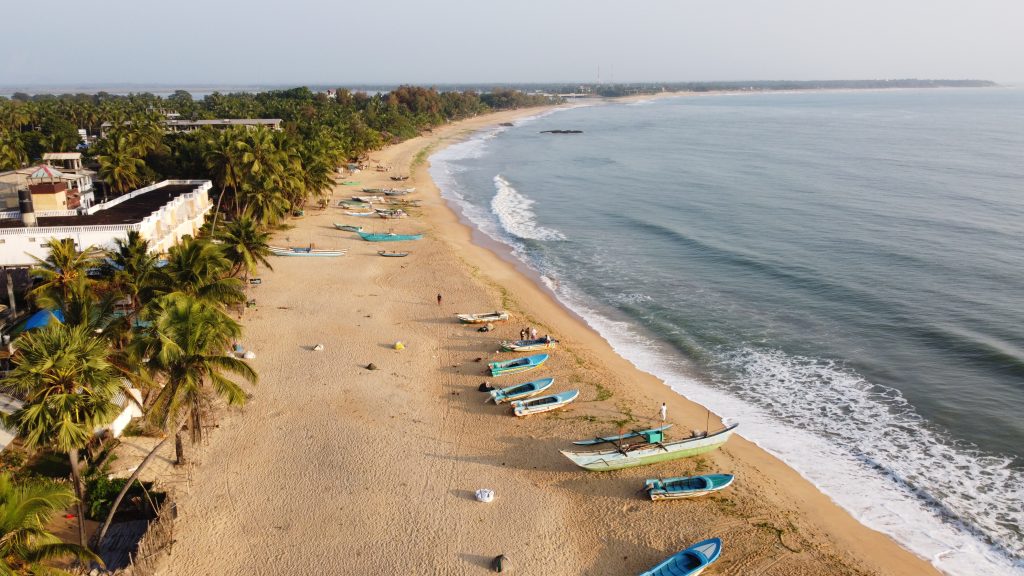
Jaffna sits at the far northern tip of the island, a long way from everywhere else on the usual route, so it only works with at least two or three nights. Trains run there from Colombo Fort. It is the base for the islands, the temples and the fort, in a region with a culture and landscape of its own.
Types of places to stay
Sri Lanka Tourism, through the Sri Lanka Tourism Development Authority (SLTDA), registers several kinds of accommodation, and the names are useful when you search:
- Tourist hotels, which can be classified with stars, from city business hotels to beach resorts.
- Boutique hotels and villas, which the SLTDA describes as personalised places that focus on atmosphere and privacy.
- Guest houses, less formal than hotels, often with meals on offer.
- Homestays: a family home with one to four guest rooms, where you live alongside your hosts.
- Bungalows and heritage bungalows, rented homes and rented apartments, from old estate houses to flats in town.
Inside the national parks there are also the Department of Wildlife Conservation’s own bungalows and campsites. And whatever you book, remember that Poya, the full-moon day each month, is a dry day: the Excise Department lets approved hotels serve their own guests on dry days only at New Year and Christmas, not on Poya.
How to check a place is registered
Under the Tourism Act of 2005, places that take foreign guests are meant to be registered and licensed with the SLTDA. Many aren’t. In December 2024 the SLTDA’s chairman said about 60% of hotels operating in Sri Lanka were unregistered, and in May 2026 hotel-industry leaders asked the government to allow only registered places on international booking sites.
Registration isn’t a guarantee of a good stay, but it does mean the place has been inspected. For homestays, bungalows and rented homes, the SLTDA inspects the premises before registering them, can make surprise visits and renews the licence every year.
To check, search for the place by name or town on Sri Lanka Tourism’s registered accommodation search. If something goes wrong during your stay, the Sri Lanka Tourism hotline is 1912.
When to book ahead
Sri Lanka Tourism’s figures for 2025 show December and January as the busiest months, each with more than 250,000 visitor arrivals, and July and August as a smaller second peak, with about 200,000 each. May and June were the quietest. Book early for:
- the Christmas and New Year fortnight anywhere on the south and west coasts;
- Kandy around the Esala Perahera in July or August;
- Nuwara Eliya in April, around the Sinhala and Tamil New Year.
Our guide to the best time to visit Sri Lanka explains the seasons in more detail.
Our festival and Poya calendar lists the dates worth checking, and our guide to whether the Kandy Perahera is worth planning around covers Kandy at perahera time.
Frequently asked questions (FAQs)
Where should I stay in Sri Lanka for a first visit?
A common first trip uses Negombo or Colombo for the first night, Sigiriya or Habarana for the ancient cities, Kandy, Ella or Nuwara Eliya in the hills, and a beach town chosen for the season. Two nights or more in each place makes the trip far easier.
Should I stay in Sigiriya, Habarana or Dambulla?
Sigiriya is closest to the rock and Pidurangala. Habarana is well placed for Polonnaruwa and the Minneriya and Kaudulla safaris, and Dambulla is the easiest by bus.
Where should I stay on the south coast?
Galle Fort or Unawatuna for history, Weligama for learning to surf, Ahangama or Hiriketiya if you already surf, Mirissa for whale watching from November to April, and Tangalle for somewhere quieter.
How do I know if a hotel or homestay in Sri Lanka is registered?
Search for it on Sri Lanka Tourism’s registered accommodation search at srilanka.travel. Places that take foreign guests are meant to be registered with the SLTDA, but many are not.
When should I book accommodation in Sri Lanka early?
For Christmas and New Year, December and January in general, the Kandy Esala Perahera in July or August, and Nuwara Eliya in April.
Header photo: Sajith T S / Wikimedia Commons, CC BY-SA 2.0.