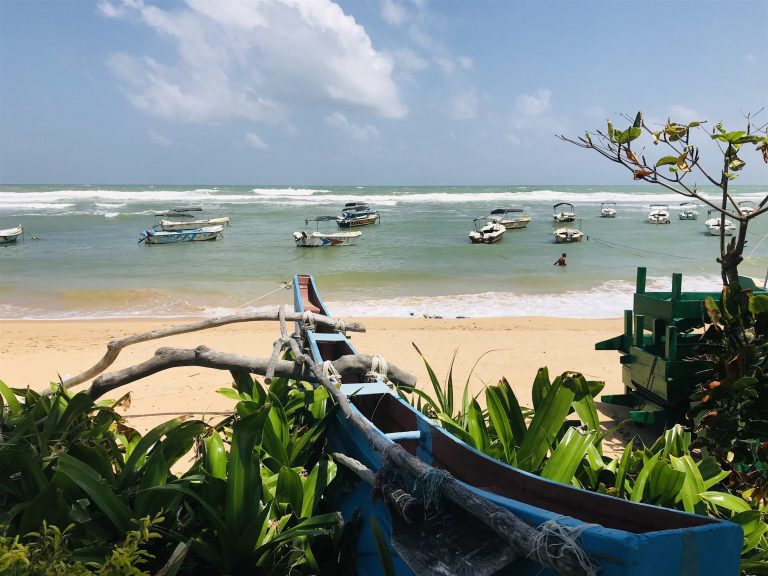
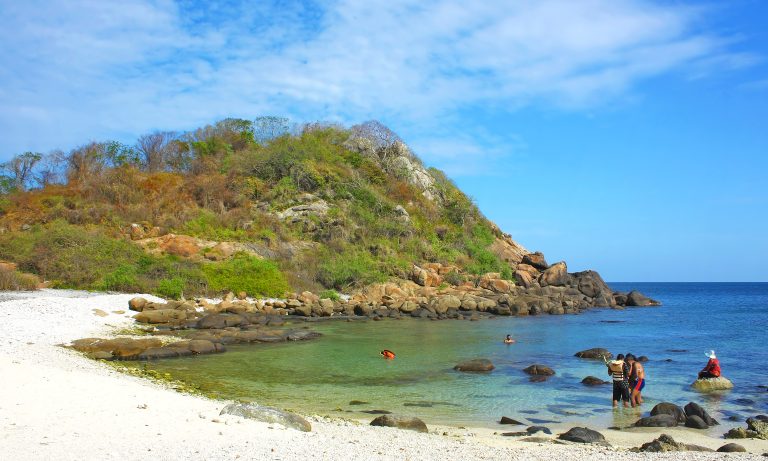
Ahangama is a small coastal town in Galle District, on the A2 coast road about 18 km east of Galle. It isn’t one beach but a run of short sandy bays, reefs and rocky points between Koggala and Weligama, and it has become one of the south coast’s surf towns, with surf camps, villas and cafés strung out along the road.
Is Ahangama for you?
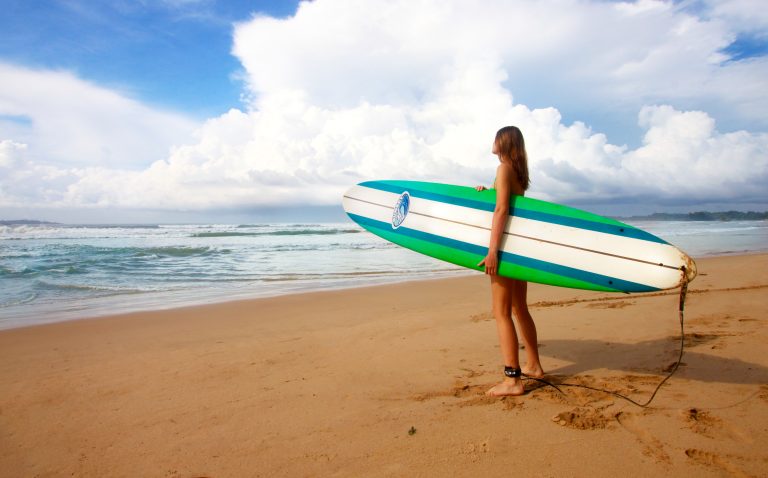
Go if you already surf, or you’ve had a few lessons and want more choice of waves than a single sandy bay gives you. It also suits longer stays: plenty of people come for a week or a month, surf early and late, and do very little in between.
Think twice if you want a town to stroll around or a calm beach for swimming. There is no promenade and not much of a centre; most places sit along the busy A2, and the sea gets rough in the south-west monsoon, from May to September. Recent visitors (2025–26) also say café and restaurant prices here are closer to European than Sri Lankan.
Kabalana and the other beaches
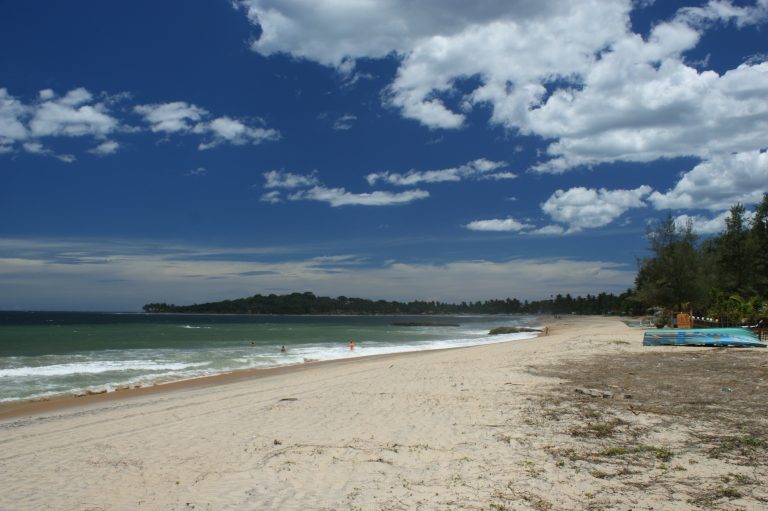
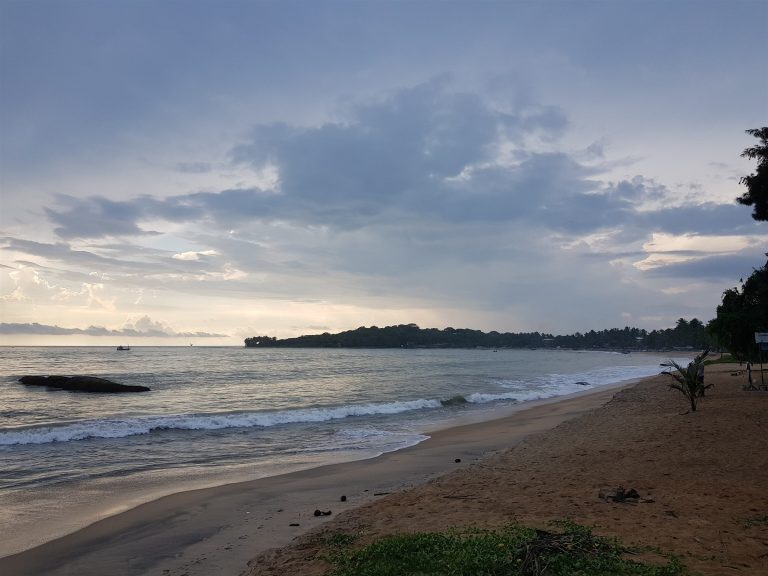
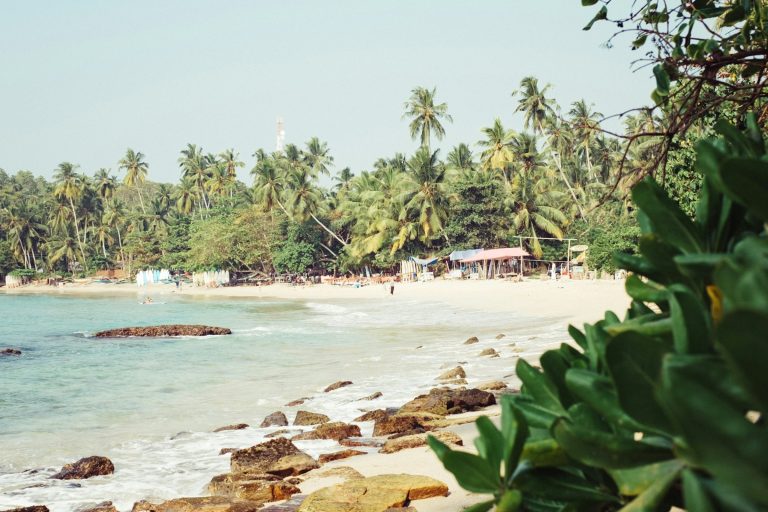
Ahangama’s shore is split into several short beaches, including Kathaluwa, Kabalana, Ahangama beach itself, Goviyapana and Midigama. Kabalana is the one most visitors head for. Recent visitors (2025–26) describe a curve of golden sand backed by palms, with sunbeds for hire and king coconut sellers walking the beach.
Kabalana has two very different waves. The Rock is a reef break off the beach with fast take-offs, and it is for experienced surfers only. The sandy beach break, by contrast, is where beginners practise in the whitewater, though recent visitors warn that the currents can still push you around.
Most of the other named breaks along this stretch are over reef or rock, which is why Ahangama draws more intermediate and advanced surfers than Weligama does. Recent visitors mention breaks nicknamed Sticks, Marshmallow and Animals, among others. Ask a local instructor which ones suit your level, and wear reef boots where the bottom is sharp.
When to come
Sri Lanka Tourism says the north-east winds make the south-west coast sunny and the sea calm from November to March. From May to September the south-west monsoon brings onshore wind, rain and rougher seas. Recent visitors (2025–26) rate January and February as the most reliable months for surf, with December, March and April also good. Some surf camps keep running in a quieter, cheaper “green season” late in the year, but expect mixed weather.
There is no official register of surf schools and no set prices. Before you book a lesson, agree the price, how long it lasts, how many students each instructor takes, and whether the board and a rash vest are included.
Beach cafés come and go
Building is not allowed within a zone of 10 to 25 metres from the shoreline, and the Department of Coast Conservation and Coastal Resource Management enforces it: in August 2026 it demolished 22 unauthorised structures along the Ahangama beach strip, including beachside restaurants and cafés. Places open, close and move, so check that a café you’ve read about is still there before you set off.
Stilt fishermen
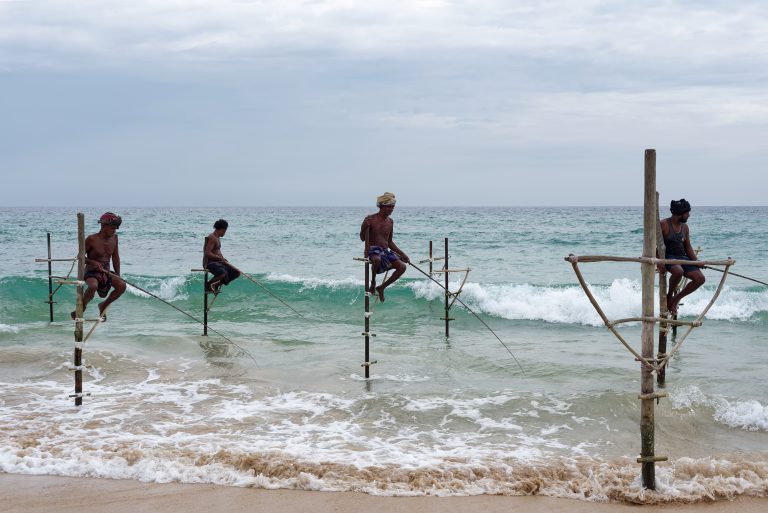
This stretch of coast is known for stilt fishing, with fishermen perched on a cross-bar tied to a single pole set in the shallows. These days it is mostly for the camera. Along the coast at Koggala, the Sunday Times found in February 2025 that the poles stood almost on the beach and the fishermen charged foreign adults Rs 1,000 ($3.00 · convert) per photo, and recent visitors (2025–26) describe the stilt fishermen around Ahangama as mainly a tourist attraction too. If you want a picture, agree the price first. Our guide to the stilt fishermen explains when you can still see real fishing.
Around Ahangama
- Kataluwa Purvarama Maha Viharaya: a temple about 2 km west of Ahangama, founded in the 13th century. The late-19th-century paintings in its image house mix Buddhist stories with colonial-era detail, including European figures and a portrait of Queen Victoria. Cover your shoulders and knees, and take your shoes off where asked.
- Koggala Lake: a mangrove lagoon with boat trips, and nearby the Martin Wickramasinghe Folk Museum at the writer’s birthplace, about 4 km west of Ahangama. Inland, Handunugoda Tea Estate shows how lowland tea is made.
- Weligama: the next town east, a wide sandy bay where many people take their first surf lessons.
- Galle: the old fort town, an easy half-day trip west along the A2.
Getting there and around
By train: Ahangama has a station on the coastal line from Colombo via Galle, with Kathaluwa and Midigama stations either side. Not every train stops at the smaller stations, so check the timetable. Reserved seats are sold on the Sri Lanka Railways seat reservation site.
By road: Ahangama is on the A2 between Galle and Matara, which runs very close to the shore here.
Getting around: tuk-tuks and rented scooters are the usual way to hop between beaches. Recent visitors warn that the A2 is heavily trafficked, so walking along it is unpleasant, especially after dark; the lanes inland are quieter on foot or by bicycle.
Safety in the water
Reefs, rocks and currents are the main hazards. Don’t paddle out at a reef break beyond your level, go in with an instructor if you are learning, and heed lifeguards and local warnings, especially from May to September. Further along the coast at Weligama, two visitors died in the sea in 2026.
Frequently asked questions (FAQs)
Is Ahangama good for beginner surfers?
Yes, at the right spots. Recent visitors say Kabalana’s sandy beach break suits beginners, but most other breaks here are over reef and better for intermediate and advanced surfers.
Where is Kabalana beach?
Kabalana is one of Ahangama’s beaches, on the A2 coast road in Galle District. It is known for The Rock, a reef break for experienced surfers, and a sandy beach break for beginners.
When is the surf season in Ahangama?
Sri Lanka Tourism says the sea on the south-west coast is calm and the weather sunny from November to March. Recent visitors rate January and February as the most reliable months; May to September brings the south-west monsoon.
Ahangama or Weligama: which is better for surfing?
Weligama’s wide sandy bay is where many people take their first lessons. Ahangama has more reef breaks and suits surfers who have moved beyond the whitewater.
How do I get to Ahangama?
By train to Ahangama station on the coastal line from Colombo via Galle, or along the A2 coast road, about 18 km east of Galle.
Header photo: Sasith Lakshan Wickramasinghe / Wikimedia Commons, CC BY-SA 4.0.