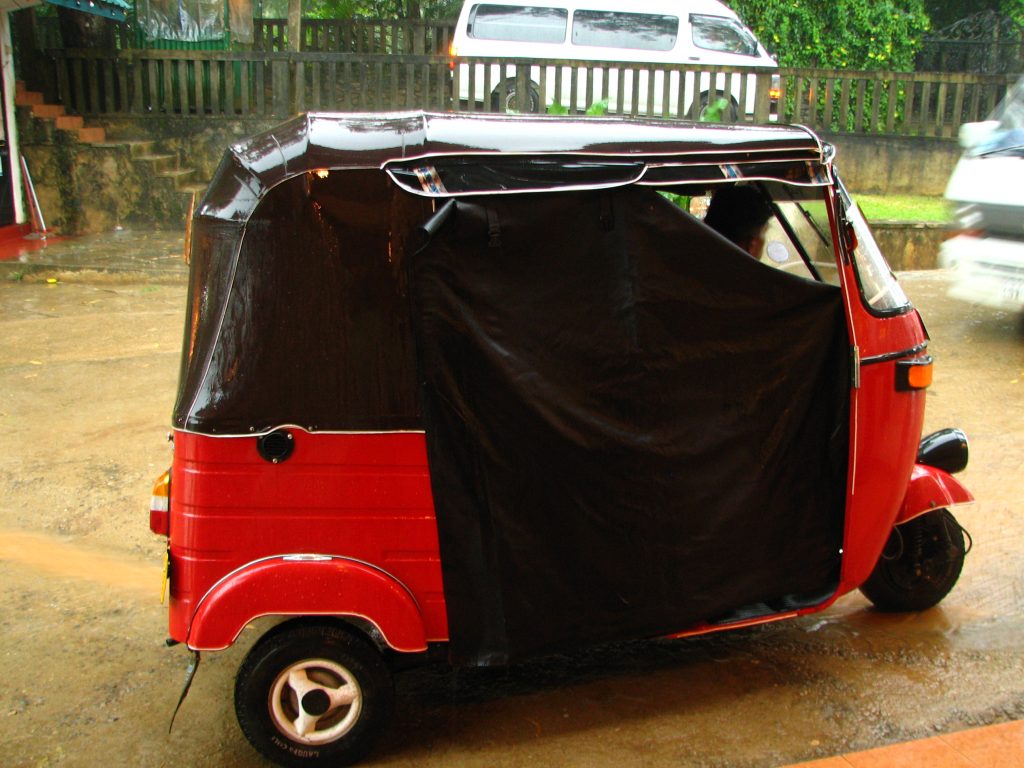

You will ride in a tuk-tuk in Sri Lanka, probably on your first day. Tuk-tuks in Sri Lanka cover the short hops everywhere: station to guesthouse, town to viewpoint, beach to beach. Most rides are cheerful and quick. The friction is almost always about the price, and a few habits take most of it away.
This guide covers what a fair fare looks like and when the PickMe and Uber apps help. It also covers hiring a tuk-tuk for the day, and staying comfortable after dark.
The short version
- Use an app where it works. PickMe and Uber show the fare, the driver and the vehicle before you book.
- Otherwise agree the fare first, for the whole ride and everyone in it, before you get in.
- Carry small notes. Tuk-tuks are paid in cash, and a big note can be hard to change.
- Ask your guesthouse what a ride should cost before you go out. Nobody knows local prices better.
Meters and what a ride should cost
Some tuk-tuks have meters and many don’t. Where there is one, the fare is set per kilometre. The Western Province, which includes Colombo, raised its metered fare in March 2026. Its Road Passenger Transport Authority set Rs 110 ($0.33 · convert) for the first kilometre and Rs 90 ($0.27 · convert) for each kilometre after that. It called this a temporary adjustment for higher fuel prices, so check whether it still applies.
Outside the meter, the price is whatever you agree. App fares are often far below what drivers at a stand ask. In January 2026 The Morning reported one route where app drivers charged around Rs 270 ($0.81 · convert). A traditional three-wheeler charged close to Rs 800 ($2.41 · convert). That doesn’t make every stand driver a crook. It does mean that twice the app fare is normal at a stand. Four times is worth questioning.
Two things catch people out. A fare is for the vehicle, not per person, so ask “for the whole ride, both of us?” first. And a driver who skips the fare talk may charge far more at the end. Some stop at a shop that pays them commission. Our scams and touts guide covers those tricks.
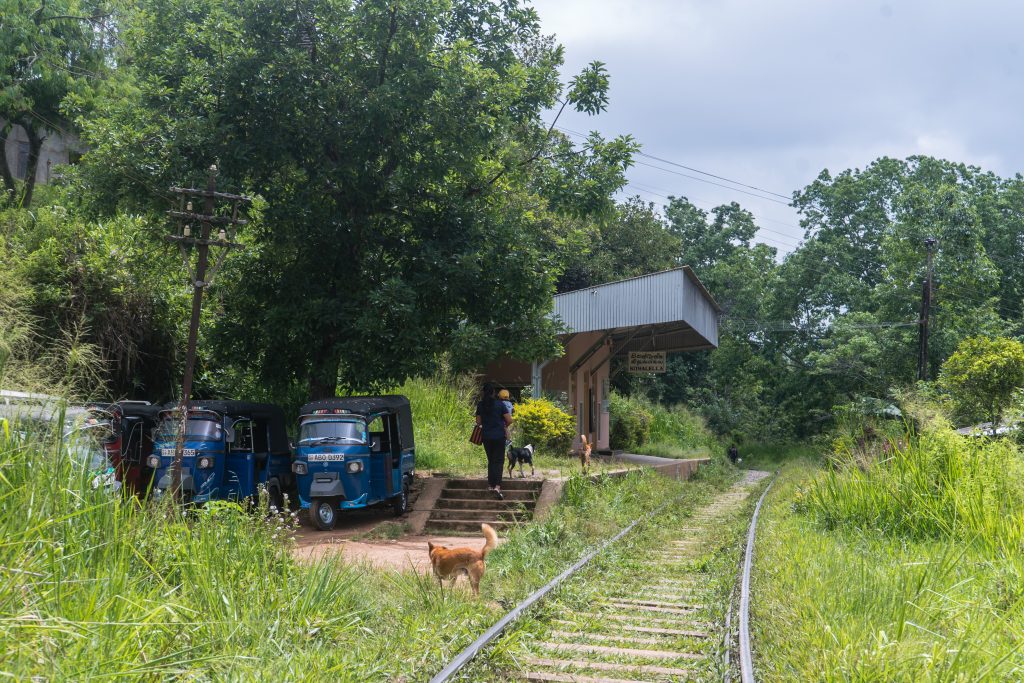
PickMe and Uber
Both apps book tuk-tuks and cars. They are the easiest way to avoid haggling in Colombo and the bigger towns. They need mobile data, so sort out a SIM or eSIM at the airport. Our SIM and eSIM guide explains the options. The airport itself lists Uber and PickMe as ways into town. Recent visitors report app fares usually below the fixed rates at the official taxi counter.
Recent visitors (2025–26) report that the apps work less well in smaller tourist towns, where fewer drivers are signed up. Indian travellers can pay PickMe rides with UPI through PhonePe, under a partnership announced in 2024.
When the apps meet the tuk-tuk stand
App drivers charge less, and in some tourist towns the stand drivers don’t like it. Disputes have been reported in places including Ella, Weligama, Sigiriya, Dambulla and Galle. There, stand drivers object to app drivers picking up near their stands. In December 2025 PickMe wrote to the Inspector General of Police about intimidation of its drivers in tourist areas. It named Ella and asked the police for protection.
What this means for you: an app driver may cancel. Or they may ask you to walk a little way from a stand or a station to meet them. Go along with it rather than arguing, and if a ride gets heated, get out somewhere busy. If an app won’t find a driver, ask your guesthouse to call one they use.
Hiring a tuk-tuk for the day
Some mornings are spent on sights off the main road, such as waterfalls, viewpoints and temples. For those, a tuk-tuk for a few hours often beats a car and is far cheaper. Agree in advance where you’re going and how long the driver waits at each stop. Then agree the total price, including waiting time. Ask your guesthouse to suggest a driver; good ones get repeat business, and that keeps them honest.
The same rule applies on a longer day: say at the start if you don’t want shopping stops. Recent visitors report drivers steering them to spice gardens and gem shops that pay commission on what you buy.
After dark
Official travel advice from the UK and Canada says harassment is common. Women travelling at night should take extra care. At night, book through an app where you can. You see the fare, the driver and the vehicle before you get in, and there’s a record of the trip. If you hail one, pick it up outside your hotel or a busy restaurant rather than on an empty road.
If something goes wrong, call the Sri Lanka Tourism hotline on 1912 from any phone network. It can put you through to the Tourist Police. In an emergency, call the police on 119. Our travel safety guide has more.
Driving a tuk-tuk yourself
Tempted to drive one? The Department of Motor Traffic issues temporary driving licences at the airport. They cover motorcycles and light vehicles such as cars, but not three-wheelers. Check exactly which document a rental company needs before you pay anything. Our getting around guide explains licences and self-drive, and the guide to buses in Sri Lanka covers the cheapest way between towns.
Frequently asked questions (FAQs)
How much is a tuk-tuk ride in Sri Lanka?
In the Western Province, which includes Colombo, metered fares were set in March 2026 as a temporary measure. They are Rs 110 ($0.33 · convert) for the first kilometre and Rs 90 ($0.27 · convert) for each one after. Unmetered tuk-tuks charge whatever you agree, and app fares are usually lower than stand prices.
Do Uber and PickMe work in Sri Lanka?
Yes, in Colombo and the bigger towns, for tuk-tuks and cars. Recent visitors report they work less well in smaller tourist towns, where fewer drivers use them.
Do tuk-tuks in Sri Lanka have meters?
Some do and many don’t. If there’s no meter, agree the fare for the whole ride before you get in.
Is it safe to take a tuk-tuk at night?
Usually, with care. Book through an app so the fare, driver and vehicle are recorded. Or take one from outside your hotel or a busy restaurant. Women travelling alone should take extra care at night.
Can tourists drive a tuk-tuk in Sri Lanka?
Not on the temporary licence issued at the airport, which covers motorcycles and cars but not three-wheelers. Check which document a rental company needs before you pay.
Header photo: McKay Savage / Wikimedia Commons, CC BY 2.0.