
Most visitors to Sri Lanka see Buddhist temples, but the Hindu temples in Sri Lanka, known as kovils, are just as alive and often more colourful: painted gateway towers crowded with gods, drums and bells at puja time, and festivals that fill whole towns. Most are in the Tamil north and east, though a few of the most visited are on the usual tourist route.
Here are the ones worth planning around, what to expect inside, and how to behave when you get there.
Jaffna and the islands
The north has the greatest concentration of kovils, and the most important.
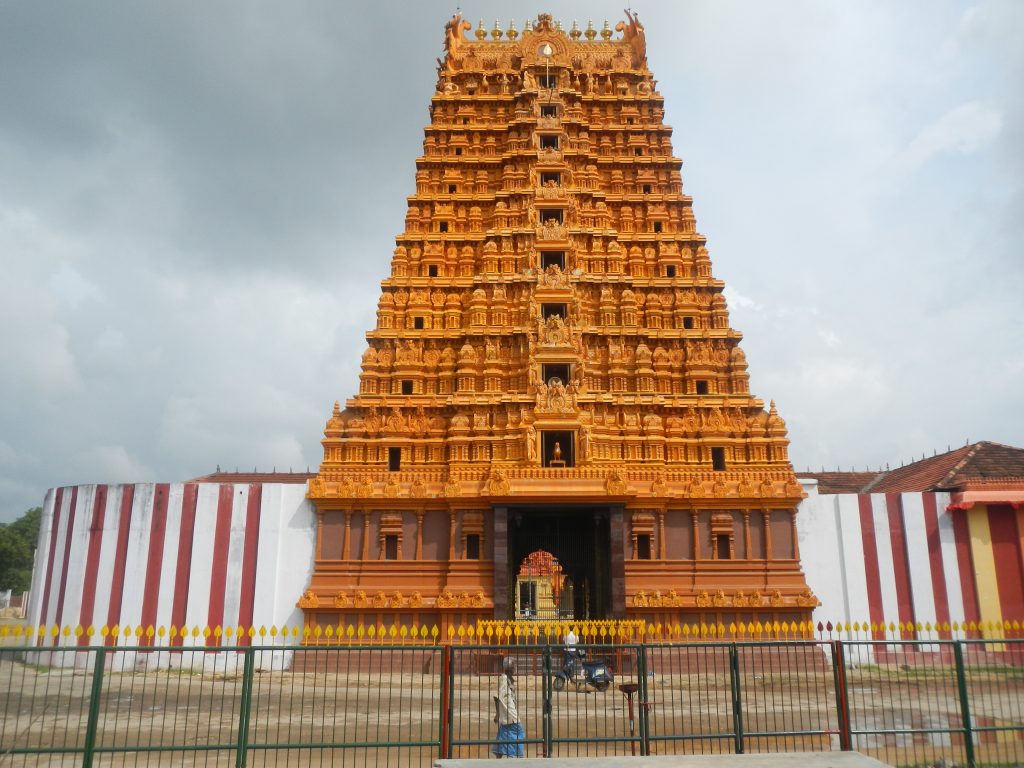
Nallur Kandaswamy Temple, in Jaffna town, is the big one: a temple to Murugan with a golden gateway and a carved five-storey gopuram (gateway tower). The present temple dates from 1734, and it is also a social institution for Sri Lankan Tamils. Pujas run several times a day and are known for starting exactly on time. Men go in bare-chested, with no exceptions.
Nagapooshani Amman Temple stands at the water’s edge on Nainativu, a small island reached by boat from Kurikadduwan jetty. Its painted eastern gopuram, about 33 m tall, is the first thing you see from the boat, and serpent imagery is everywhere inside. The Buddhist Nagadeepa Purana Viharaya is about 700 m along the shore, so most people see both.
Naguleswaram Temple, at Keerimalai on the northern coast, is a Shiva temple of painted pillars and long corridors, next to the sacred Keerimalai Springs where pilgrims bathe.

Trincomalee and the east
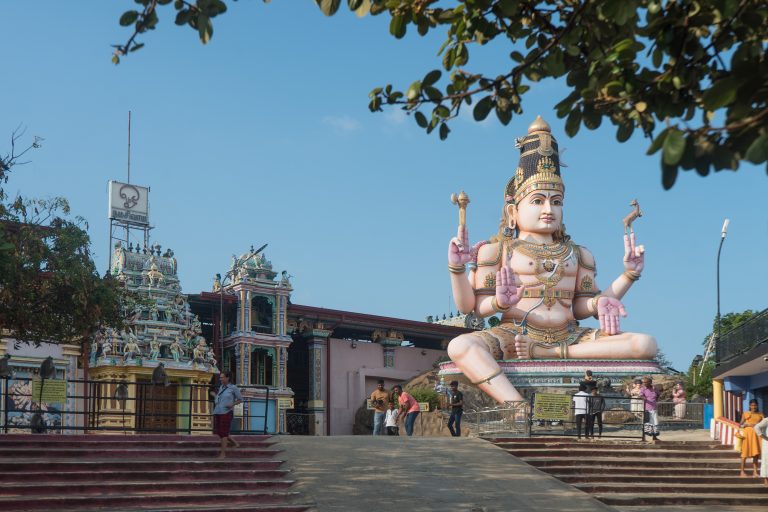
Koneswaram Temple sits on Swami Rock above the sea, reached through the gate of Fort Frederick, still an army base. The Portuguese pulled down the old temple in 1622 and used its stone for their fort; statues found in 1950 were reinstalled when the rebuilt temple opened in 1963. A giant painted Shiva sits beside it, and the view from the cliff edge is one of the best on the east coast. Recent visitors (2025–26) report an ID check at the fort gate, so carry your passport or a copy.
The west coast and the south
Munneswaram Temple, just east of Chilaw, is a Shiva temple complex where most worshippers today are Sinhala Buddhists. Its Kali temple draws people of all faiths. The temple opens daily from 5.30 am to 8 pm and asks visitors to leave phones and cameras behind before entering. It is an easy stop on the coast road between Negombo and Kalpitiya.
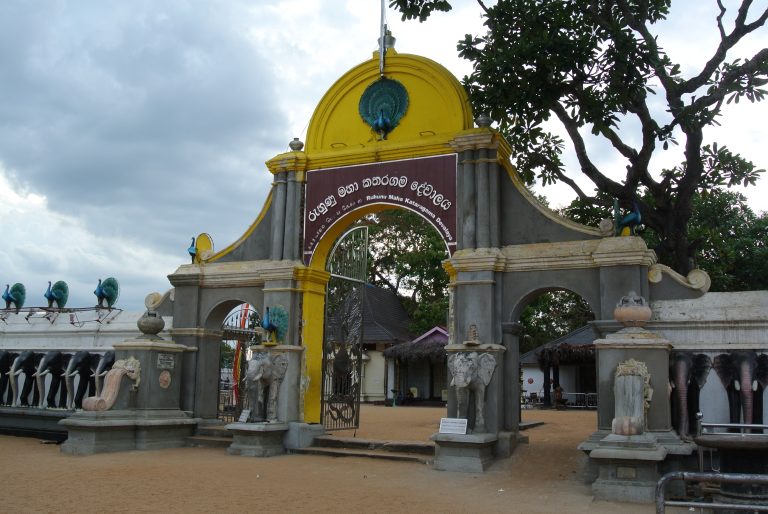
Ruhunu Maha Kataragama Devalaya is a shrine to the god Kataragama, worshipped by Hindus as Skanda or Murugan and honoured by Buddhists as a guardian deity. Its own website calls it a temple for all faiths, and a mosque stands inside the complex. Recent visitors say the evening puja is the one to see.
In the hill country
Seetha Amman Temple, on the road from Nuwara Eliya to Welimada, is tied to the Ramayana: devotees believe Ravana held Sita captive here. It’s a short stop, about 30 minutes, often paired with Hakgala Botanic Gardens about 1 km away.
The five ancient Shiva temples
Three of the temples above, Koneswaram, Munneswaram and Naguleswaram, belong to the Pancha Ishwarams, the five ancient abodes of Shiva in Sri Lanka. A fourth, Thirukketheeswaram, stands beside the Palavi tank on the mainland near Mannar, a short drive from the causeway to Mannar Island.
Festivals worth timing a trip for
Kovil festivals follow the Tamil calendar, so the dates move every year. Check them before you plan around one.
- Kataragama Esala festival: 15 nights of processions, fire-walking and a water-cutting ceremony in the Menik Ganga. It ran from 15 to 30 July in 2026.
- Nallur festival: about 25 days, usually starting in July or August, with the chariot procession on the 24th day. Our Nallur festival guide picks out the days worth planning around.
- Munneswaram festival: about four weeks; in 2026 it ran from the flag-hoisting on 31 July to the water-cutting on 27 August.
- Nagapooshani Mahotsavam: about two weeks in the Tamil month of Aani (June and July).
- Koneswaram chariot festival: 22 days in April, leading up to the Tamil New Year.
Deepavali and Thai Pongal are public holidays: Deepavali fell on 8 November in 2026, and Thai Pongal is on 15 January 2027. Our festival and Poya calendar has the other dates.
How to visit a kovil
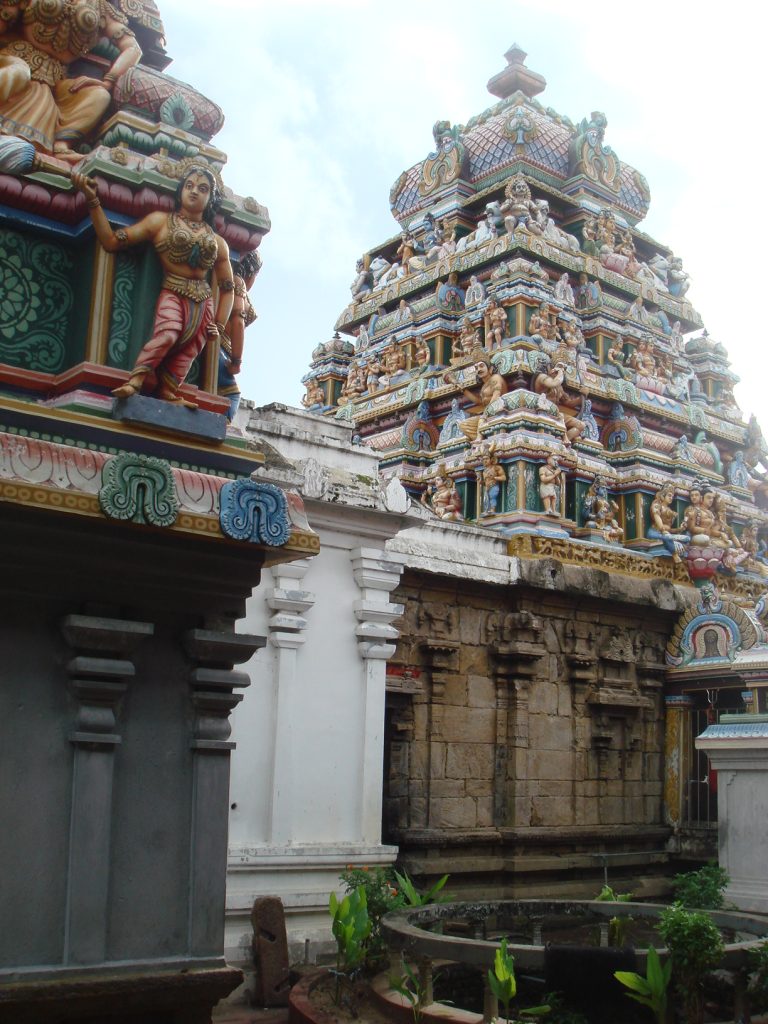
Customs vary from temple to temple, so the easiest guide is to watch what local people do at the door.
- Shoes off before you enter, and often before the temple grounds. Some temples have shoe-keepers who look after footwear for a small fee.
- Men may need to remove their shirts. At Nallur there are no exceptions. Recent visitors report the same request at other kovils, mainly before the inner shrine.
- Dress modestly: shoulders and knees covered.
- Cameras: some temples don’t allow photos inside. Munneswaram asks visitors to leave phones and cameras behind, and recent visitors report no photography inside the temple at Nainativu. Ask before photographing anyone at prayer.
- Keep your voice down, switch off your phone and don’t touch the statues, as the Northern Province Tourism Bureau asks at Nallur.
- Offerings go in the hundi (the offering box) or to temple staff.
Some kovils serve free meals: Munneswaram serves lunch to devotees every day, and Nagapooshani a rice meal at noon. Our cultural etiquette guide covers temple manners in more detail.
Fitting them into a trip
You’ll pass Seetha Amman on the hill-country road and can reach Munneswaram from Negombo, but the richest kovil country is the north. Two or three days in Jaffna covers Nallur, Nainativu and Keerimalai; our northern Sri Lanka in 7 days itinerary adds Mannar and the road south. Koneswaram fits into any stay in Trincomalee.
Frequently asked questions (FAQs)
What is the most important Hindu temple in Sri Lanka?
Nallur Kandaswamy Temple in Jaffna is the best known and draws devotees from across the island and abroad for its 25-day festival. Koneswaram, Munneswaram and Naguleswaram are among the five ancient Shiva temples.
Can tourists visit Hindu temples in Sri Lanka?
Yes. Dress modestly, take your shoes off, keep your voice down and follow the temple’s rules on photography. Some temples ask men to remove their shirts.
Do men have to take off their shirts in Sri Lankan kovils?
At Nallur Kandaswamy Temple, yes, with no exceptions. Some other kovils ask the same, mainly before the inner shrine, so watch what local men do.
Can I take photos inside a kovil?
Often not. Munneswaram asks visitors to leave cameras and phones behind, and recent visitors report no photography inside the temple at Nainativu. Ask first.
When is the Nallur festival?
It lasts about 25 days and usually starts in July or August. The dates change every year, so check before you go.
Header photo: உமாபதி / Wikimedia Commons, CC BY-SA 3.0.