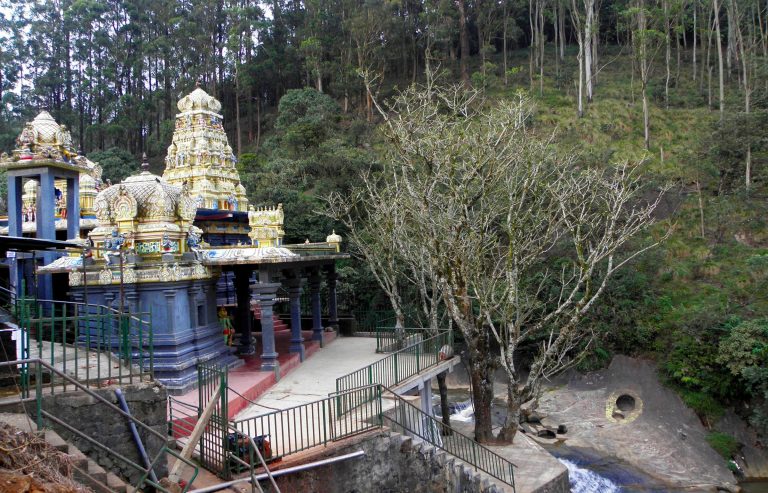
Seetha Amman Temple is a Hindu temple in the village of Seetha Eliya, in the hills outside Nuwara Eliya. It also links to the Ramayana. Devotees believe King Ravana held Sita here, and the temple’s stream and rock belong to that story. It is a working place of worship, not a museum, so a short visit is enough.
Is it worth visiting?
Go if you are drawn to the Ramayana, to Hindu temple architecture, or to how a local legend shapes the landscape. It is also a good stop for pilgrims and for Indian visitors following the Ramayana trail through Sri Lanka.
Think twice if you are in a hurry or dislike dressing modestly. So plan on about 30 minutes, and dress modestly.
The Ramayana story
In the Ramayana, Ravana abducts Sita and holds her in a garden called Asoka Vanam. Many devotees also believe that garden lay on the hillside near this temple. The provincial tourism site describes three things. There is a stream where Sita is said to have bathed and a stone bench where she sat. There is also a footprint on the rock face that devotees believe is Hanuman’s. Hanuman is the devotee of Rama who found Sita in the story.
Please treat these as beliefs rather than proven history. They are why the place matters, so a visit makes more sense when you know them. Our Nuwara Eliya guide also places the temple among the other sights in the area.
History of the temple
The temple began as a small shrine under a tree, but its origin date is not known. A 1999 Sunday Times feature says that workers found a coin dated 1894. That suggests the site is more than a century old. At the time the paper was writing, builders were putting up a larger new temple. Meanwhile, local trustees, public donations and a gift from an Indian foundation paid for it.
According to Newsfirst, the temple had a second consecration, a Maha Kumbhabhishekam ceremony, on 19 May 2024. The ceremony used water from the Sarayu River in Ayodhya on the figures of Rama, Sita, Lakshmana and Hanuman. Offerings also arrived from Ayodhya and Nepal. The Indian spiritual leader Sri Sri Ravi Shankar also attended.
What to see at Seetha Amman Temple
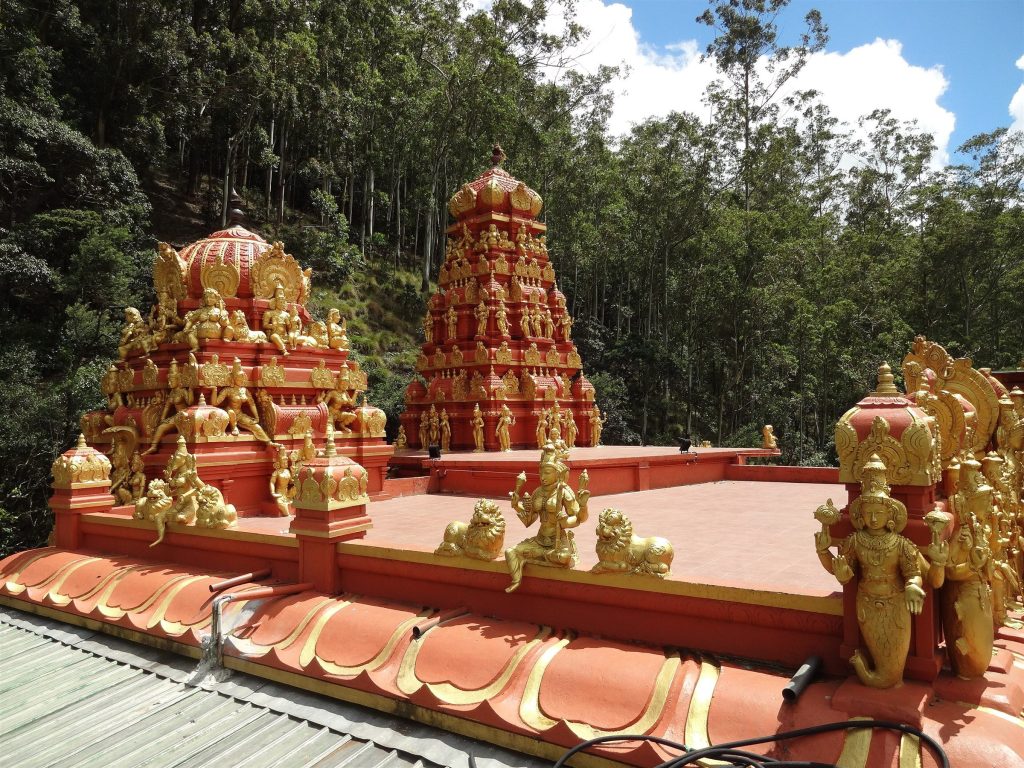
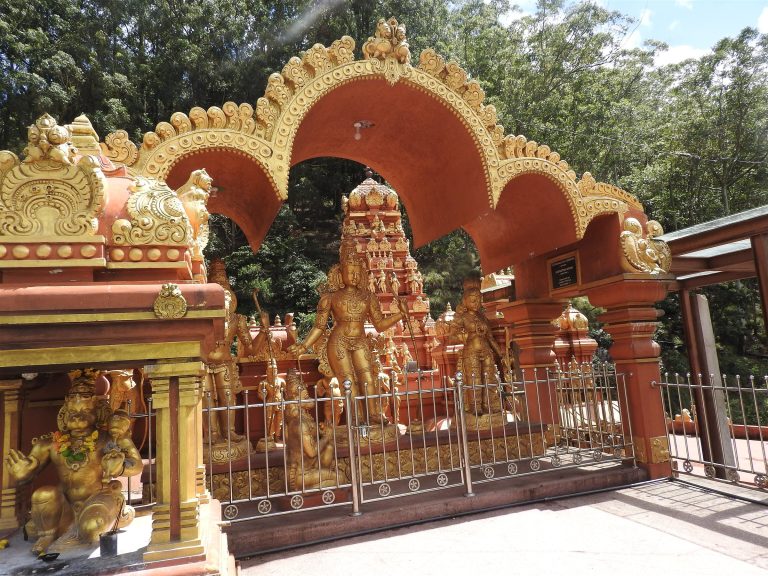
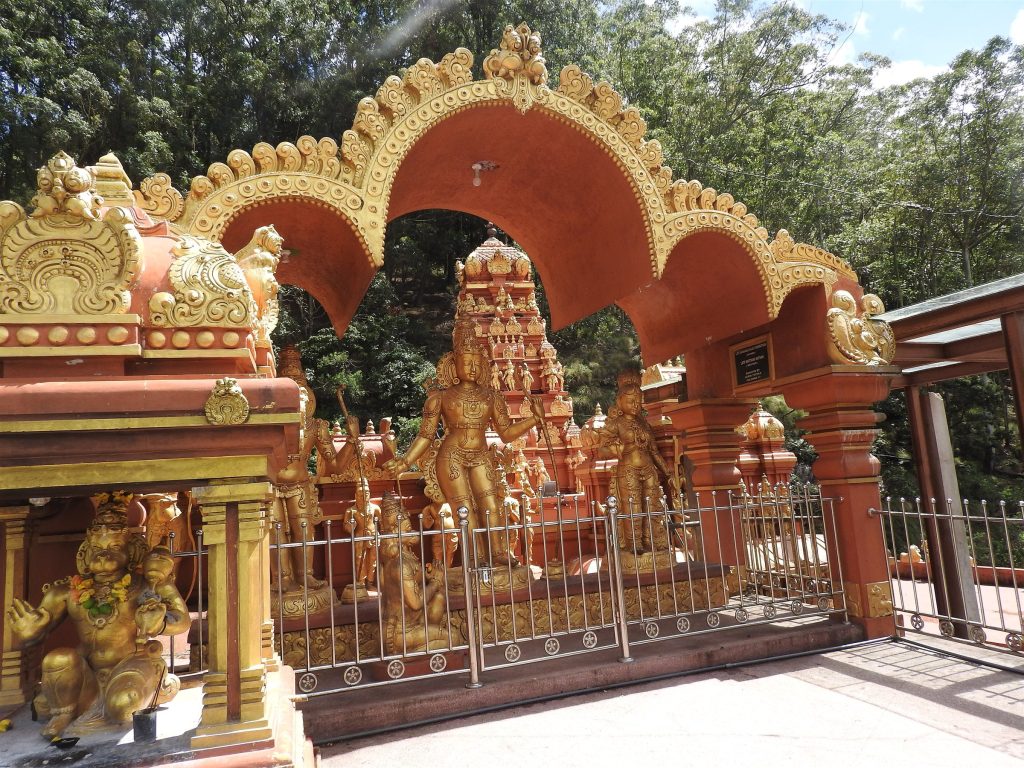
- The shrines: figures of Rama, Sita, Lakshmana and Hanuman, and also gilded gateway towers (gopurams) in the South Indian style.
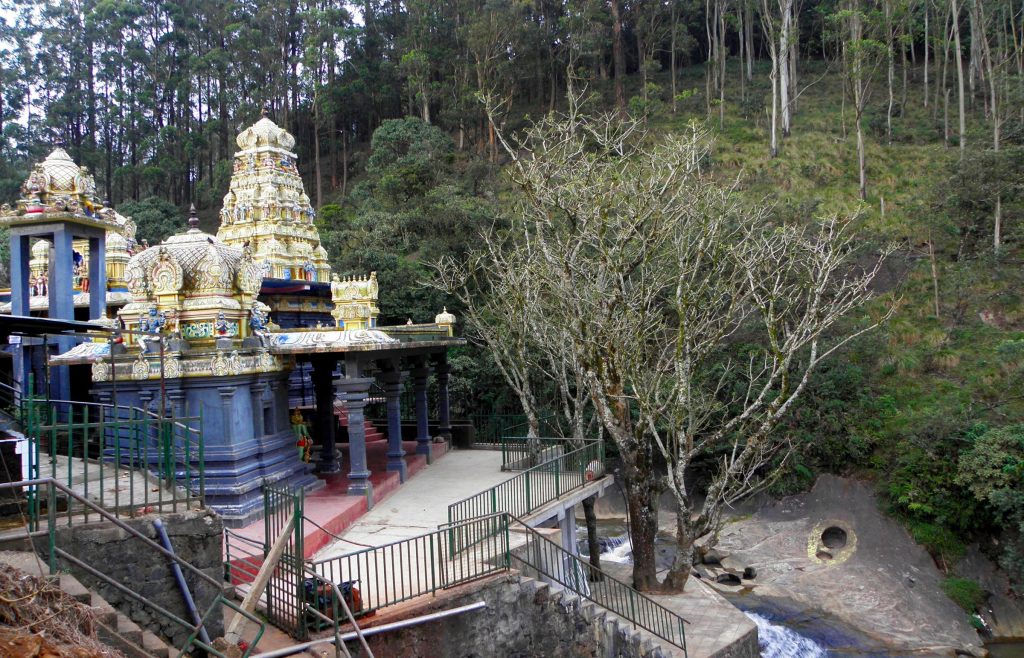
- The stream: it runs beside the temple over a rock, and the story says Sita bathed in it.
- The footprints: circular marks in the rock across the stream, which devotees believe are Hanuman’s. Some visitor sources also say they vary in size.
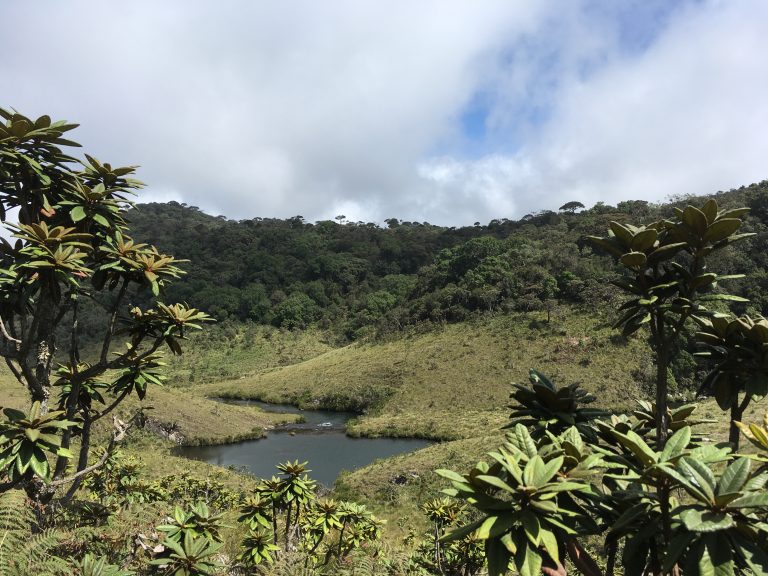
- The surroundings: the temple sits in forested hills, while Hakgala Botanic Gardens are close by. Our Hakgala Botanic Gardens guide covers the next stop.
Visiting Seetha Amman Temple
- Hours: the temple has no published hours that we could check. However, recent visitors (2025–26) report that it opens daily. They describe a morning session from about 8 am to 1 pm and an evening session from about 2 pm to 6:30 pm. So plan around the break at midday.
- Entry: recent visitors (2025–26) report that there is no entrance fee, and that donations are welcome. They also say tickets for a puja cost roughly 100 to 200 rupees. So treat these as indicative and check on the day.
- Dress: one visitor guide advises long trousers or a skirt that covers the knees. Expect to leave your shoes outside, as at most Hindu temples. Also ask before you take photographs inside the shrines. Our cultural etiquette guide covers temple behaviour in general.
- Respect: keep your voice low, don’t touch the images, and don’t step in front of people praying.
- Getting there: according to Sri Lanka’s provincial tourism site, the temple is on the Nuwara Eliya–Welimada road, about 1 km from Hakgala Gardens. You reach it by road from town.
Back in town, Victoria Park and Gregory Lake are the usual stops.
Frequently asked questions (FAQs)
Where is Seetha Amman Temple?
In Seetha Eliya village in the Nuwara Eliya district. It stands on the Nuwara Eliya–Welimada road, about 1 km from Hakgala Gardens.
Why is Seetha Amman Temple important?
Devotees believe that King Ravana held Sita captive here, as told in the Ramayana. The stream and the rock footprints also belong to that story.
Is there an entrance fee?
Recent visitors (2025–26) report that entry is free, with donations welcome and small charges for pujas. So check on the day.
What should I wear?
Modest clothes that cover your knees. Also expect to leave your shoes outside, as at most Hindu temples.
How long do you need at the temple?
About 30 minutes covers the shrines and the stream.
What happened in 2024?
According to Newsfirst, the temple held a Maha Kumbhabhishekam consecration on 19 May 2024.
Header photo: Z thomas / Wikimedia Commons, CC BY-SA 4.0.