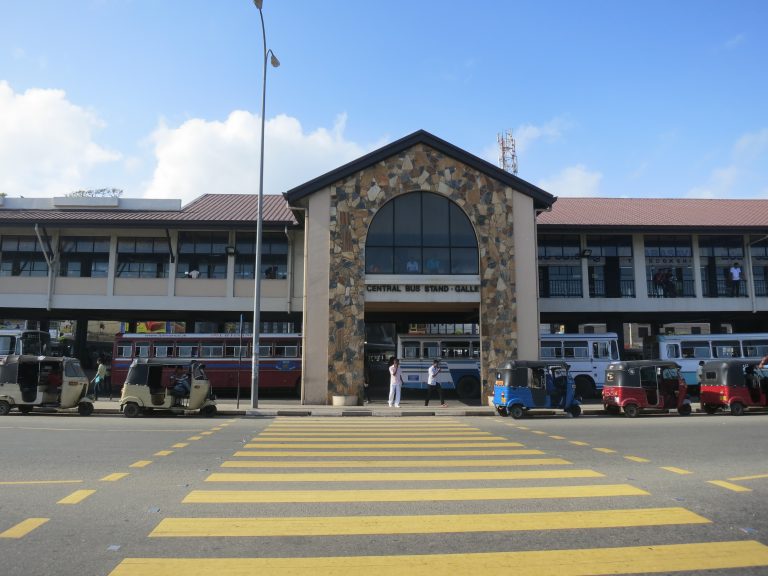
Matale is the main town of Matale District, in a green valley on the A9 north of Kandy. It sits on the road to Dambulla, Sigiriya and the north, so most travellers only see it through a bus or car window. Even so, it rewards an hour or two. A Hindu temple with a 108-foot painted gateway tower stands in town, and the cave temple where monks first wrote down the Buddhist scriptures is just to the north. The district is also one of Sri Lanka’s main pepper and nutmeg growing areas.
Is Matale for you?
Go if you are travelling between Kandy and the Cultural Triangle and would rather break the journey with a couple of good stops than drive straight through, or if you plan to walk on the Riverston side of the Knuckles range.
Think twice if you want a base with plenty to do in the evenings, because Matale is a working market town rather than a holiday town and its sights fit into half a day from Kandy.
What to see in Matale
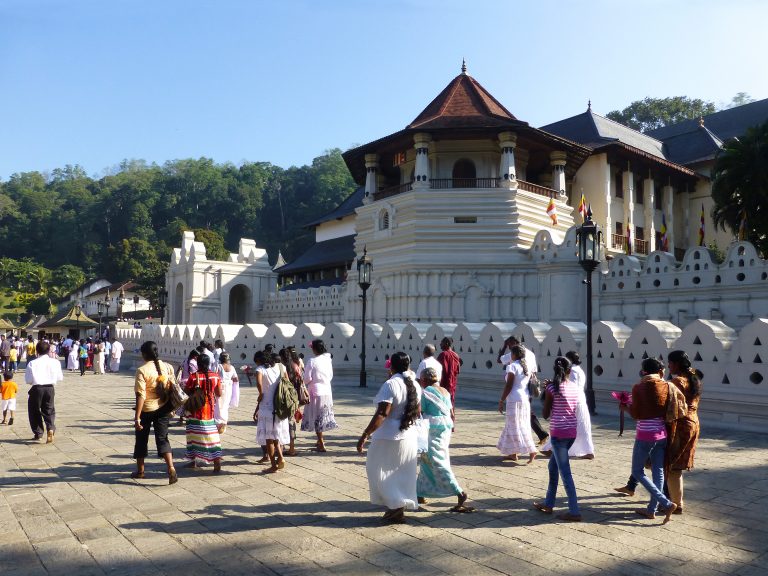
Sri Muthumariamman Temple. This Hindu temple belongs to Muthumariamman, a form of the goddess Mariamman, who is linked with rain and fertility. Its gateway tower (rajagopuram) rises 108 feet, about 33 metres. Every level is crowded with painted figures of gods, so you can pick it out from the hills above the town. The temple began as a small shrine. According to The Morning, it became the spiritual home of the Tamil workers brought from South India in the British period. Many of them passed through Matale on their way to the plantations of the hill country.
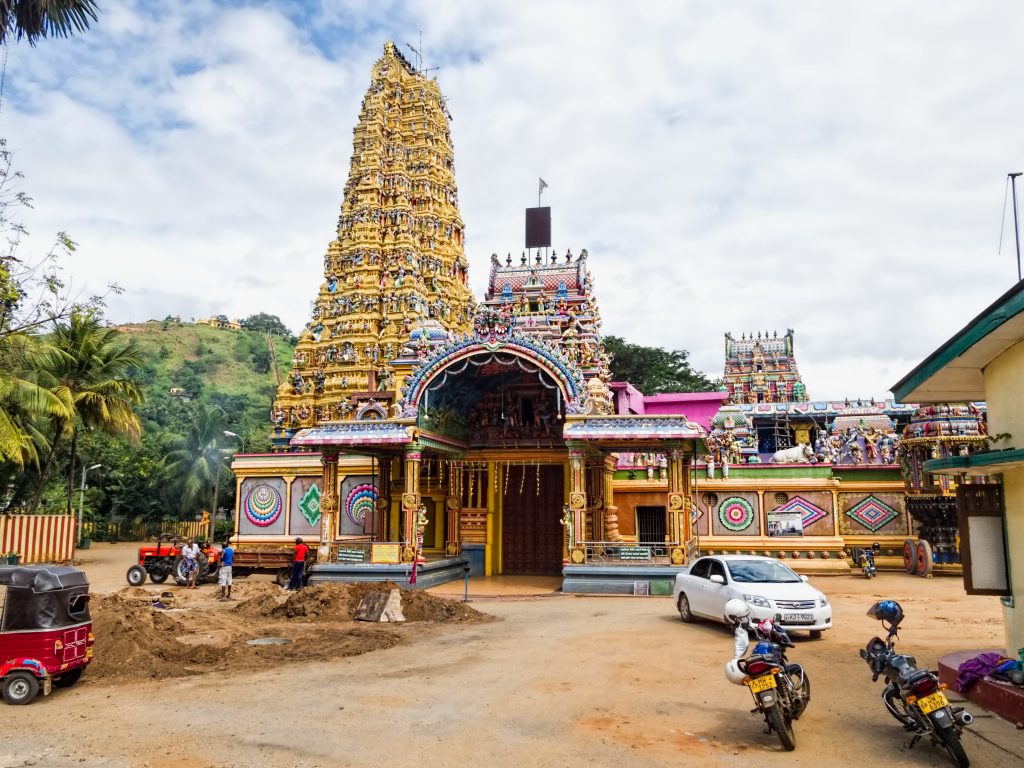
The main festival falls in February or March. On the chariot day, devotees pull five decorated chariots carrying images of the gods through the streets. On any other day it is a working temple, so take off your shoes, cover your shoulders and knees, and ask before taking photos inside. Our guide to temple etiquette in Sri Lanka covers the details.
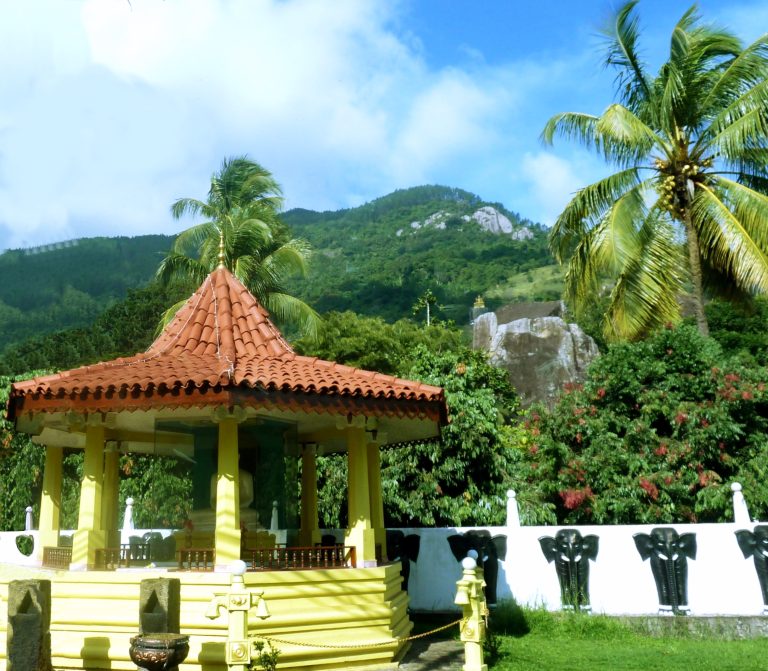
Aluvihara Rock Temple. About 4 km north of town, right beside the A9, a cluster of boulders hides a cave temple with painted shrines. Tradition says that monks wrote down the Pali Canon here in the 1st century BC. If you only have time for one stop in Matale, make it this one, and allow about an hour.
Spice gardens. The Export Development Board names Matale among the leading districts for both pepper and nutmeg. As a result, you will pass a string of spice gardens on the A9 towards Dambulla. Most offer a short guided walk among cinnamon, pepper, cardamom and nutmeg plants, and the walk usually ends in a shop.
Recent visitors (2025–26) report that the garden part is pleasant but the selling afterwards can be hard. They mention oils and balms priced well above ordinary shops, massages nobody asked for followed by a request for a tip, and drivers who earn a commission for bringing you. So go knowing you don’t have to buy anything, and ask the price before anything is applied or packed. If price matters, buy your spices at a supermarket or in the town market instead.
Around Matale: the Knuckles side
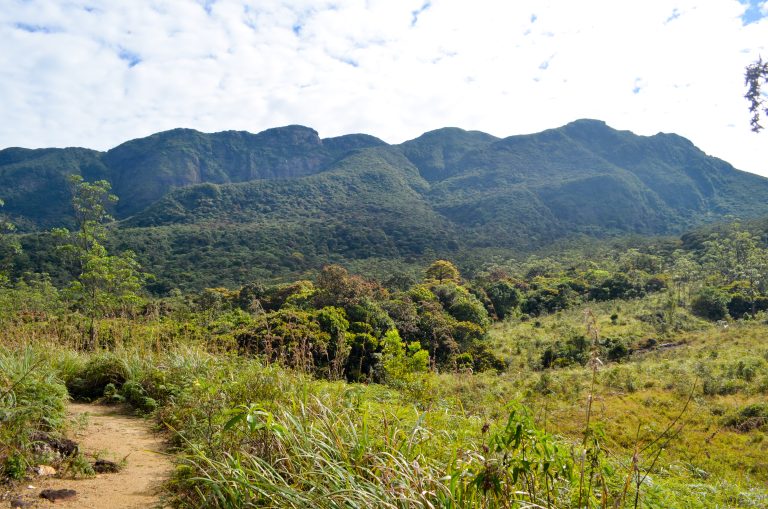
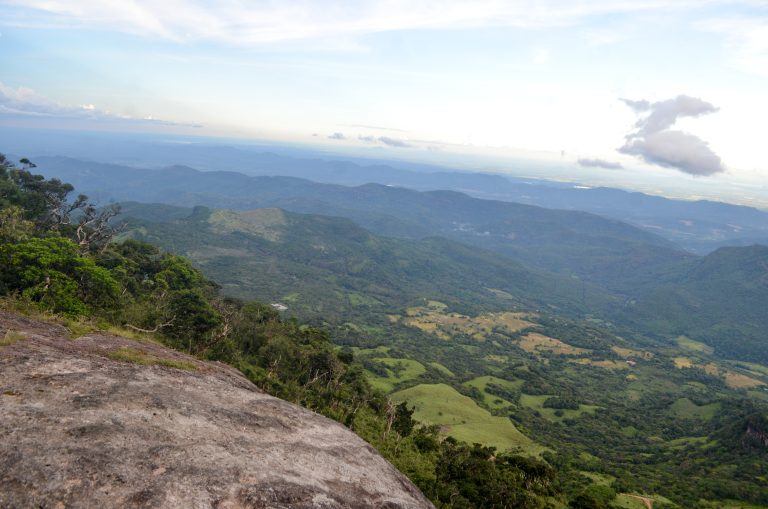
East of town, a road climbs through Rattota to Riverston, where the Knuckles Conservation Forest begins. This is the way to Pitawala Pathana and the Riverston area. For walks on the northern side of the range, then, Matale is a more natural starting point than Kandy. Our Knuckles guide covers the trails and how to reach them.
A little history
Matale was at the centre of the Matale Rebellion of 1848, an uprising against British rule led by Gongalegoda Banda and Puran Appu. During the fighting, British troops damaged Aluvihara and burnt manuscripts kept in its library. Much later, the monks there wrote the whole canon out again on palm leaves.
Getting there and around
- By road: Matale is on the A9, the Kandy–Jaffna road, between Kandy and Dambulla. Buses running between the two pass through the town, and it is an easy stop if you are driving.
- By train: the town is the end of the Matale line, a branch railway from Kandy through Katugastota and Wattegama. Check the current service with Sri Lanka Railways before you plan on the train.
- In town: tuk-tuks are the easiest way to reach the temple, Aluvihara and the spice gardens. Agree the fare before you set off.
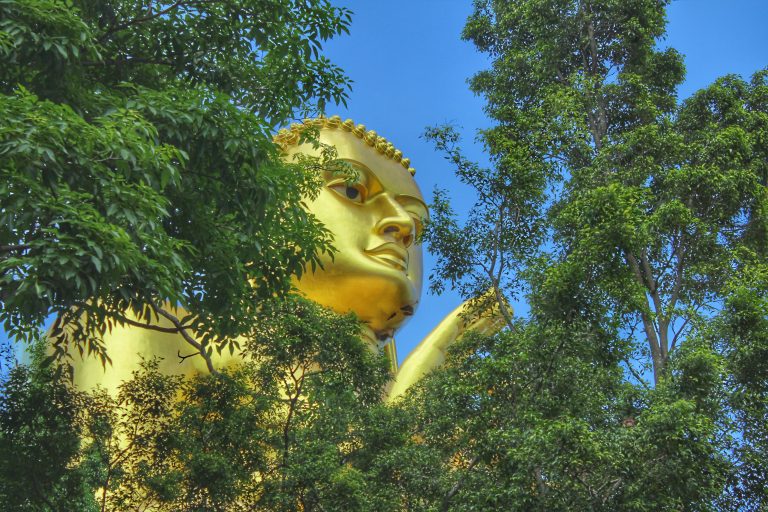
On the drive from Kandy to Sigiriya, the Muthumariamman temple and Aluvihara both fit in on the way north. The Dambulla Cave Temple lies further up the same road. Our five-day Cultural Triangle itinerary shows how the bigger sights of the region fit together.
Frequently asked questions (FAQs)
Where is Matale?
In Central Province, on the A9 north of Kandy, on the road towards Dambulla and Sigiriya. It is the main town of Matale District.
What is Matale known for?
Spices, especially pepper and nutmeg, and two temples: Sri Muthumariamman, with its 108-foot gateway tower, and Aluvihara, where tradition says the Pali Canon was first written down.
When is the Matale chariot festival?
The temple’s main festival falls in February or March. On the chariot day, devotees pull five chariots carrying images of the gods through the town.
Are Matale’s spice gardens worth visiting?
The guided walk is interesting, but recent visitors report a hard sell in the shops afterwards. Ask prices first and don’t feel obliged to buy.
Can I get to Matale by train?
Yes. Matale is the end of a branch line from Kandy through Katugastota and Wattegama. Check the current service with Sri Lanka Railways before relying on it.
Header photo: Olitheeban / Wikimedia Commons, CC BY-SA 4.0.