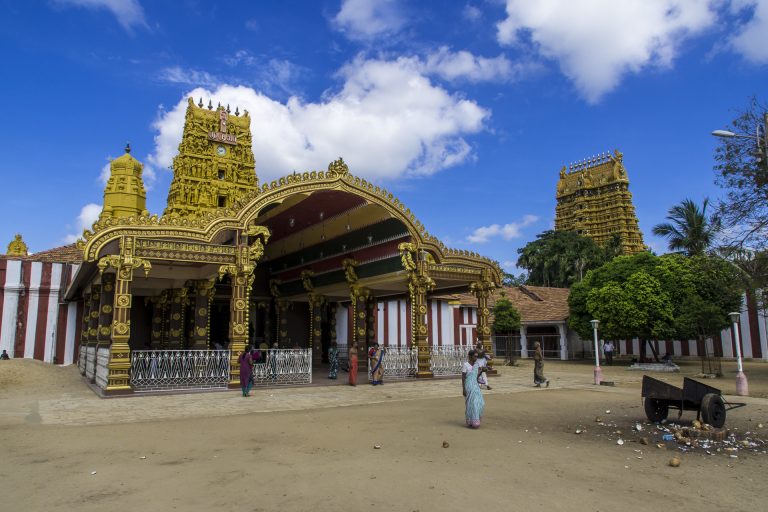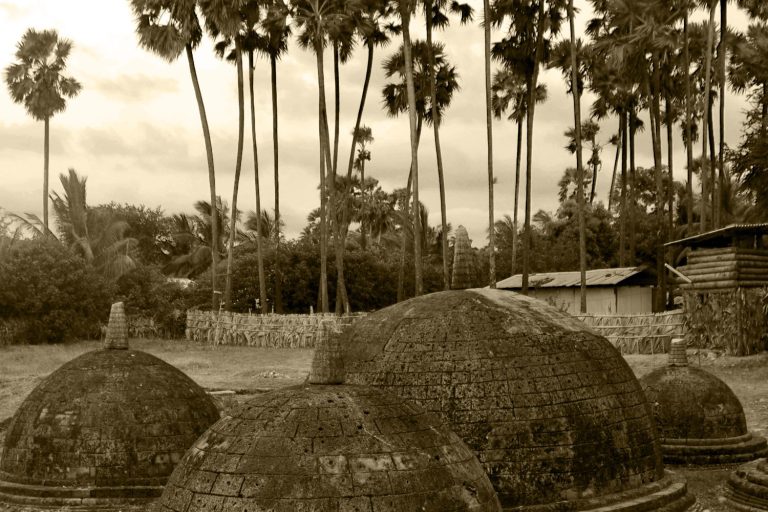
Keerimalai is a sacred spring and bathing place at the northern tip of the Jaffna peninsula, beside the sea and next to the Naguleswaram Temple. Pilgrims, families and day-trippers from Jaffna come here to bathe, and the name means “mongoose hill” in Tamil.
Is it worth visiting?
Go if you want to see a living Hindu pilgrimage place rather than a monument, and you are happy to spend an hour or two at the sea’s edge with a temple next door. It also works well as the far end of a day out from Jaffna.
Think twice if you expect a hot spring. Recent visitors (2025–26) report that the water is not noticeably hot, and the bathing spot is a busy, shared space where modest dress matters.
What Keerimalai is
Fresh water from the rock of the peninsula comes out near the shore and meets the sea here, which is why the bathing place sits right at the water’s edge. Local belief holds that the water is sacred, and many Hindus bathe here before visiting the temple. Claims about its healing powers are unconfirmed, so treat those as belief.
The Naguleswaram Temple is one of the five ancient Shiva shrines of Sri Lanka, known as the Pancha Ishwarams. Sources disagree on when the present temple was rebuilt after its destruction in Portuguese times, so we leave out the date.
Several legends explain the place. In one, a holy man bathed in the spring and his mongoose-like face turned human. In another, a Pandyan princess was cured of a horse-shaped face. A third says Rama bathed here after the war with Ravana. All three are traditional stories, not documented history.
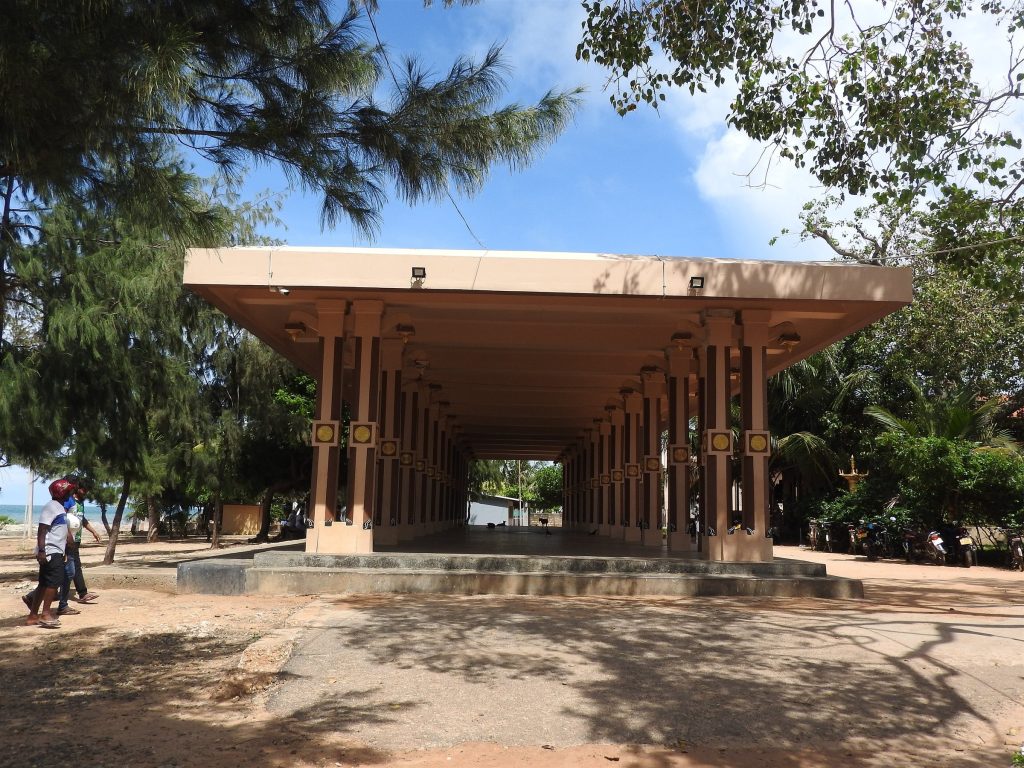
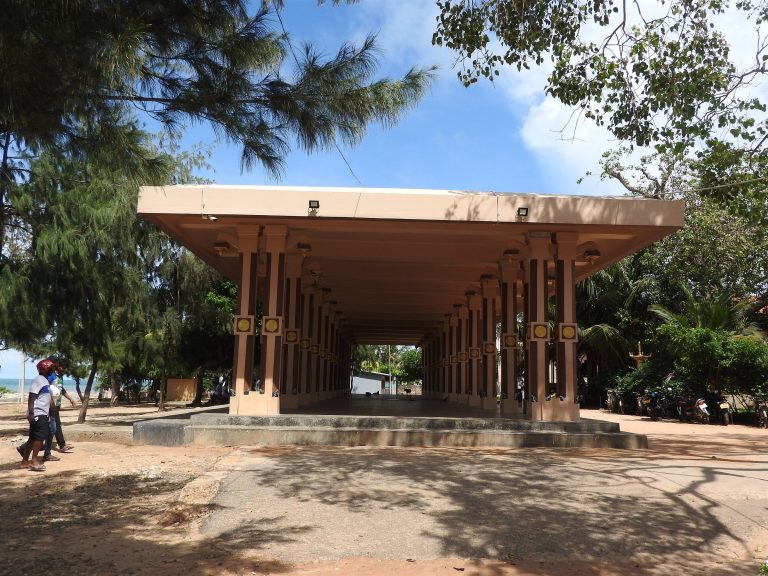
When to go and what to expect
Recent visitors (2025–26) report that the spring is busiest during the day and that early morning is calmer. Visitors also report separate bathing areas for men and women, and bathing hours of roughly 6 am to 6 pm. No official source gives hours or any charge, so check locally.
Pilgrims gather in large numbers on the new-moon day of the Tamil month of Aadi (mid-July to mid-August) to remember their ancestors. Expect crowds and heavy traffic around the site on that day.
- Dress: this is a place of worship, so bring a change of clothes and keep it modest.
- Timing: go early if you prefer quiet.
- Valuables: leave anything you don’t need in the car, as you would at any busy bathing place.
Getting there
Keerimalai lies north of Jaffna town, close to the coast. Most visitors arrive by car, taxi or tuk-tuk from Jaffna, often as part of a longer day that also includes Casuarina Beach or a stop at Nallur Kandaswamy Temple. Parts of this area were closed to the public during and after the war, and some land nearby is still restricted. Ask your driver or guesthouse about the current road and any local notices before you set off.
For a wider route, see Northern Sri Lanka in 7 Days.
Frequently asked questions (FAQs)
Where is Keerimalai Springs?
At the northern tip of the Jaffna peninsula, beside the sea and the Naguleswaram Temple.
Are the Keerimalai springs hot?
Not necessarily. Recent visitors (2025–26) report that the water is not noticeably hot, so don’t expect a thermal spring.
What does Keerimalai mean?
In Tamil it means “mongoose hill”, a name linked to the legend of a holy man whose mongoose-like face was restored to human form.
Is there an entrance fee?
No official source gives fees or opening hours. Visitors report bathing from about 6 am to 6 pm, but check locally.
Can visitors bathe at Keerimalai?
Yes, many people do. Visitors report separate areas for men and women, and modest dress is expected at this sacred site.
Header photo: Walidh97sm / Wikimedia Commons, CC BY-SA 4.0.