Buses go almost everywhere in Sri Lanka, leave often on the main roads and cost very little. They are also crowded, fast and short on luggage space, so they suit some travellers far better than others. This guide covers the kinds of bus, where they leave from and what you pay. It also explains the new online booking and how to make a bus day go smoothly.
Is the bus right for you?
Go if you travel light, like a bargain and don’t mind a crowd. On the busy main roads a bus is often quicker than the train. A long-distance ride also costs a small fraction of a day with a driver.
Think twice if you have a big suitcase, need a guaranteed seat or have a tight connection. Local buses don’t run to a published timetable. And the last stretch to a guesthouse or a sight usually means a tuk-tuk anyway.
SLTB and private buses
Two kinds of bus share the roads. Sri Lanka Transport Board (SLTB) buses are state-run, and the rest belong to private operators. The National Transport Commission (NTC) and the provincial transport authorities regulate their routes and fares.
For a passenger, the type of service matters more than the owner:
- Normal buses stop often and cost least. Most long journeys between towns are on these.
- Semi-luxury, luxury and super-luxury buses cost more, usually have air conditioning and stop less. On the expressways, buses charge on the luxury fare scale.
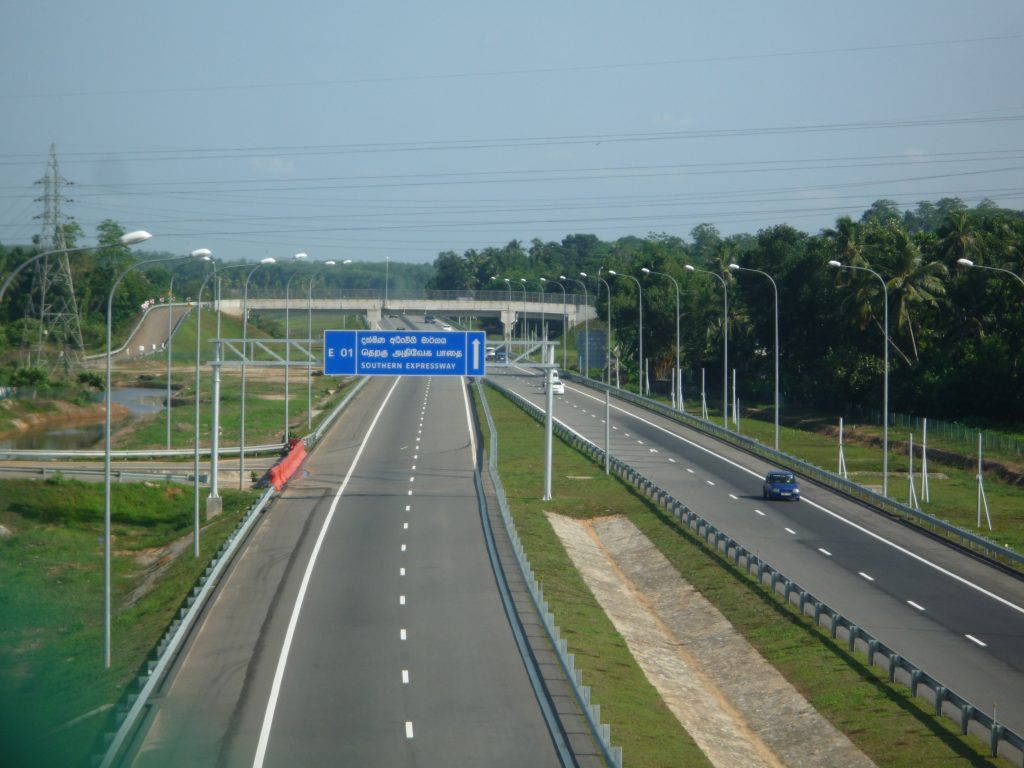
- Expressway buses use the motorways, such as the Southern Expressway towards Galle and Matara. They save a lot of time where an expressway runs your way.
Where buses leave from
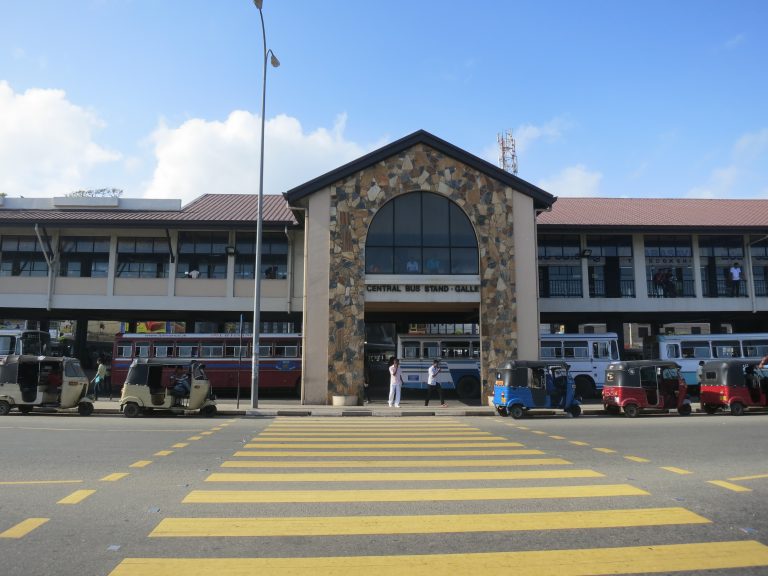
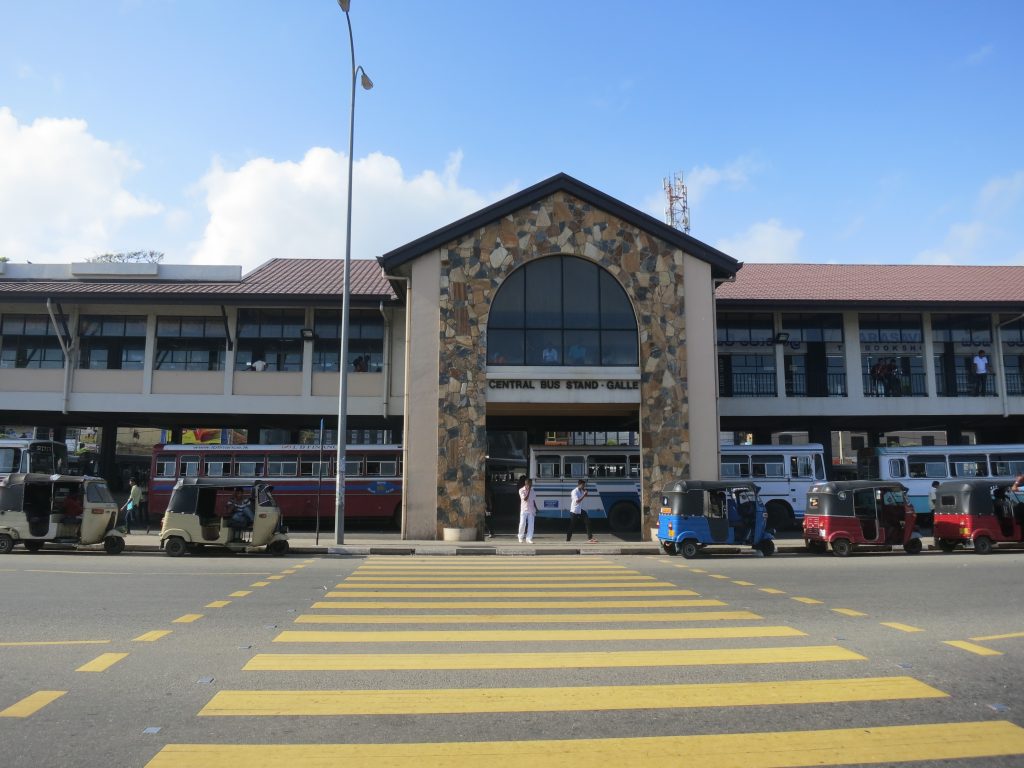
In Colombo, SLTB long-distance buses leave from the Central Bus Stand in Pettah, next to Colombo Fort railway station. It reopened after renovation in April 2026. Private long-distance buses use the nearby Bastian Mawatha bus station. Both are a short walk from Pettah Market, so allow time to find your bus in the crowds.
For the south and the south-east, the main interchange is the Makumbura Multimodal Centre at Kottawa. It sits on Colombo’s south-eastern edge, and expressway buses start there. An air-conditioned bus runs there from the airport’s arrival outer porch in about 50 minutes. The airport listed the fare at Rs 410 ($1.24 · convert) in October 2026. For central Colombo, the airport’s bus 187 runs 24 hours a day to Colombo Fort, also in about 50 minutes. Our arriving in Sri Lanka guide has the details.
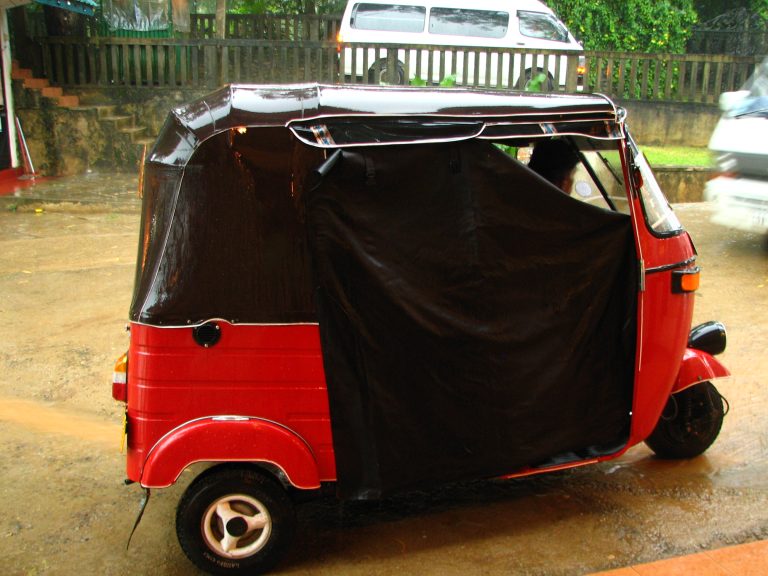
Elsewhere, every town has a main bus stand, usually near the market or the clock tower. Bigger towns sometimes have more than one, so ask your guesthouse which stand your bus uses. In Kandy, for example, buses to the hills leave from the Goods Shed bus stand. For the last stretch from the bus stand, see our guide to tuk-tuks and ride apps.
What it costs
Fares are set nationally and revised every July. The 2026 revision took effect on 6 July. The minimum fare went up to Rs 34 ($0.10 · convert), and normal fares rose by 12% on routes under 100 km and 20% on longer ones. Semi-luxury fares stayed at 1.5 times the normal fare. The NTC publishes the full fare tables on its [https://www.ntc.gov.lk/]website, along with its complaints line, 1955.
Recent visitors (2025–26) report paying the conductor in cash once on board, so carry small notes. They also report sometimes paying for an extra seat when a big backpack takes one.
Booking a seat online
You don’t have to book: most people just turn up. On the long routes, though, a reserved seat takes the stress out of a busy day. In May 2026 the government started a pilot of online seat reservations for long-distance buses. It runs at [https://www.busticket.gov.lk/]busticket.gov.lk, with a phone line on 011 200 1266. It began with private operators at hubs including Makumbura, Galle and Kandy, and SLTB buses are to be added later. There’s a service fee of about Rs 30 ($0.09 · convert), and you can pay by card.
Some operators also sell their own seats. One expressway route runs from Makumbura round the south of the hills to Ella and Badulla. Its operator’s timetable showed two departures a day in October 2026, and our Colombo to Ella guide has the details. Around the Sinhala and Tamil New Year in April, extra buses run. Seat reservations can be suspended for the holiday rush.
Routes that work well
- Colombo to the south coast. Expressway buses run from Makumbura to Galle and Matara. Normal buses take the coast road to the beach towns in between. See Colombo airport to the south coast.
- Colombo to Kandy. Frequent buses leave from Pettah. With the railway into Kandy still under repair, this is the cheapest way there; see Colombo to Kandy.
- Colombo to Ella. The expressway bus round the south of the hills, often quicker than the train.
- Around the Cultural Triangle. Dambulla is the bus hub, with local buses to Sigiriya until early evening.
- Colombo to Jaffna. Recent visitors report overnight buses on the A9 taking around seven hours; see getting to Jaffna.
The awkward one is Ella down to the south coast or Yala. Recent visitors report a bus to Wellawaya and a change there, with unreliable timings. Our Ella to the south coast guide has the options.
Making a bus day go smoothly
- Start early. Buses are most frequent and least crowded in the morning. You also won’t be hunting for a guesthouse in the dark.
- Travel light. There’s no luggage hold on most buses. Recent visitors report big bags stacked by the driver, so keep valuables on you.
- Ask the conductor. Check the bus is going your way before you board. Then tell the conductor where you want to get off.
- Sit on the shady side on a long daytime ride, and carry water.
- Keep your day bag in front of you on a packed bus, with your phone and money inside it.
Be realistic about safety. The UK government’s travel advice describes buses as often driven fast and poorly maintained. It calls driving in general erratic, especially at night, so choose daytime journeys where you can. Women travelling alone report unwanted attention, mostly in crowded places such as buses and stations. Our solo and solo female travel guide has practical advice.
Bus, train or driver?
A bus beats the train where the train is slow or doesn’t go. Examples are Colombo to Ella via the south, the Cultural Triangle and Ella to the coast. The train wins on the scenic stretches, and when you’d rather walk about than sit squeezed in. Our train travel guide explains booking. A car with a driver wins with luggage, children or a list of sights off the main road. Plenty of travellers mix all three. Our Sri Lanka without a driver guide shows which legs are easy on public transport.
Frequently asked questions (FAQs)
How much is a bus fare in Sri Lanka?
Fares are set nationally. From 6 July 2026 the minimum fare is Rs 34 ($0.10 · convert), and semi-luxury buses charge 1.5 times the normal fare. The National Transport Commission publishes the full fare tables.
Can you book long-distance buses online in Sri Lanka?
Yes, on some routes. A government pilot at busticket.gov.lk, started in May 2026, sells seats on long-distance private buses. It covers hubs including Makumbura, Galle and Kandy, for a service fee of about Rs 30 ($0.09 · convert).
Where do buses leave from in Colombo?
SLTB long-distance buses leave from the Central Bus Stand in Pettah, next to Colombo Fort station. Private buses use the nearby Bastian Mawatha bus station. Expressway buses to the south start at Makumbura, on Colombo’s edge.
Can I take a big suitcase on a Sri Lankan bus?
It’s awkward. Most buses have no luggage hold, so big bags end up by the driver or on a seat you may pay for. Travel light, or use a car for luggage-heavy legs.
Is the bus faster than the train?
Often, yes, especially on the expressways. The expressway bus from Makumbura to Ella goes round the south of the hills and is often quicker than the train.
Header photo: Shehanw / Wikimedia Commons, CC BY-SA 3.0.