Anawilundawa Wetland Sanctuary lies between Chilaw and Puttalam, on Sri Lanka’s north-western coast. Here a chain of ancient irrigation tanks meets mangrove swamp and open coastline. It’s one of only a handful of Ramsar-listed wetlands in the country. It’s also a working one: the same tanks that shelter its birds still water the paddy fields around them.
Is it worth visiting?
Go if you’re interested in birds, or simply want a quiet wetland walk away from the national park circuit. The tanks are also easy to reach from the coast road.
Think twice if you want guaranteed sightings or marked trails with signs. This is a working sanctuary rather than a developed tourist site, so what you see depends on the season and a bit of luck.
Three ecosystems, one small area
Anawilundawa became a sanctuary on 11 June 1997. Then, on 3 August 2001, it joined the Ramsar list of Wetlands of International Importance, becoming only the second Ramsar site in Sri Lanka after Bundala National Park. It covers about 1,397 hectares in Puttalam District, between the coast and the Chilaw–Puttalam railway line.
What makes the site unusual is the mix packed into that small area. There’s a line of ancient irrigation tanks, said to date from the 12th century and the reign of King Parakramabahu the Great. Alongside them, you’ll also find coastal mangrove swamp and freshwater marsh. The tanks still do their original job, feeding paddy land in the surrounding villages.

Birds and other wildlife
The tanks and marshes are a feeding and nesting ground for both resident and migratory water birds. They’re part of the wider network of wetlands that waterfowl use along the Central Asian Flyway each winter. Numbers build from around October to April, as northern migrants join the resident storks, pelicans, cormorants and waders. Species counts vary between surveys, so treat any single figure with caution.
Away from the water, reports of the sanctuary’s mammals include the slender loris and the rusty-spotted cat. However, both are small and nocturnal, and they keep to the scrub. So you’re far more likely to hear about them than see them.
Getting there and visiting
Anawilundawa has its own railway station on the Chilaw–Puttalam line. The sanctuary sits beside both the railway and the coast road between the two towns. So it’s a realistic stop if you’re travelling this stretch of coast, rather than a special detour.
We don’t have an official source for an entrance fee or opening hours. Check with the Department of Wildlife Conservation, which manages the site from its Puttalam office, before you plan around a particular time of day.
Looking after the wetland
Like many of Sri Lanka’s coastal wetlands, Anawilundawa has been under pressure. Drought has at times reduced the water reaching the tanks. In the past, shrimp farms also replaced parts of the mangrove. Now a restoration project is bringing abandoned shrimp-farm land back to mangrove. The Department of Wildlife Conservation runs it with the Wildlife and Nature Protection Society and Wayamba University. Instead of replanting by hand, they restore the natural water flow and let the mangrove re-seed itself.
Around Anawilundawa
The sanctuary makes a sensible stop on the coast road. To the north, beyond Puttalam, lie the Kalpitiya peninsula and Wilpattu National Park. Heading south instead, you reach Munneswaram Temple near Chilaw, one of the island’s old Shiva temples.
Frequently asked questions (FAQs)
Where is Anawilundawa Wetland?
Between Chilaw and Puttalam on Sri Lanka’s north-western coast, in Puttalam District. It sits beside the coast road and the Chilaw–Puttalam railway line.
Is Anawilundawa a Ramsar site?
Yes. It became a sanctuary in 1997, and then joined the Ramsar list of Wetlands of International Importance on 3 August 2001. That made it Sri Lanka’s second Ramsar site.
When is the best time to see birds at Anawilundawa?
Roughly October to April, when migratory waterbirds join the resident species. Sightings vary, though, so there are no guarantees on any given day.
Is there an entrance fee for Anawilundawa?
We couldn’t find an official published fee or opening hours. Check with the Department of Wildlife Conservation’s Puttalam office before you go.
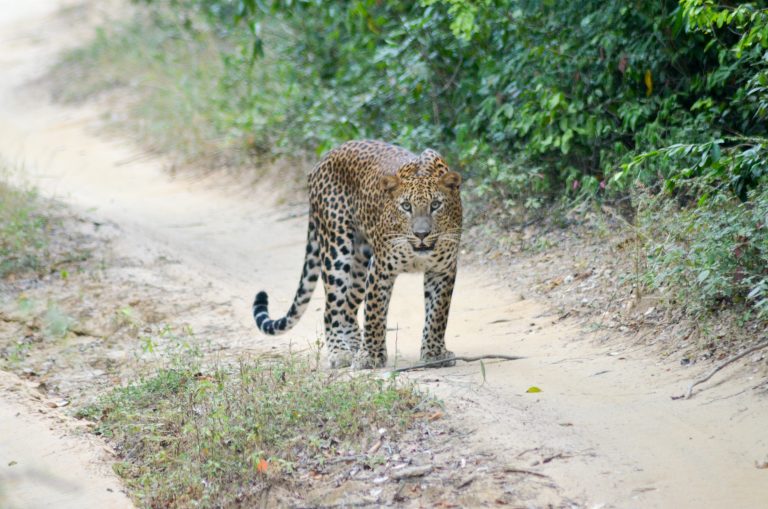
Can you see elephants or leopards at Anawilundawa?
They aren’t the reason people come. It’s a wetland and tank sanctuary rather than a national park, so people come instead for its birds and smaller mammals such as the slender loris.
Header photo: Gobalakrishnan Thuvaragan / Wikimedia Commons, CC BY-SA 4.0.