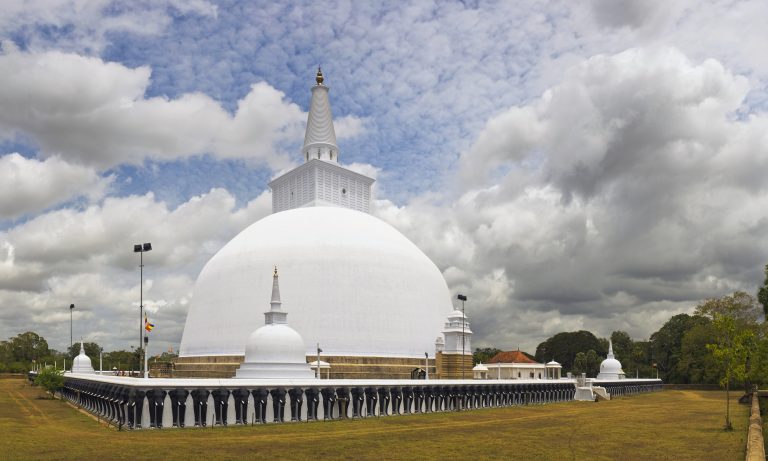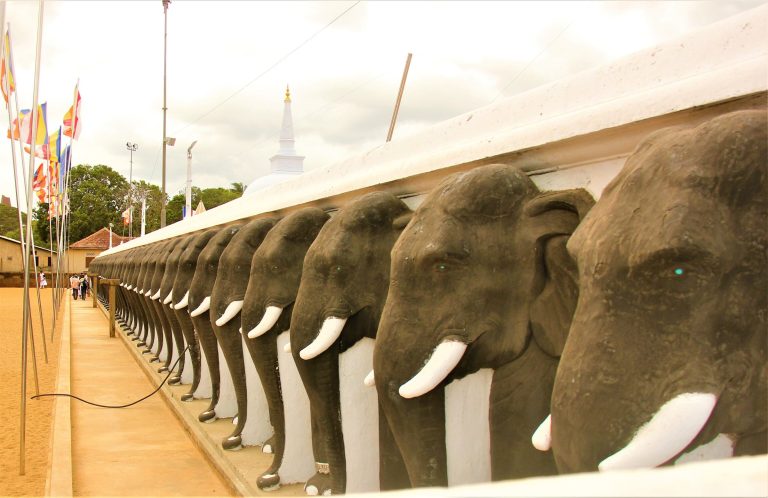
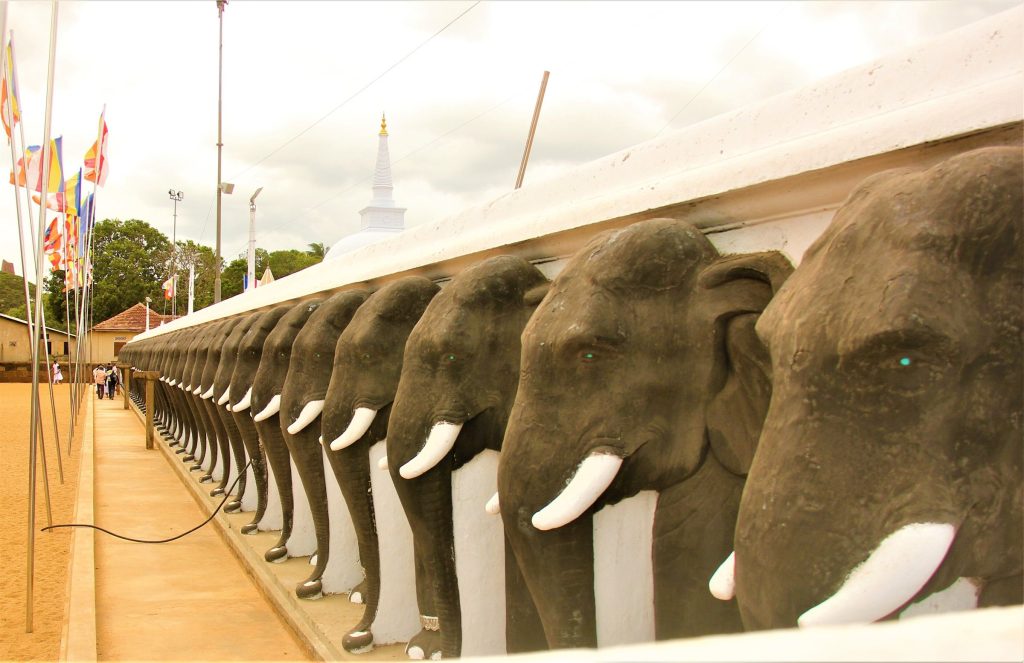
Ruwanwelisaya is the great white stupa at the heart of Anuradhapura, in the North Central Province. King Dutugemunu began it in the 2nd century BC, and pilgrims still walk round it every day. A wall of stone elephants circles the base, and the dome is easy to spot from the road.
Is it worth visiting?
Go if you want one stop that shows why Anuradhapura matters. The dome is huge and the elephant wall is striking. On a full-moon evening the platform also fills with pilgrims in white.
Think twice if you want ruins to climb over. Ruwanwelisaya is a working place of worship with a whitewashed dome, so it is not a ruin in the usual sense. Also, the sand and paving underfoot get very hot in the middle of the day.
A short history
Sri Lanka’s ancient chronicle, the Mahavamsa, calls it the Maha Thupa. According to the national tourism board, Dutugemunu built only the dome, and his brother and successor Saddhatissa finished the rest. Buddhist tradition holds that it enshrines relics of the Buddha. The CCF notes that the great stupas of Anuradhapura rank among the tallest ancient brick structures ever built.
The stupa fell into ruin over the centuries, and by the 19th century it was overgrown. Restoration began then and went on in stages into the 20th century. That is why the dome looks so fresh today. Sources disagree on the height and on when the work finished, so we give neither.
What to see at Ruwanwelisaya
- The dome and spire: walk the full circuit of the platform to see every side.
- The elephant wall: a boundary wall carved with rows of elephant heads. It makes the platform look as if elephants are holding it up.
- The smaller shrines: small shrines and a smaller stupa stand around the platform, where pilgrims stop to leave flowers.
- The evening: recent visitors (2025–26) say the stupa is lit after dark. They add that late afternoon is the best time for photos.
Practical tips
- Dress: cover your shoulders and knees, and wear white if you have it, as many pilgrims do. Remove your shoes and hat before you step onto the platform. Our etiquette guide has more.
- Heat: the platform is exposed, so go early or late. Also carry socks for the hot paving.
- Respect: walk quietly, don’t climb the wall or touch the carvings, and don’t pose with your back to the stupa.
- Tickets: the Central Cultural Fund (CCF) sells Anuradhapura tickets at the site and on its eTicket service. Our Sacred City guide lists the price we checked. The CCF says counters open 7 am to 5 pm, and a ticket is valid for one entry on the day. Keep it with you, because officers can ask to see it.
- Poya days: large crowds gather on full-moon evenings. Come then for the atmosphere, but not if you want space to move.
Around Ruwanwelisaya
The Sri Maha Bodhi tree and the Thuparamaya stupa are both close. Our Sacred City guide also suggests an order to see them in. For the town itself, including where to sleep and how to get around, see Anuradhapura. If you have time left, Mihintale is the hill nearby where tradition says Buddhism first reached Sri Lanka.
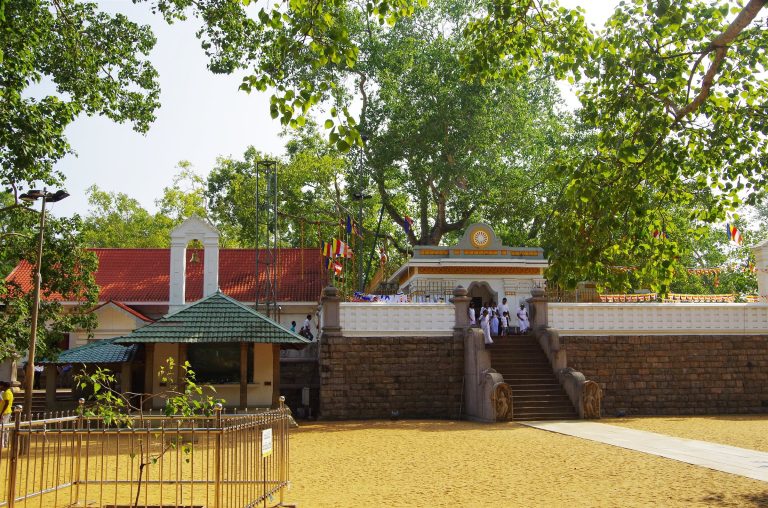
The sacred tree at Sri Maha Bodhi is another stop in the same Sacred City.
Frequently asked questions (FAQs)
Who built Ruwanwelisaya?
King Dutugemunu began it in the 2nd century BC. According to the tourism board, his brother Saddhatissa finished it.
Do you have to take your shoes off?
Yes. Shoes and hats come off before you step onto the platform, and you should cover your shoulders and knees.
What are the opening hours?
The CCF says its heritage-site ticket counters open from 7 am to 5 pm. A ticket is valid for one entry on the day of issue.
When is the best time to visit?
Early morning or late afternoon, when it is cooler and the light is softer. Full-moon evenings are busy with pilgrims.
Header photo: AKS.9955 / Wikimedia Commons, CC BY-SA 4.0.