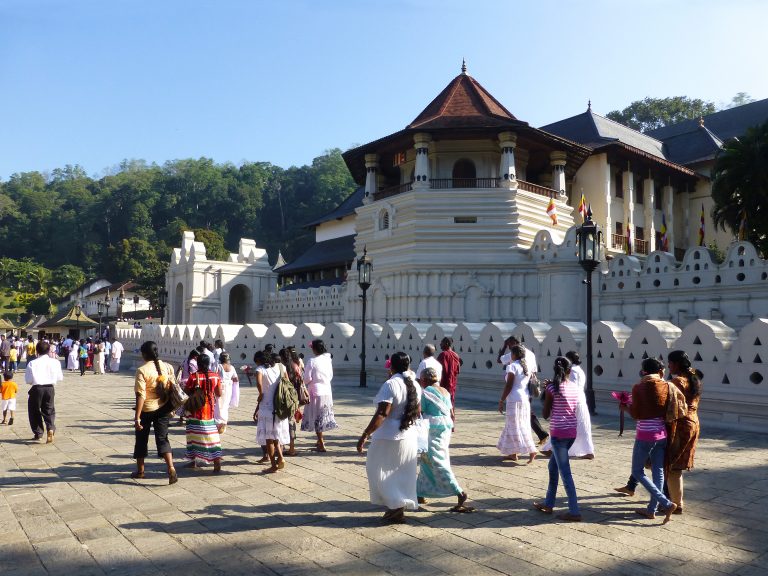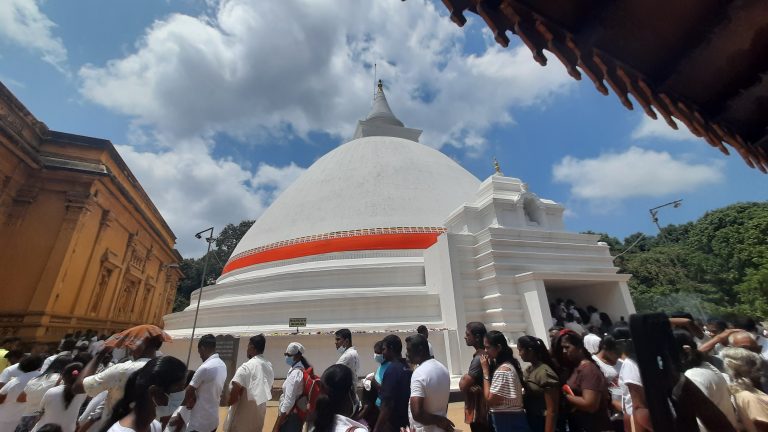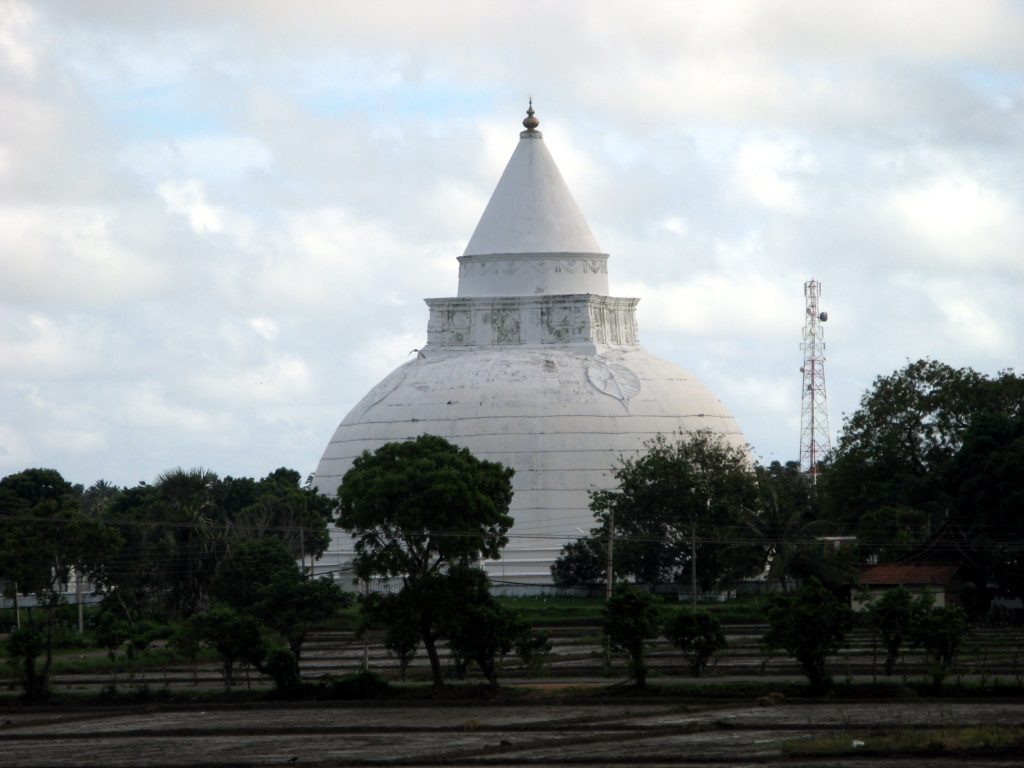
The Tissamaharama Raja Maha Vihara is the working Buddhist temple around the great white stupa in Tissamaharama, the usual base for safaris in Yala. Buddhists count it among the 16 places in Sri Lanka that the Buddha is believed to have visited, and Sri Lanka Tourism calls its stupa the largest of the ancient southern kingdom of Ruhuna. You can see the dome across the paddy fields long before you reach the gate.
Is it worth visiting?
Go if you are in Tissa for a safari anyway and would like to spend a cool evening at the town’s oldest monument, walking round the stupa with the families and pilgrims who come to make offerings.
Think twice if you are hoping for ruins to explore, because the great monastery that once surrounded the stupa is almost gone, and what you see today is a stupa restored from the 19th century onwards with modern temple buildings around it.
Who built the stupa?
The chronicles credit King Kavantissa of Ruhuna, father of the warrior king Dutugemunu, who ruled from the old capital of Magama in the 2nd century BC. Not everyone agrees, though. Some historians think the temple goes back to Mahanaga, the first king of Ruhuna, and that Kavantissa enlarged an older foundation into a great monastery.
Which relic lies inside is also debated. The chronicles name the Buddha’s frontal bone. However, an inscription found near Tissamaharama, at Kirinda on the coast, has been read as recording a tooth relic, so both traditions survive side by side.
For more than a thousand years, the monastery here was a leading centre of Buddhist learning in the south, and kings repaired and enlarged the stupa again and again. Then came the invasion of Kalinga Magha in the 13th century, and the monastery never recovered. By the 19th century the stupa was an overgrown mound in the jungle.
A ruin brought back to life
The stupa you see owes its shape to a long revival. In 1858 a pilgrim monk, Wepathaira Sumana Thera, came across the overgrown mound, built himself a hut beside it and stayed to oversee the rebuilding. He did not live to see it finished, so a fellow monk carried the work on, helped later by a committee of local Buddhists. The pinnacle finally went on in 1900, and the temple buildings around the stupa date from this period too.
The stupa has needed care since. Late in the 20th century cracks opened in the dome, and the Department of Archaeology called in engineers from the State Engineering Corporation to stop them spreading.
Walking round the stupa
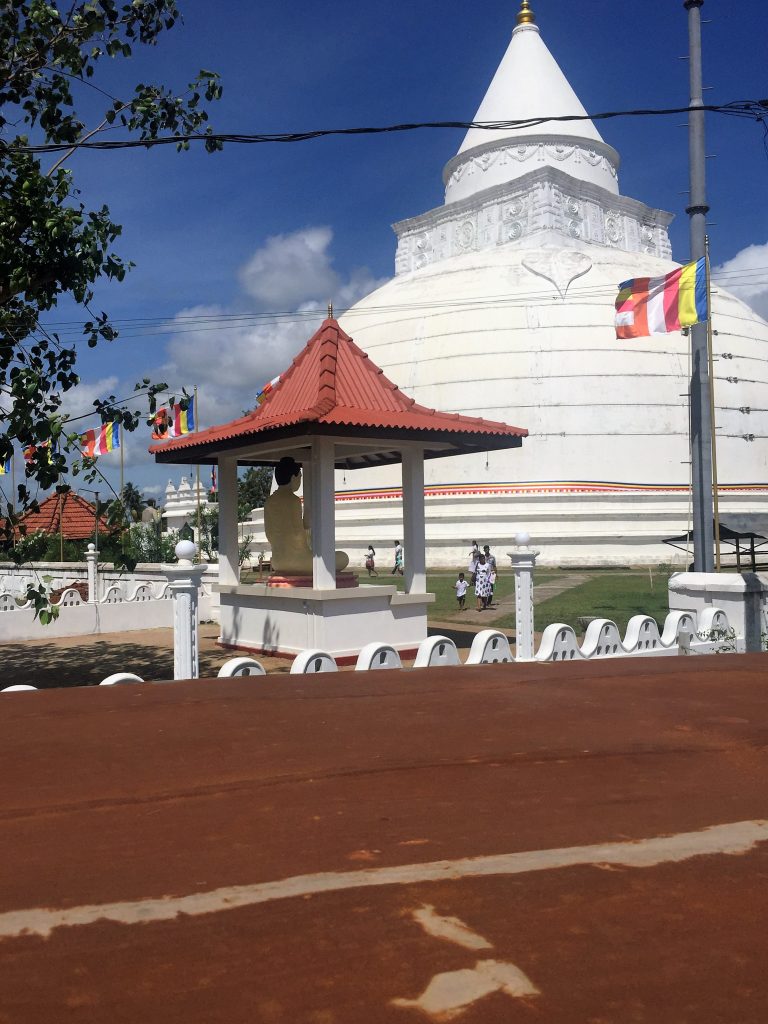
The dome is whitewashed brick, topped by a square, carved section and a tall cone. Buddhist flags run along the low wall, and the paved terrace around the base is open to everyone, so you can join the slow clockwise walk round the stupa. Small shrines, an image house and the monks’ quarters stand in the grounds, with a few old stone pillars among them.
This is a living temple rather than a monument, so cover your shoulders and knees and take off your shoes and hat before you step onto the terrace. Visitors warn that the paving gets painfully hot by late morning, and several suggest coming early in the morning or late in the afternoon, when the stone has cooled. After dark the stupa is lit. Visitors also describe thousands of fruit bats leaving the big trees near Tissa Wewa at dusk, a sight worth timing your visit for. Our guide to temple etiquette in Sri Lanka covers what else to expect.
There is no official opening time or ticket price published for the temple, so treat it as you would any village temple: go in quietly, and give a donation if you wish.
Poson and the Kataragama season
The temple’s big event is its annual Poson festival in June, when it holds a perahera, a procession of dancers and drummers through the town. Full moon (poya) days bring crowds all year, as local Buddhists come dressed in white to spend the day at the temple. The Central Cultural Fund adds that many pilgrims on their way to Kataragama stop here to pay homage first, so Tissa is busier during the Kataragama festival season. Check the dates in our festival and Poya calendar if you want to join the crowds, or avoid them.
Yatala Vehera, the older neighbour
On the Debarawewa side of town, Yatala Vehera is a smaller stupa from the 3rd century BC. It sits on a platform of large granite slabs, inside a wall carved with elephant heads and a moat. Tradition links it to the birth of King Yatala Tissa, son of Mahanaga. The Department of Archaeology runs a small site museum beside it, the Yatala Museum, with finds from the excavations there.
The temple is in Tissamaharama itself, so a tuk-tuk from your guesthouse is the easy way there, often the evening before a dawn start for Yala National Park. Our Tissamaharama guide covers the town, the reservoir and the safari side of a stay.
Frequently asked questions (FAQs)
Who built the Tissamaharama stupa?
The chronicles credit King Kavantissa of Ruhuna, in the 2nd century BC. Some historians think an earlier king, Mahanaga, founded the temple and Kavantissa enlarged it.
What relic is in the Tissamaharama stupa?
The chronicles name the Buddha’s frontal bone. An inscription found at Kirinda has been read as referring to a tooth relic as well.
Is Tissamaharama one of the 16 sacred places?
Yes. Buddhists count the Tissamaharama Raja Maha Vihara among the 16 places in Sri Lanka that the Buddha is believed to have visited.
What is the best time to visit the Tissamaharama stupa?
Early morning or evening, when the paving is cooler and, after dark, the stupa is lit. Poya days, Poson in June and the Kataragama festival season are the busiest times.
What should I wear to Tissamaharama Raja Maha Vihara?
Clothes that cover your shoulders and knees. You take off your shoes and hat before you step onto the terrace around the stupa.
Sources: srilanka.travel, ccf.gov.lk, en.wikipedia.org (Tissamaharama Raja Maha Vihara), en.wikipedia.org (Yatala Vehera), en.wikipedia.org (Solosmasthana), archaeology.gov.lk, infolanka.com, sundaytimes.lk, ft.lk, news.lk and recent visitor reports. Header photo: Michael Gunther / Wikimedia Commons, CC BY-SA 4.0.