Currently closed or suspended Yala National Park: Blocks 1 and 2 closed until 15 October 2026 Checked 3 October 2026
Because of drought, the Department of Wildlife Conservation has closed Blocks 1 and 2 of Yala National Park from 14 September to 15 October 2026. Check with the department before booking a safari.
Check before you travel Hill-country railway: repairs after Cyclone Ditwah Checked 5 October 2026
Cyclone Ditwah damaged the hill-country railway in November 2025, and it is reopening in stages. Since 2 October 2026, trains run again from Colombo Fort to Peradeniya and Gampola, but Kandy station itself is not served yet. On 5 October 2026 earth and rocks fell onto the line between Kadigamuwa and Gangoda after heavy rain and derailed an early train; services restarted later the same day, but expect delays or short suspensions after heavy rain. Trains between Nanu Oya and Badulla, which stop at Haputale, Ella and Demodara, restarted on 20 June 2026. The section between Gampola and Nanu Oya is still under repair, so you cannot yet go by train from Colombo or Kandy all the way to Ella. Check the latest services before you plan a rail journey, and book reserved seats on the Sri Lanka Railways seat reservation site.
Two weeks is enough for the full loop most people picture when they think of Sri Lanka: the ancient cities of the dry zone, Kandy, the tea country, a safari, and a few days on the south coast to finish. The route below does it with at least two nights in most places and only one short stop, so there’s time to enjoy each region rather than just pass through. It runs from the airport up to the ancient cities, down through the hills and back along the coast, so the long drives are spread across the fortnight instead of piling up at the end.
Is two weeks on the loop right for you?
Go if this is your first proper trip and you want a bit of everything: ruins, temples, mountain walks, wild elephants or a leopard, and a beach at the end. It also suits a second visit if you skipped the hills or the south last time.
Think twice if you would rather unpack once and stay put. This plan has six bases, and even with two nights in most of them there are moving days. If the coast matters most, a slower trip of hills and beaches, with fewer stops, may suit you better. And check the month before you commit to the south coast; between May and September the east coast may be the better ending (see Choosing your coast by the month).
The route at a glance
- Nights 1–3: Sigiriya or Habarana, for the ancient cities
- Nights 4–5: Kandy
- Nights 6–7: Nuwara Eliya, for Horton Plains
- Nights 8–9: Ella
- Night 10: Tissamaharama, for a Yala safari
- Nights 11–13: one base on the south coast, with a day in Galle
- Day 14: to the airport
Days 1–3: the ancient cities
From the airport at Katunayake, drivers and recent visitors report four to five hours by road to Sigiriya, through Kurunegala and Dambulla. Set off early; traffic around Colombo builds through the morning. If you land at night, sleep in Negombo first and take a night off the coast at the end.
The next two days follow the heat. Climb Sigiriya when the Central Cultural Fund’s counters open at 7 am, rest through the middle of the day, and go up Pidurangala in the late afternoon for the view back to Sigiriya. On Day 3, spend the morning among the palaces, image houses and rock-cut Buddhas of Polonnaruwa, about an hour and a quarter away by road, and take an afternoon jeep safari at Minneriya or Kaudulla on the way back. In the dry season, roughly May to October according to Sri Lanka Tourism, elephants gather on the banks of the tanks in large numbers.
Shoes come off and shoulders and knees are covered at every temple and shrine, so pack accordingly.
Days 4–5: Kandy
Stop at the Dambulla cave temple on your way south, early, before the climb gets hot. Kandy is about two and a half to three hours from Sigiriya by road, according to drivers and recent visitors. Go to the evening ritual at the Temple of the Sacred Tooth Relic, from about 6.30 to 8 pm, and give Day 5 to the Royal Botanic Gardens at Peradeniya in the morning and a walk round the lake or into the forest of Udawattakele later.
Days 6–7: Nuwara Eliya and Horton Plains
The drive up from Kandy on the A5 through Gampola takes about two and a half hours, drivers report, and the air cools noticeably on the way. Nuwara Eliya sits at 1,868 m among tea estates, and it is cool all year, so dig out a warm layer. Spend the afternoon around Gregory Lake and the town’s colonial buildings, or at Hakgala Botanic Gardens, a terraced garden beneath Hakgala Rock on the Badulla road, known for its roses.
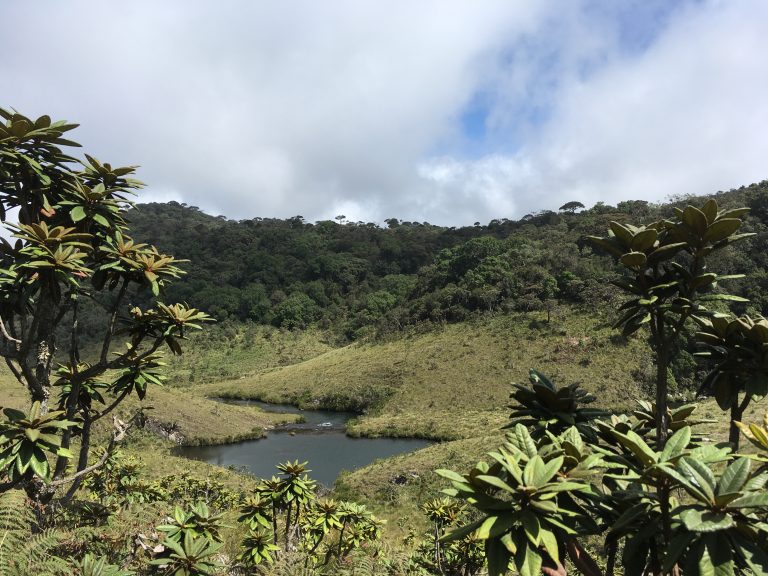
Day 7 is the reason for stopping here. Horton Plains National Park is a high plateau of grassland and cloud forest that ends abruptly at World’s End, a sheer drop with views down to the valleys below. Sri Lanka Tourism gives the road from Nuwara Eliya via Ambewela and Pattipola as 32 km, and recent visitors report about an hour’s drive. Its advice is to be there roughly between 6 and 10 am, before the cloud rolls in, so leave in the dark. The main trail is a loop of about 9 km past World’s End and Baker’s Falls, taking around three hours.

Bring no polythene: it’s banned in the park, and recent visitors report that bags are checked at the entrance. Stay behind the edge at World’s End. The view is clearest from January to March; in the rainy months from April to September, fog often hides it.
Days 8–9: Ella
Day 8: by train to Ella. Nanu Oya, Nuwara Eliya’s station, is a short drive from town, and the train from there to Ella takes about two and a half hours, through tea country and past Haputale. See the travel update at the top of this page for the current service. Times change and trains often run late, so check them close to the day, and book reserved seats on the Sri Lanka Railways seat reservation site up to 30 days ahead with each traveller’s passport number. If the timing doesn’t work, drivers put the road from Nuwara Eliya to Ella at about one and a half to two hours.
Day 9: Ella’s walks. With one full day, do the big walk early: Ella Rock, about 10 km there and back from Ella station with around 600 m of climbing, or the shorter Little Adam’s Peak if you’d rather keep your legs for later. The Nine Arch Bridge fits into the same day. Our two-day Ella plan has the detail, including the wrong-turn touts on the Ella Rock path.
Days 10–11: down to the south and a safari
The A23 drops out of the hills through the Ella Gap to Wellawaya, and Ravana Falls, about 6 km from Ella, is right beside the road, so stop on the way. Drivers and recent visitors report about two and a half to three hours from Ella to Tissamaharama, the town closest to Yala’s main entrance. Spend the late afternoon by Tissa Wewa, the ancient reservoir beside the town, or at its great white stupa.
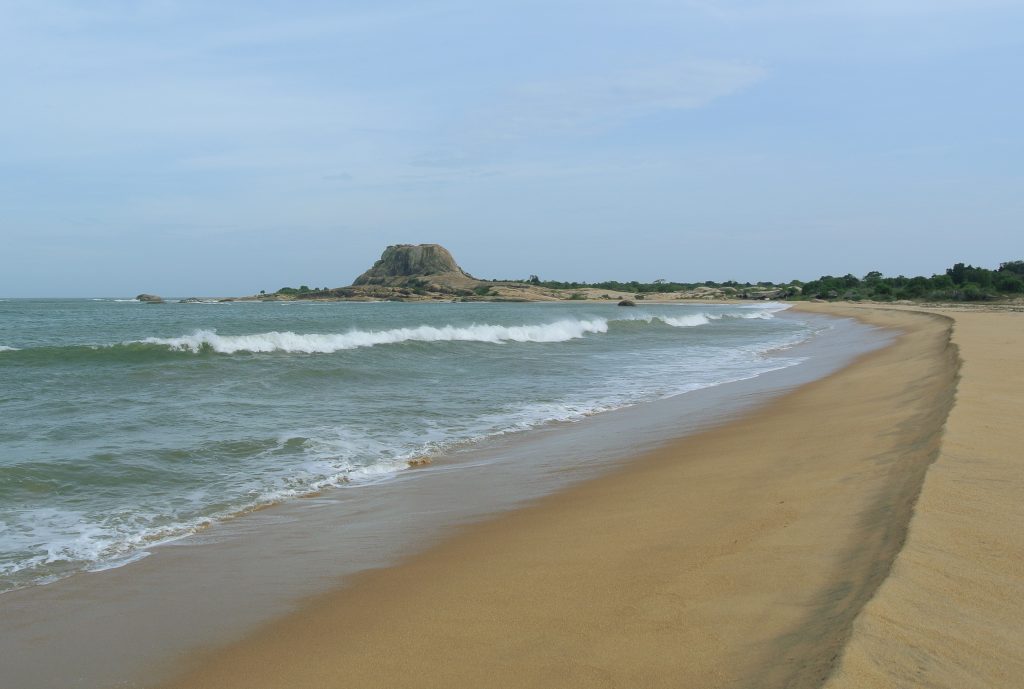
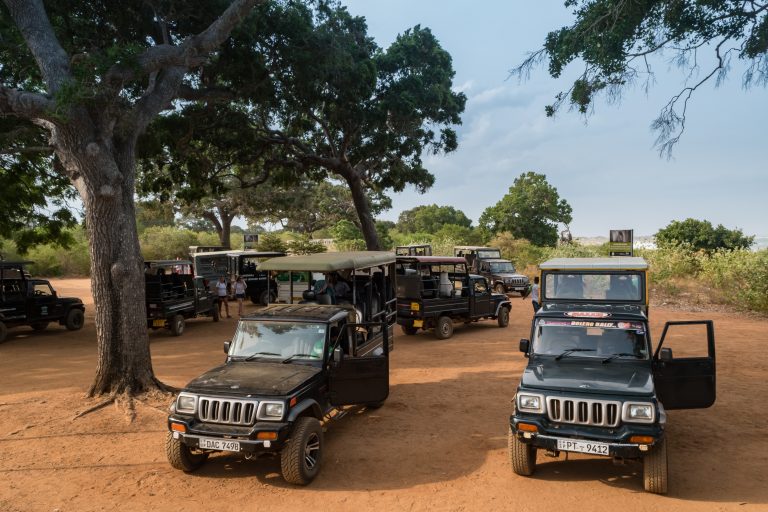
Day 11: Yala at dawn. Yala National Park is entered at Palatupana, reached from Tissamaharama via Kirinda. Sri Lanka Tourism says dawn and dusk are the best times for a safari, and the Department of Wildlife Conservation describes Blocks I and II as the best areas for leopards. You may also see elephants, water buffalo, crocodiles and water birds. Block I is busy and jeeps bunch up around leopard sightings, so choose a driver who keeps a respectful distance. Stay in the vehicle: visitors have been arrested for walking outside their jeeps.

After the morning drive, head for the coast. Drivers and recent visitors report about two and a half hours from Tissamaharama to Mirissa.
This is the one single-night stop on the route. If you can spare a day, make it two nights and add an afternoon drive.
Yala, Udawalawe or Kumana?
The Department of Wildlife Conservation has traditionally closed Yala in the driest months, around September and October, when water runs short and the animals need rest; see the travel update at the top of this page for the current position. In those weeks, or if you would rather avoid the jeep crowds, choose one of these instead:
- Udawalawe: open grassland around a large reservoir, known above all for its elephants, with the Department’s Elephant Transit Home for orphaned calves near the park. Drivers report about two to three hours from Ella, and it sits on the way from the hills to the south coast. Sri Lanka Tourism recommends a morning or evening safari.
- Kumana: next to Yala on the south-east coast, best known for its waterbirds, which gather to breed from about April to July. It is reached from Arugam Bay, so it belongs with the east-coast version of this route below.
Days 11–13: the south coast
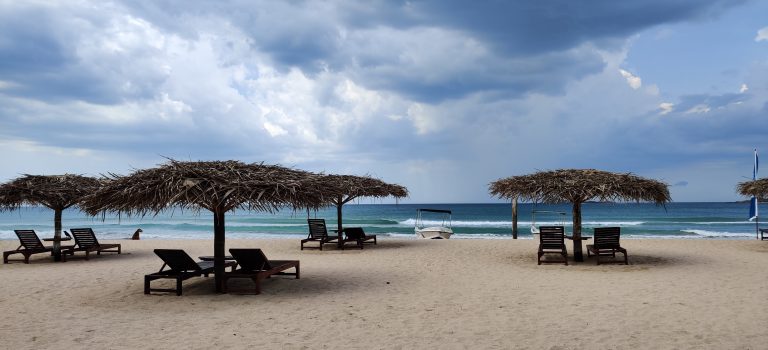
Pick one base and stay put for three nights; after ten days on the move, you’ll be glad of it.
- Mirissa if you want to go whale watching. Sri Lanka Tourism gives the season as November to April, with morning trips leaving the harbour at about 6.30 am and lasting three to four hours. Choose an operator that briefs you on the rules, keeps the legal 100 m from whales and doesn’t offer swimming with them.
- Weligama if you’d like to learn to surf: recent visitors describe small, slow waves over a sandy bottom and plenty of surf schools.
- Unawatuna if you want to be close to Galle, about 5 km away, and to the expressway home.
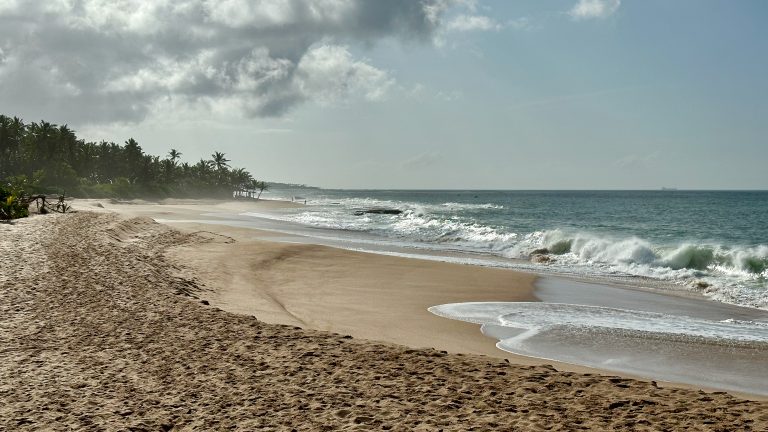
- Tangalle if you want a quieter beach base, and it’s the first of these you reach from Tissamaharama.
Whichever you choose, spend a day in Galle. Its walled old town, a UNESCO World Heritage Site since 1988, is still a living town of houses, churches, a mosque and cafés inside 17th-century Dutch ramparts. Walk the walls to the lighthouse in the late afternoon, and look into the Dutch Reformed Church, completed in 1755. From Mirissa, Galle is about an hour’s drive.

The sea along this coast can be rough, and visitors have drowned at several of these beaches. Ask the lifeguards or your hotel before you swim, and heed local warnings.
Day 14: to the airport
The Southern Expressway links Galle with Colombo, and drivers and recent visitors report about two to two and a half hours from Galle to the airport; from Mirissa, add about an hour. The coastal railway also runs from Galle to Colombo Fort if you’d rather take the train for the first part; check the timetable with Sri Lanka Railways.
Choosing your coast by the month
The south-west monsoon brings rain mostly to the south-western parts of the island from May to September, and Sri Lanka Tourism says Mirissa’s sea is rougher from May to October. The north-east monsoon, from December to February, brings rain to the eastern half. So:
- November to April: follow the route as it is. It’s the season for the south coast and for whales off Mirissa.
- May to September: consider ending on the east coast instead. Turn east at Wellawaya onto the A4 for Arugam Bay, whose surf season, according to Sri Lanka Tourism, runs from April to October, and take a safari at Kumana from there. The catch is the journey home: getting back across the island to the airport from the east coast takes most of a day.
Getting around
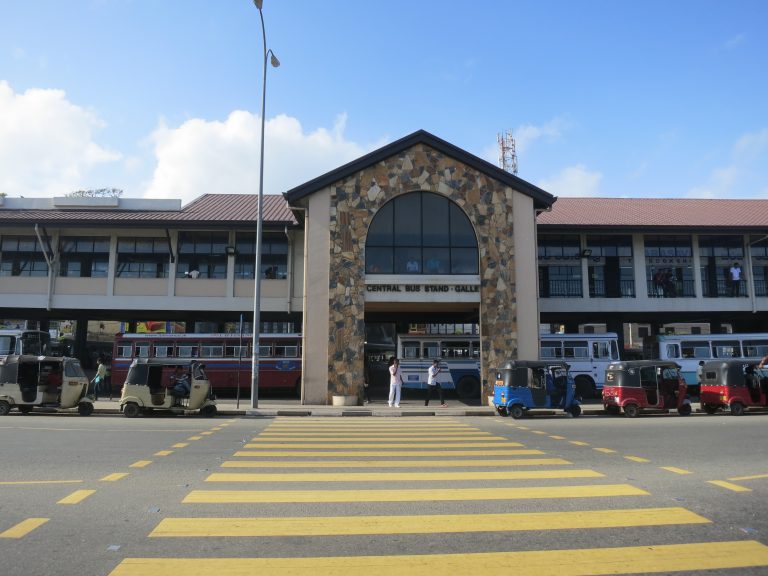
Many visitors do the whole loop with a hired car and driver, sometimes swapping in the train between Nanu Oya and Ella. You can do it by bus and train, but allow more time for every leg. Within each base, tuk-tuks cover the short trips; agree the fare before you set off. This plan does the legs into Kandy and up to Nuwara Eliya by road, so it works whatever the trains are doing.
Shorter or longer
Twelve days: skip the nights in Nuwara Eliya and go straight from Kandy to Nanu Oya for the train to Ella, giving up Horton Plains, and take a night off the coast.
Sixteen days or more: add the Sacred City of Anuradhapura to the start, a second night near the safari park, or simply more beach. With three weeks, the east coast or the north come into reach; our guide to how many days you need in Sri Lanka shows how they fit.
For a single week, see our seven-day classic route; with three weeks, the 21-day itinerary adds a region most short trips leave out.
Frequently asked questions (FAQs)
Is two weeks enough for Sri Lanka?
Yes, for the classic loop: the ancient cities, Kandy, the hill country, a safari and the south coast, with two nights or more in most places.
Yala or Udawalawe: which is better?
Yala is the park for leopards, but it’s busy and has traditionally closed in the driest months, around September and October. Udawalawe is known for its elephants and sits between the hills and the coast.
How do I get from Ella to Yala?
By road down the A23 through Wellawaya to Tissamaharama, about two and a half to three hours according to drivers and recent visitors. Ravana Falls is beside the road on the way.
Can I see whales on this route?
Yes, between November and April, when Sri Lanka Tourism gives the season off the south coast. Base yourself in Mirissa, where morning trips leave at about 6.30 am.
Which beach should I stay at?
Mirissa for whales, Weligama to learn to surf, Unawatuna to be near Galle and the expressway, Tangalle for somewhere quieter.
What if I travel between May and September?
The south-west monsoon brings rain to the south-west then, and the sea is rougher. Consider ending on the east coast around Arugam Bay instead.
Sources: en.wikipedia.org (Bandaranaike International Airport), en.wikipedia.org (A6 highway (Sri Lanka)), whc.unesco.org (list), whc.unesco.org (list), whc.unesco.org (list), whc.unesco.org (list), whc.unesco.org (list), whc.unesco.org (list), ccf.gov.lk, srilanka.travel (attraction&), en.wikipedia.org (Minneriya National Park), sridaladamaligawa.lk, botanicgardens.gov.lk (royal botanic gardens peradeniya), en.wikipedia.org (Nuwara Eliya), srilanka.travel (index.php), botanicgardens.gov.lk (botanic gardens hakgala), srilanka.travel (attraction&), en.wikipedia.org (Horton Plains National Park), dwc.gov.lk, en.wikipedia.org (Nanu Oya railway station), english.newsfirst.lk (badullananu oya train services resume today), dailymirror.lk, english.newsfirst.lk (colombo kandy rail services to…), seatreservation.railway.gov.lk, seatreservation.railway.gov.lk (faq), en.wikipedia.org (Ella, Sri Lanka), en.wikipedia.org (Nine Arch Bridge), en.wikipedia.org (Ravana Falls), en.wikipedia.org (Tissamaharama), en.wikipedia.org (Tissa Wewa (Tissamaharama)), dwc.gov.lk, dwc.gov.lk, srilanka.travel (attraction&), en.wikipedia.org (Yala National Park), adaderana.lk (cmu0las280006356pjzzscu5f), newswire.lk, adaderana.lk (cmqevs1p20009356qhrv0ho2z), srilanka.travel (attraction&), en.wikipedia.org (Udawalawe National Park), en.wikipedia.org (Udawalawe Elephant Transit Home), srilanka.travel (attraction), en.wikipedia.org (Kumana National Park), srilanka.travel (whale watching), srilanka.travel (attraction), faolex.fao.org, en.wikipedia.org (Weligama), en.wikipedia.org (Unawatuna), en.wikipedia.org (Tangalle), en.wikipedia.org (A2 highway (Sri Lanka)), en.wikipedia.org (Galle Fort), en.wikipedia.org (Coastal line (Sri Lanka)), srilanka.travel (attraction), en.wikipedia.org (A4 road (Sri Lanka)), statistics.gov.lk, gov.uk and recent visitor reports. Header photo: Adbar / Wikimedia Commons, CC BY-SA 3.0.