
Travelling responsibly in Sri Lanka mostly comes down to a few choices you’ll face again and again: how you watch elephants, leopards and whales, how you behave at temples, who you point your camera at, and what you do with plastic. Several of those choices are backed by law, and visitors have been arrested over them. This guide sets out what the rules say, where welfare groups and researchers go further, and what that means in practice.
The short version
- Watch elephants in the wild or at the Elephant Transit Home; skip rides, bathing and hand-feeding.
- Never feed wild animals, including the elephants that wait beside some roads. On the road through Yala, the Department of Wildlife Conservation (DWC) says it is illegal.
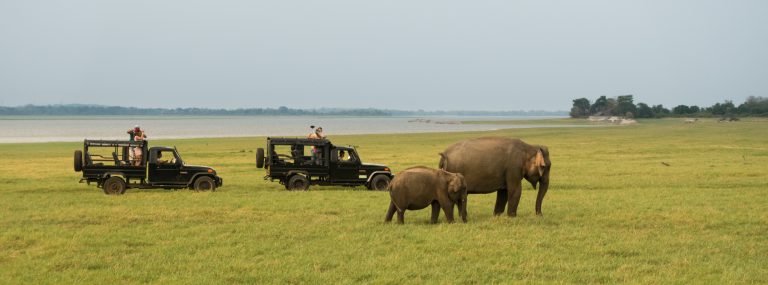
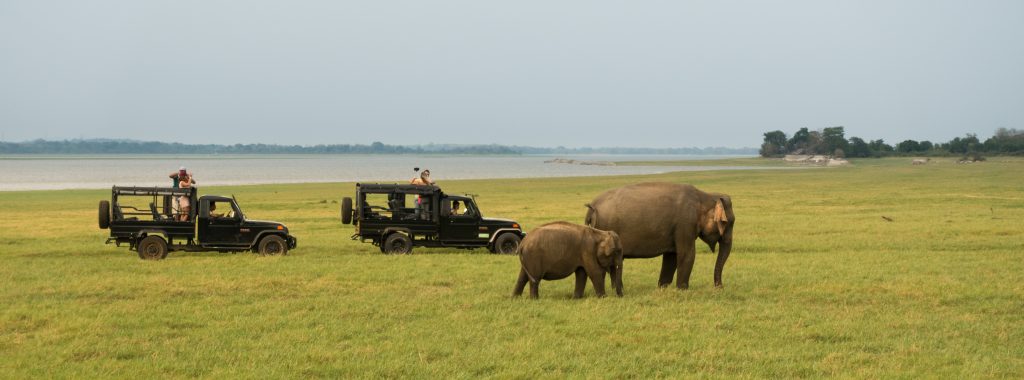
- Stay in the jeep on safari, and ask your driver to keep back and switch off near animals.
- On a whale-watching boat, 100 metres is the legal minimum distance, and nobody goes in the water.
- Don’t pose with Buddha statues, and keep any Buddha tattoo covered.
- Ask before you photograph people, and agree any payment first.
- Carry a reusable bag and bottle; some places ban single-use plastic outright.
- No drone flights over temples, ancient sites or wildlife without approval.
Elephants: watch rather than ride
Elephant rides are still legal in Sri Lanka. Rules for captive elephants gazetted in 2021 allow no more than four people on an elephant at once, on a well-padded saddle; they also bar mahouts from drinking at work, and stop baby elephants being used for work or separated from their mothers. Legal isn’t the same as kind, though. ABTA, the UK travel association, changed its animal-welfare guidelines in 2019 to class rides, bathing, shows and any contact with elephants without a barrier as unacceptable for the tour operators who follow them. World Animal Protection’s advice is simple: see elephants where you can only watch.
That puts Pinnawala Elephant Orphanage in an awkward spot. It is run by the Department of National Zoological Gardens and has a large captive herd, and it sells fruit to feed the elephants, short passes to bathe one in the river and, since July 2026, an “Elephant Walk” beside one. Those are the kinds of contact welfare groups advise against. If you go, watch the bathing from the bank.
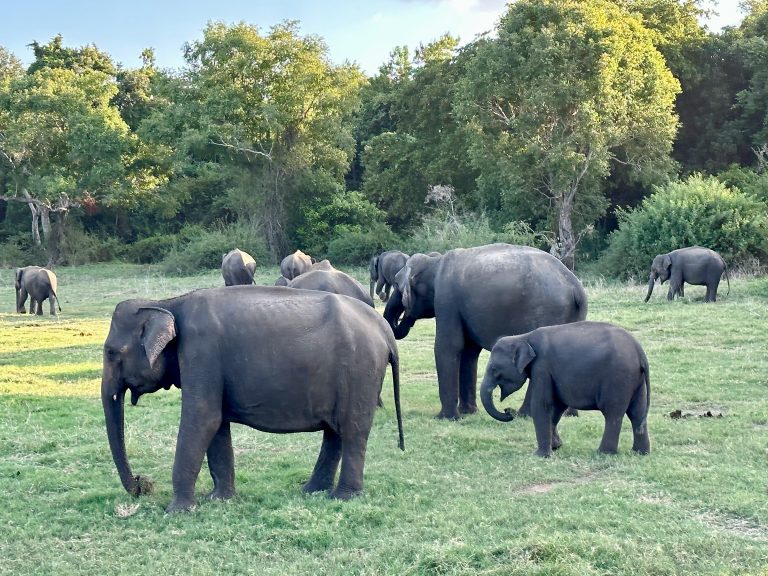
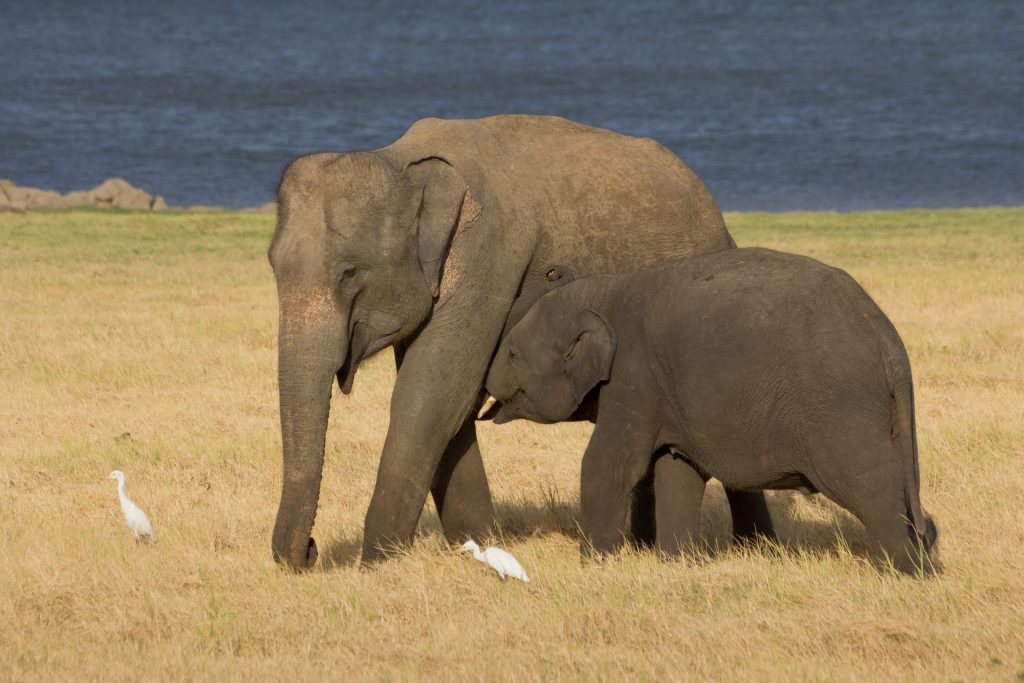
There are better ways to see elephants up close. At the Elephant Transit Home beside Udawalawe National Park, the DWC raises orphaned calves for release into the wild, and visitors come to watch them being fed. And a jeep safari at Minneriya or Udawalawe shows you herds living on their own terms.
Don’t feed the roadside elephants. On the Kataragama–Buttala road, which runs through Block 2 of Yala, about eight wild elephants have learnt to stop vehicles for food. When none comes, some have attacked: the DWC says five people have died in attacks on vehicles there in six years, more than 100 vehicles are damaged each year, and a bus was recently overturned, injuring about 40 people. In September 2026 the DWC said that getting out of vehicles and feeding wild animals on this road is illegal, and that it would film the vehicles involved and take action under the Fauna and Flora Protection Ordinance. Keep the windows up, keep moving when it’s safe to, and tell your driver you don’t want to stop.
On safari
Most of what makes a good safari is down to the jeep, so it helps to know the rules before you set off.
- Stay in the vehicle. In June 2026 five visitors were arrested in Yala for walking outside their jeeps, and were to be taken before the Tissamaharama Magistrate’s Court.
- Slow down and back off. Yala’s warden says drivers are advised to switch off their engines near animals. Recent visitors (2025–26) report jeeps bunching around elephants and leopards; you’re paying, so it is reasonable to ask your driver to keep a distance and not to chase sightings.
- No pork. The DWC has banned raw pork and pork products in all its national parks, to protect wild boar from a disease found in domestic pigs.
- Take your rubbish out, and don’t throw food to monkeys, deer or anything else.
Whales, turtles and reefs
Whale-watching boats are licensed by the DWC under the Sea Mammals Regulations of 2012. Boats must stay at least 100 metres from a whale (50 metres from dolphins), switch off their engines from 100 metres, and never chase the animals or block their path. Passengers may not get into the sea. The rules are often broken: a study reported by The Morning in 2025 found that 73% of operators in Mirissa and 83% in Trincomalee offered illegal swimming with whales. Book a licensed operator, expect a briefing and a life jacket, and walk away from any offer to swim. Our guide to whale watching from Mirissa or Trincomalee covers the seasons and the full rules.

Turtle hatcheries are dotted along the south-west coast, and they are harder to judge than they look. A study published in 2013 surveyed the seven hatcheries then operating in Galle District. All were private businesses run mainly for tourism income, buying eggs from collectors was common practice, and all kept hatchlings in tanks for 24 hours or more. Best-practice guidelines say hatchlings should go straight to the sea, because the first hours of swimming matter for their survival. A hatchery showing tanks of baby turtles, or letting you handle them, isn’t following that advice.
Reefs: if you snorkel at Pigeon Island or Hikkaduwa, don’t stand on, touch or take coral, and leave turtles alone. Sri Lanka Tourism says the export of coral, shells and other protected marine products is strictly prohibited, so don’t buy them as souvenirs either.
Temples and Buddha images
The rules that catch visitors out most often are religious. Sri Lanka Tourism says it is strictly forbidden to be photographed in front of or beside a Buddha statue or mural, so photograph the statue, not yourself with it. Visible Buddha tattoos have led to visitors being refused entry or deported; in 2014 a British tourist was deported over one. Cover your shoulders and knees at temples and take off your shoes and hat. Our guide to Sri Lankan etiquette goes through all of it, including Hindu temples and Poya days.
Photographing people and village visits
Sri Lanka Tourism notes that many people, from fishermen to tea pluckers, are happy to be photographed, that some will ask for a copy, and that some will expect a small payment for posing. The respectful way round is simple: ask first, accept a no, and if money is involved, agree it before you take the picture rather than arguing afterwards. Ask a parent before you photograph a child.
If you join a village tour or a home-cooking visit, ask who runs it and how the family you visit is paid. And don’t photograph military bases, government buildings or VIP vehicles; the UK government’s travel advice warns against it.
Plastic and rubbish
Sri Lanka has been tightening the rules on plastic, and a few habits will keep you on the right side of them.
- Shopping bags: since 1 November 2025, shops have had to charge for polythene carrier bags instead of handing them out free, under a Consumer Affairs Authority gazette. Carry a cloth bag.
- Sri Pada (Adam’s Peak): from the 2025–26 pilgrimage season the Cabinet banned selling and carrying single-use plastics in the mountain’s sensitive zone, including sachets, polythene bags, polystyrene food boxes, straws, plastic cutlery, cups and plates, and water bottles smaller than one litre. Take a refillable bottle of a litre or more. See our Sri Pada guide.
- Horton Plains: polythene isn’t allowed in the park, and recent visitors (2025–26) report bags being checked at the entrance, so pack food in paper or a box.
Everywhere else, the simplest rule is to take out whatever you bring in, from beaches as much as from parks.
Drones near temples, ruins and wildlife
Drones need approval from the Civil Aviation Authority of Sri Lanka before any flight, and the Ministry of Defence says archaeological sites and wildlife sanctuaries need a separate approval from the authority in charge. Visitors were arrested for flying over the Temple of the Tooth in Kandy in 2023 and again in September 2025, and in August 2026 wildlife officers arrested a man whose drone was obstructing elephants crossing a road near Kasikota. If you want aerial shots, get the approvals first, and keep away from temples, ruins and wildlife unless your approval covers them.
Our guide to drone rules in Sri Lanka explains how visitors get approval.
Souvenirs to leave behind
Sri Lanka Tourism says that buying and exporting any wild animal, bird or reptile, dead or alive, or parts of one such as skins, horns, scales or feathers, is prohibited without a licence, and that antiques more than 50 years old, including palm-leaf manuscripts and rare books, need official permission to leave the country. Coral and shells are on the banned list too. Tea is the easy one: Sri Lanka Tourism says you can take up to 10 kg out of the country duty free.
Frequently asked questions (FAQs)
Is it ethical to ride elephants in Sri Lanka?
Rides are legal, with up to four riders on a padded saddle, but ABTA’s guidelines class elephant riding and bathing as unacceptable. Watching wild herds on safari, or calves at the Elephant Transit Home, is the better choice.
Can you feed wild elephants in Sri Lanka?
No. The Department of Wildlife Conservation says feeding wild animals from vehicles on the Kataragama–Buttala road, which runs through Yala, is illegal, and it has warned that it will take legal action. Feeding teaches elephants to stop vehicles, and some have attacked them.
Can you swim with whales in Sri Lanka?
No. The regulations don’t allow passengers into the sea, and boats must stay at least 100 metres from whales. Turn down any operator who offers it.
Should I visit a turtle hatchery in Sri Lanka?
Be choosy. A 2013 study of seven hatcheries in Galle District found that all kept hatchlings in tanks for a day or more, against best-practice guidelines.
Are plastic bags banned in Sri Lanka?
Not across the country, but since November 2025 shops must charge for polythene carrier bags. Single-use plastics are banned in the Sri Pada sensitive zone, and polythene isn’t allowed in Horton Plains National Park.
Can I fly a drone over temples in Sri Lanka?
Not without approval. Every drone flight needs approval from the Civil Aviation Authority, and archaeological sites need a separate approval from the authority in charge; visitors have been arrested for flying over the Temple of the Tooth.
Sources: dawn.com, colombogazette.com, worldanimalprotection.org (elephant riding and bathing now…), worldanimalprotection.org (elephant friendly tourist guide), nationalzoo.gov.lk, dailymirror.lk (Walk with an Elephant’ launched…), en.wikipedia.org (Udawalawe Elephant Transit Home), adaderana.lk (cmukumoyq000g356opk4zlwsz), sundaytimes.lk (face a fine if you…), adaderana.lk (cmqevs1p20009356qhrv0ho2z), news.mongabay.com, dwc.gov.lk, faolex.fao.org, themorning.lk (h0N7htXGIwtwQmIFTCHE), iotn.org, srilanka.travel, aljazeera.com, gulf-times.com, gov.uk, newswire.lk (no free polythene shopping bags…), themorning.lk (0CzapA15o141ih51zmj9), newswire.lk, newsfirst.lk, en.wikipedia.org (Horton Plains National Park), defence.lk, sundaytimes.lk (american tourist arrested for flying…), newswire.lk (chinese national arrested for operating…), newswire.lk (suspect arrested for flying drone…), dailymirror.lk (Drone operator arrested over Kasikote…) and recent visitor reports. Header photo: Carlos Delgado / Wikimedia Commons, CC BY-SA 4.0.