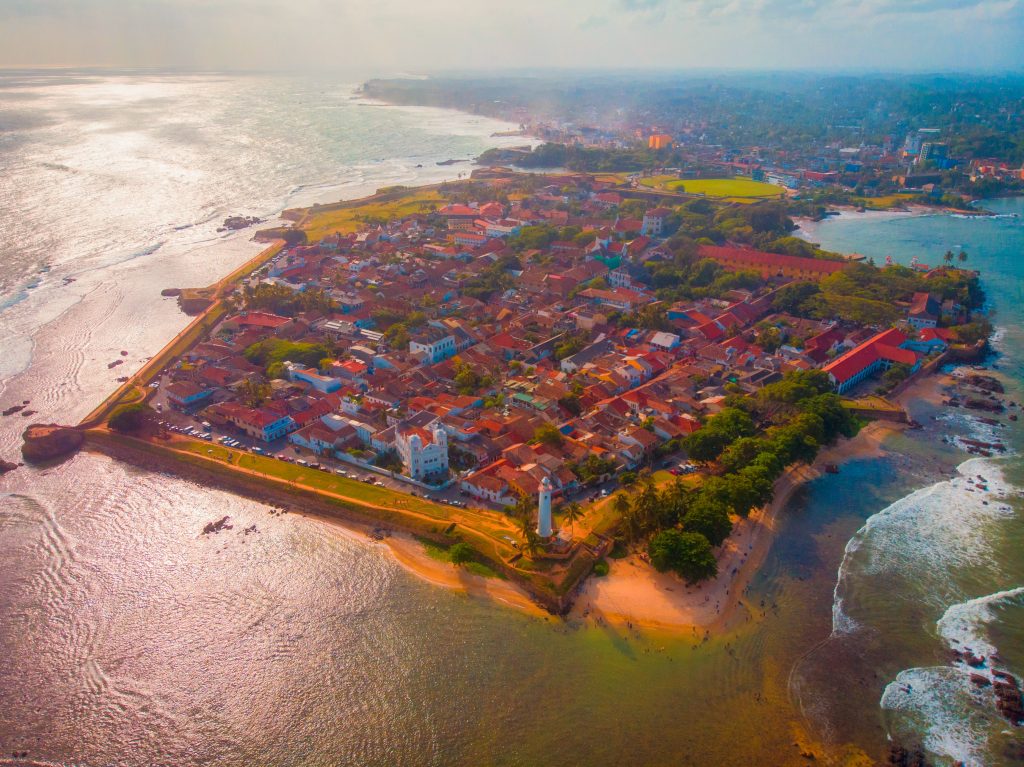

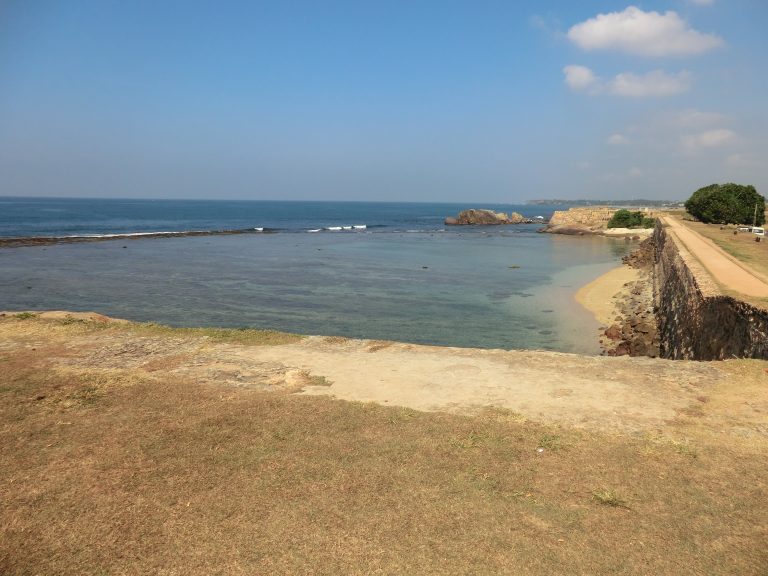
Galle Fort is the walled old town on the headland at Galle, and the best way to understand it is from the top of its walls. UNESCO lists it as the “Old Town of Galle and its Fortifications”, and the ramparts still wrap the whole promontory, with the sea on one side and red-tiled roofs on the other. This page is about walking them: the gates, the bastions worth stopping at, when to go and where the edges need care.
Is it worth visiting?
Go if you like old towns you can explore on foot, because a loop of the walls takes you past nearly everything that made Galle a fortress, and you can drop down into the streets whenever the heat or curiosity gets the better of you.
Think twice if you struggle in strong sun or are travelling with small children who run ahead, since the rampart tops are open grass and stone with very little shade, and the outer edge has long drops to rock and sea.
A loop of the walls from the Main Gate
Most people arrive at the Main Gate, a short walk from Galle’s railway and bus stations. It faces the cricket stadium, and it is not as old as it looks: the British cut it through the land-side rampart in 1873, between the Moon and Sun Bastions. Next to it, the clock tower stands on the Moon Bastion, which the Galle Heritage Foundation describes as the largest bastion in the fort.
From here, climb up onto the walls and head west past the Star Bastion. The Portuguese fortified only this land-facing side; the Dutch later closed the circuit along the sea. Where the walls turn the corner, the sea wall runs south above the rocks past a string of smaller bastions. UNESCO points out that the ramparts don’t follow a neat European plan; instead, they bend with the rock outcrops of the headland, and you can see that as you walk.

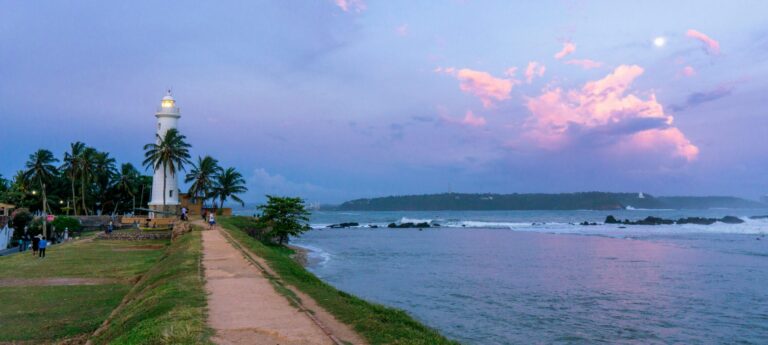
At the south-west corner is Flag Rock. It was once a signalling post that warned ships of the rocks in the bay, and today it is where people gather for sunset. A little further on, the white lighthouse stands on the Point Utrecht Bastion. It is still a working light, and visitors report that it isn’t open for climbing, so enjoy it from the walls. Across the road on the land side is the Meeran Mosque, and below the wall there is a small sandy beach.
Then turn north along the eastern walls. Near the Akersloot Bastion, look for the breadfruit tree; the Dutch are said to have brought breadfruit to the island. Further on is the Black Fort, or Zwart Bastion, the oldest surviving part of the fortifications. The Portuguese began it, and the Dutch made it their most heavily armed bastion. The Galle Heritage Foundation says the name may come from the smoke of its cannon and blacksmiths’ forges. Finish at the Old Gate, built into the long Dutch warehouse that now houses the National Maritime Museum. Its outer face carries the British royal coat of arms, while on the inside you’ll find the Dutch East India Company’s VOC emblem with the date 1669.
Recent visitors (2025–26) say a straight loop of the walls takes around 45 minutes. Allow far longer, though, because the streets inside keep pulling you off the route.
Inside the bastions
Three bastions have small museums in their old underground powder stores, run by the Galle Heritage Foundation. The Black Fort gallery covers the Portuguese period, the Star Bastion holds the fort’s largest gunpowder magazine and tells the Dutch story, and the Moon Bastion gallery runs from early history to the end of colonial rule. According to the foundation, the display galleries open every day from 8.30 am to 5.30 pm, including public holidays, and each sells its own tickets.
For the churches, the two national museums and the Old Dutch Hospital, see our Galle guide, which has their dates, hours and prices.
When to walk
Heat is the main thing to plan around. There is almost no shade along the ramparts, and recent visitors (2025–26) describe midday on the walls as hard going, so walk early in the morning or in the last hours of the afternoon and take water and a hat. The middle of the day is better spent in the shaded streets, a museum or a café.
The sea wall faces west, so late afternoon brings the softest light and, by sunset, the biggest crowds, especially around Flag Rock. If you’d rather have the walls to yourself, go soon after sunrise. Visitors also note that the fort quietens down once the day-trip coaches leave in the afternoon, which is one reason to stay a night inside the walls.
For the rainy months on this coast, see our guide to the best time to visit Sri Lanka.
Edges, jumpers and the rocks below
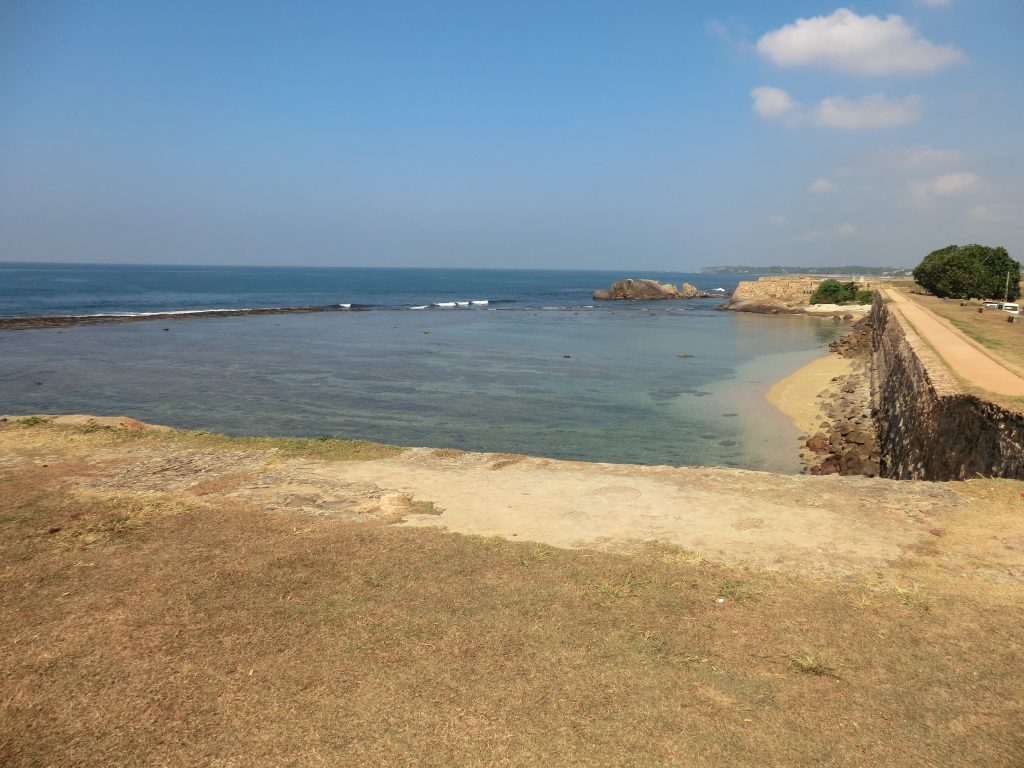
The ramparts are wide, but much of the outer edge has no railing. Recent visitors (2025–26) warn that the walls aren’t suitable for young children without close supervision. Stay well back from the edge, especially after dark or when the grass is wet.
Near Flag Rock you may see local men run and leap from the wall into the sea, usually performing for tips. They know the water and the rocks; visitors don’t. In April 2025 a 21-year-old student died after falling from the ramparts at a spot commonly used for cliff jumping and hitting the rocks below. So watch, by all means, but don’t try it.
Before you go
There is no ticket for the fort itself: it is a lived-in town, open at all hours, and you pay only at the museums and galleries. The Galle Heritage Foundation’s information centre on Baladaksha Mawatha has displays, guidebooks, toilets and, on request, guides. It opens on weekdays from 9 am to 4.30 pm, except on government holidays, and the foundation also runs public toilets near the Sun Bastion.
If you go into the churches or the mosque, cover your shoulders and knees; our guide to cultural etiquette in Sri Lanka covers the details. Taking photos for yourself is free, but flying a drone needs permission from the Civil Aviation Authority, as our Sri Lanka drone rules guide explains.
Galle sits on the coastal railway from Colombo, so the train is the easy way in. See our Sri Lanka train travel guide for booking reserved seats.
Frequently asked questions (FAQs)
Is it free to walk the Galle Fort ramparts?
Yes. The fort is a lived-in town with no entrance ticket; you pay only for the museums and the bastion galleries.
How long does it take to walk around Galle Fort?
Recent visitors say a straight loop of the walls takes around 45 minutes. With stops at the lighthouse, the bastion galleries and the streets inside, allow much longer.
What is the best time of day to walk the walls?
Early morning or late afternoon. There is almost no shade on the ramparts, and the sea wall faces west, so sunset brings the best light and the biggest crowds.
Can you go up Galle lighthouse?
Visitors report that it isn’t open for climbing, as it is still a working lighthouse. You can see it from the ramparts and the small beach below.
Are the Galle Fort ramparts safe for children?
Much of the outer edge has no railing and drops to rocks and sea, so keep small children close. A young man died after falling from the ramparts in April 2025.
Sources: whc.unesco.org, galleheritage.gov.lk (display galleries), galleheritage.gov.lk (black fort), galleheritage.gov.lk (star gallery), galleheritage.gov.lk (moon gallery), galleheritage.gov.lk (heritage information center), galleheritage.gov.lk (history), galleheritage.gov.lk (filming and photography within galle fort), srilanka.travel, en.wikipedia.org (Galle Fort), en.wikipedia.org (Galle Lighthouse), en.wikipedia.org (Galle Clock Tower), internationalheritage.dutchculture.nl, themorning.lk (lGVl3OuUx7B9d5sUbSTS), themorning.lk (rnGEK5kBcR26shzNrhKQ), newswire.lk and recent visitor reports. Header photo: Rovin Shanila / Wikimedia Commons, CC BY-SA 4.0.