Kalkudah Beach is a long stretch of open sand on Sri Lanka’s east coast, a few kilometres north of Pasikuda in Batticaloa District. It shares the same curved bay and offshore coral reef as its better-known neighbour. The difference is that it has a fraction of the hotels and far fewer people on the sand.
Is it worth visiting?
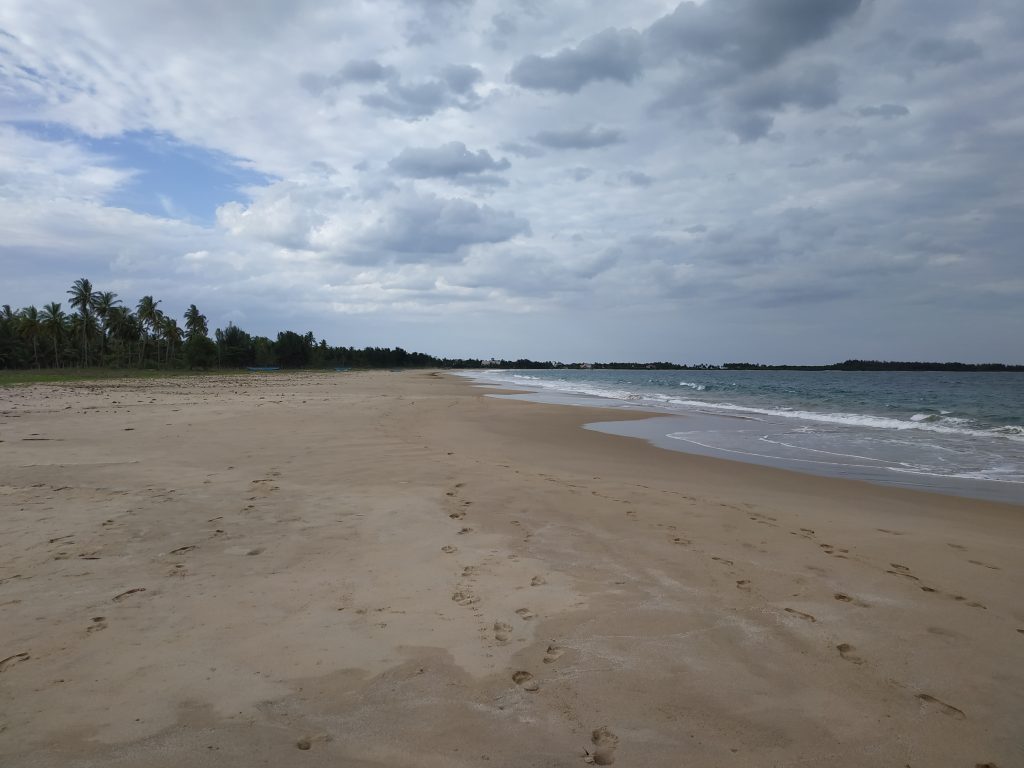
Go if you want an east-coast beach without the resort crowds. Expect wide sand, palm trees and fishing boats pulled up on the shore. Outside the main season, your only company may be a few local fishermen and grazing cattle.
Think twice if you want sunbeds, beach restaurants or a lifeguard watching the water. For that, Pasikuda next door is set up for tourists in a way Kalkudah still isn’t.
A quieter stretch of coast
Kalkudah and Pasikuda sit on the same bay, and the same offshore reef shelters both beaches from the open sea. Pasikuda has grown into a cluster of resorts. Kalkudah, by contrast, has stayed closer to what it was: a fishing beach with a scatter of guesthouses rather than hotel chains. Recent visitors (2025–26) describe it as the more peaceful of the two, with few footprints on the sand besides their own and the fishermen’s.
Kalkudah’s tourism history has been interrupted twice, like the rest of this coast. Hotels were built here in the 1970s and early 1980s. The civil war damaged them first, and then the 2004 Indian Ocean tsunami. Since the war ended, investment has slowly returned, although Kalkudah has drawn less of it than Pasikuda.
Swimming and the reef
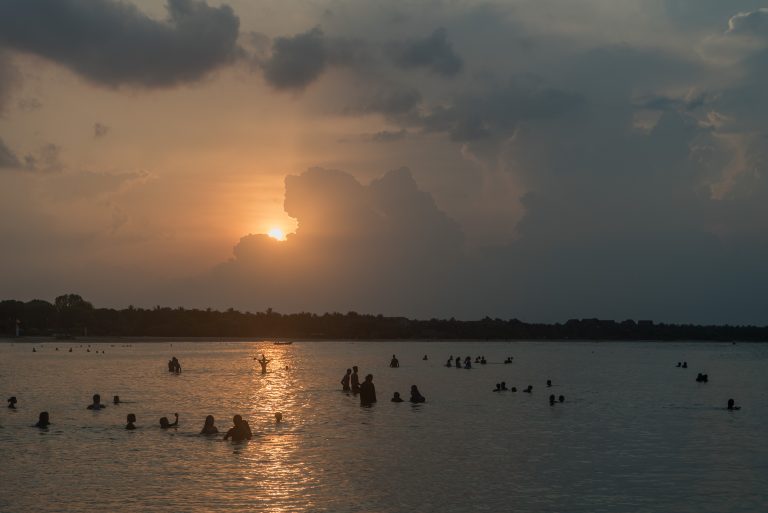
Recent visitors report that the reef keeps the water calm and shallow a good way out from the shore. That suits families and less confident swimmers. However, several mention occasional currents, and there’s no lifeguard on duty here, unlike the main Pasikuda stretch. So don’t assume it’s always as sheltered as it looks on the calmest days.
The reef is also the reason to bring sandals rather than go barefoot. Recent visitors mention sharp coral and shell fragments in the sand near the water’s edge. Where the reef is healthy, there’s reasonable snorkelling close to shore. As with any Sri Lankan reef, go gently and never stand on the coral.
Getting there
- From Batticaloa: Kalkudah is around 35 km north-west of Batticaloa town. Most people come by hired car, taxi or tuk-tuk along the coast road, since there’s no public bus worth relying on for the last stretch.
- From Pasikuda: the two beaches are a few minutes apart on foot or by tuk-tuk.
- Fees: there’s no official entrance fee. It’s open coastline, not a ticketed site.
Around Kalkudah
For more places to eat and stay, base yourself in Pasikuda: our Pasikuda and Kalkudah guide covers the area. Batticaloa town, with its Dutch-era fort, makes a good half-day trip south along the coast. The wider Batticaloa area also has its own lagoon, markets and colonial streets if you have time.
Frequently asked questions (FAQs)
Is Kalkudah Beach the same as Pasikuda Beach?
No, though they sit next to each other on the same bay and share an offshore reef. Pasikuda is the more developed of the two, with most of the area’s resorts. Kalkudah has stayed quieter, with fewer hotels and fewer visitors.
Is it safe to swim at Kalkudah Beach?
The offshore reef generally keeps the water calm and shallow well out from shore, which suits most swimmers. However, recent visitors report occasional currents and no lifeguard on this beach. So take the same care you would at any unsupervised beach.
Is there an entrance fee for Kalkudah Beach?
No. It’s open coastline with no ticket booth or official fee.
What’s the best way to get to Kalkudah from Batticaloa?
By hired car, taxi or tuk-tuk along the coast road. It’s about 35 km north-west of Batticaloa town, and there’s no reliable public bus for the final stretch.
Header photo: fazen / Wikimedia Commons, CC BY-SA 4.0.