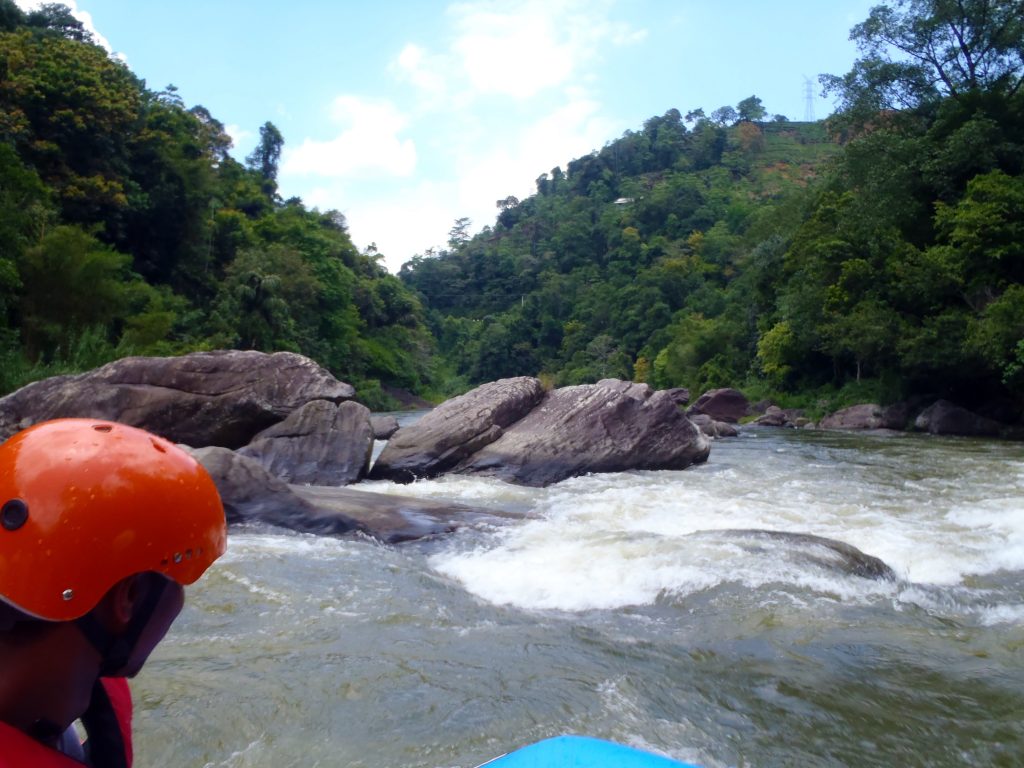
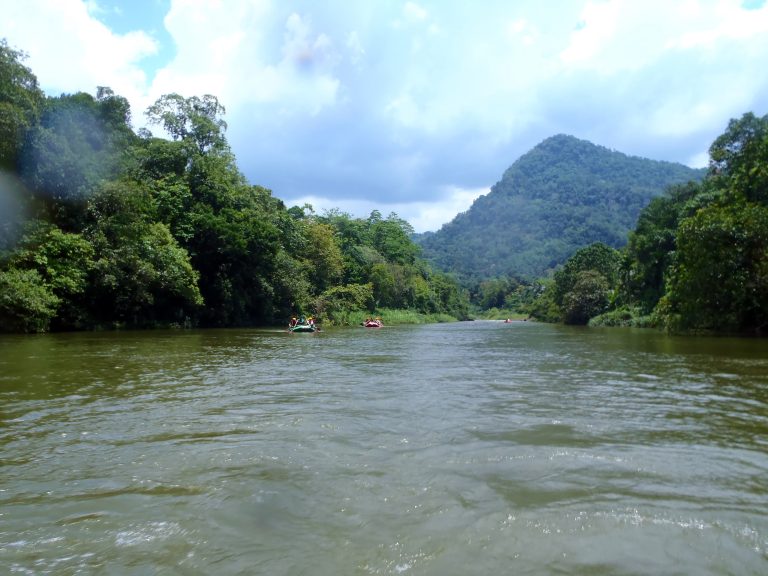
Rafting on the Kelani River is one of the two big reasons people stop at Kitulgala, the other being the rainforest birds. You paddle a shared inflatable raft through forested country, with a guide at the back calling the strokes, a safety kayak nearby and calm stretches between the rapids where you can catch your breath. This page is about doing the trip well: picking an operator, what happens on the day, and the rules that are meant to keep you safe.
Is it right for you?
Go if you want a few hours of proper adrenaline on the way between Colombo and the hill country, you are happy to get soaked and take orders from a guide, and you are fit enough to paddle hard in short bursts. You don’t need to be a strong swimmer, although being comfortable in moving water helps if you fall in.
Think twice if you are travelling with children under 14, because Sri Lanka Tourism’s rafting guideline sets 14 as the minimum age on every section of the river. The guideline also says people with a medical condition should not take part, so check honestly with your doctor if you have a heart, back or neck problem, or you are pregnant.
What the rapids are like
Operators and recent visitors (2025–26) describe the standard Kitulgala run as grade 2 to 3 at normal water levels: big enough splashes to throw you around the raft, with a couple of drops that get everyone shouting. After heavy rain the river rises and the same rapids become more powerful. Reports of how long the run is and how many rapids it has vary a lot between sellers, so treat any number you see as one operator’s description of its own trip, not a fixed route.
The river has also changed. The Broadlands hydropower scheme on the river near Kitulgala was commissioned in February 2022, and the Ceylon Electricity Board says it agreed to keep a steady release of water to protect rafting. Even so, operators told the government in 2023 that the scheme had hit their business hard, and a committee was set up to look into it. Recent visitors report that trips now run when water is being released, so the time of your run is set by the operator. Ask when you book, and don’t plan the rest of the day around a time you haven’t confirmed.
Choosing an operator
Rafting is one of the water-based adventure activities that operators register with the Sri Lanka Tourism Development Authority (SLTDA). Sri Lanka Tourism keeps a list of registered water sport centres that you can search by name or registration number, so ask for the operator’s number and check it. The SLTDA’s guideline for rafting operators (published as a draft) is short and worth a look before you go. In practice, it gives you a checklist:
- Does the trip start with a face-to-face safety briefing that covers falling out, flips and how the safety kayaker will rescue you?
- Are you asked to sign a waiver and a medical form? A company that skips this is skipping other things too.
- Is your life jacket the right size, fastened, and checked by the instructor before you get in? Is everyone, guides included, wearing a helmet?
- Is there at least one safety kayak on the water with your raft, and does each raft carry a rescue bag and a first-aid kit?
- Does the operator take children under 14? Some online listings advertise lower ages, which goes against the guideline. Treat that as a reason to look elsewhere.
The guideline also bans rafting in the dark and alcohol or drugs during the trip and for at least six hours before, so a boozy lunch before an afternoon run is out. If the water looks high and brown after a night of rain and your guide says no, take it well. That is the system working.
How the day goes
Recent visitors (2025–26) describe much the same routine. You arrive at the operator’s base, leave your phone and valuables behind, and get kitted out with a life jacket, helmet and paddle. The briefing comes next, and it’s worth paying attention: you’ll learn the paddle commands, what “hold on” means, and what to do if you go over.
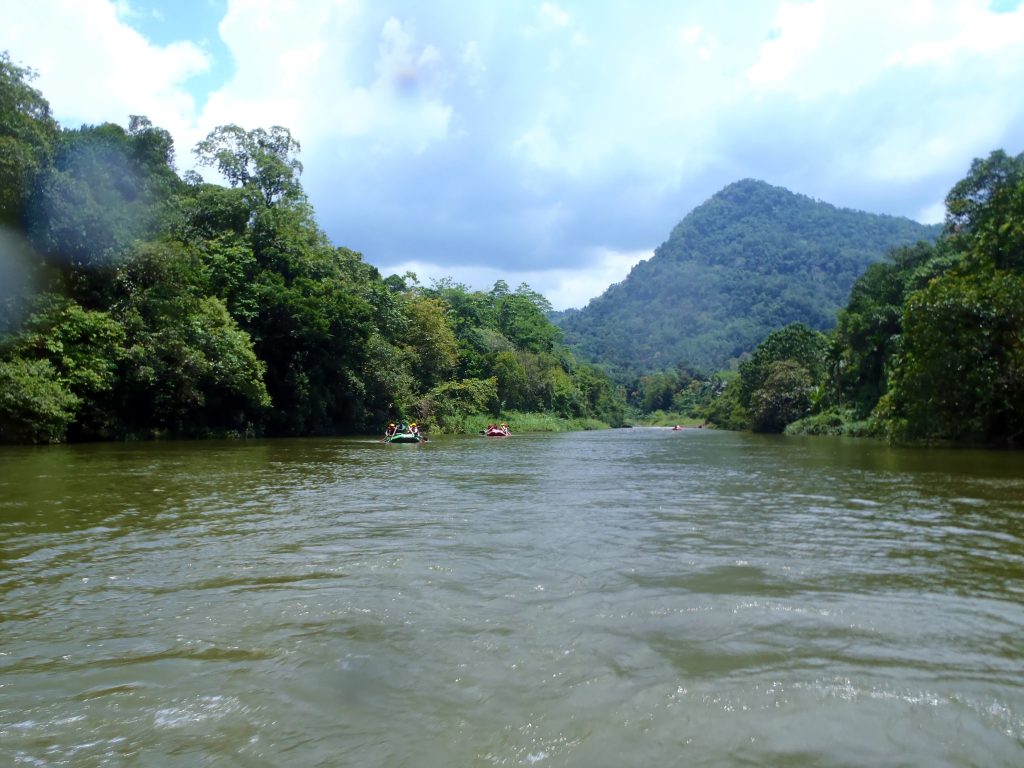
Then you’re driven upstream and put in. Expect the big rapids to come in bursts, with quieter stretches between them; recent visitors mention kingfishers and monitor lizards on the banks. On some trips, guides let people jump in and float down a gentle rapid in their life jackets. Only do this when your guide says so and where they point. The run ends downstream, where you get out and are driven back to base.
What to wear and bring
- Clothes that can get wet: swimwear or light shorts and a quick-drying top rather than cotton.
- Shoes that will stay on in water, such as old trainers or sandals with a heel strap. Flip-flops get lost.
- Sunscreen, applied before you start, and a hat for the drive. The river reflects a lot of sun.
- A full change of clothes and a towel for afterwards.
- Leave phones, jewellery and wallets at the base. If you want photos, recent visitors report that some operators film the trip or rent action cameras, sometimes for an extra charge, so ask what is included.
Accidents and the river
People have died rafting at Kitulgala, and it is worth knowing how. In June 2007 two people drowned when their raft capsized on a rope stretched across the river for construction workers; heavy rain had raised the water and the rope was hidden below the surface. That doesn’t make rafting here reckless, but it shows what matters: high water and hidden obstacles change everything, and the guide’s judgement and the kayaker’s rescue skills matter more than the price.
Away from the organised trip, only swim where local people or your guide say it is safe. Heavy rain also brings landslide warnings in Kegalle District, so check road conditions before driving in or out.
Fitting it into your trip
Kitulgala is on the A7 between Avissawella and the hill country, so rafting fits neatly into a travel day between Colombo and Hatton, the usual base for climbing Sri Pada (Adam’s Peak). There is no railway, so you’ll need road transport. If you’d rather not rush, stay a night: the Kitulgala guide covers the film location of The Bridge on the River Kwai, the Belilena cave and the rainforest birds, and our packing list helps with the rest.
Frequently asked questions (FAQs)
What is the minimum age for rafting at Kitulgala?
Sri Lanka Tourism’s rafting guideline sets a minimum age of 14 on all sections of the river. Some listings advertise younger ages, which goes against that guideline.
Is white-water rafting at Kitulgala safe?
Registered operators are expected to give a safety briefing, check every life jacket, put helmets on everyone and keep a safety kayak on the water. Fatal accidents have happened, especially in high water, so choose an operator that follows these rules and accept the guide’s decision if the river is too high.
What grade are the rapids at Kitulgala?
Operators and recent visitors describe the standard run as grade 2 to 3 at normal water levels. The rapids get more powerful after heavy rain.
Do I need to be able to swim to raft at Kitulgala?
Your life jacket keeps you afloat, and the briefing teaches you what to do if you fall in. Being comfortable in water helps, so tell your guide if you can’t swim.
What time of day does rafting run?
Since the Broadlands hydropower scheme opened in 2022, recent visitors report that trips run when water is released. Ask your operator for the day’s times when you book.
How do I check that a rafting operator is registered?
Ask for the operator’s SLTDA registration number and search for it in Sri Lanka Tourism’s list of registered water sport centres.
Header photo: Rehman Abubakr / Wikimedia Commons, CC BY-SA 4.0.